Exploring Hiroshima & Etajima: A 2-Day Bike Trip

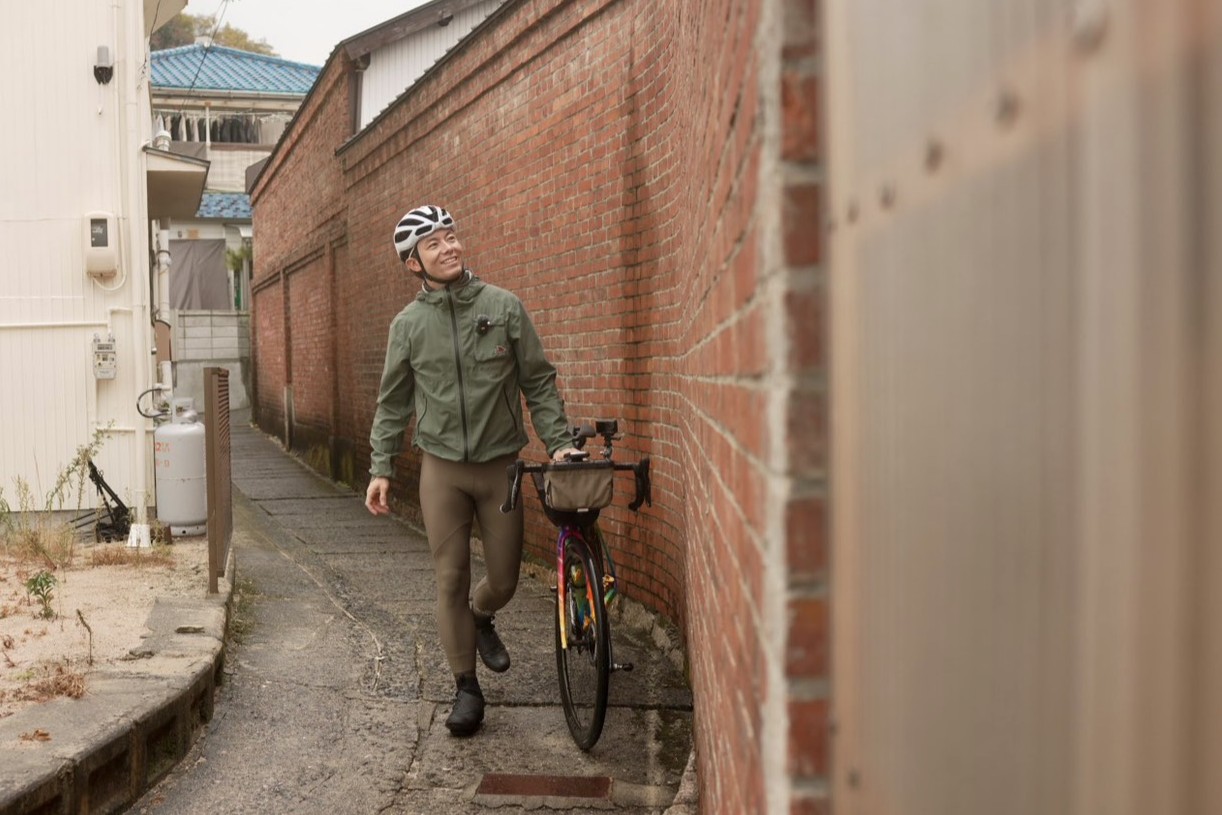
When you think of cycling in Hiroshima, the Shimanami Kaido and Yumeshima Kaido probably come to mind first. But this time, I decided to mix it up a bit and ride the scenic Kakishima Kaido, a beautiful cycling route connecting Etajima City and Kure.
To get ready for the ride the next day, I took the Shinkansen with my bike from Tokyo Station down to Hiroshima the day before. The trip was a bit tight—just one night and two days—with only one full day of actual riding. But even so, the amount of stuff to see and do in Etajima and Kure was way more than I expected. Before I knew it, I was thinking, “Wow, this is seriously packed…” and totally satisfied. I’m excited to share this cycling adventure in Hiroshima and Etajima with you in this report!
*This article is brought to you by the Chugoku Region Governors’ Association Cycling Tourism Promotion Committee.*
Arrived in Hiroshima the day before by Shinkansen with my bike in tow.
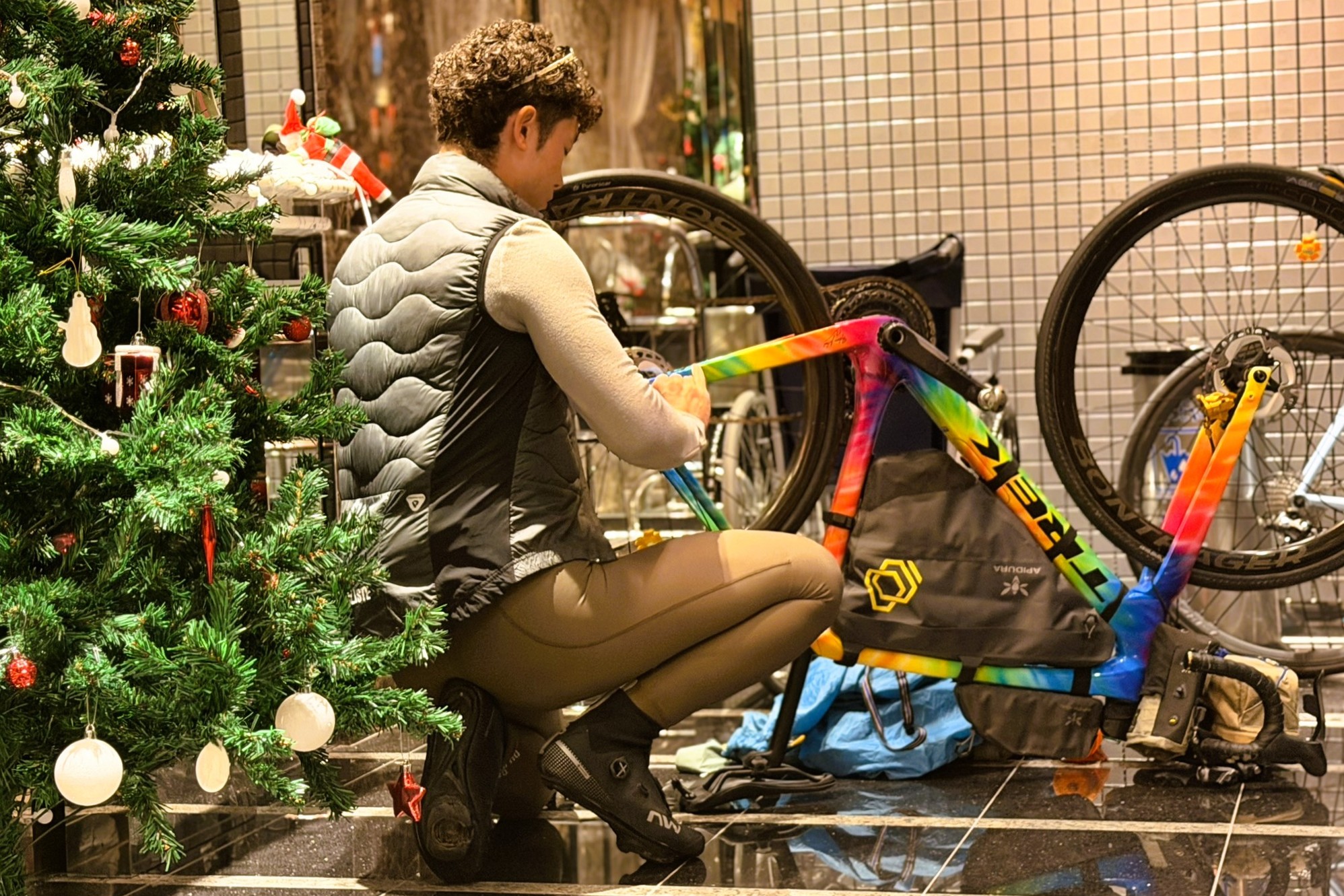
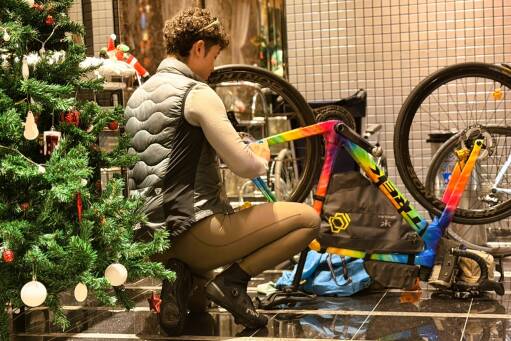
The afternoon before, I hopped on the Shinkansen from Tokyo to Hiroshima. It took about four hours—a decent chunk of travel time—but somehow, it didn’t feel like a hassle before the trip even started. I stayed the night at the APA Hotel Hiroshima Ekimae Shinkansen Exit, just a five-minute walk from Hiroshima Station. Since I had to keep my bike packed in its bag in the room, I unpacked it in the lobby the morning of the ride and got everything ready to hit the road.
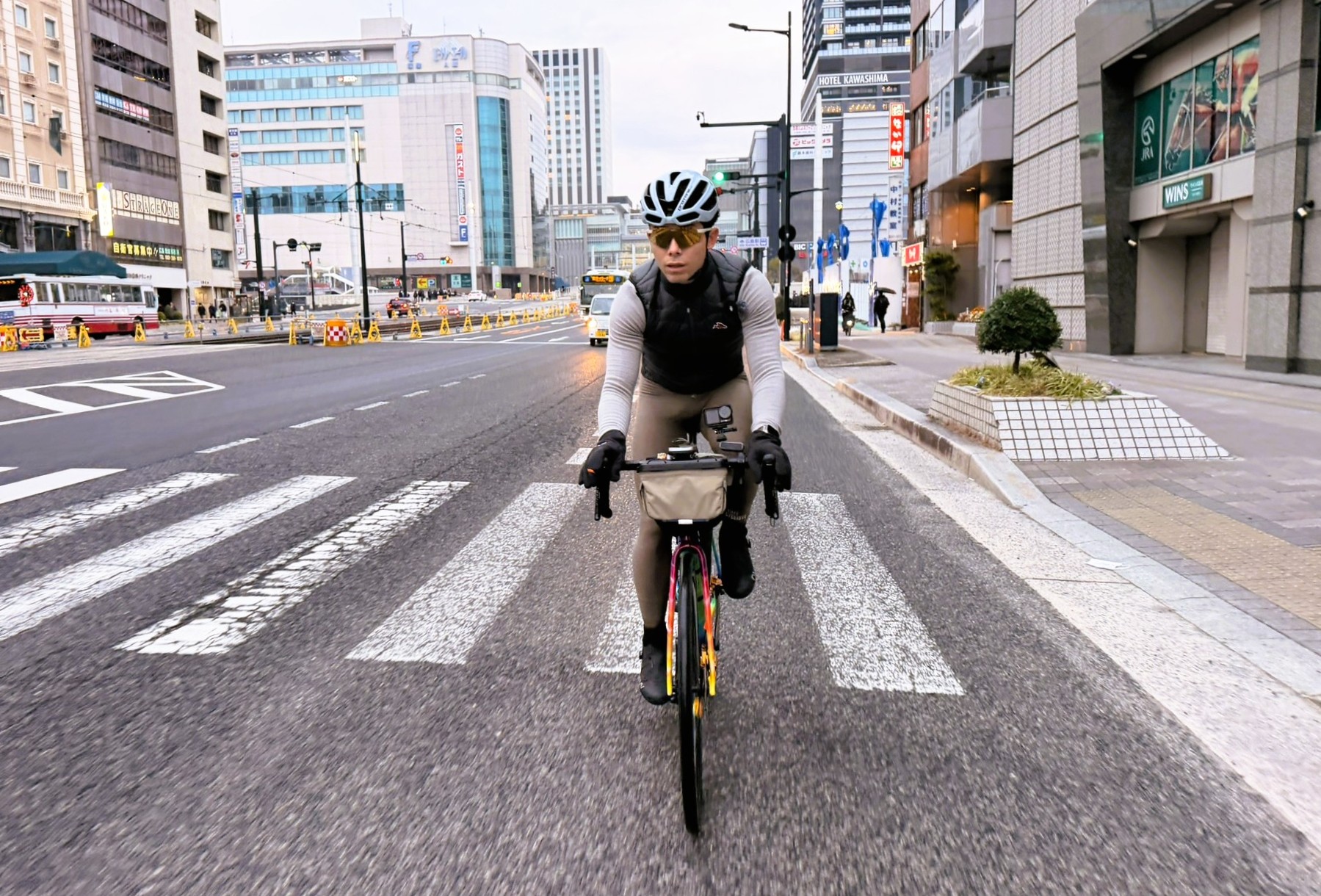
After getting everything ready, I kicked off the ride. I rode about 6 km through the city to Hiroshima Port to catch the ferry to Etajima. Since it was a weekday morning, traffic around the station was a bit heavy, so I stayed alert while making my way to the port.
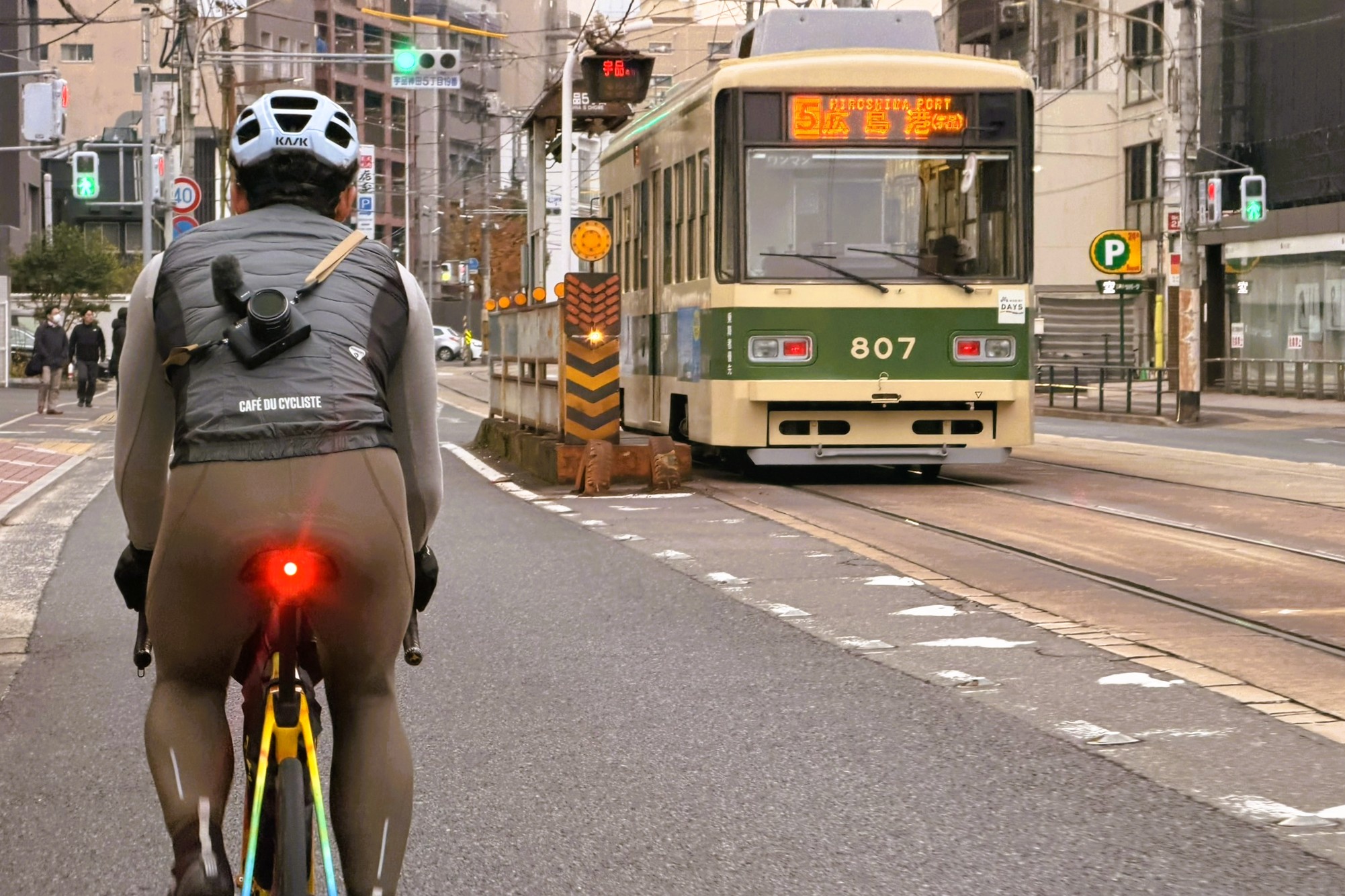
In Hiroshima city, streetcars run full throttle from morning, packed with commuters and students. Riding your bike right alongside them is a pretty unique experience you can only get in Hiroshima.
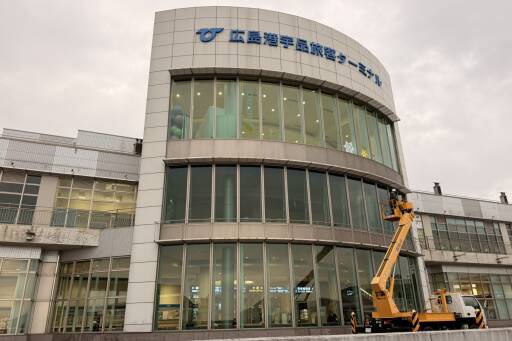
Hiroshima Port Ujina Passenger Terminal
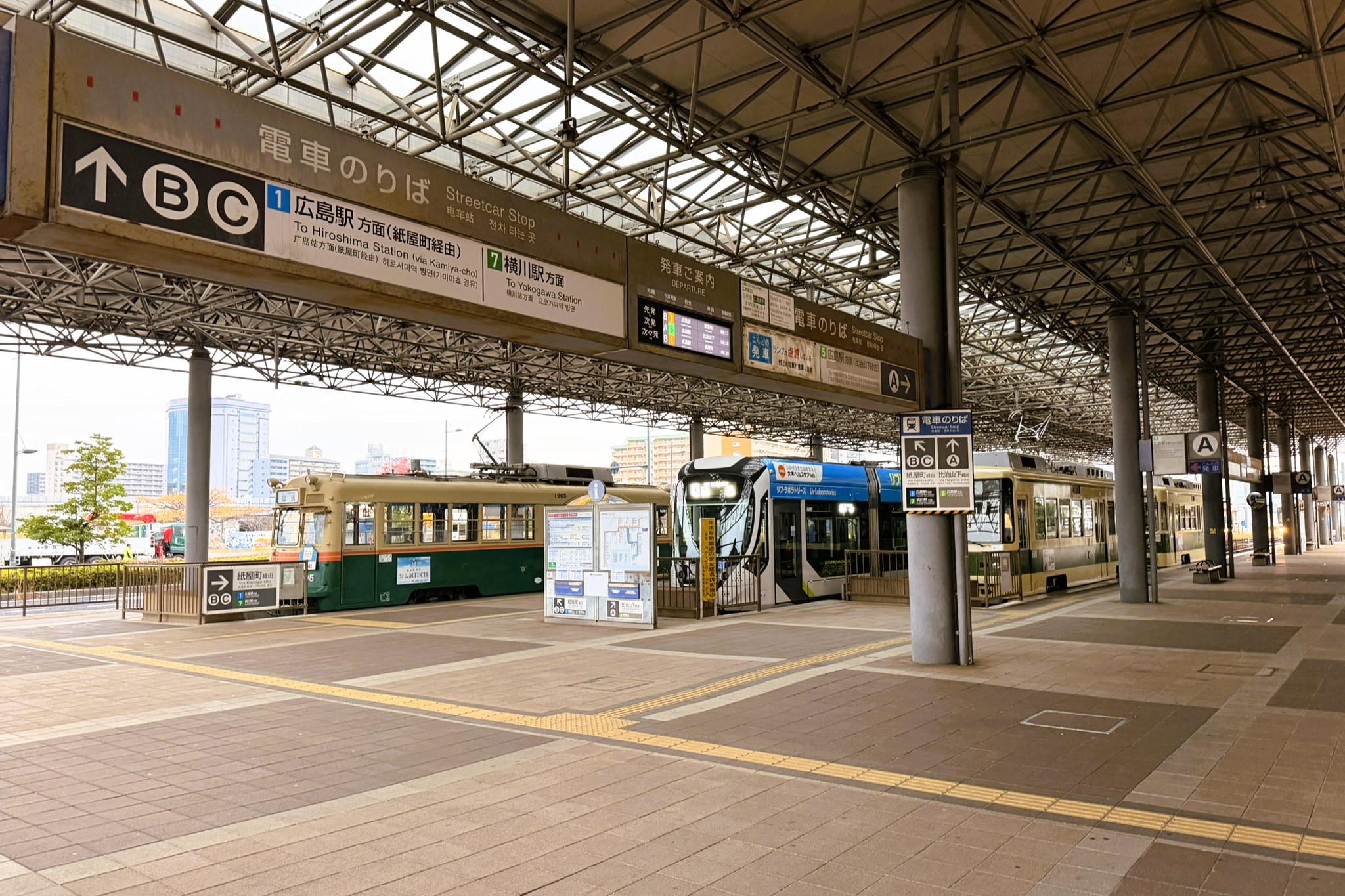
After about a 30-minute ride, I arrived at Hiroshima Port. This spot is also the final stop for the streetcar line (Hiroshima Port Station), and you can see all kinds of streetcars parked there. Before I knew it, I found myself totally distracted, watching the trains instead of my bike.

Right connected to the station is the Hiroshima Port Ujina Passenger Terminal. From here, you can catch boats heading to Etajima and a bunch of other islands across the Seto Inland Sea.

I bought a ferry ticket from Ujina to Etajima/Kirigushi for 470 yen, plus a special bike fare ticket for 190 yen at the counter.
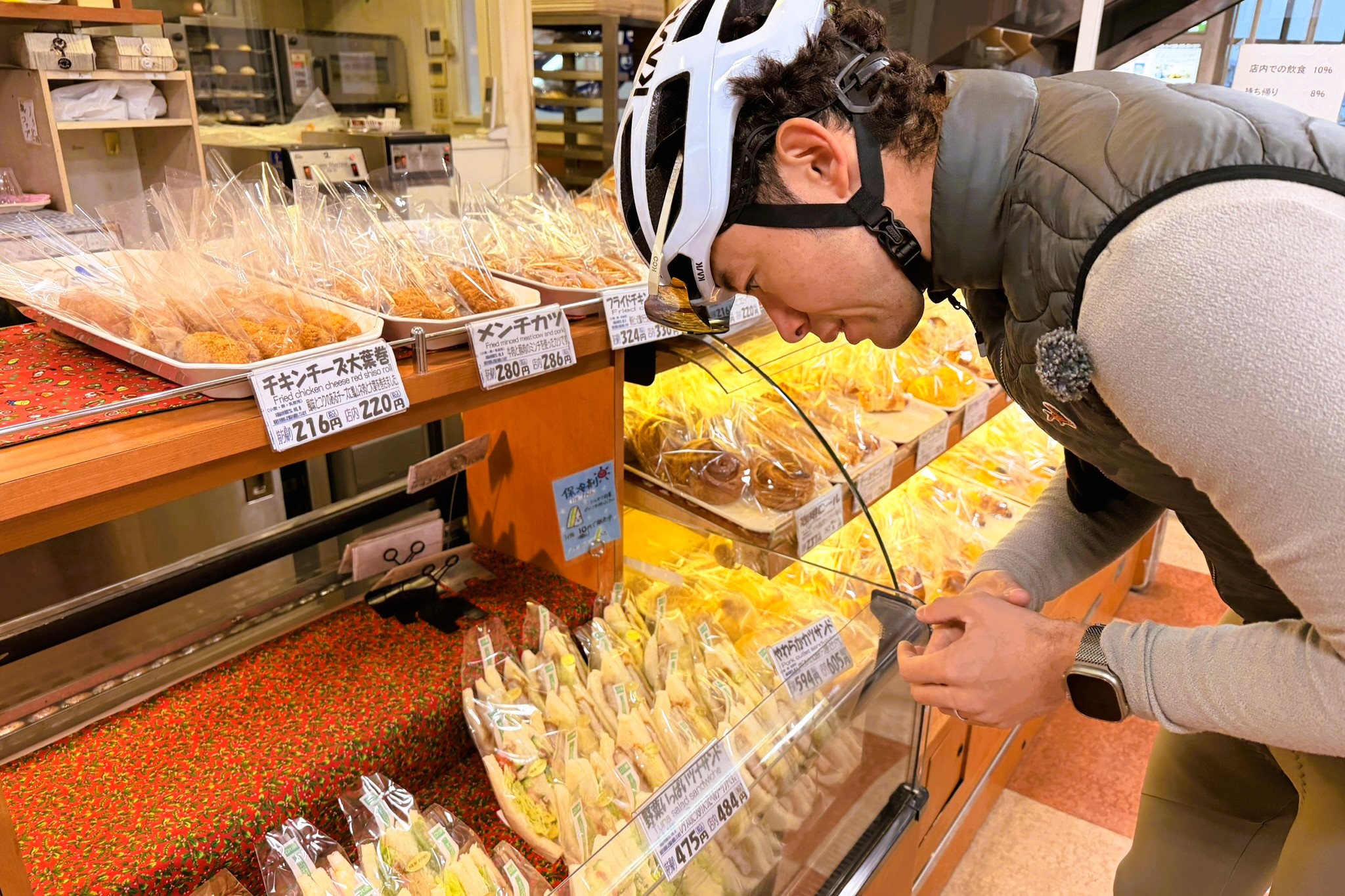
With a bit of time before boarding, I grabbed breakfast at the terminal’s bakery, Cafe & Bakery Newport. I picked up a hearty sandwich and a hot coffee to start the day right.

While waiting for the ferry, I grabbed some sandwiches and coffee for breakfast. The sky’s overcast, unfortunately, but so far the rain’s holding off. I’m silently hoping it stays that way as I wait for departure.
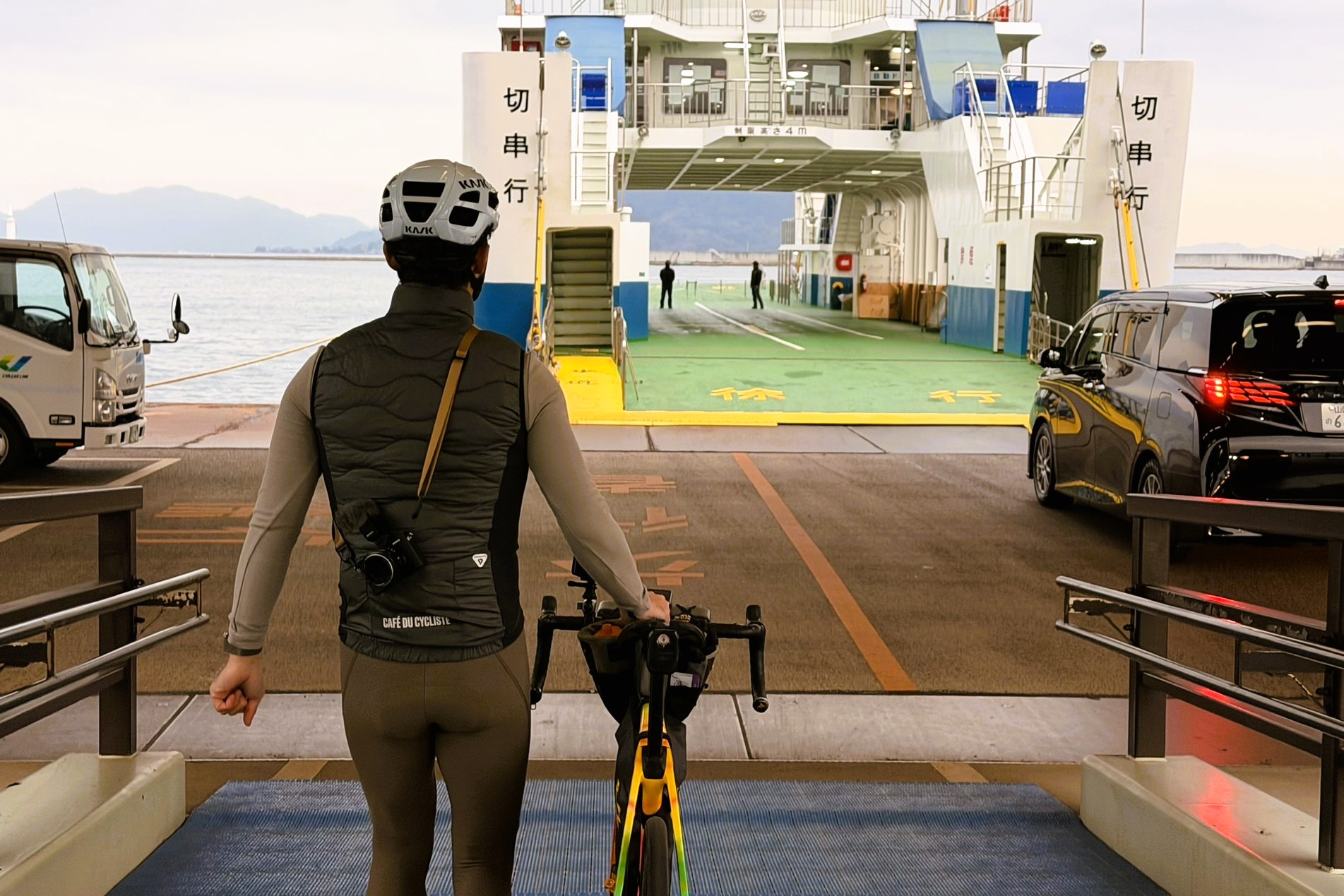
Before I knew it, the ferry bound for Kiri-kuchi arrived. We were guided on board one by one, rolling right on with our bikes. No matter how many times I do this, that moment always gets me pumped.
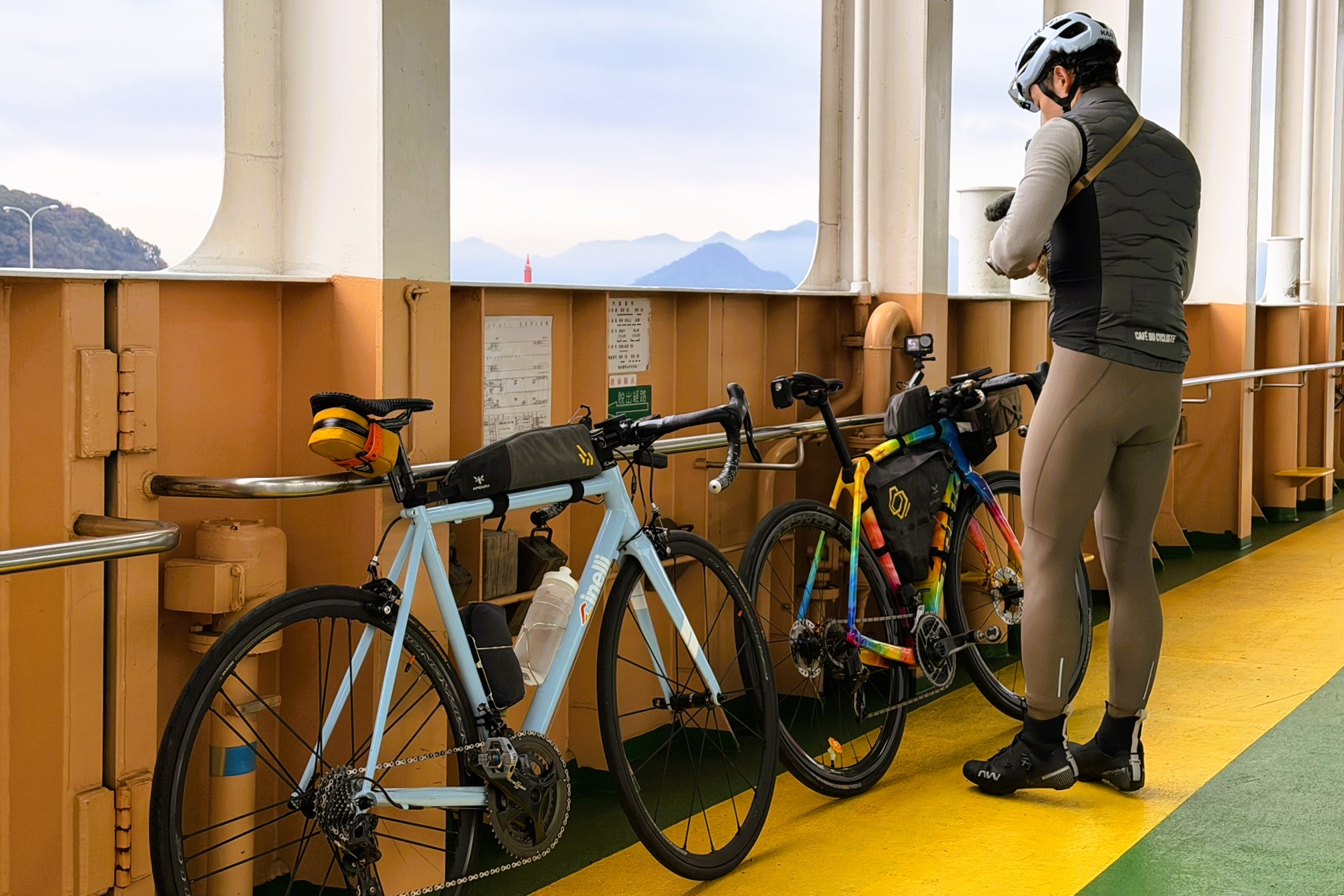
You just lean your bike against the ferry wall—super simple and hassle-free. Just stop pedaling and let the boat rock you along, and suddenly the travel vibes skyrocket.
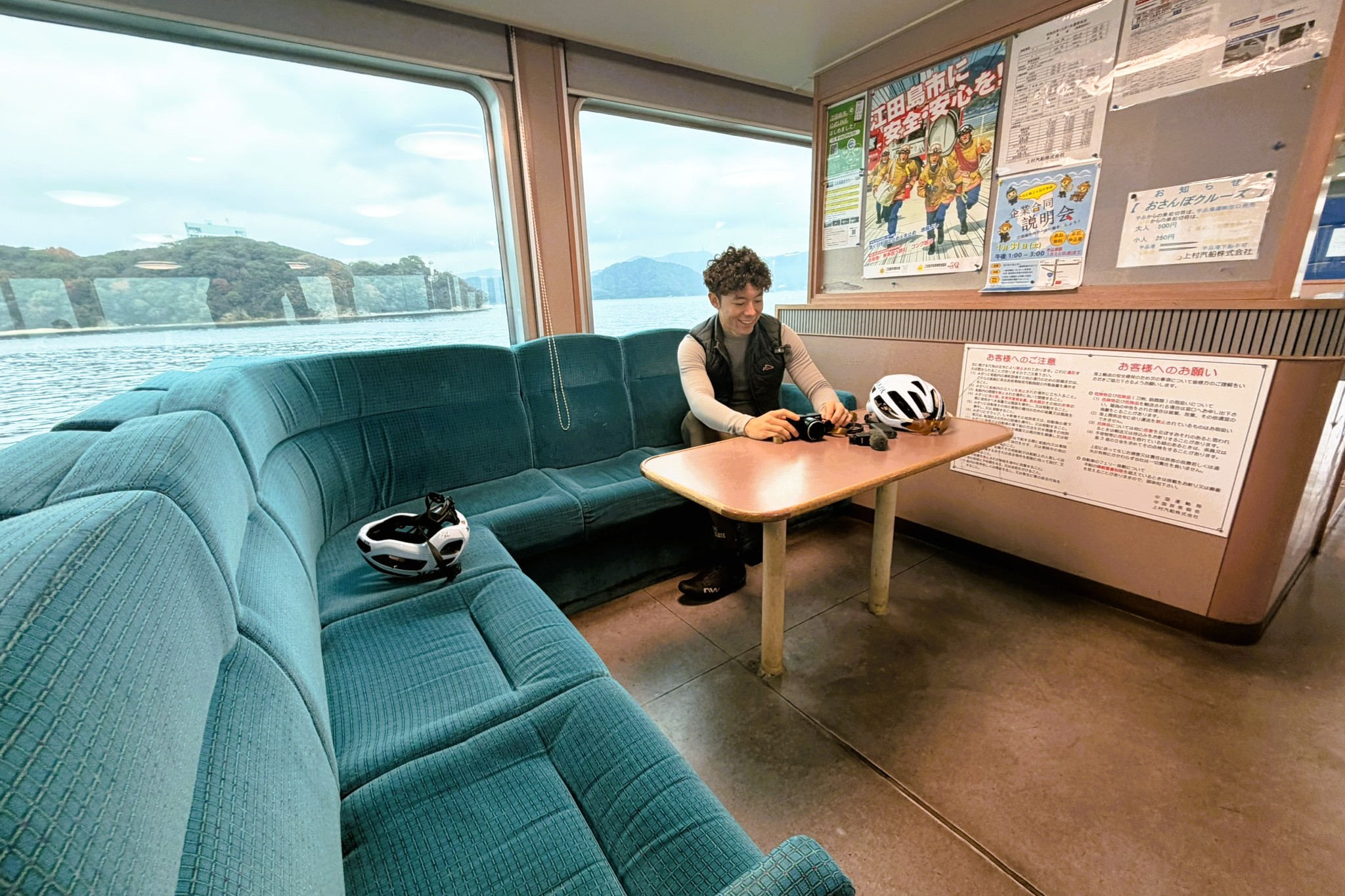
The ferry’s second floor is a passenger lounge with plenty of space and super comfy chairs. No need to worry about the bike here—it’s totally chill mode. I kicked back and enjoyed the relaxing 30-minute ride, soaking in the views of the sea.
Touchdown! Let’s hit the Kakishima Kaido!
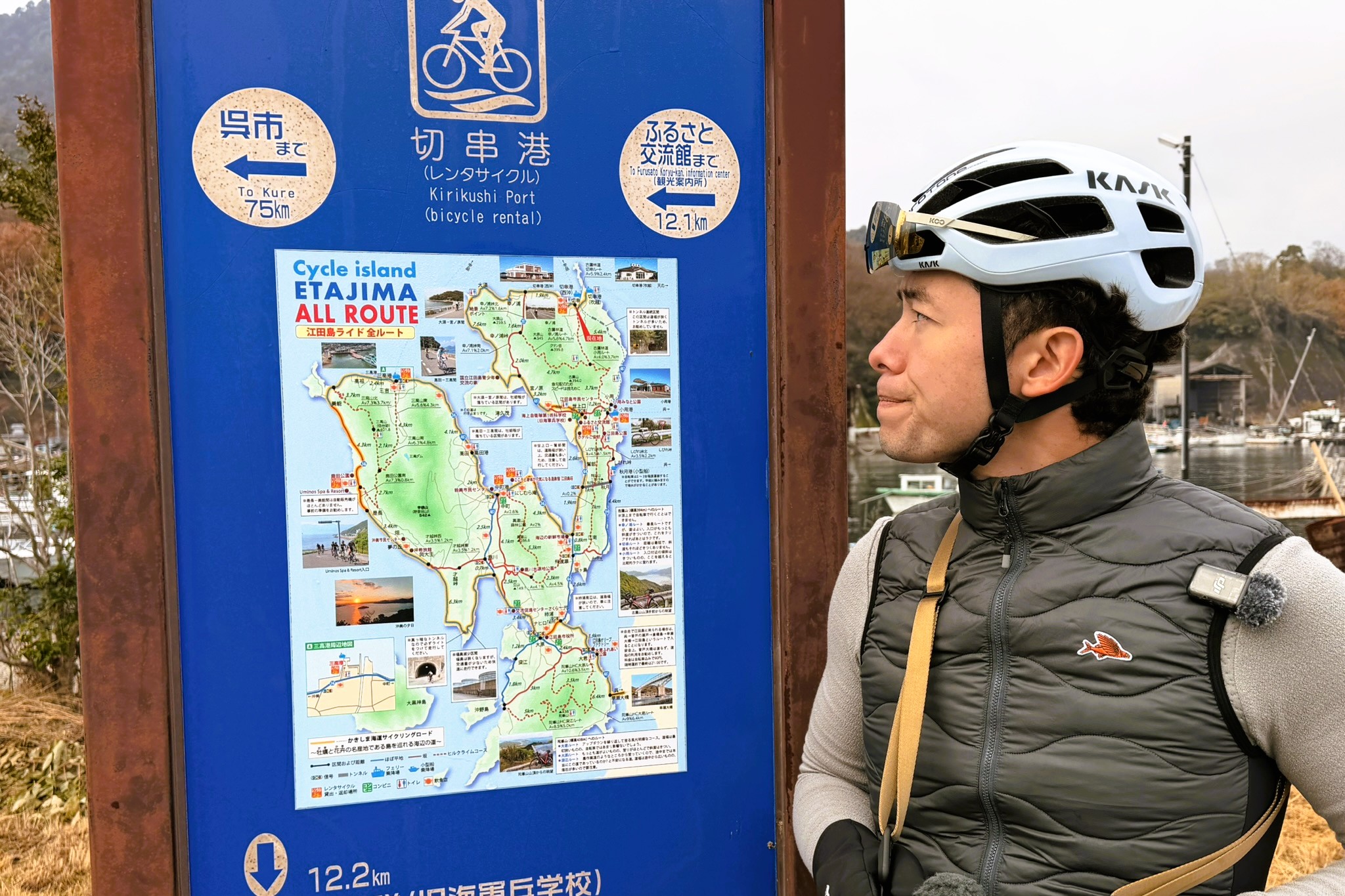
The ferry barely rocked at all and arrived at Kirigushi Port right on schedule. We landed safely on Etajima.This time, we’re riding the “Kakishima Kaido Cycling Road,” a roughly 70km route that connects Kirikushi to Kure.
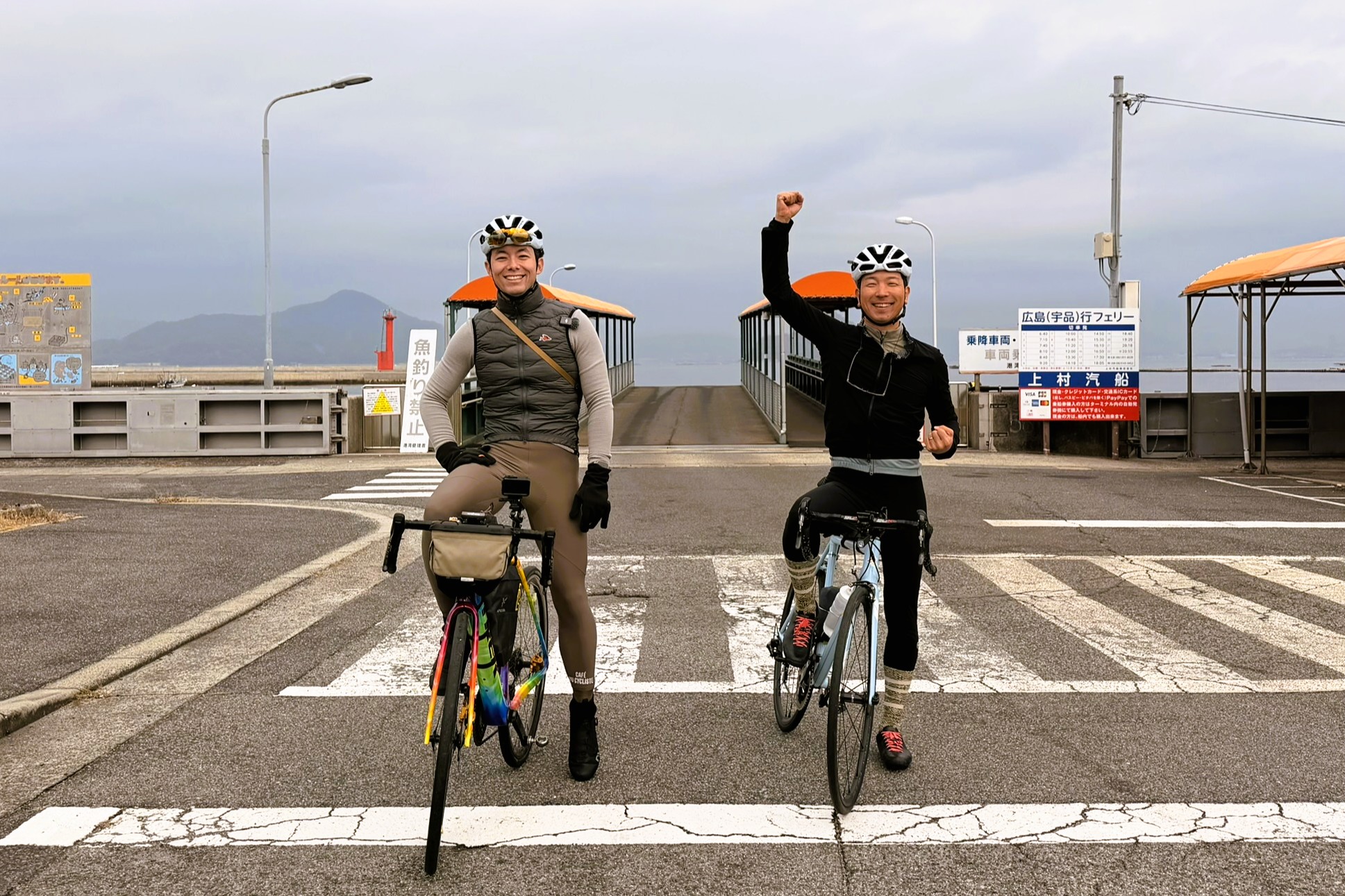
The name “Kakishima Kaido” comes from the islands known for their oysters (kaki) and flowers (kaki), making it a scenic coastal route that circles these famous spots. Even before hitting the road, the name alone sparks excitement—sounds tasty and vibrant, right?*Note: “Kaki” refers to flowers and plants that are grown mainly for ornamental purposes.*
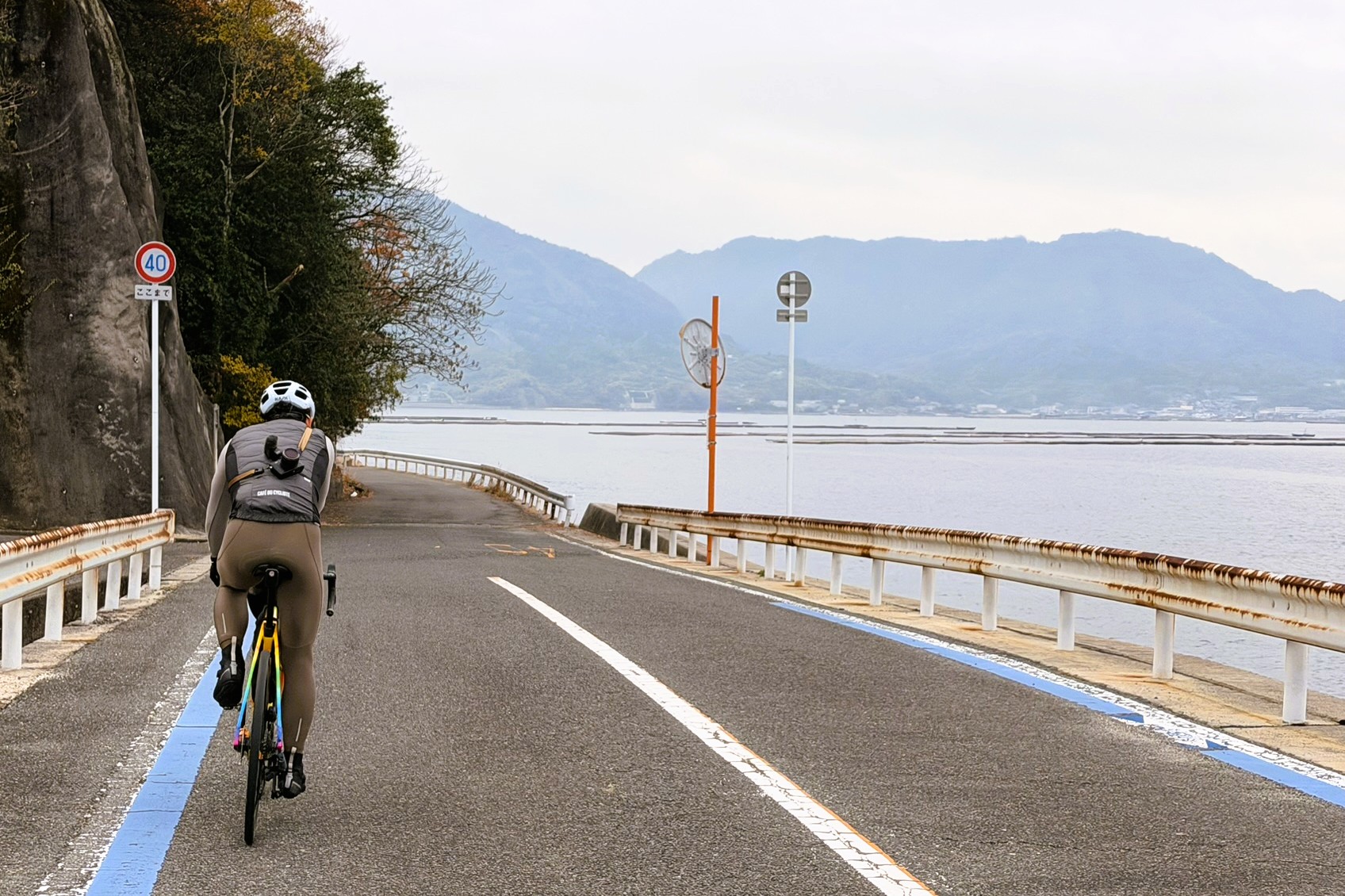
Starting off with the Seto Inland Sea right by your side is such a luxurious feeling. The clear blue lines painted on the road make it super easy to follow the route, so you can just focus on soaking in the scenery and enjoy a smooth, refreshing ride.

Along the road, Etajima’s famous citrus fruits hang heavy on the branches. As you’d expect from the Seto Inland Sea, even in winter, the air feels soft and the mild climate is something you can really feel on your skin. Riding here, the scenery just puts you in a laid-back, easygoing mood.
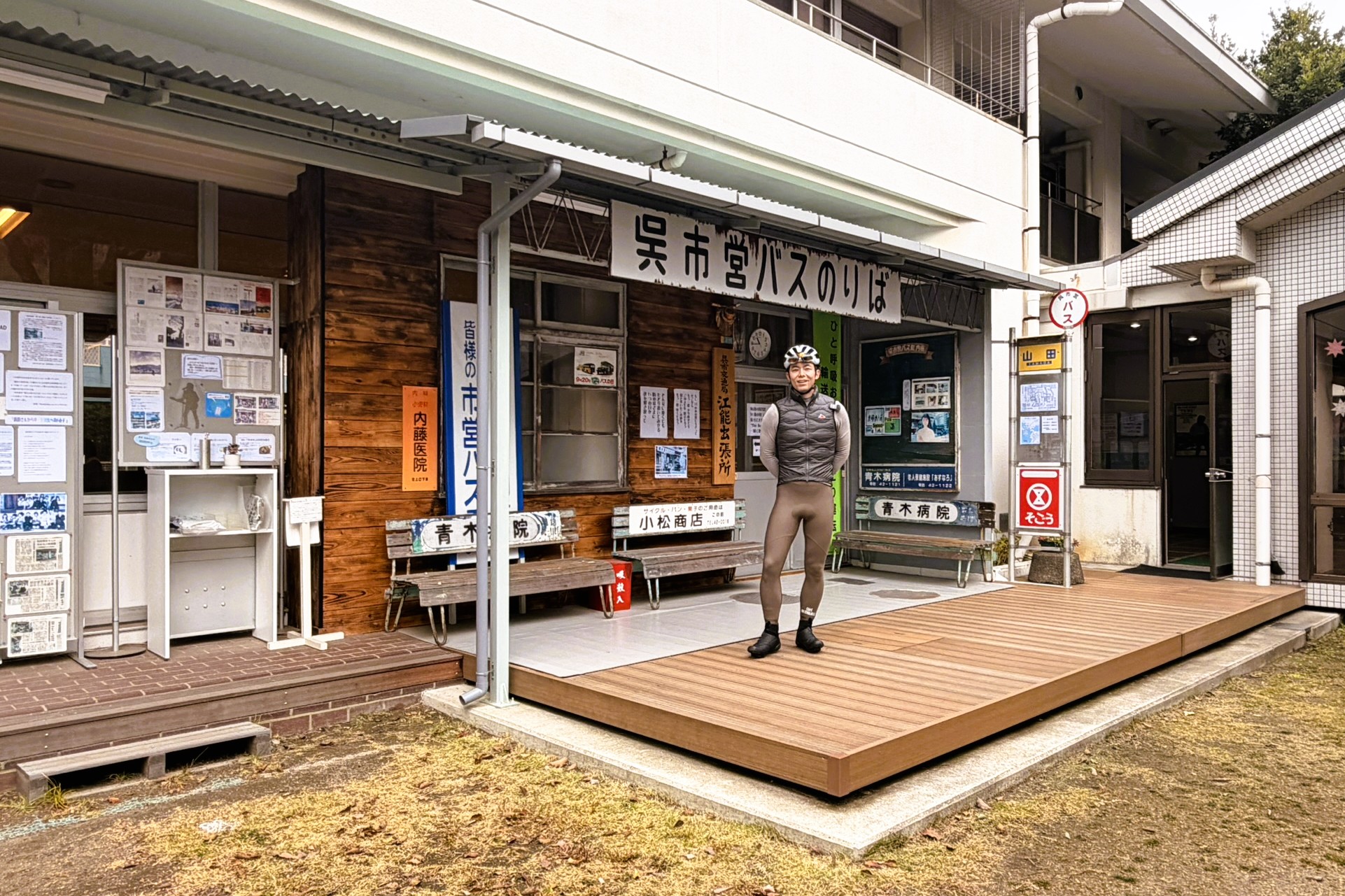
We made a stop at the “Hamada Shogo-related bus stop” that was recommended during our spot search. The city of Etajima has carefully recreated the bench where singer-songwriter Hamada Shogo actually sat, along with the look of the bus stop from back in the day. It’s a spot where you can really feel the original scenery from Hamada’s childhood, since he spent his elementary and middle school years in Etajima Town.
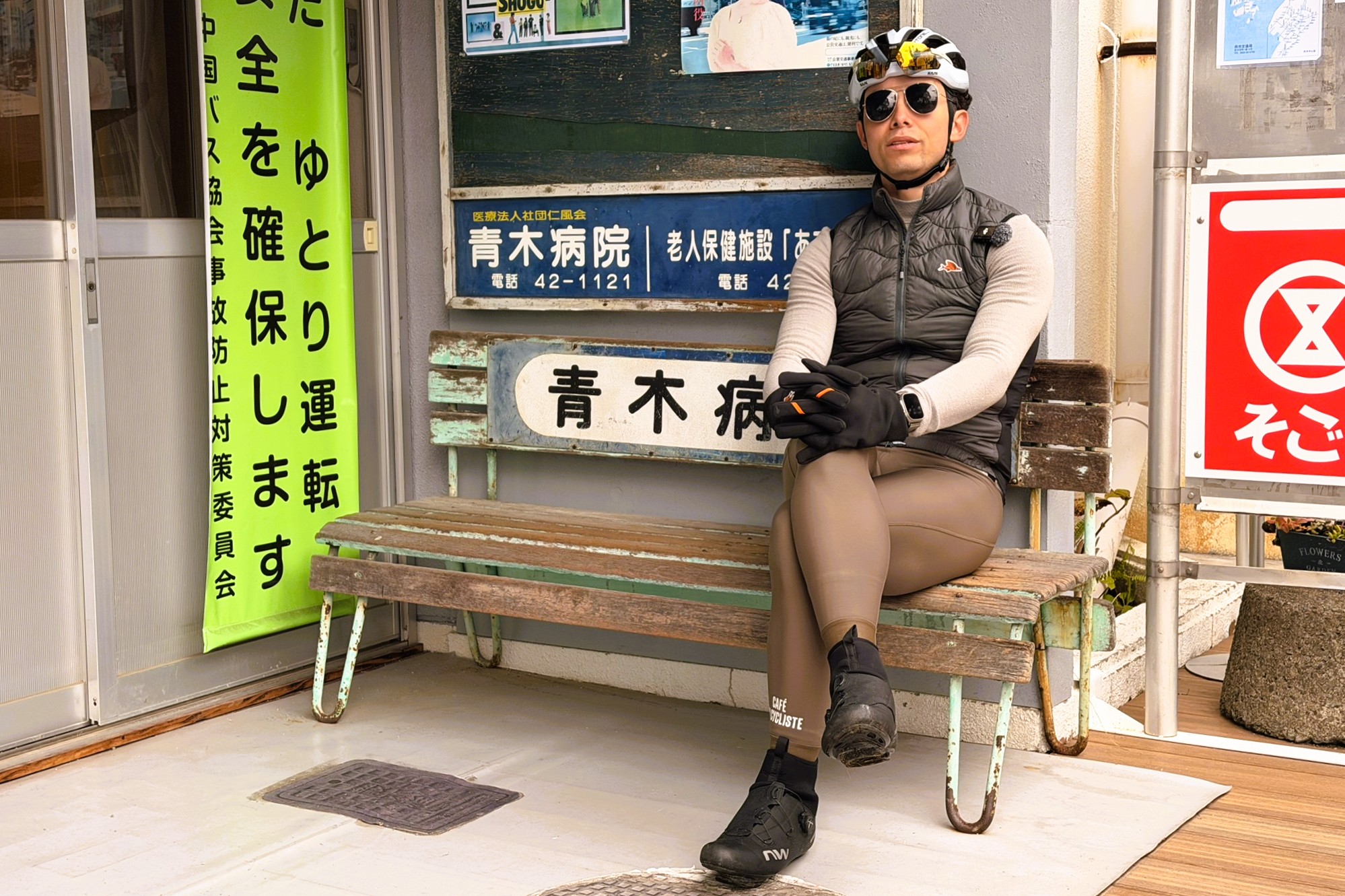
Neither Kenta nor I are really part of the so-called “Hamasho generation,” so we can’t speak too deeply about it. But when it came to shooting photos, we were all in. Slipping on sunglasses and sitting on a bench, we struck the classic pose for a shot. Even on a weekday, fans were stopping by to check things out, which really showed us how strong and lasting that popularity is.
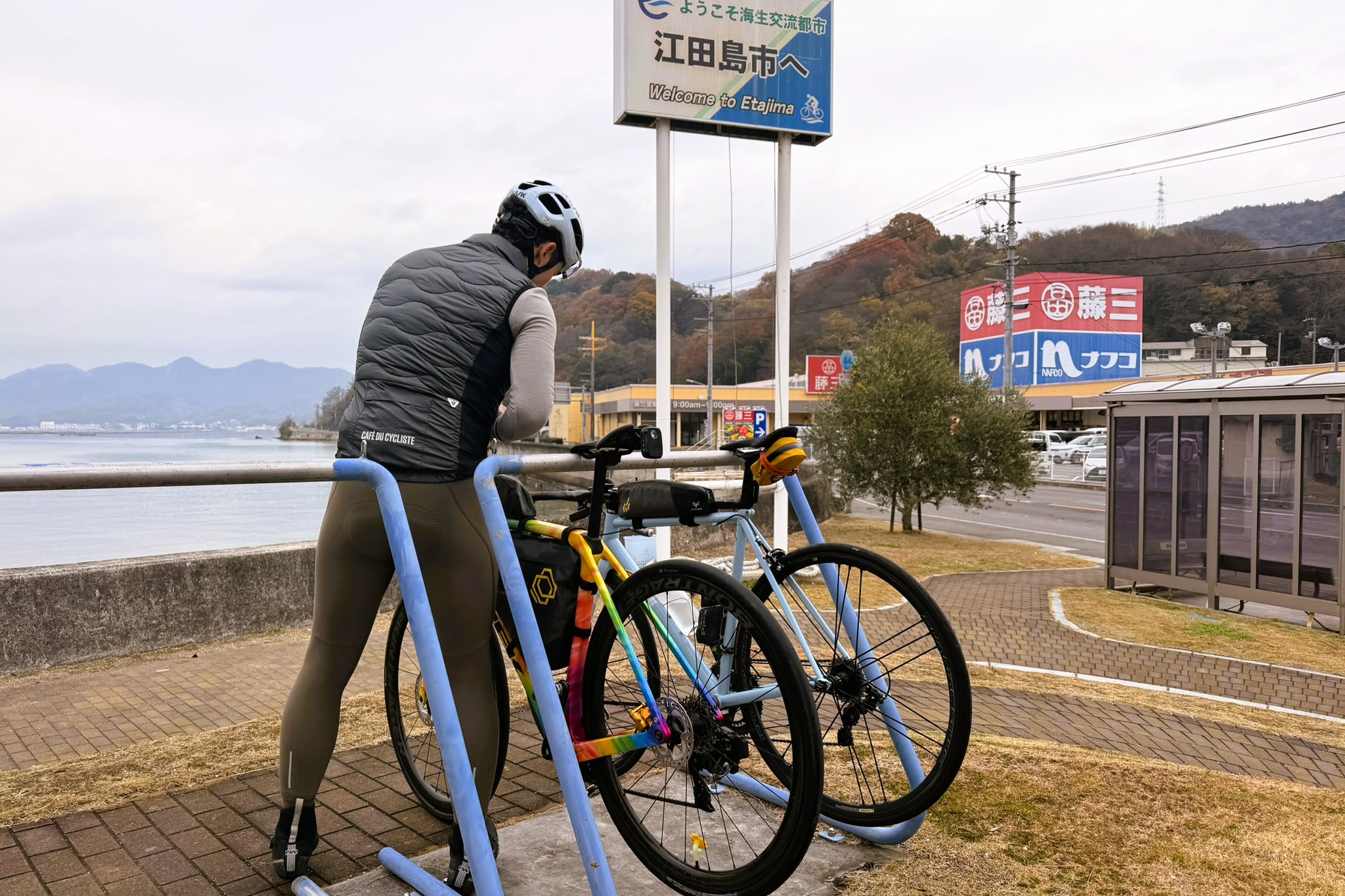
While riding around Etajima, I noticed bike racks set up here and there. They’re not just simple ones—they’re sturdy, well-secured racks like the one in the photo, with great height and stability. Having a safe spot to park your bike is a huge plus for cyclists and definitely makes the ride more enjoyable.
Lunch time at a cozy old farmhouse cafe
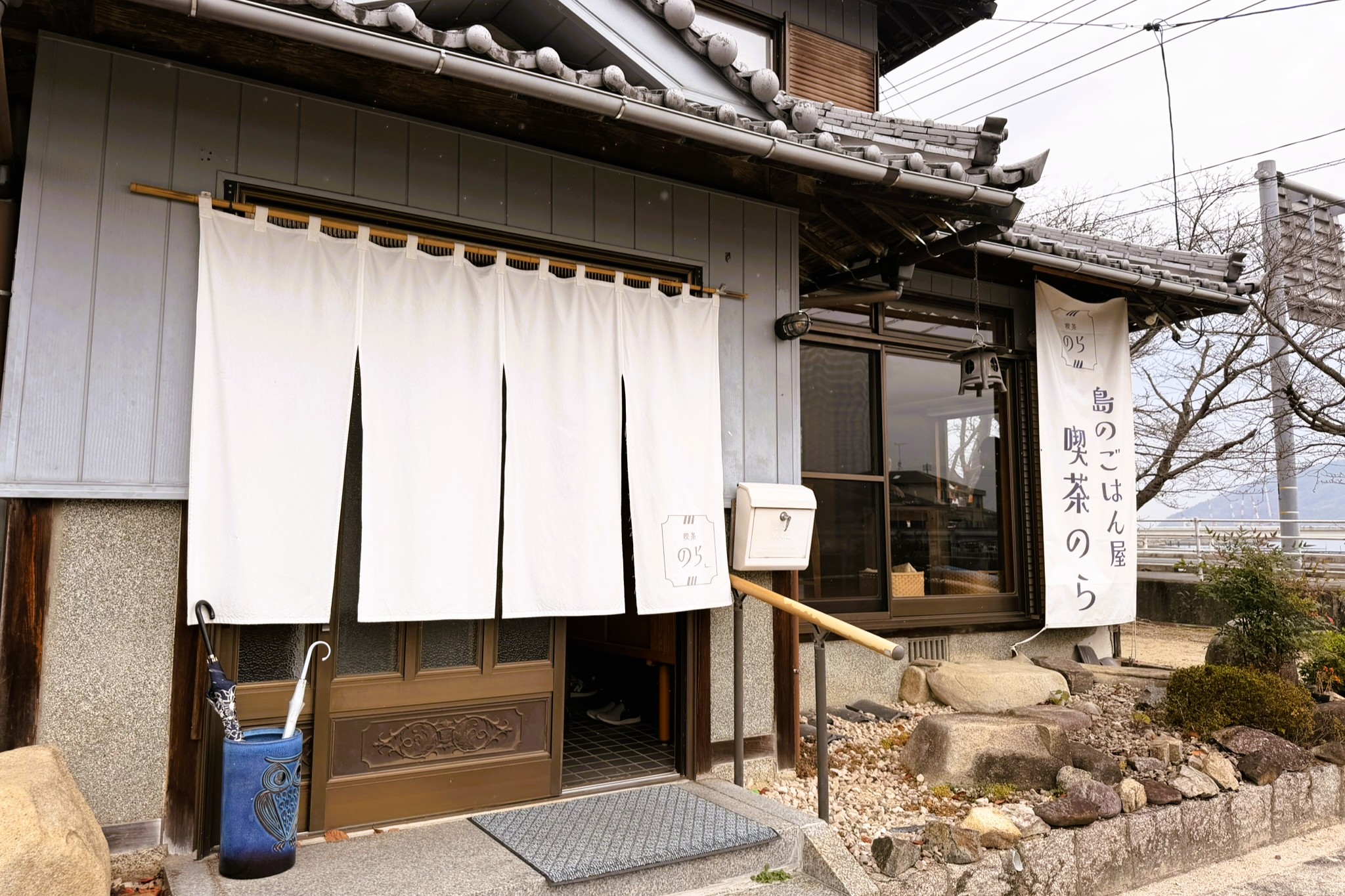
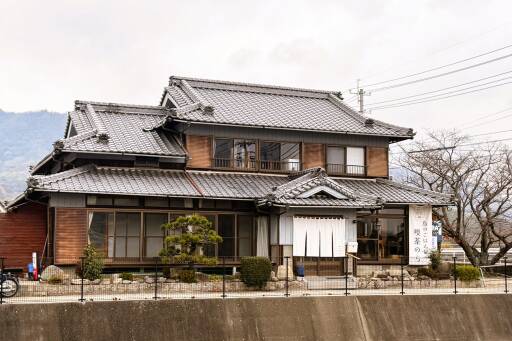
Just as we started feeling a bit hungry, it was time for an early lunch. We stopped by “Kissa Nora,” a cozy café set up in a renovated old farmhouse. The first floor operates as a café, where you can relax and enjoy your meal in a calm, laid-back atmosphere. Fun fact—it’s also available as a unique homestay experience, but only for one group per day.
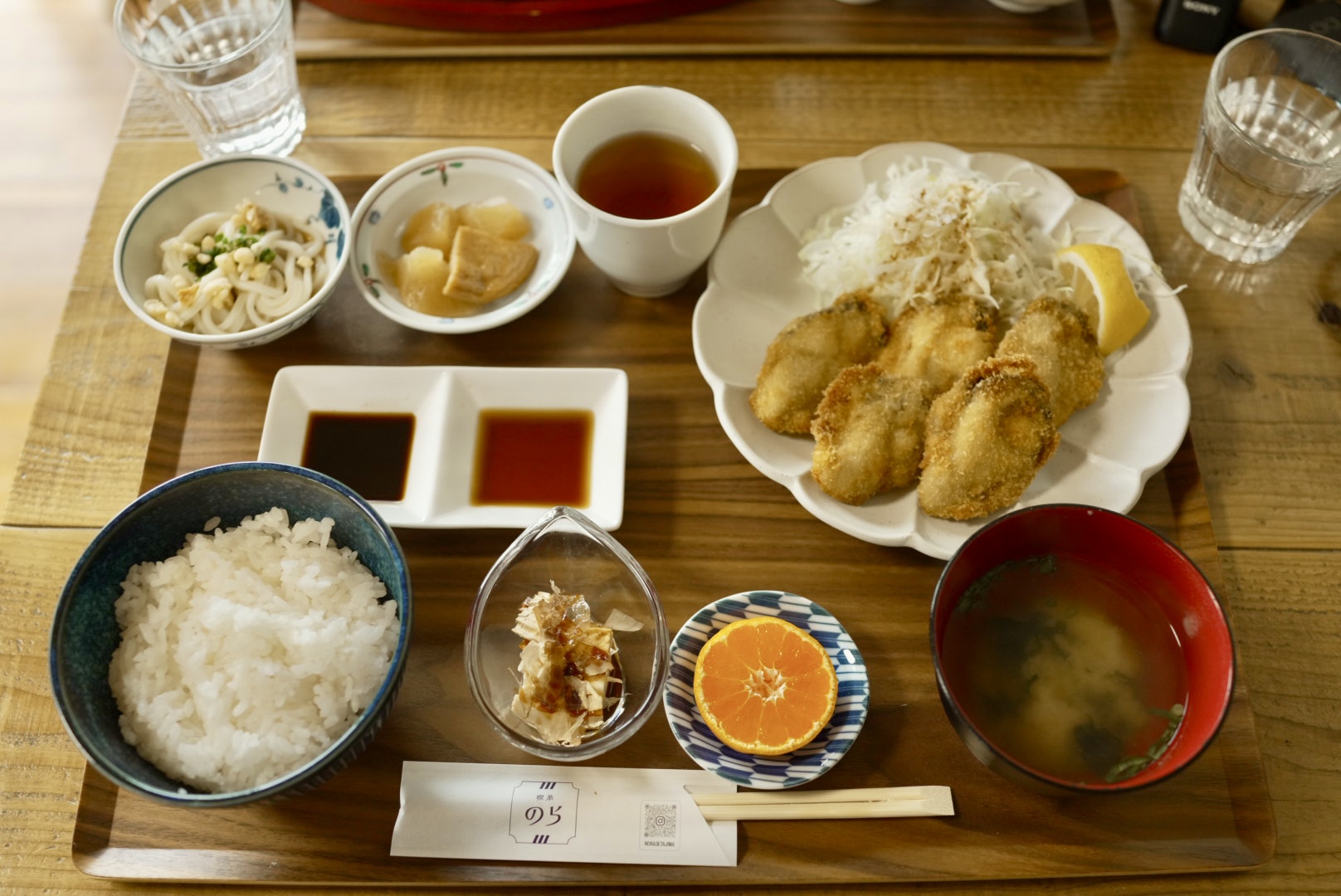
Kenta ordered Etajima’s famous “Kaki Fry Set Meal” (1,300 yen). The star of the show, the oysters, were obviously amazing, but the whole lunch was packed with local ingredients, right down to the sides.
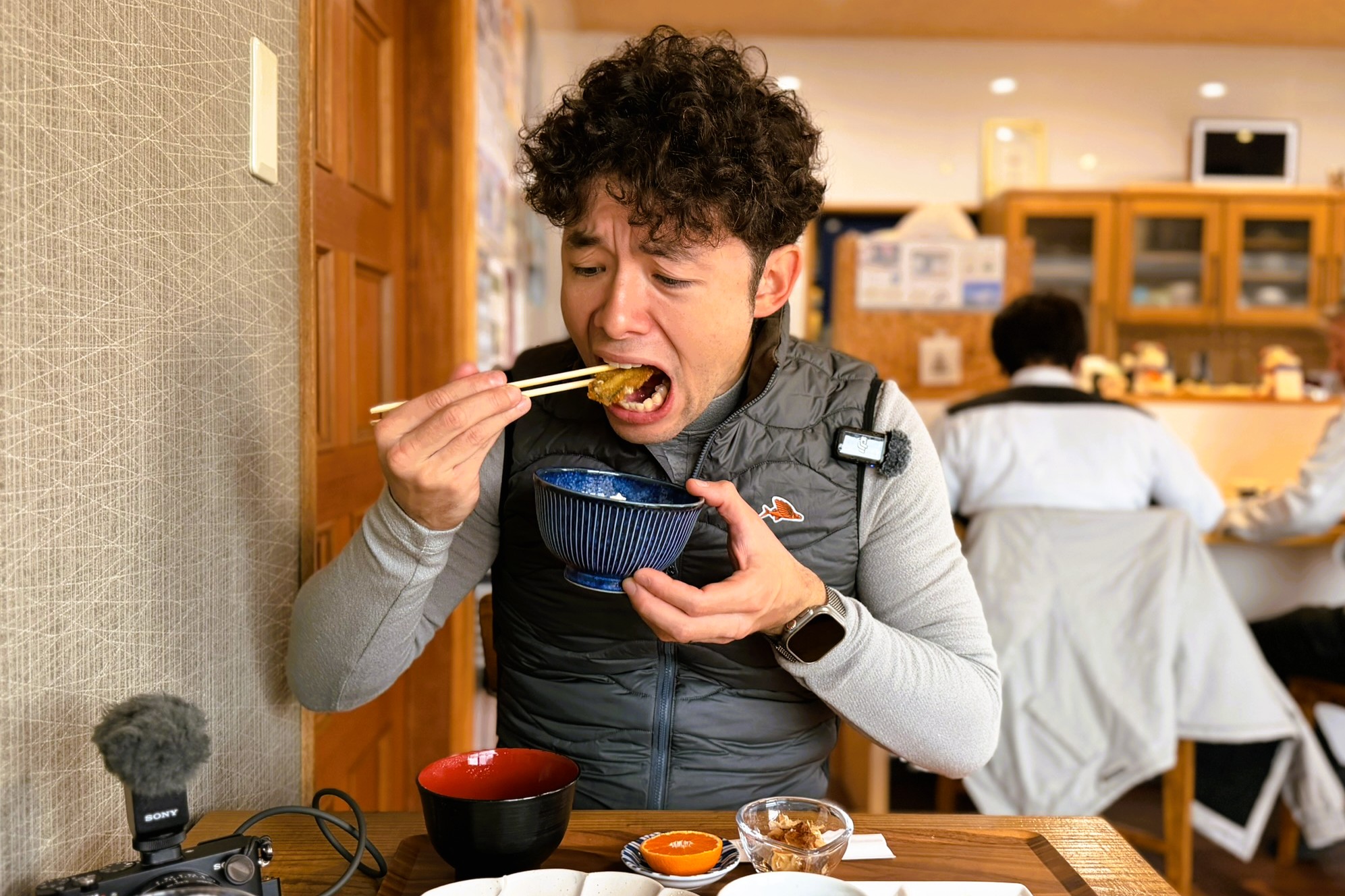
This year (2025), the oyster harvest was a bit light and the oysters themselves are a bit smaller, but take one bite and you’ll find them juicy and full of flavor. Even if they’re on the smaller side, the taste definitely lives up to that classic Etajima quality.
The second half kicks off with just the right amount of uphill to keep things interesting.
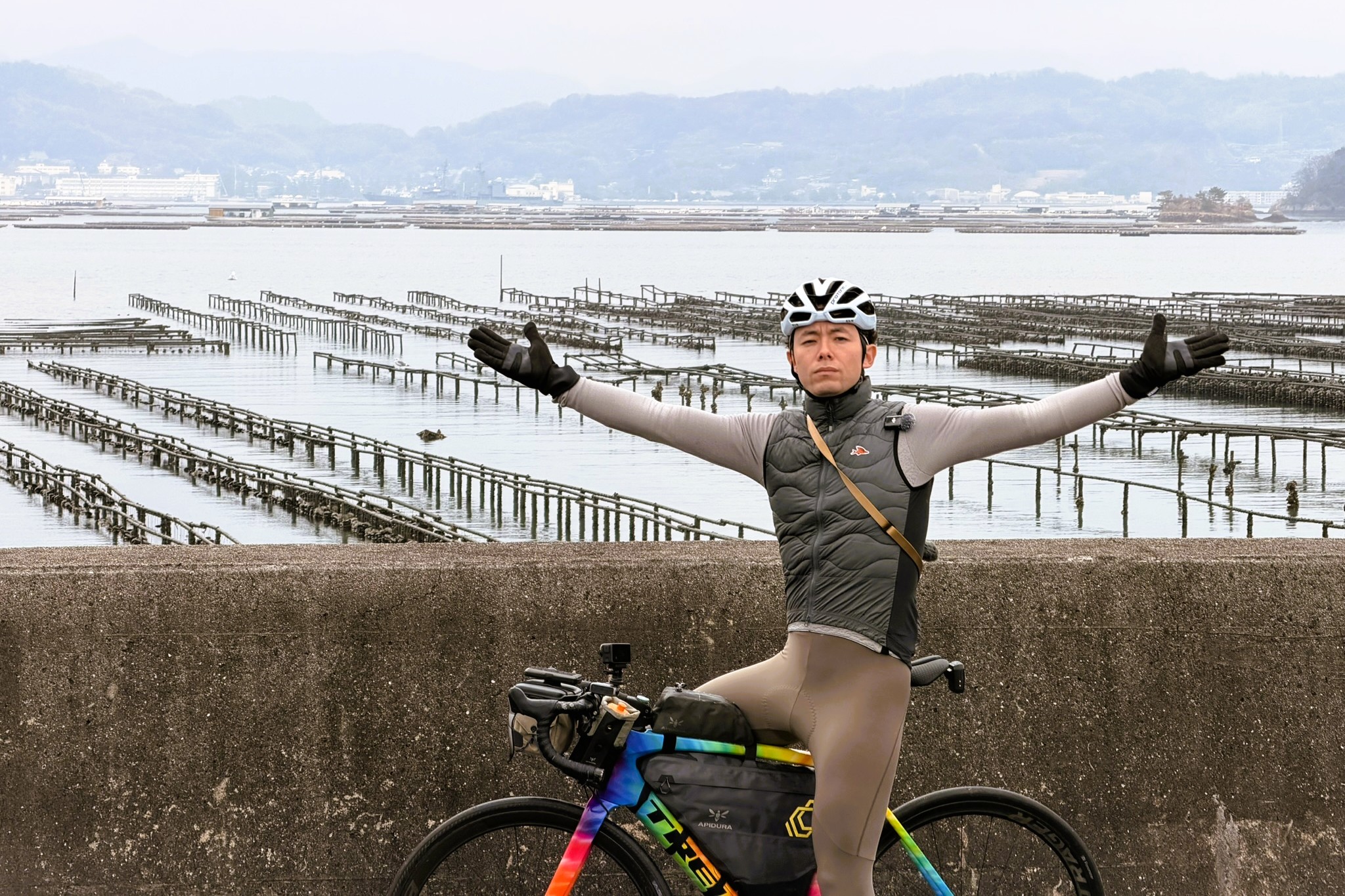
After filling up, we hit the road again. Glancing out at the sea along the route, you can see the oyster farms where we just enjoyed our lunch.
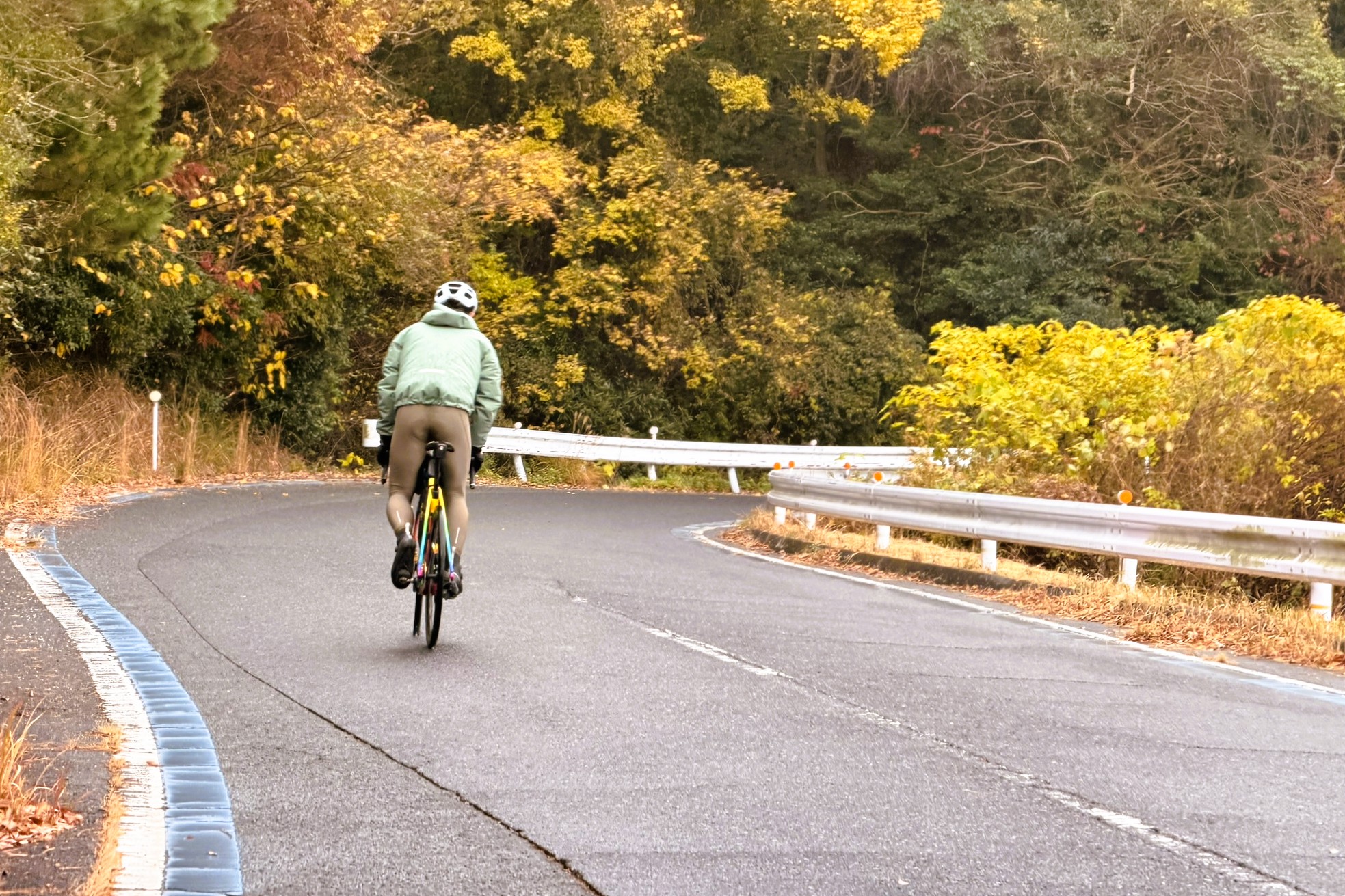
I used to think Etajima was just about riding along the coast, but it actually has some climbs too. That said, the slopes aren’t too steep or long—just enough to add a nice little challenge. It’s a great route that keeps things interesting, perfect for cyclists who find flat rides a bit boring.
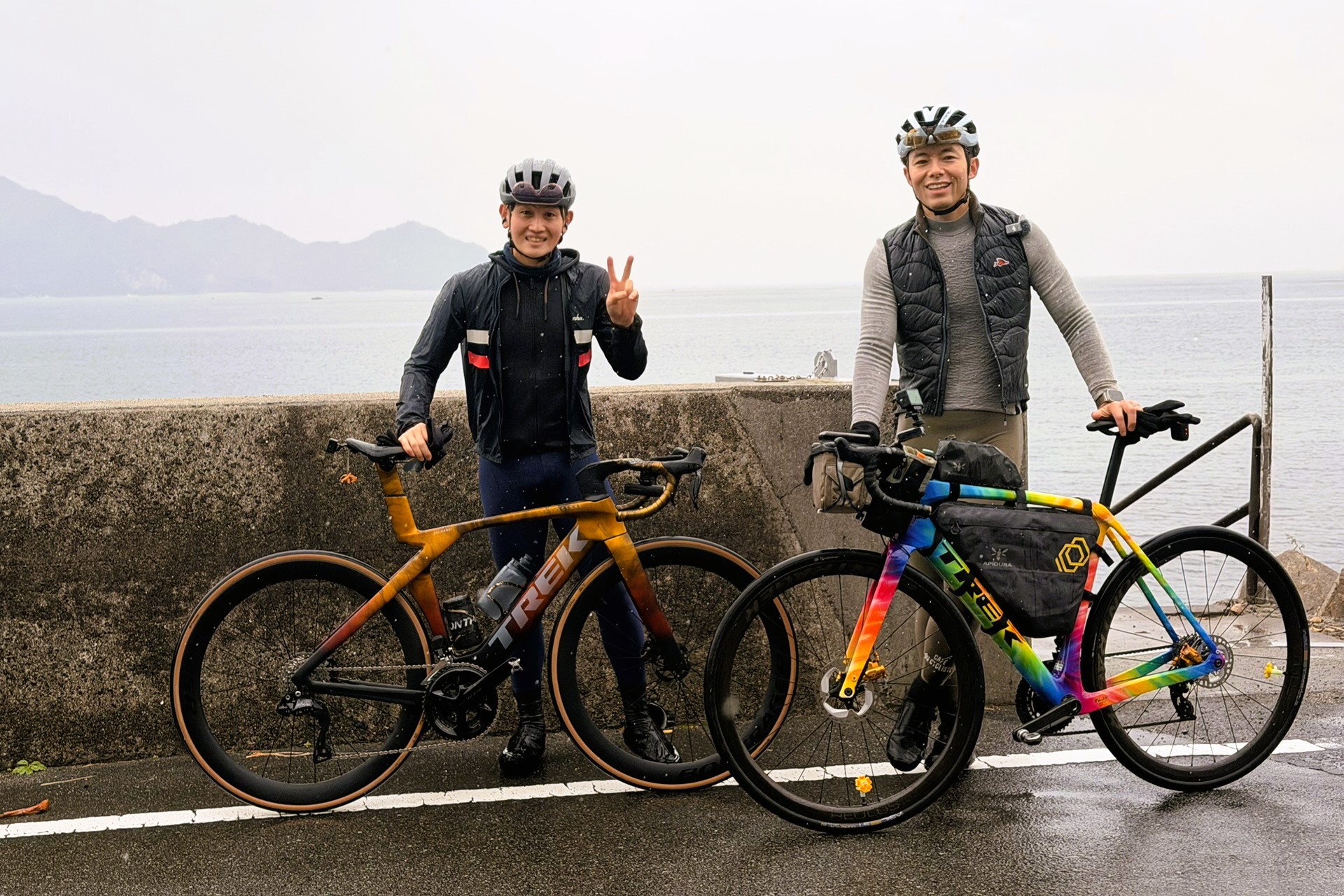
Just like the forecast said, I was riding through some light rain in the early afternoon when a cyclist appeared up ahead. As we passed each other, he called out to me—turns out he had seen Kenta’s post about the Etajima ride the day before, and right after finishing his night shift, he rode from downtown Hiroshima over to Etajima, circling around hoping we’d cross paths. I’m really glad we finally met up. Moments like this are exactly what make traveling by bike so special.
Drawn in by the aroma, I headed to a longtime favorite soy sauce shop.
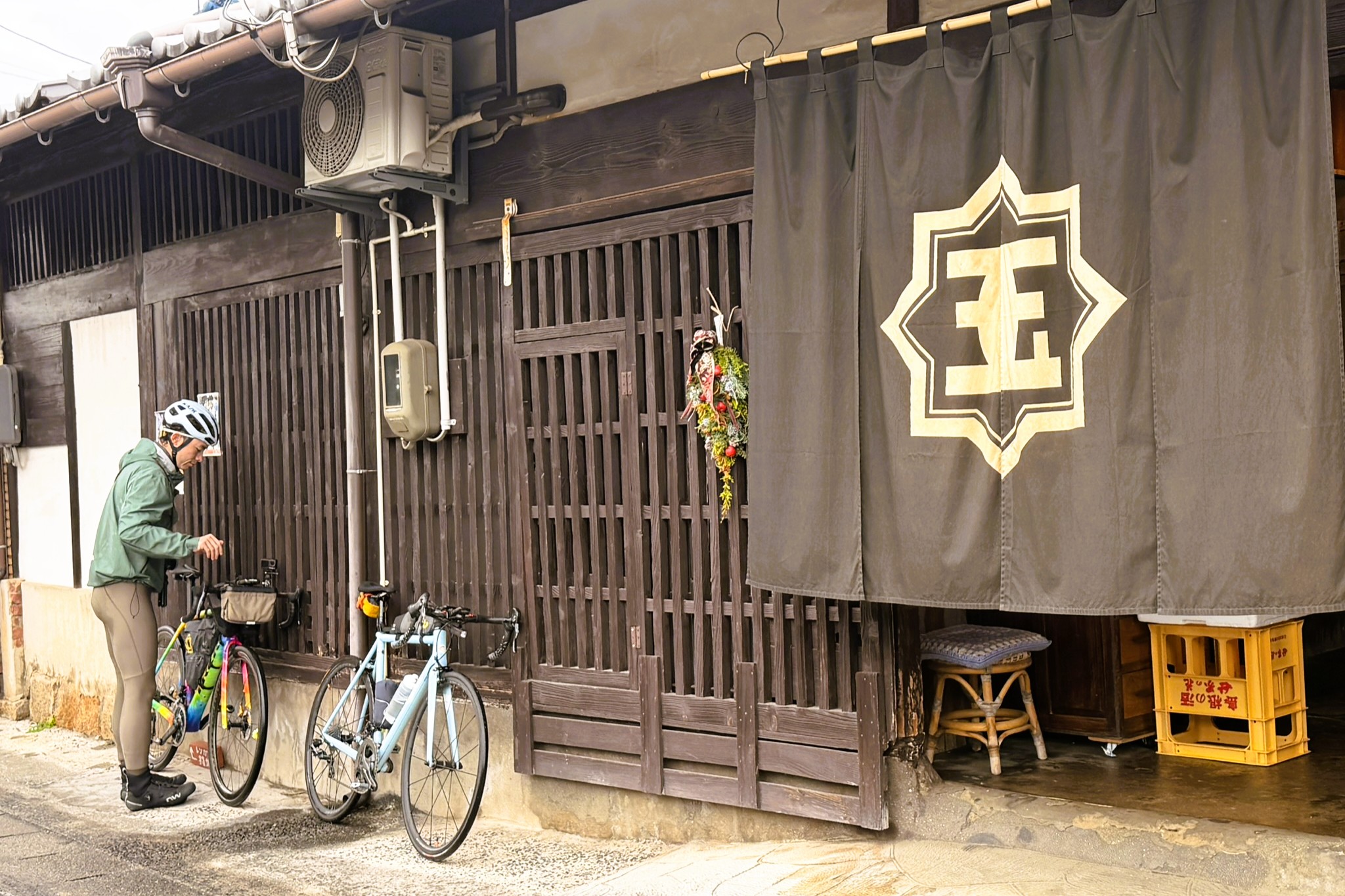
After riding about 45 km, we rolled into the heart of Etajima City. Here, we decided to stop by Hamaguchi Shoyu, a spot Kenta had researched ahead of time.
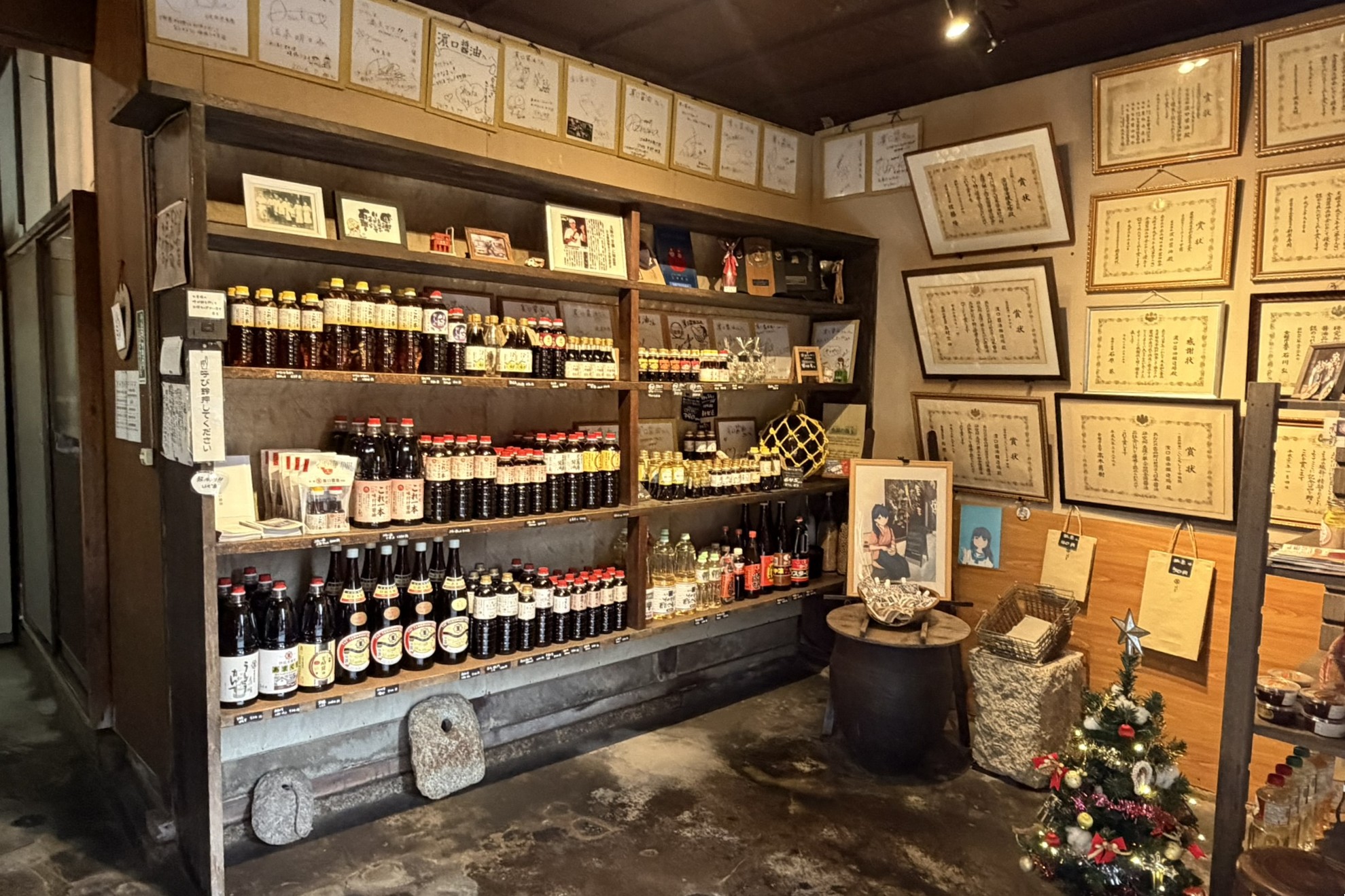
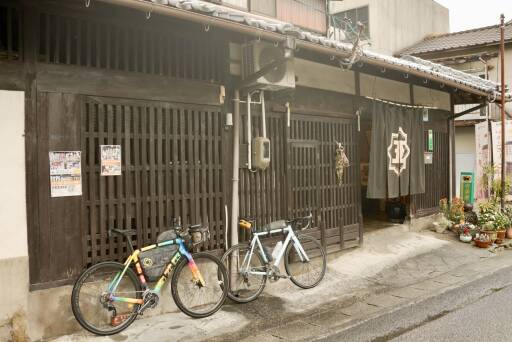
Hamguchi Shoyu has been around for 170 years, making it a true old-timer. The moment you step inside, you’re greeted by a warm, sweet soy sauce aroma that wraps around you. One entire wall is covered with awards and autographs from famous folks.
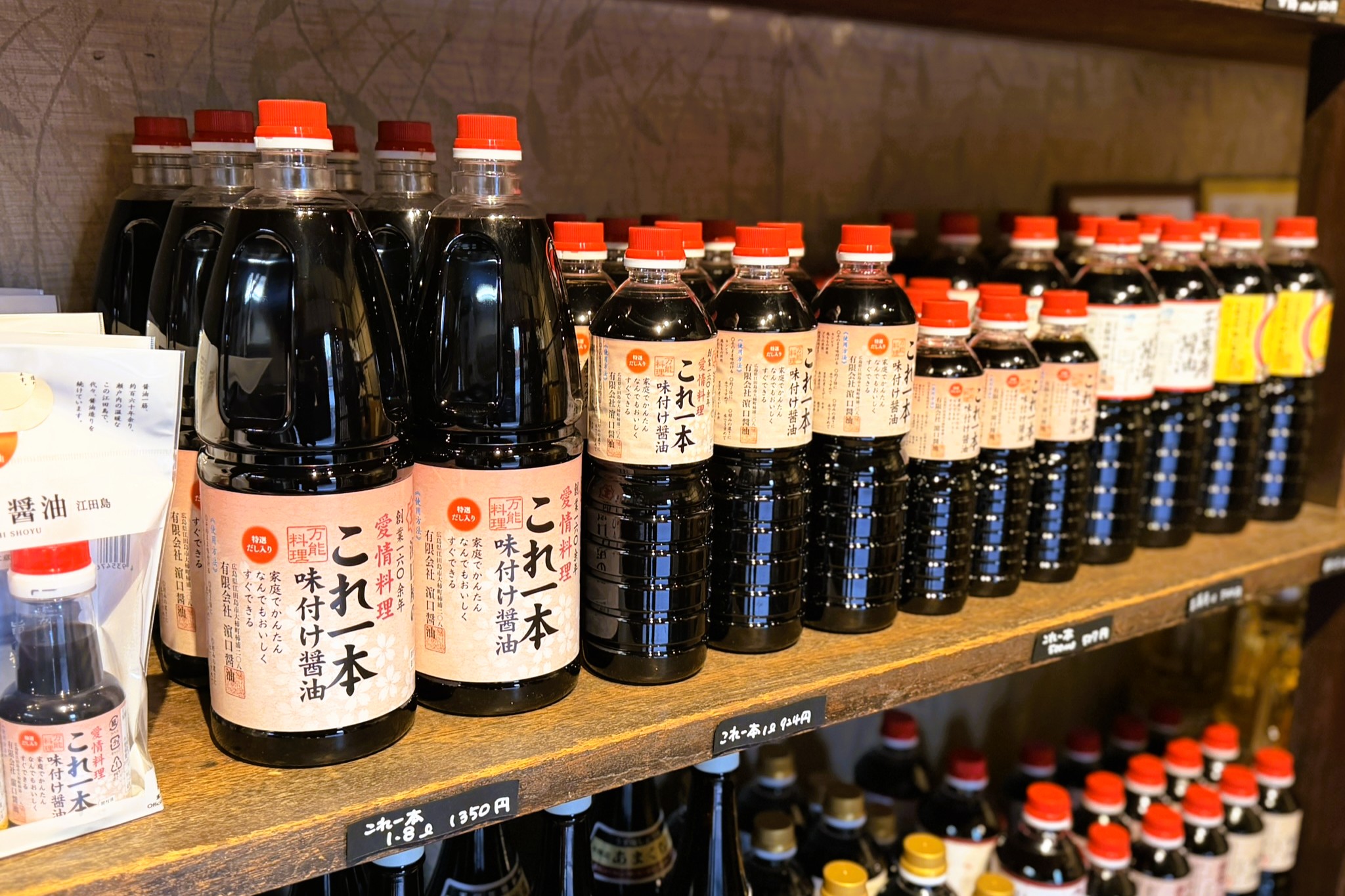
I picked up the recommended “Kore Ippon Ajitsuke Shoyu” as a souvenir. They even have mini bottles, which fit perfectly in my bike bag—super convenient!A few days later, when I tried it at home, I was blown away by its sweetness. Packed with sugar, mirin, and savory dashi flavors, this one bottle nails the taste of Japanese cuisine. It’s a memorable find that keeps the spirit of the trip alive.
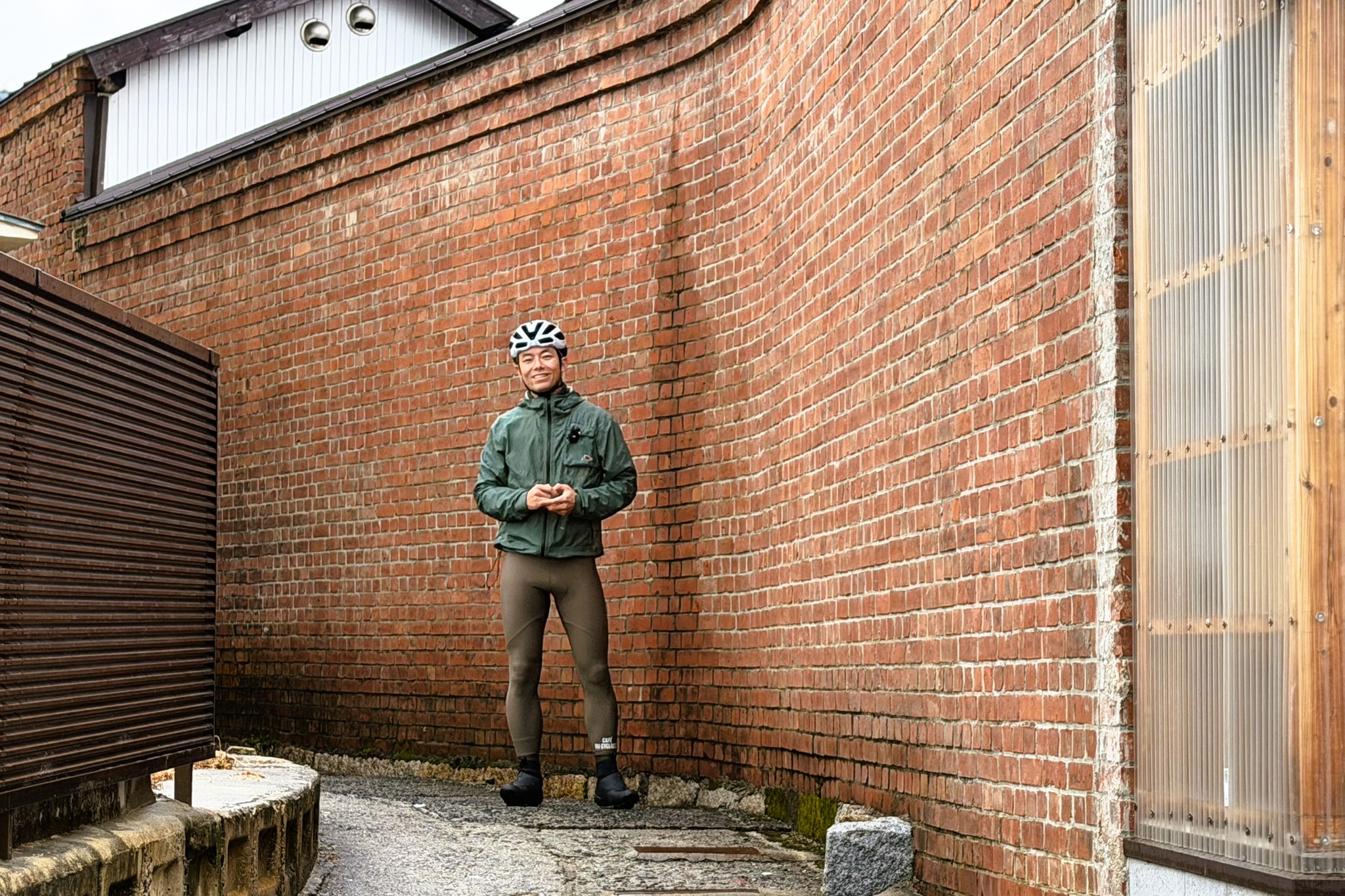
When I walked around to the back of the shop, I found a brick wall of the soy sauce factory stretching out before me. The weathered texture, built up over the years, was totally photogenic—I couldn’t help but stop and take it all in. With the scent of soy sauce in the air, the whole scene had this kind of romantic vibe to it.
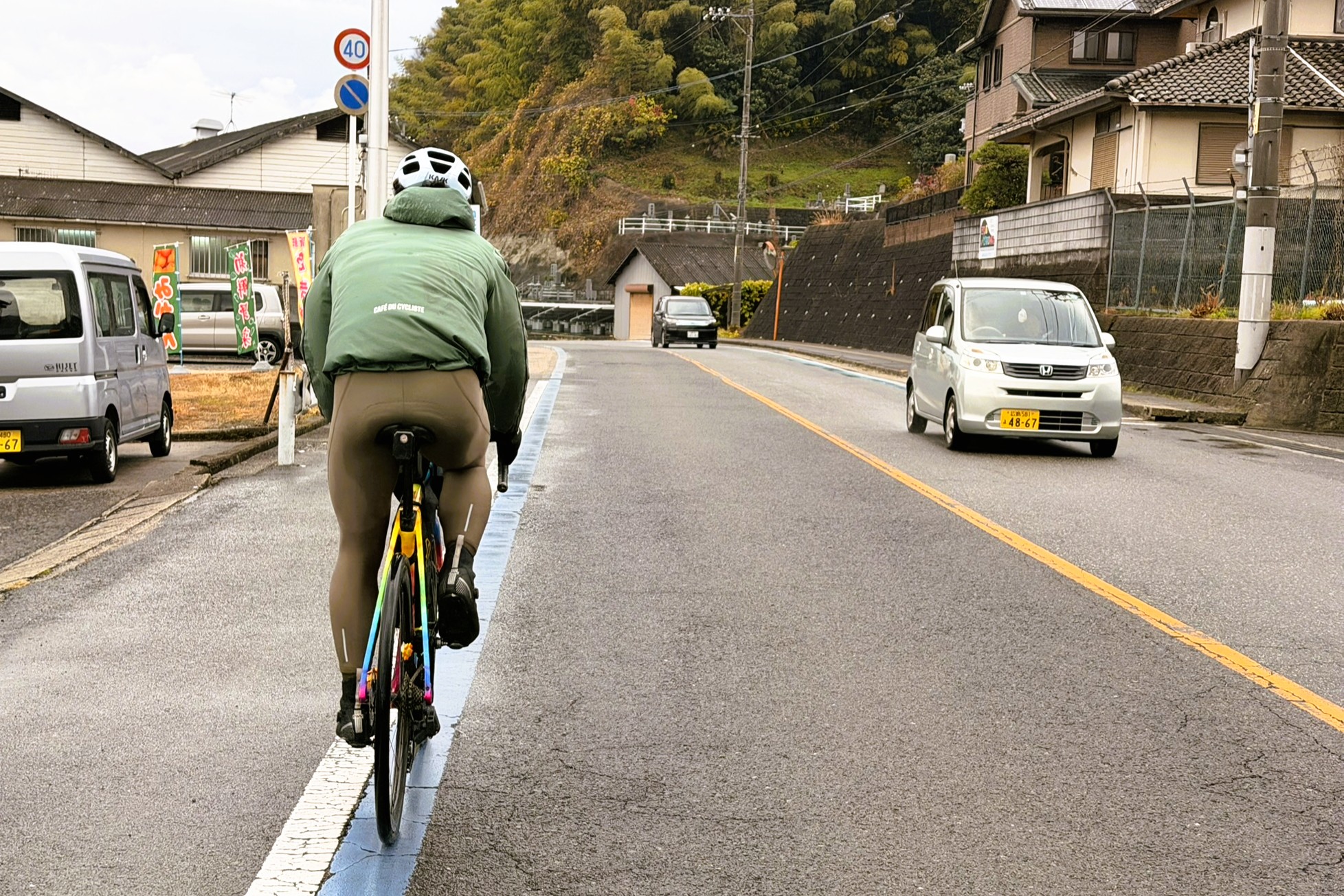
By the time we finished checking out the soy sauce shop, the rain had completely stopped and the roads were nicely dry—perfect timing. I was starting to crave a coffee break, so feeling refreshed, we set off toward Kure.
Reward time: taking a breather at Sugos cafe
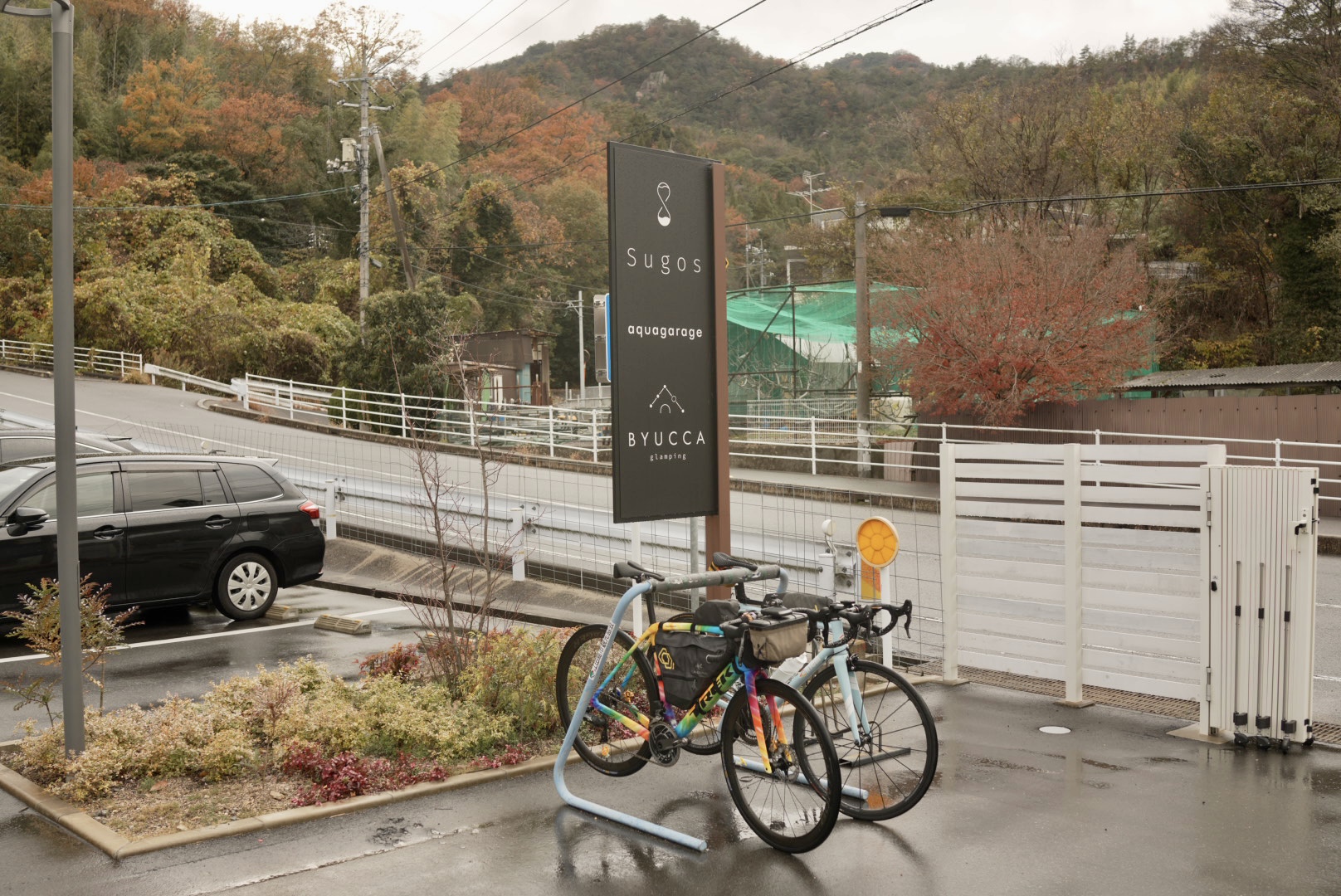
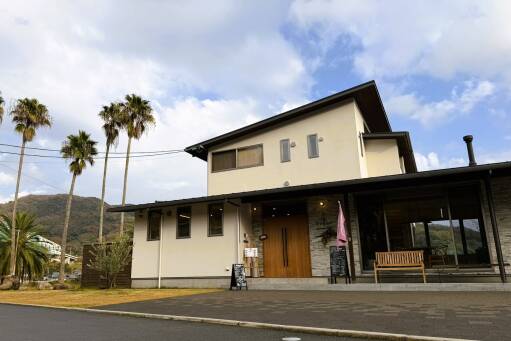
We arrived at Sugos cafe, a cozy spot right at the foot of the Hayase Bridge that connects Etajima City and Kure City. They’ve got bike racks set up here, which is always a nice touch for us cyclists—it’s one of those little things that just makes you feel at home. You can tell they really get it, and it’s a place that instantly puts a smile on your face.
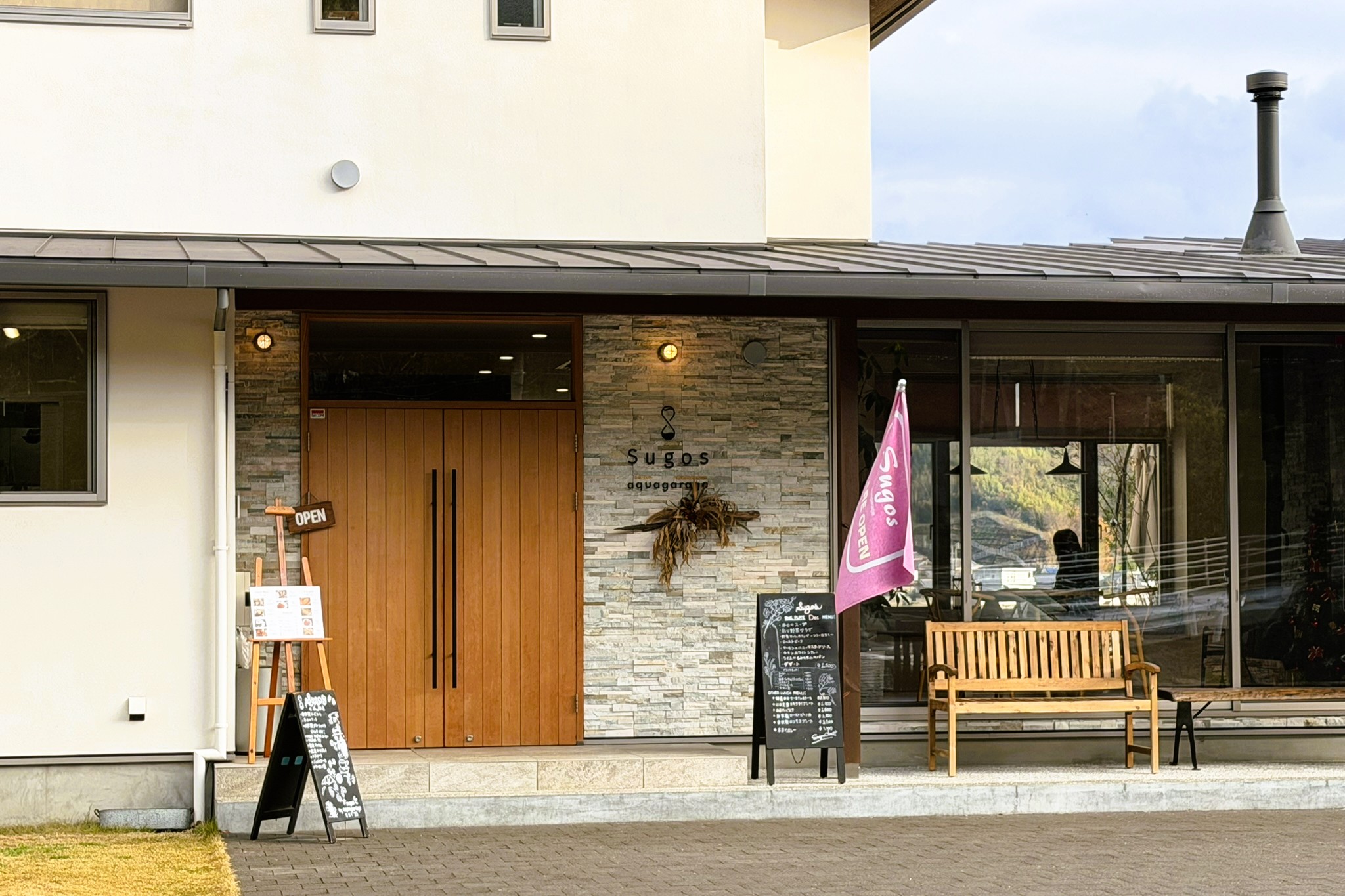
It’s not just a cafe but a multi-purpose spot with a photo studio too, and the stylish exterior definitely makes you want to stop and check it out. There’s also a glamping site on the property, so you can stay overnight. It’s definitely a place I’d keep in mind as a base for my next visit.
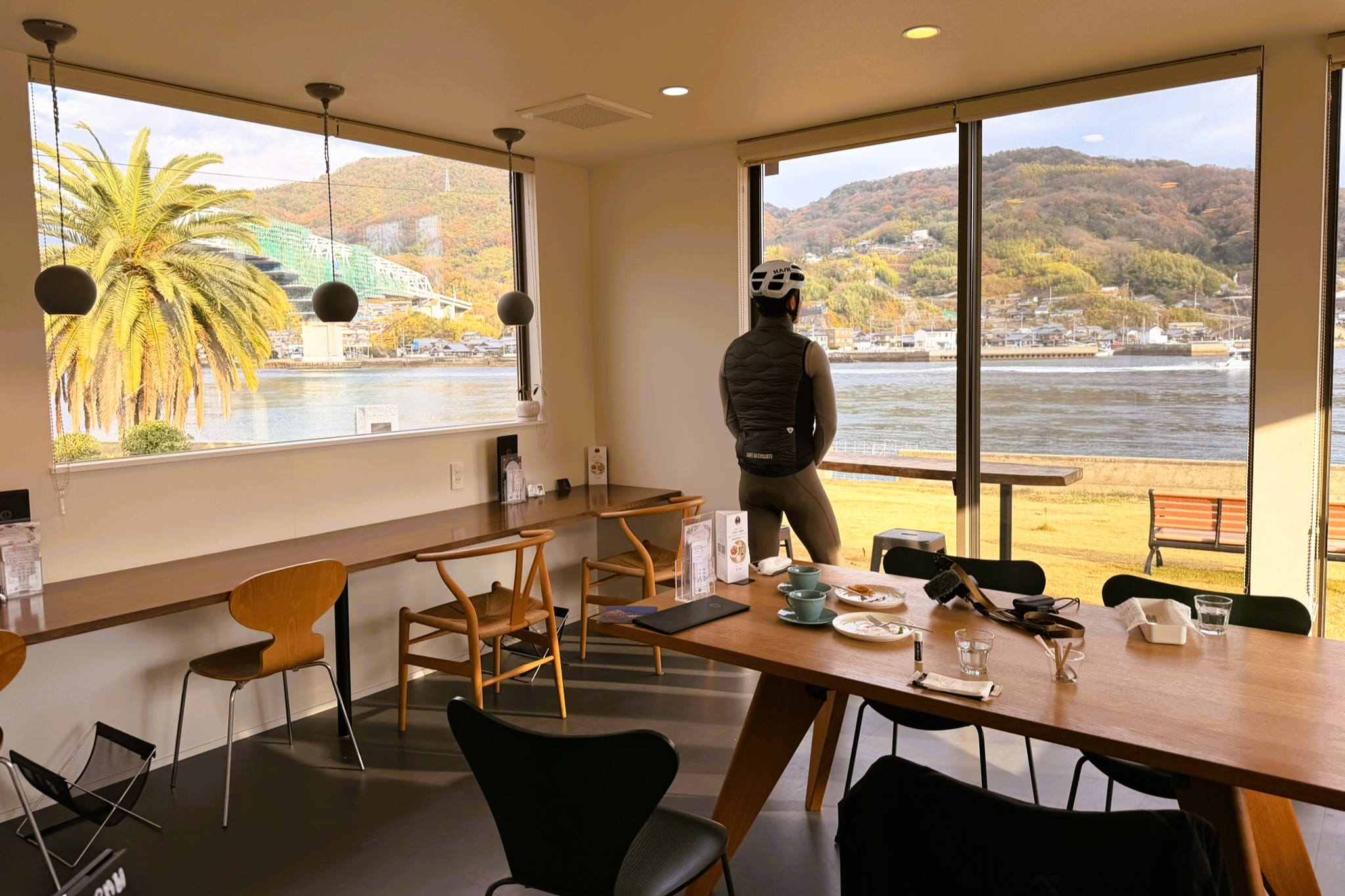
From the windows inside the shop, you get a full view of Kurahashi Island on the Kure side across the Seto Inland Sea, so you can really enjoy the scenery while you eat. They’ve also got a terrace seating area, which is definitely awesome on a nice day.
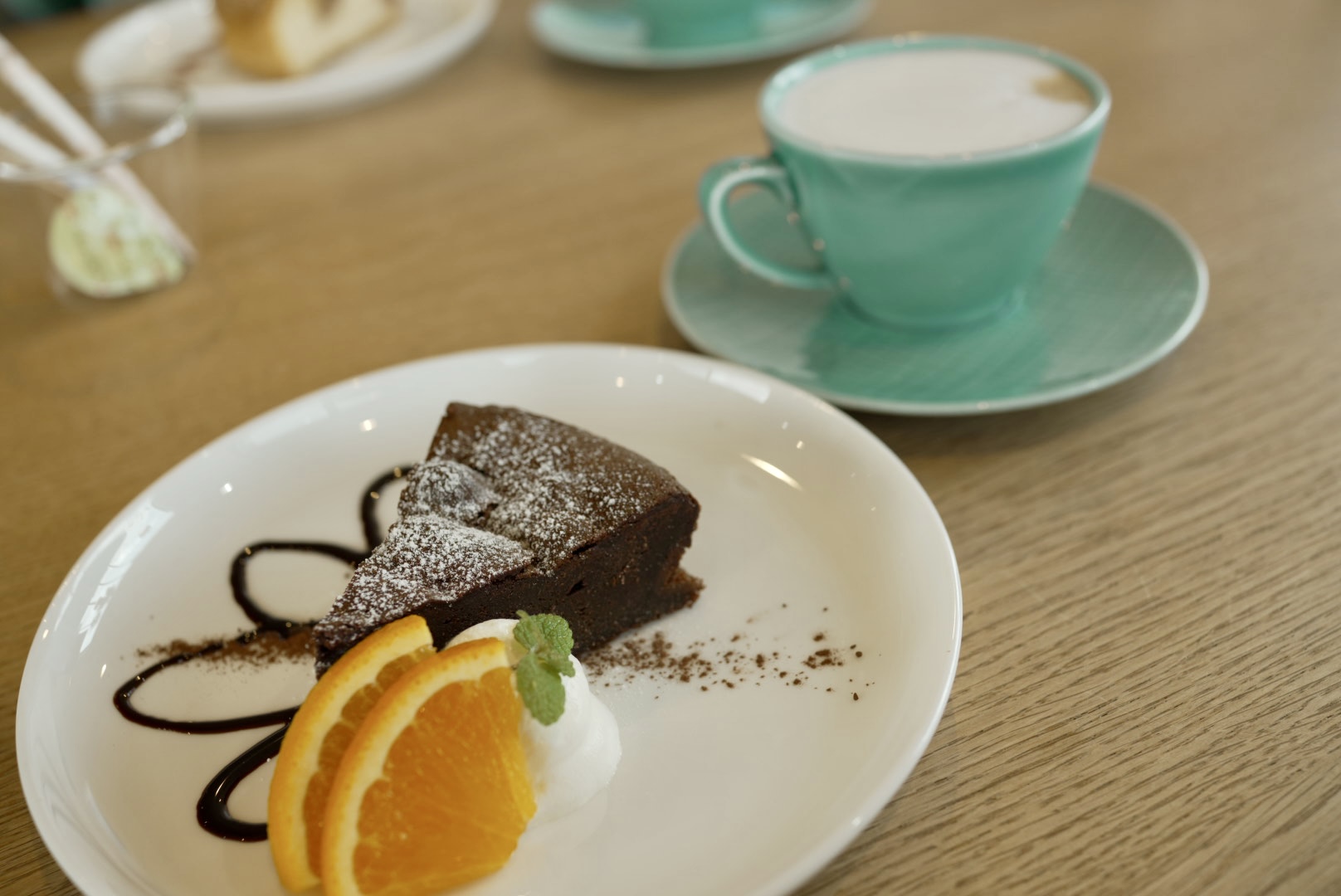
I ordered a freshly baked gateau chocolat and a cafe latte. The orange from Etajima on the side added just the right touch, showing how much they value local island ingredients here. It was the perfect sweetness for my body after the ride.
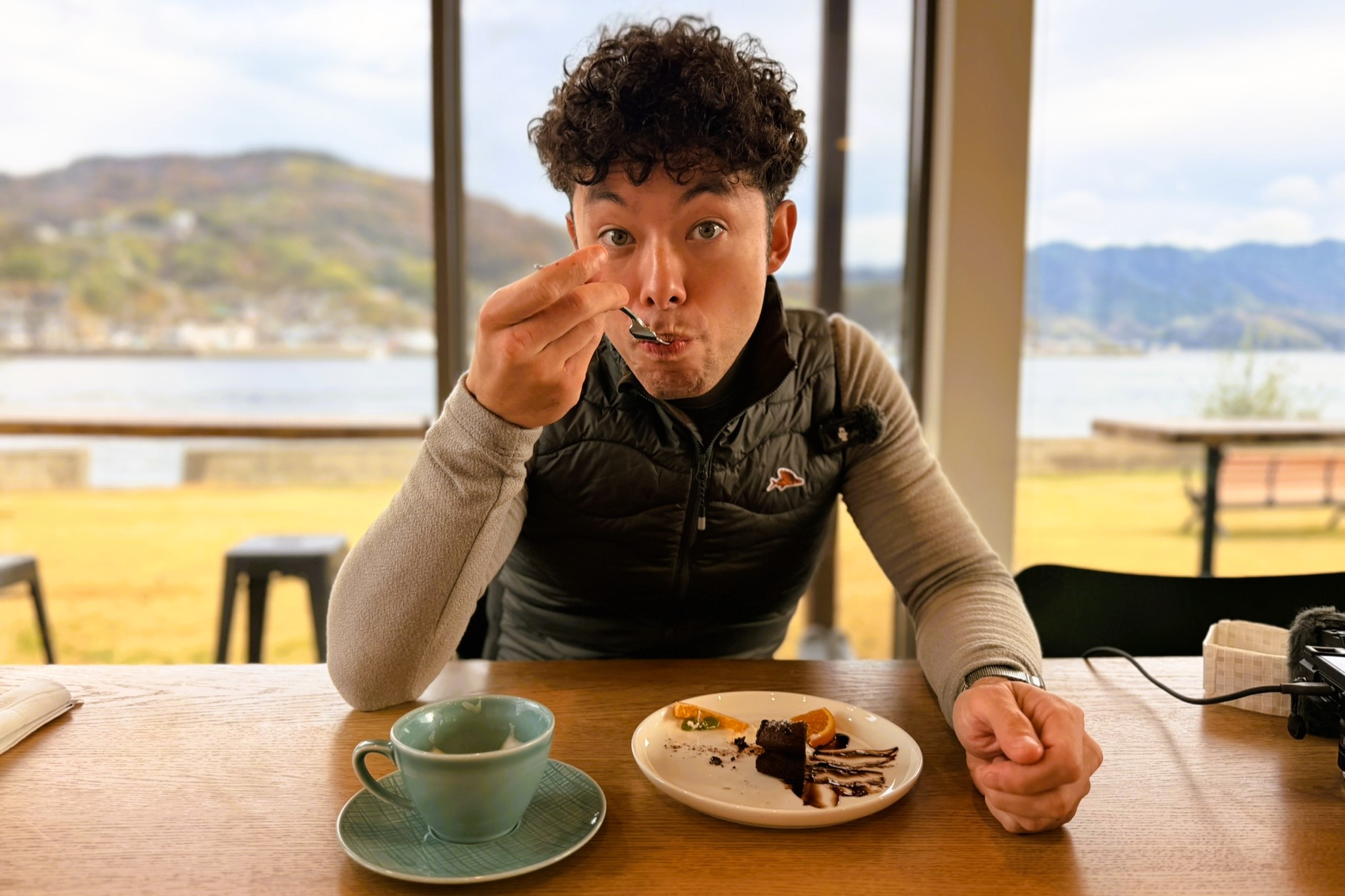
Outside the window, a peaceful view stretched out, and we kept murmuring to each other, “You could totally live here,” “No, I want to live here.” Before we knew it, time felt like it was melting away, but reluctantly shaking off that feeling, we decided it was time to hit the road again.
From Etajima to Kure

Crossing the Hayase Bridge that leads to Kurahashi Island (Kure City). Since there’s construction, traffic is alternating one way, so while waiting at the light, it’s the perfect time to just zone out and take in the views of the Seto Inland Sea. Once you get across the bridge, you’re officially entering the second half of the trip in Kure City. Goodbye, Etajima!
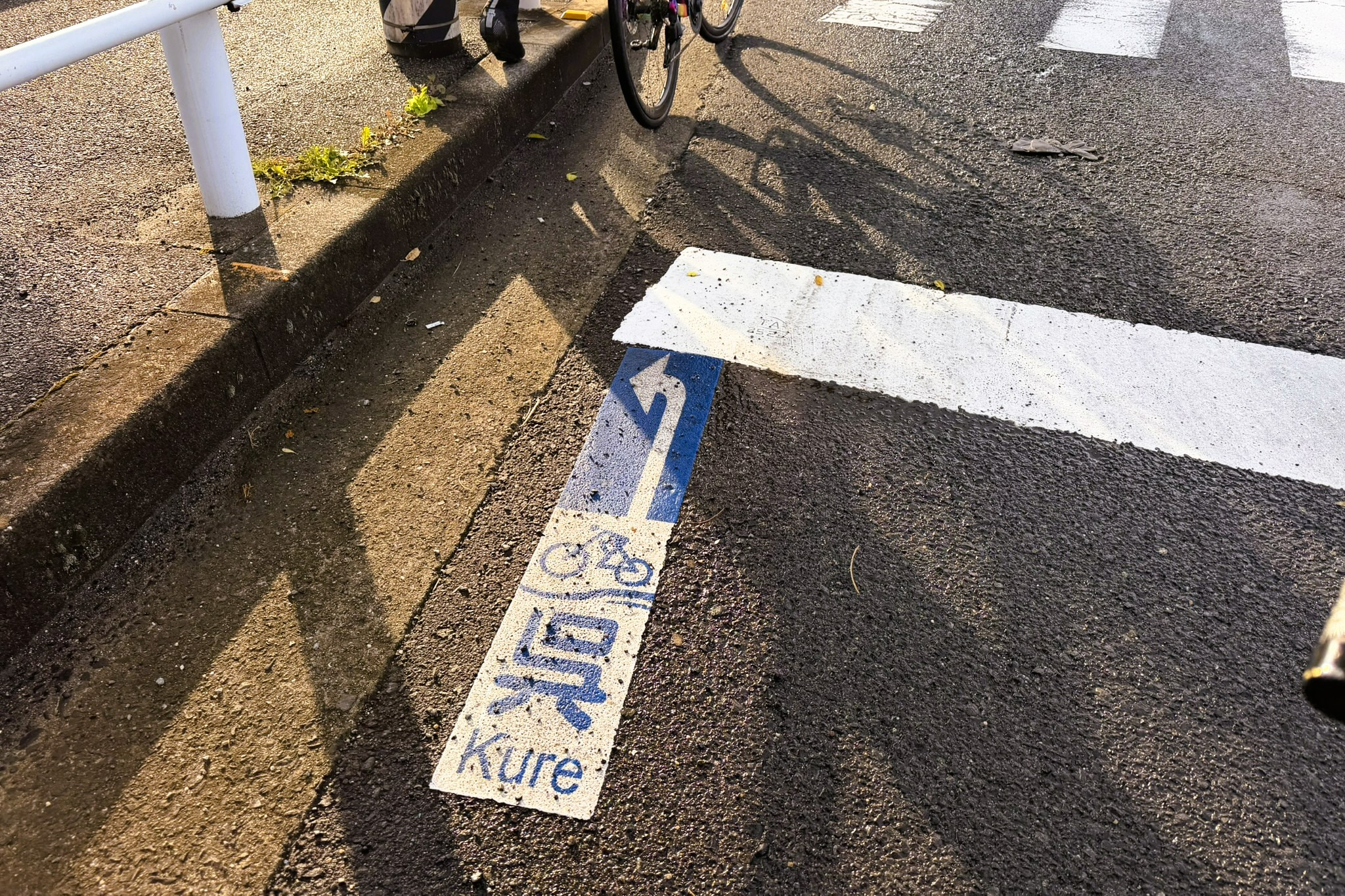
After crossing over to Kurahashi Island, there’s about 20 km left to the finish at Kure Station. The route signs are scattered along the roads, making it clear that Kure City is pretty cyclist-friendly.
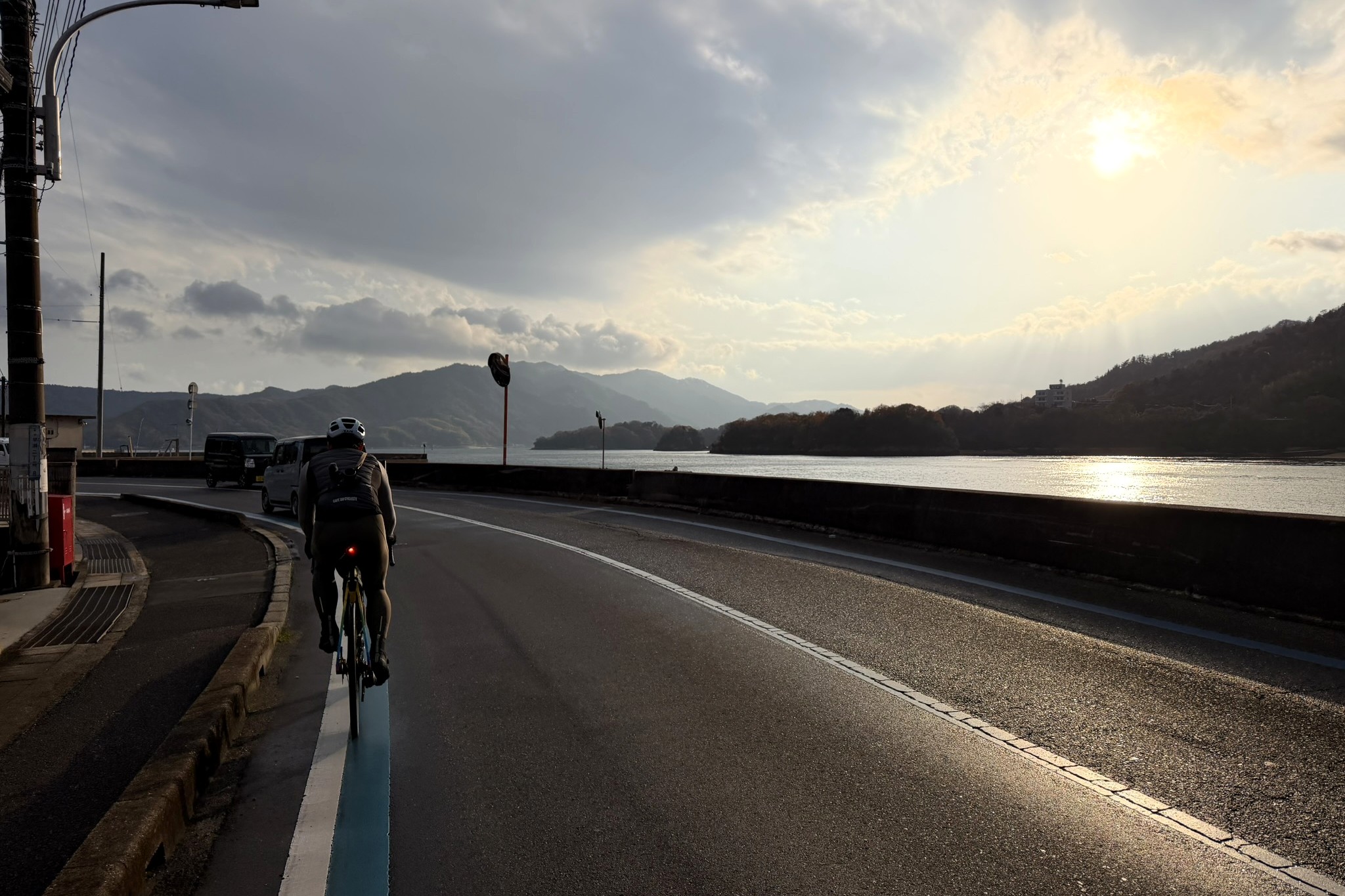
Riding alongside the calm Seto Inland Sea as the sunset slowly dips below the horizon. It’s so peaceful, like time itself is just slowing down. The layered scenery of sea and mountains, so typical of the Setouchi area, never gets old no matter how long you stare.
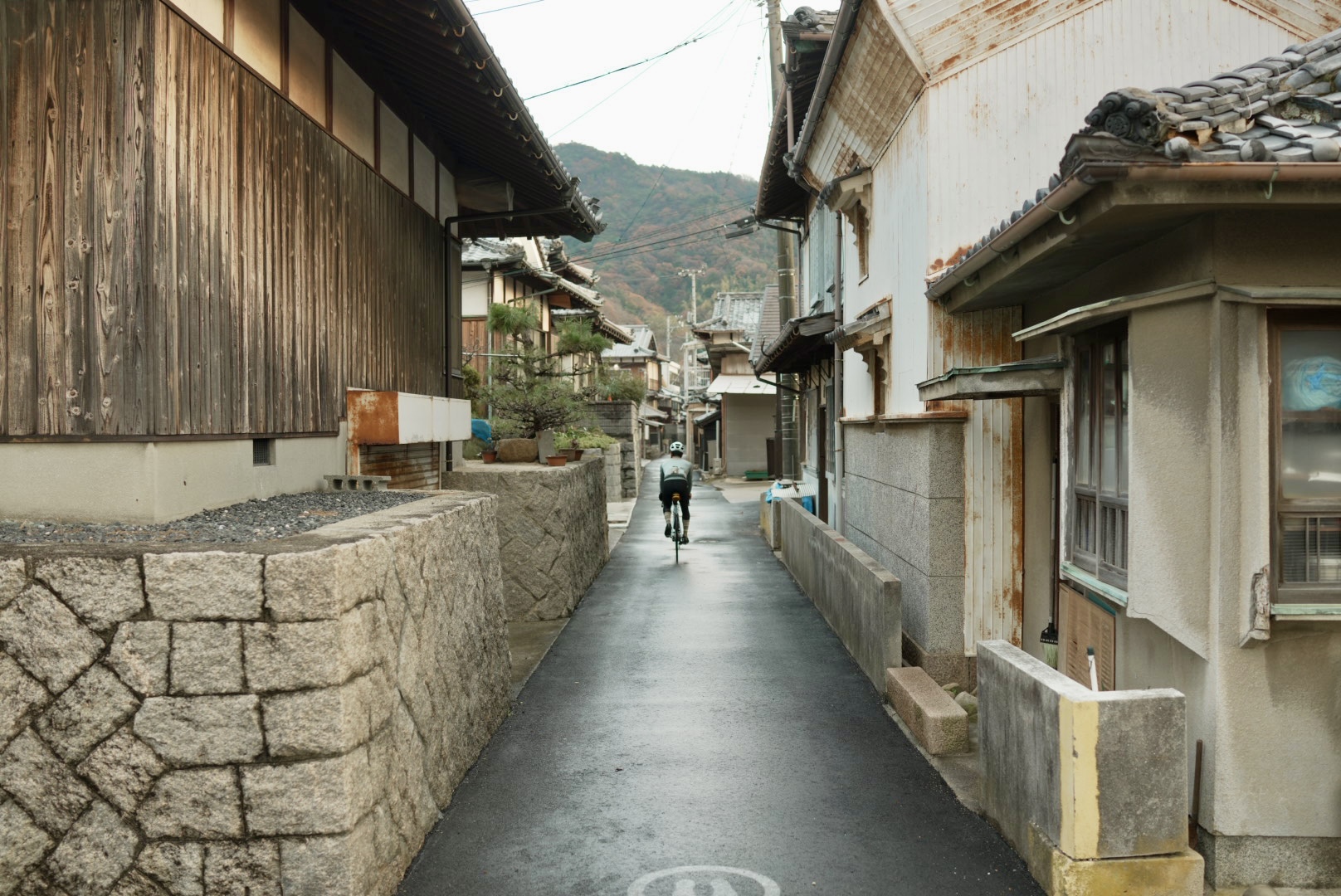
While riding through the fishing town of Ryoshida, I stumbled upon a charming alley that made me stop in my tracks. Stone walls and quiet houses lined the street. It felt too special to just pass by, so I naturally reached for my camera.
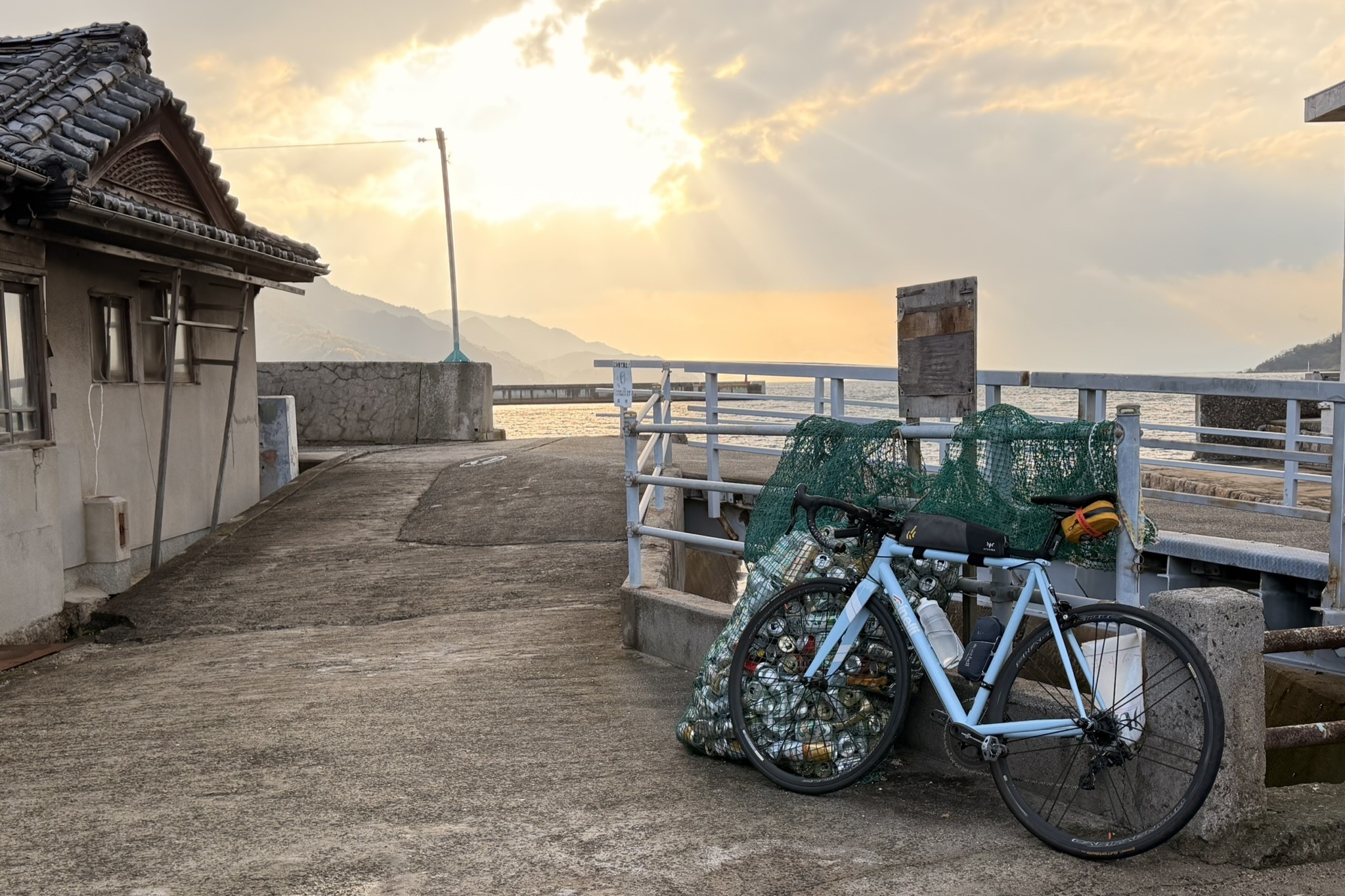
The nostalgic vibe of this port town, paired with the soft glow of the sun, creates a truly beautiful contrast. It’s the kind of scenery you’d probably miss if you were driving by, but that’s the magic of traveling by bike—you get to discover those hidden gems along the way.
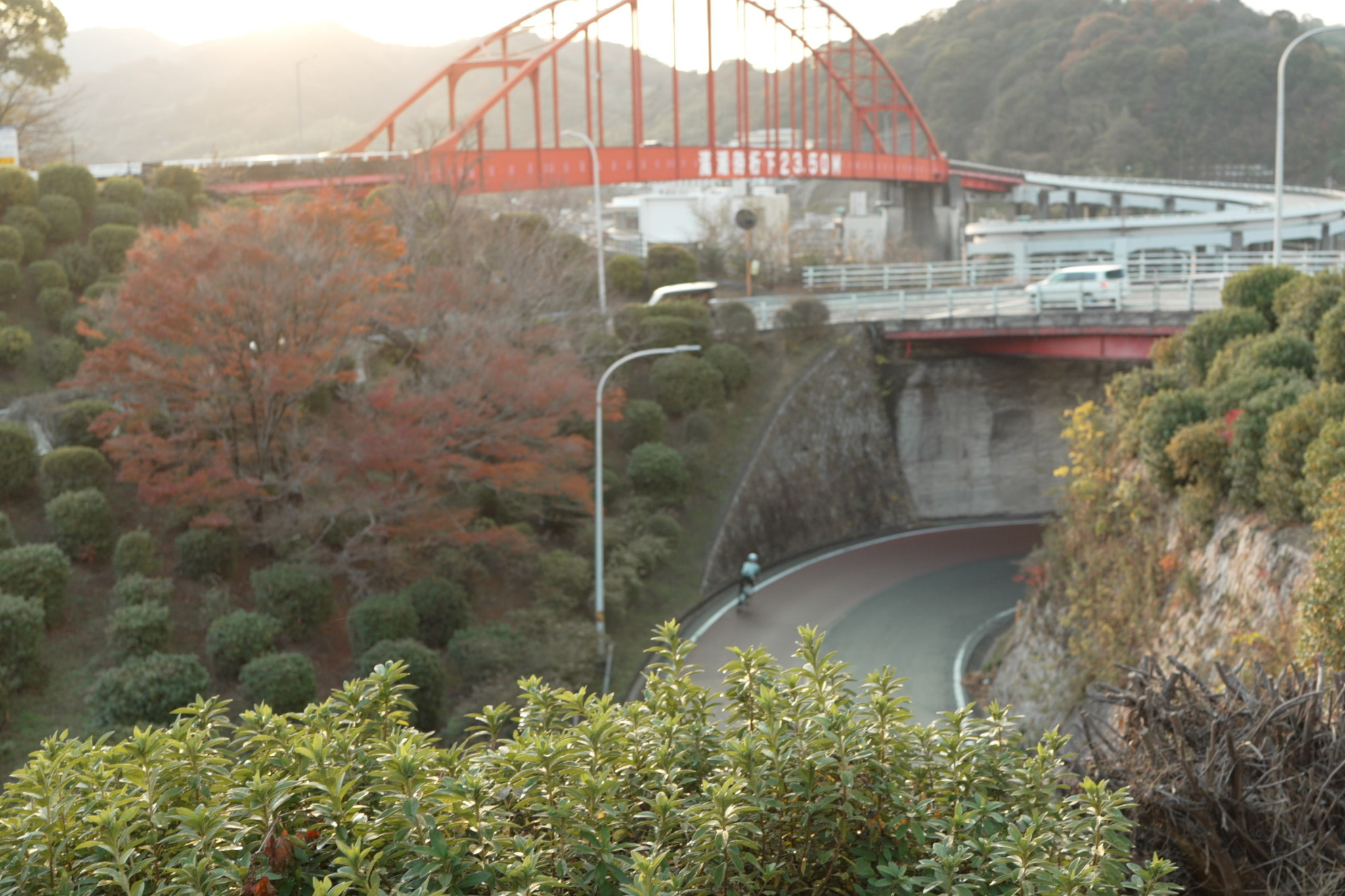
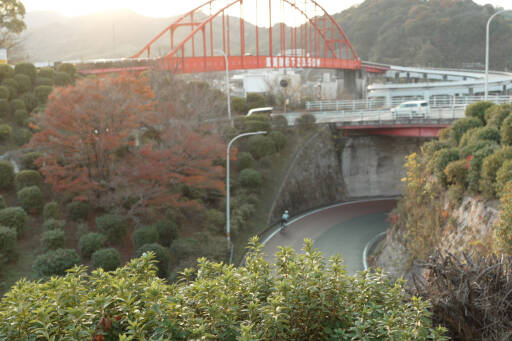
The Ondo Bridge connects Kure City and Kurahashi Island. This red arch bridge spans the Ondo Strait, and on the Ondo side, it features Japan’s first two-and-a-half-layer spiral elevated structure. It winds up high as you cross the sea—a super fun and iconic bridge to ride!
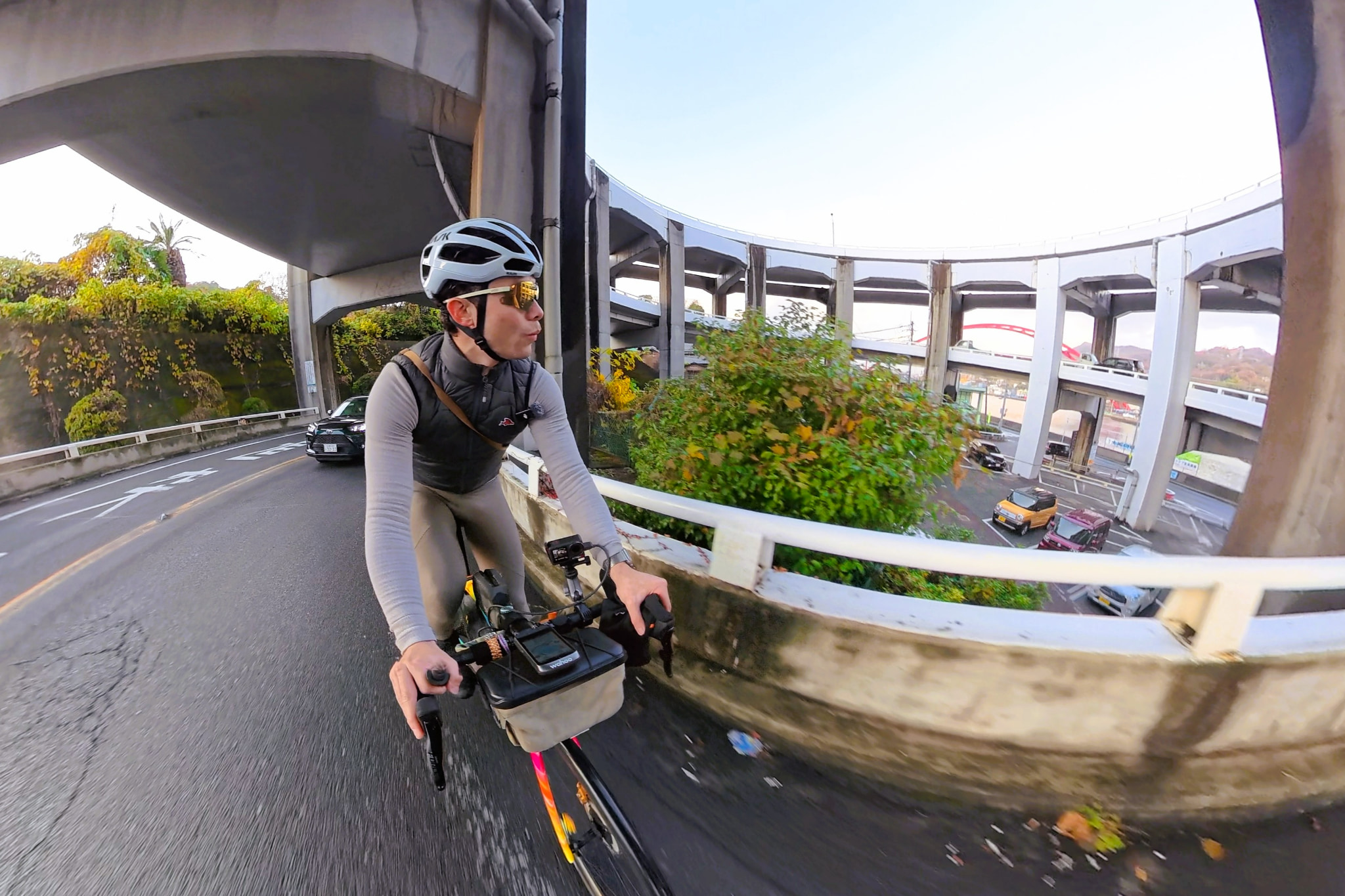
The unique climb was a first-time experience that totally pumped me up. Since the road was narrow and no cars could pass from behind, I powered through nonstop and made it straight to the top.
Heading to Kure, the city known for its craftsmanship!
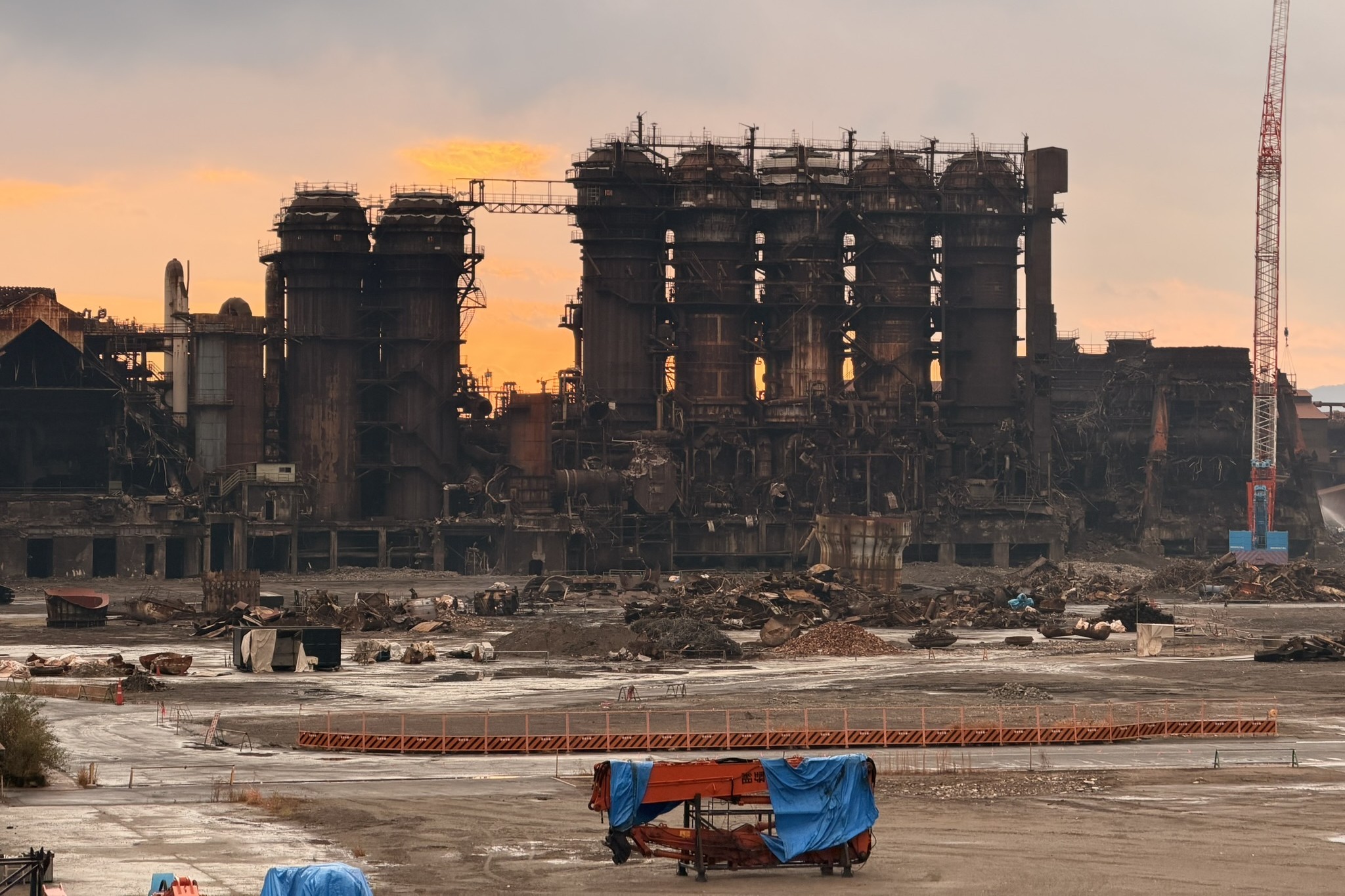
As you get closer to Kure city, the scenery gradually shifts into an industrial zone vibe. The photo shows the demolition site of Nippon Steel’s Setouchi Steelworks in the Kure area. Even from a distance, the massive structures standing on the vast grounds really give you a sense of their huge scale.
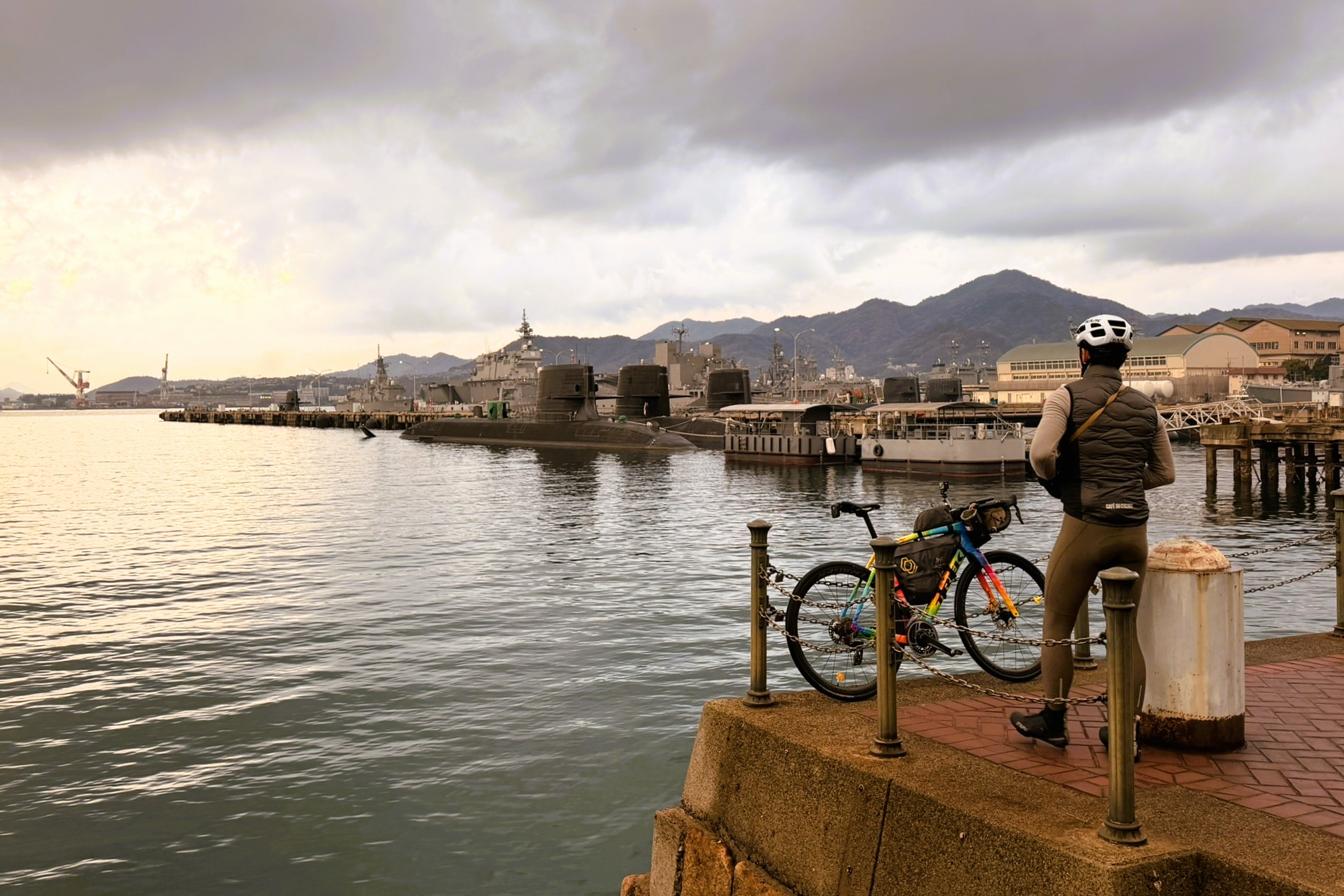
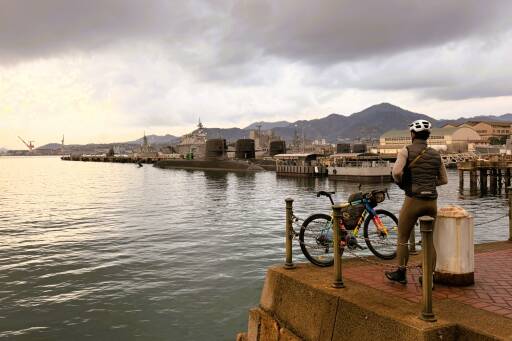
Alley Karasukojima is a park where you can get up close and personal with the Japan Maritime Self-Defense Force’s submarines. Seeing those submarines lined up on the calm sea was absolutely breathtaking—I couldn’t help but stop and take it all in the first time I saw it.
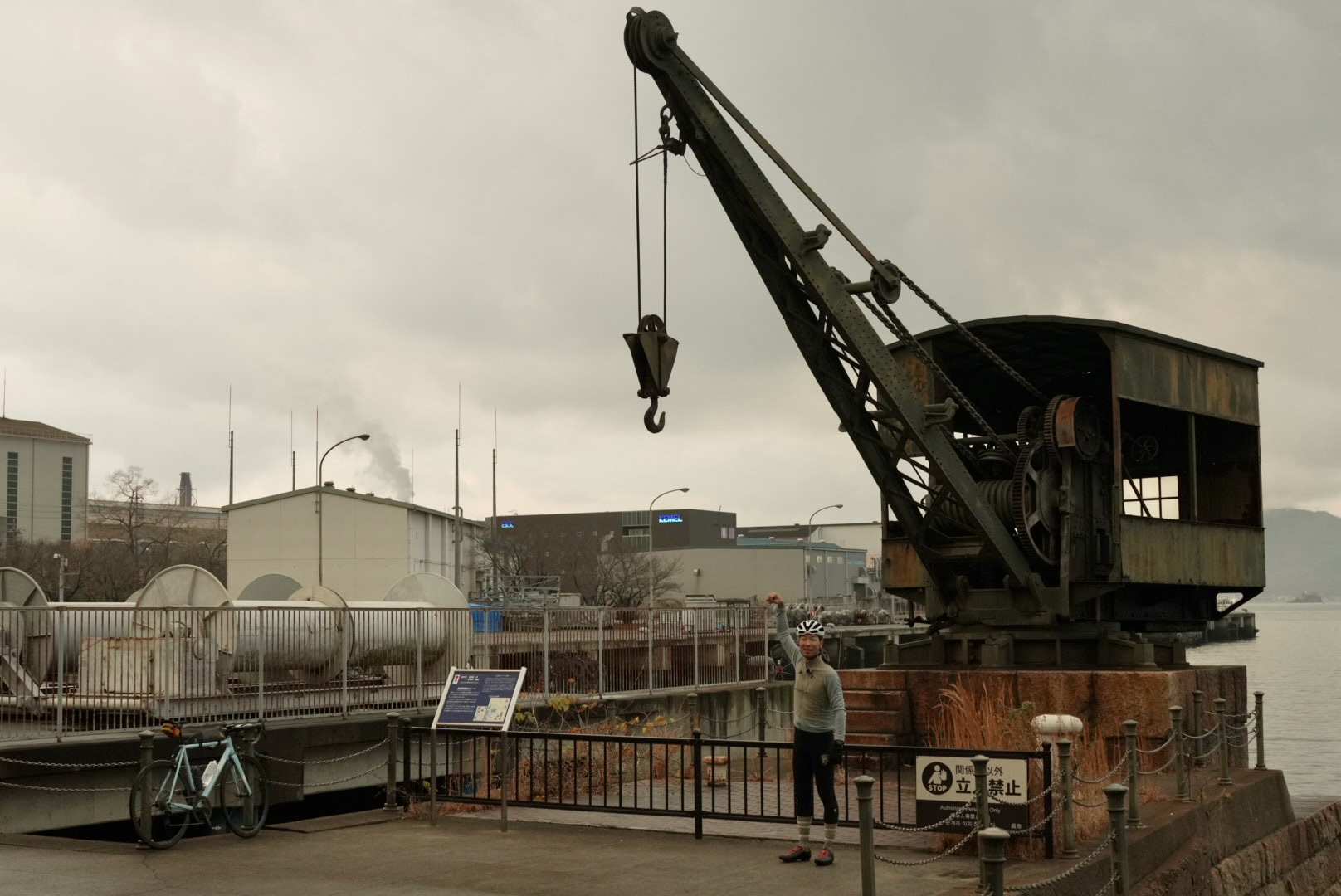
Inside the park, you can still see the old torpedo-loading crane exactly as it was back in the day. After the war, it was repurposed to unload supplies like food and other goods.
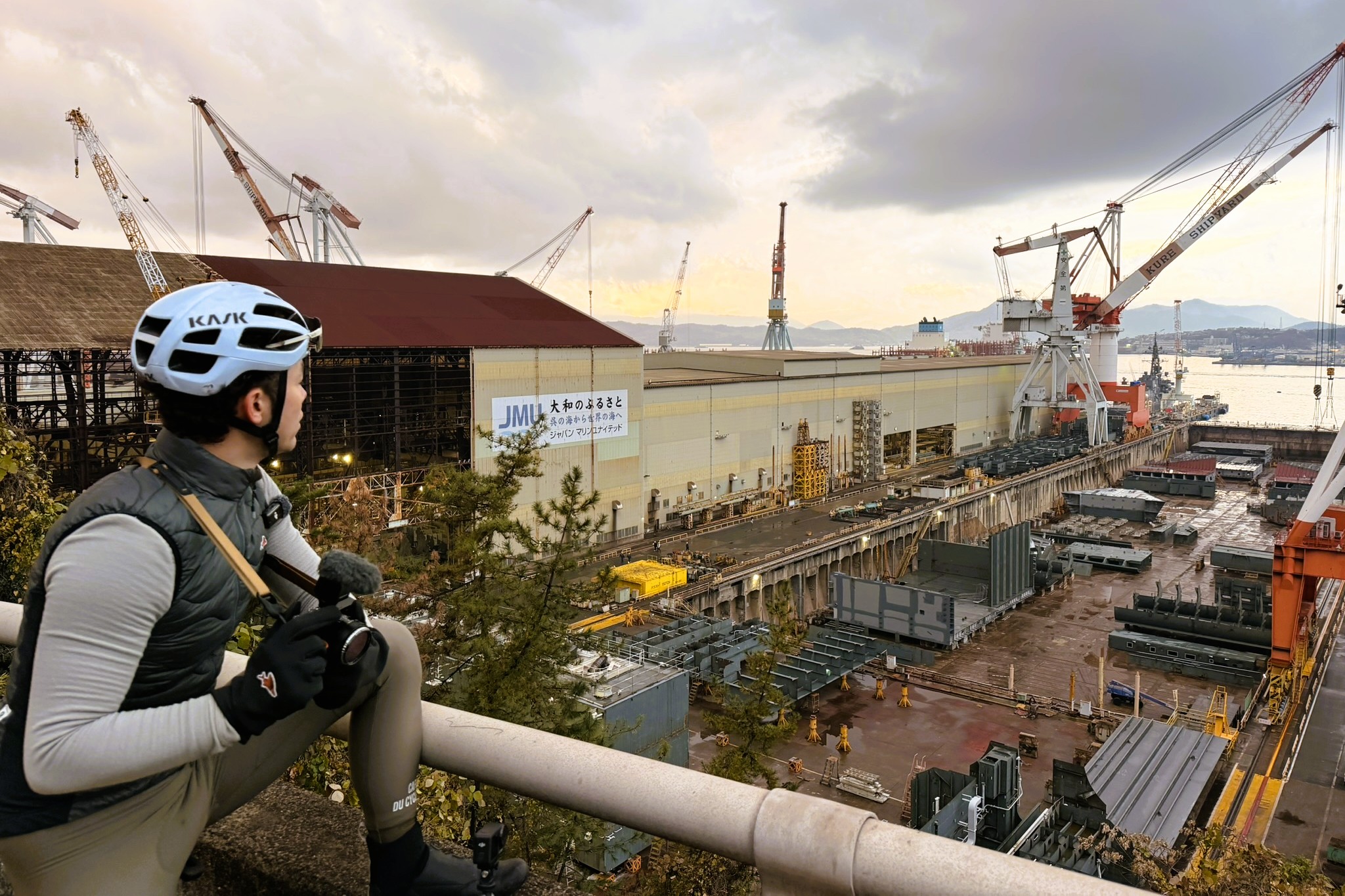
From the nearby road, you can catch a glimpse of a massive ship under construction. Even from a distance, its sheer scale is mind-blowing—it’s enough to mess with your sense of perspective. Riding through Kure, you really get a firsthand feel for the city’s powerful spirit of craftsmanship.
Bigger than you ever imagined!
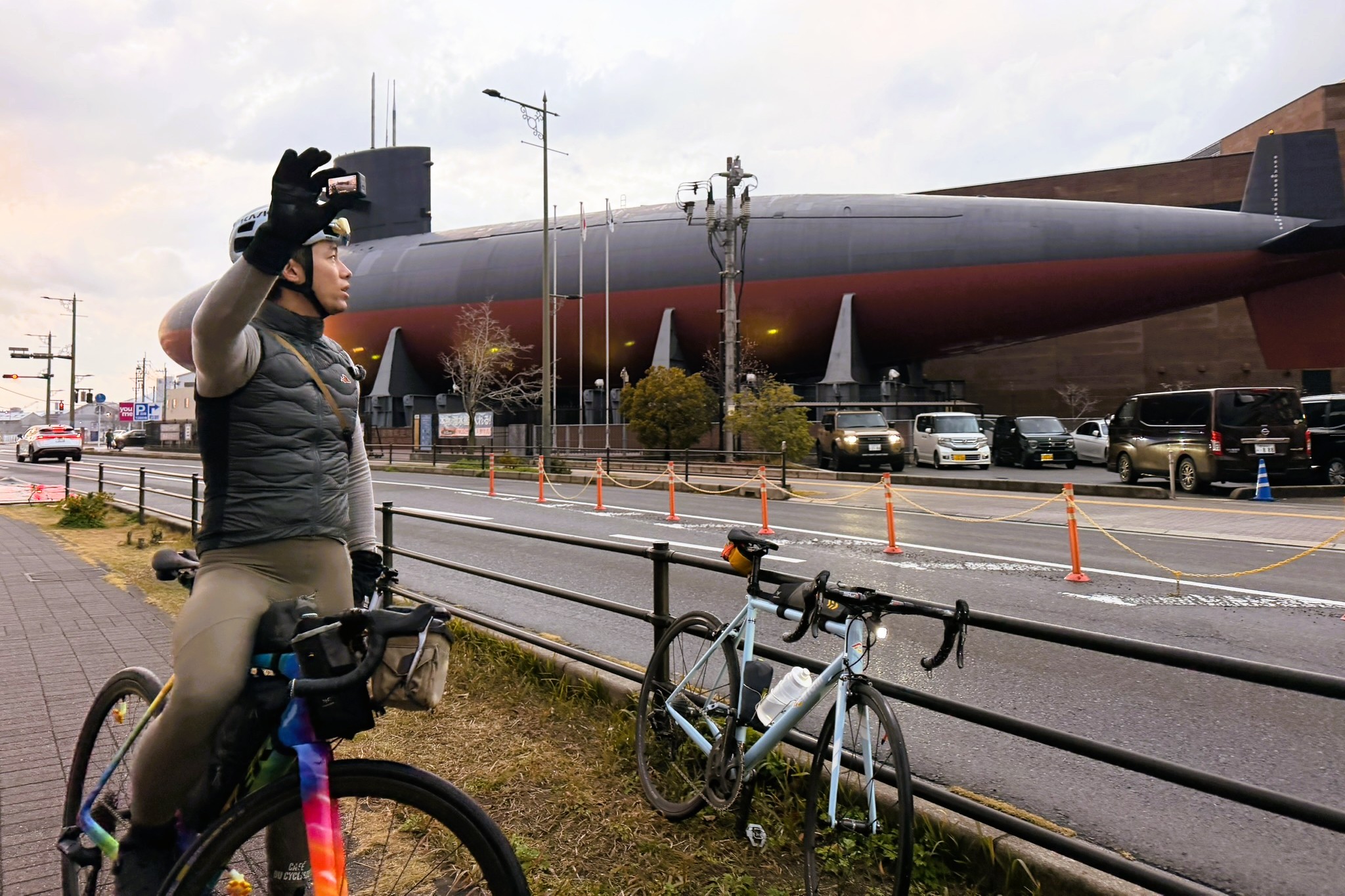
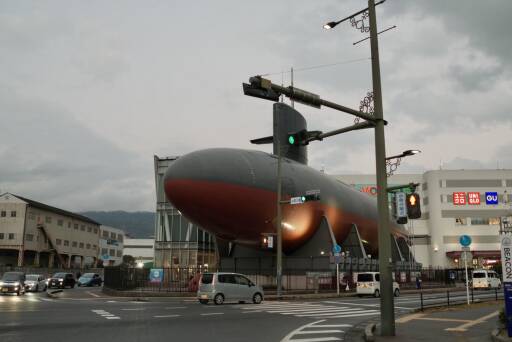
As you get closer to Kure Station, a massive submarine suddenly comes into view. It’s actually the Japan Maritime Self-Defense Force Kure Museum (Tetsu no Kujira-kan). They’ve got a real submarine on display, and seeing the whole thing up close for the first time totally blew my mind. The moment I imagined this beast moving underwater, I felt a mix of awe and a little bit of fear—talk about a rush of adventure!
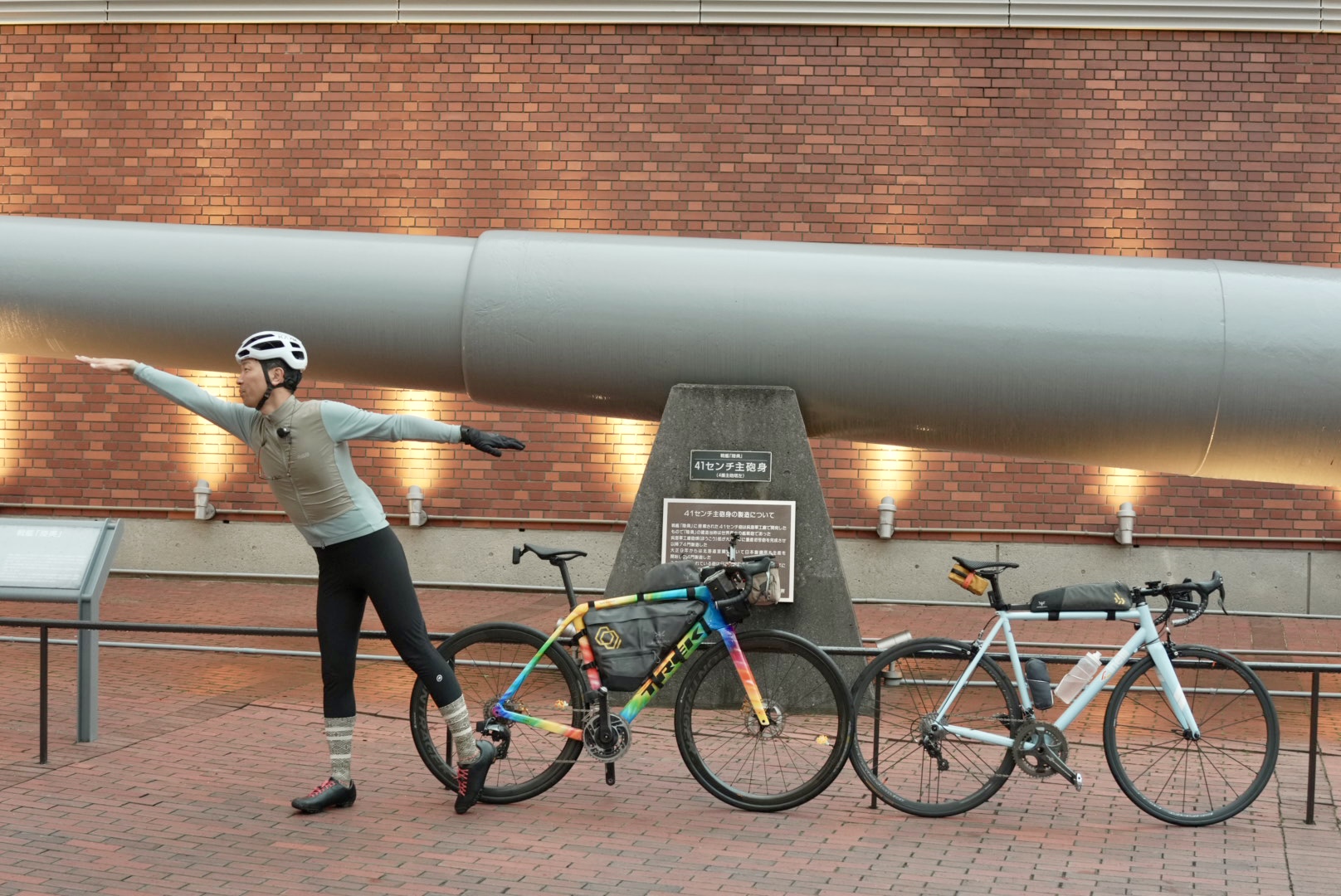
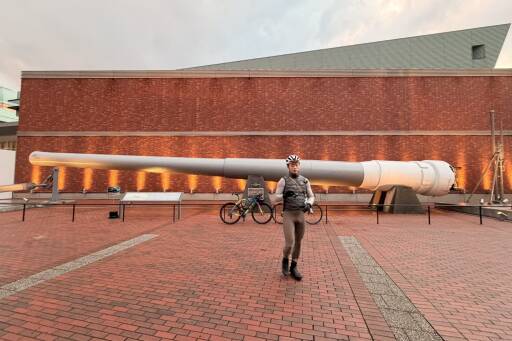
Right across from the submarine at the Yamato Museum grounds, you’ll find the 41-centimeter main gun barrel that was mounted on the battleship Mutsu. It’s crazy to think it was one of the largest naval guns in the world when it was built. Standing right in front of it, you’re just blown away by the sheer size. No need to overthink it—it’s just massive.
Finished at Kure Station!

Totally hyped by all the massive structures along the way, I finally rolled into Kure Station, the finish line. Before I knew it, it was completely dark outside. And just like that, I successfully completed the Kakishima Kaido cycling route!
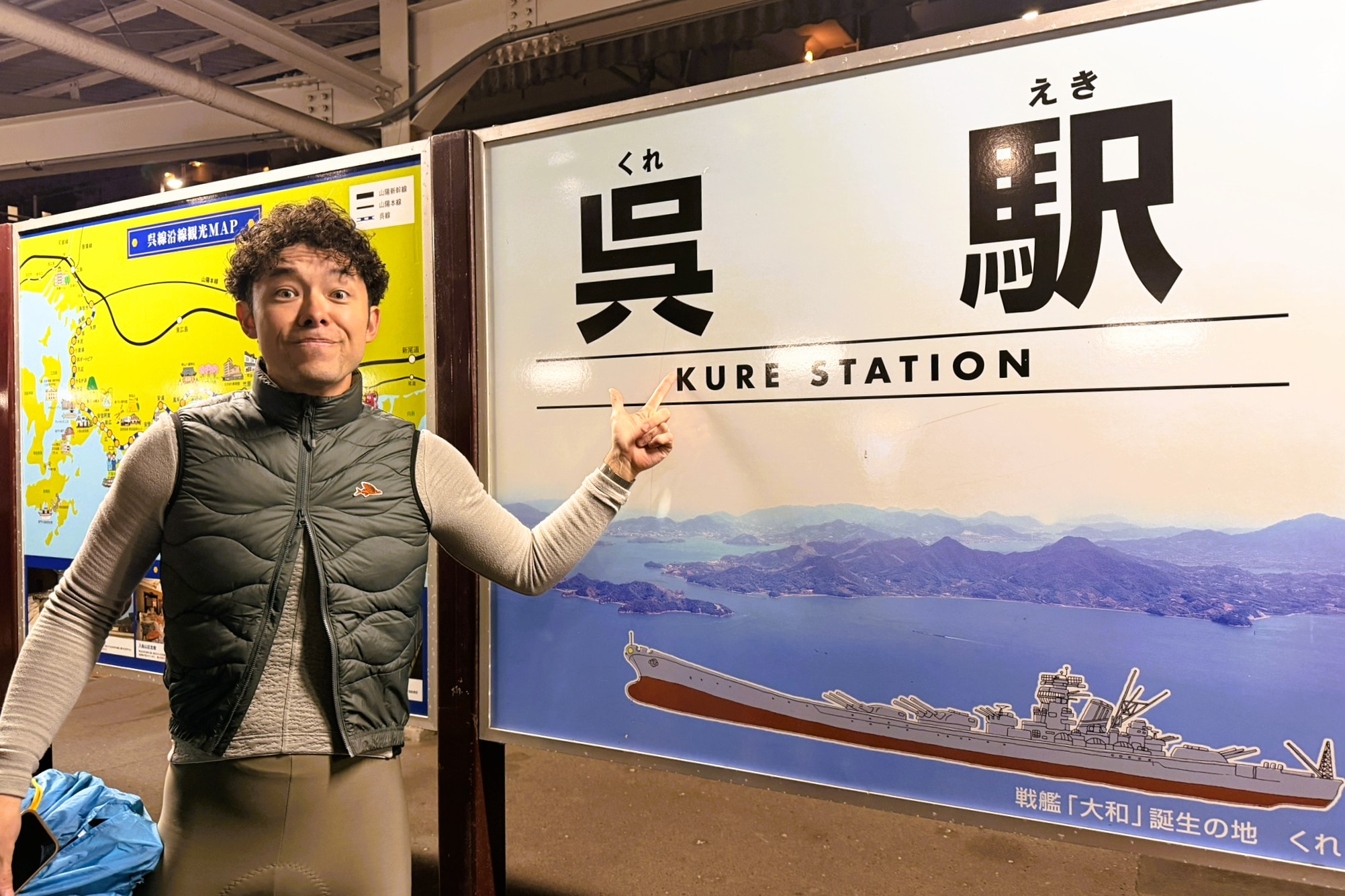
It’s about a 45-minute train ride from Kure Station to Hiroshima Station with your bike. Once you arrive at Hiroshima Station, head back to the APA Hotel where you stayed the night before, and warm up those chilled muscles with a nice soak in the bath to refresh yourself.
From sea to steel—the vibe totally changes on this Setouchi ride.
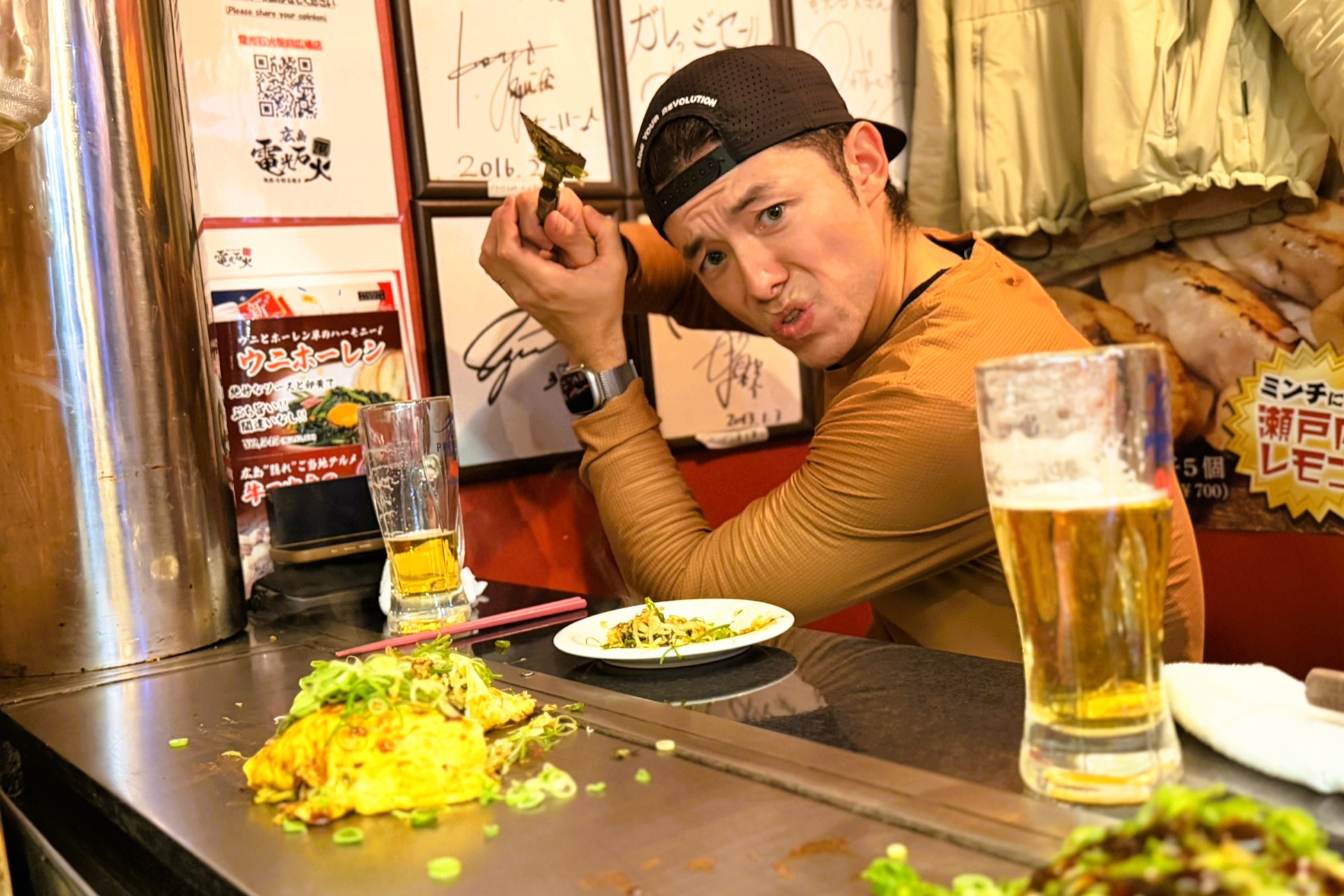
In the evening, head out to the streets of Hiroshima and savor the local flavors unique to the city while reflecting on this trip.
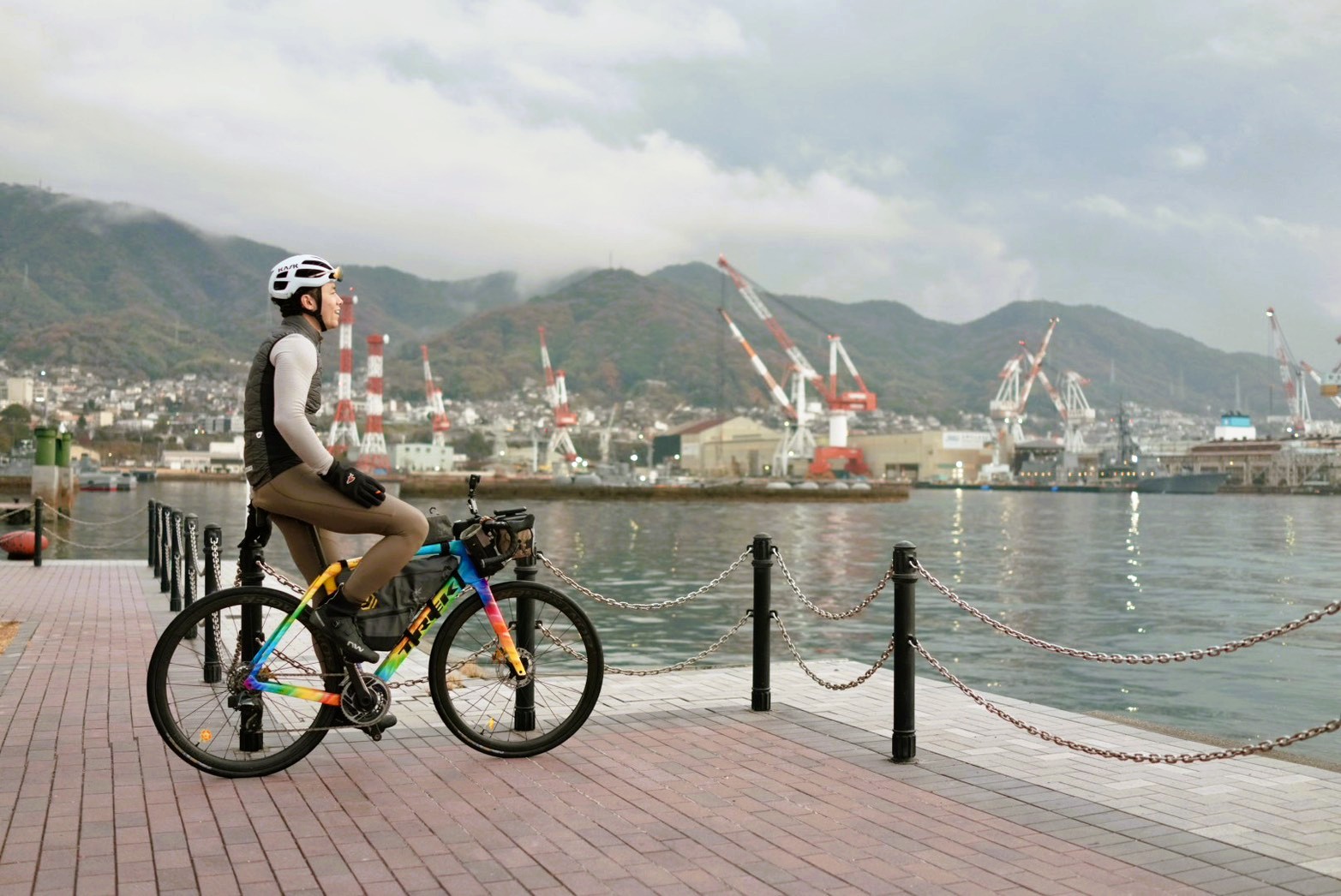
On Etajima, you can leisurely ride while taking in the calm, peaceful views of the Seto Inland Sea. Then, as you head into Kure in the second half of the ride, the scenery shifts dramatically to an industrial vibe centered around the shipyards. The landscape keeps changing with every mile, making it a route packed with sights that never get boring. If you ever find yourself visiting Hiroshima, you’ve got to give this route a spin!
旅のしおり
| 14:10 | Depart Tokyo Station (Heading out a day early via Shinkansen) |
|---|---|
| 18:00 | Arrive at Hiroshima Station (Staying overnight) |
| 7:00 | Kick off from APA Hotel Hiroshima Ekimae |
| 8:00 | Arrive at Hiroshima Port Ujina Passenger Terminal |
| 8:30 | Ferry sets sail |
| 9:10 | Arrive at Kirigushi Port |
| 9:30 | Start the Etajima Ride |
| 11:30 | Lunch at Cafe Nora |
| 14:00 | Check out the Hamaguchi Shoyu Store |
| 14:30 | Coffee break at Sugos |
| 17:00 | Arrive at Yamato Museum |
| 17:30 | Goal! Finish at Kure Station |
| 17:50 | Head from Kure Station to Hiroshima Station (Rinko/Train with bike) |
| 18:50 | Arrive back at Hiroshima Station |