Okayama & Soja: The Perfect Day Trip

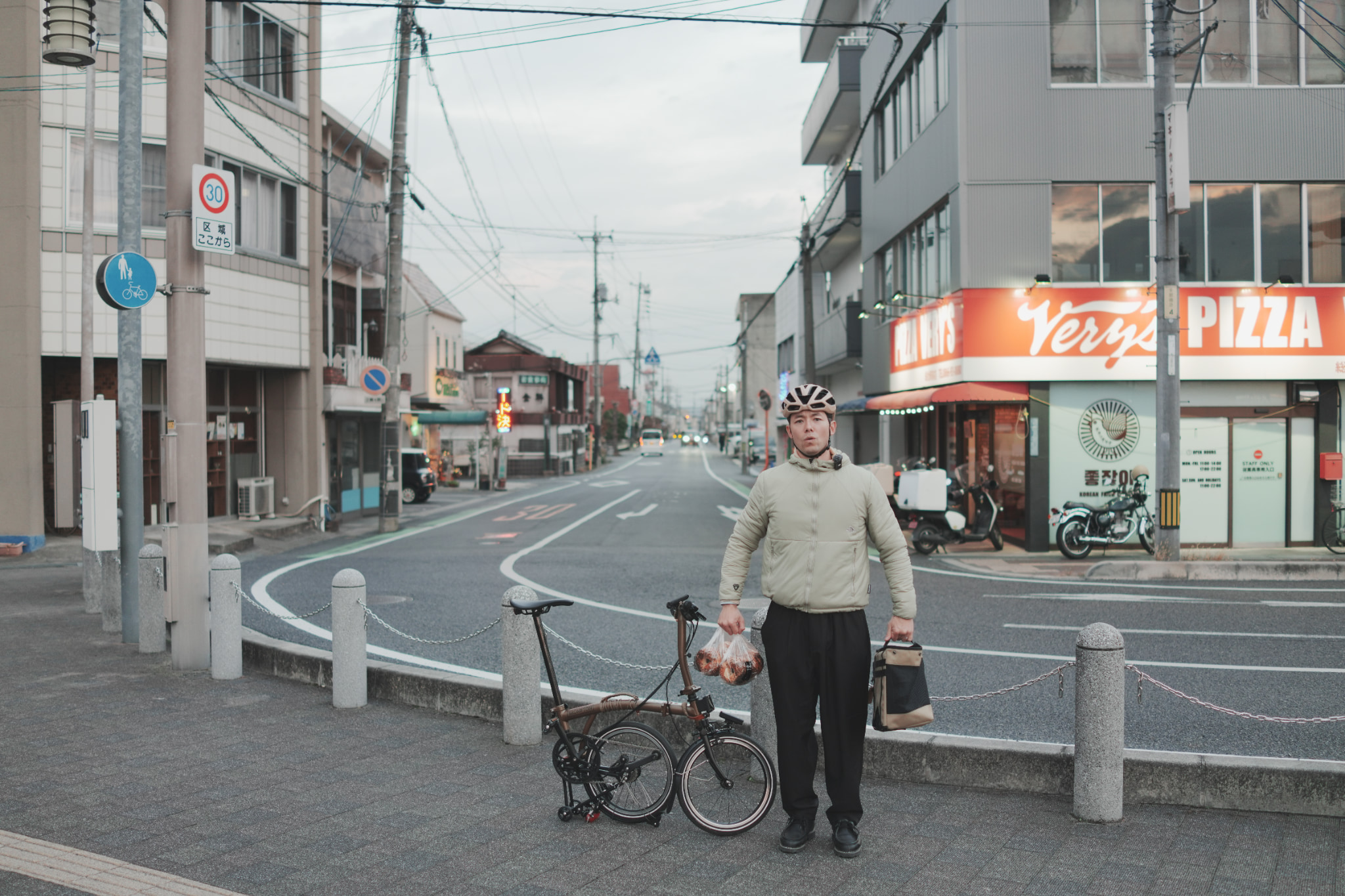
When people think of sightseeing in Okayama, they often picture Kurashiki or the scenic Seto Inland Sea. This time, I decided to take a bit of a detour from the usual spots and explore Okayama by bike.
The setting is the Kibiji area, where the legend of Momotaro comes alive. Take a leisurely ride on a Brompton folding bike along the flat and easy Kibiji Cycling Road, exploring ancient burial mounds and historic sites, and wrap up your day trip heading to Soja City, famous as the “Bread Town.”
Short on distance, heavy on detours. More sightseeing than serious riding. This time, we’re taking a day trip to Okayama on a Brompton, and just like a true Discover Ride, I’ll be sharing the adventure with you in a laid-back report.
*This article is brought to you by the Chugoku Regional Governors’ Association Cycling Tourism Promotion Committee.*
A Journey That Starts with a Brompton
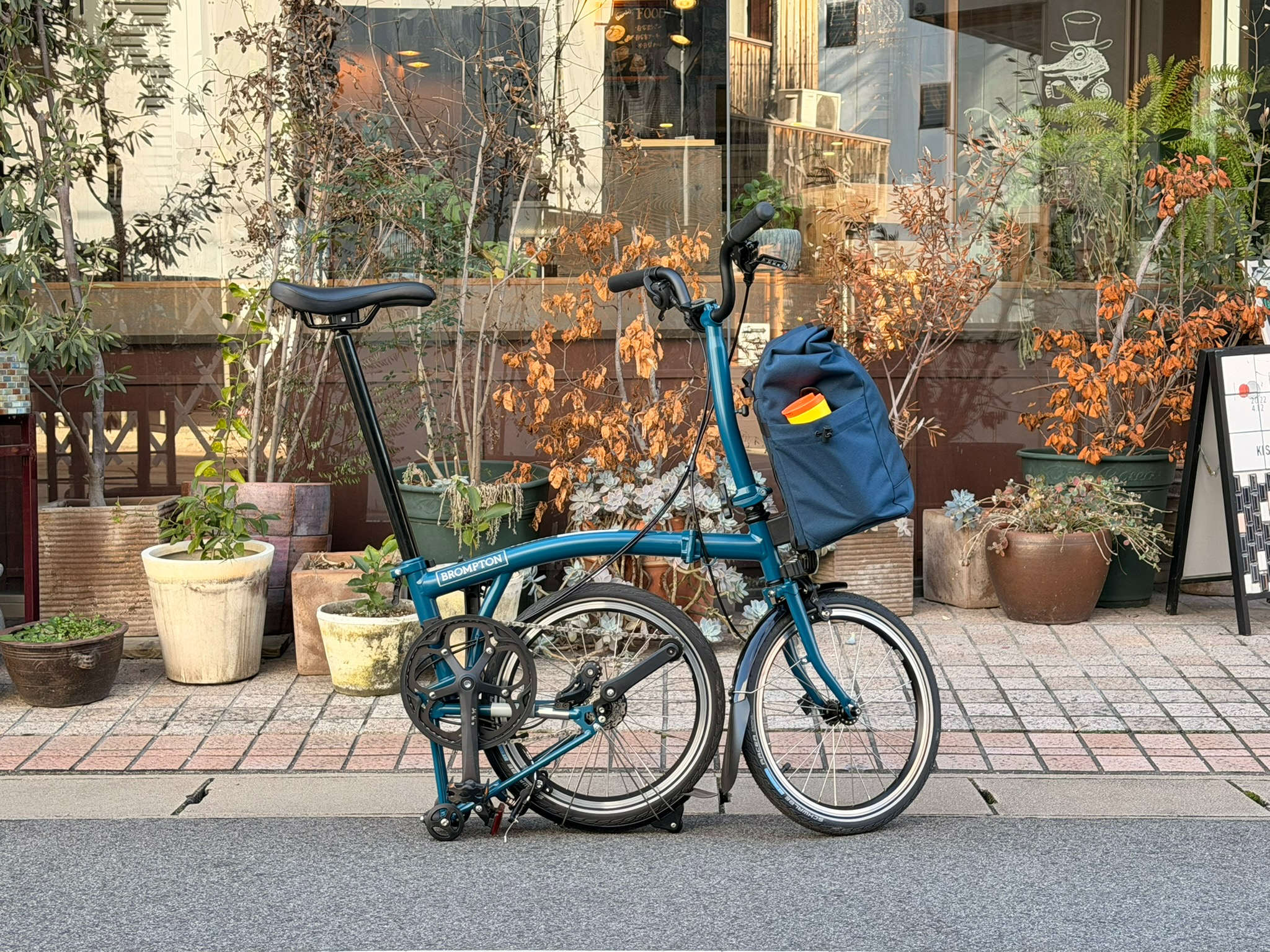
This time, my ride is a Brompton folding bike. The best part? No special tools needed—anyone can fold it up super easily. Up front, you can attach a special bag, perfect for stashing souvenirs or a few small items without any hassle. The one I used this time was…CラインThe 4-speed external gear model.
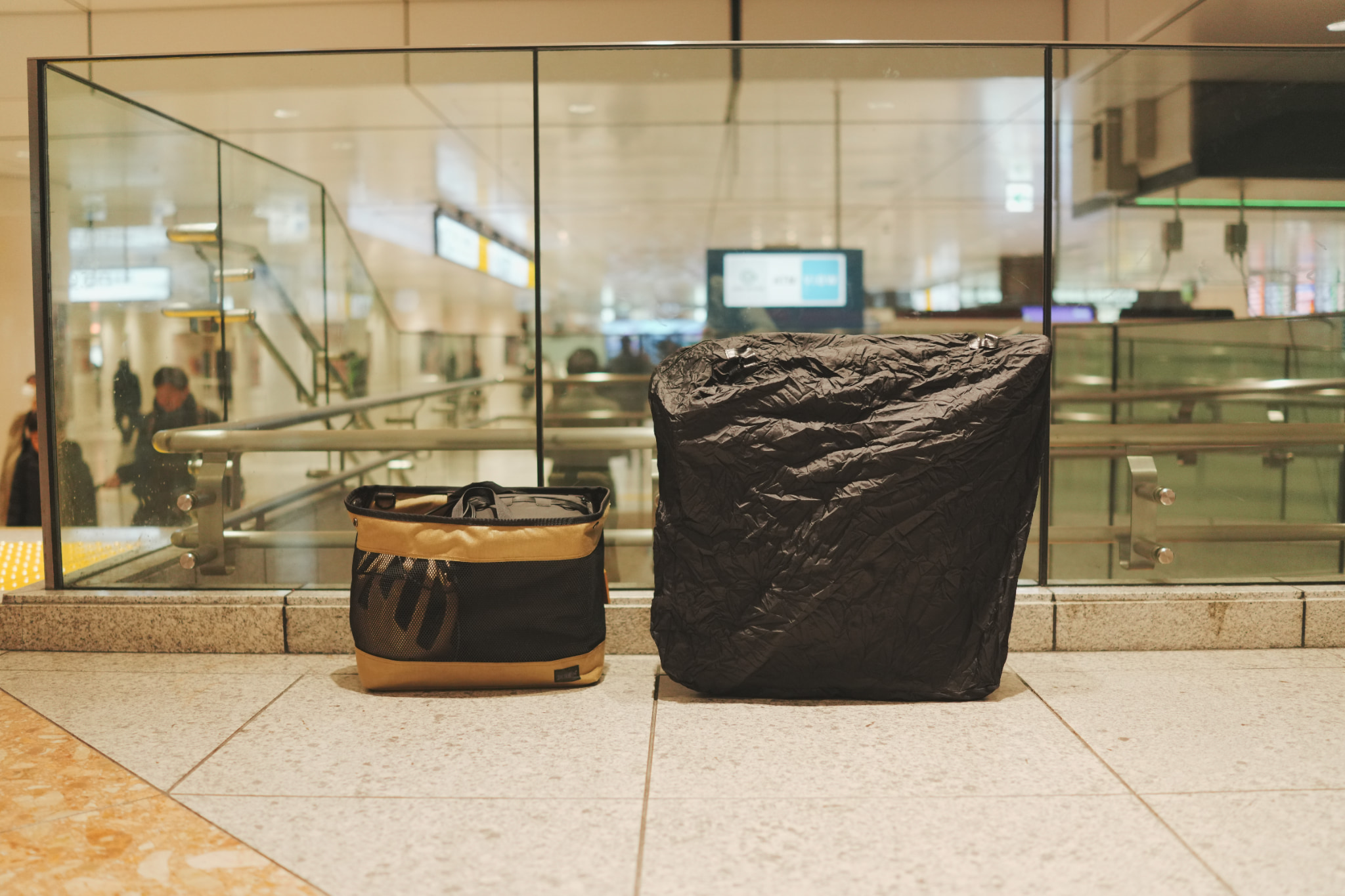
My gear is super compact, so taking the train all the way to Tokyo Station with my bike is just a breeze. Normally, I’d pick the front car to avoid bothering other passengers, but since my bike is so small, I don’t even have to worry about which car I hop on.
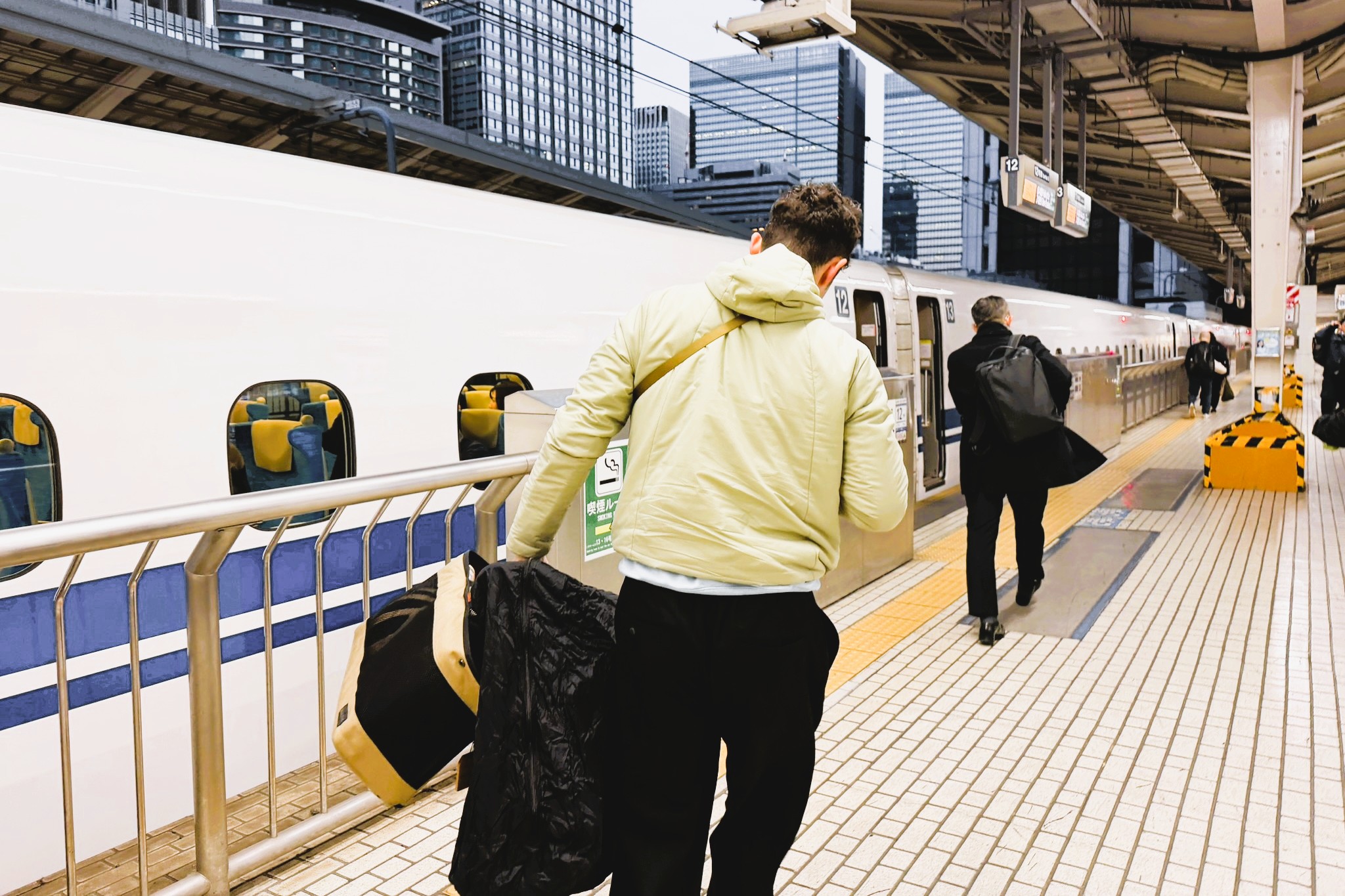
I hopped on an early morning Shinkansen straight to Okayama Station. It’s about a three-hour ride from Tokyo, and I took it easy, enjoying the scenery rolling by outside the window. It really helped me relax and get into a good headspace.
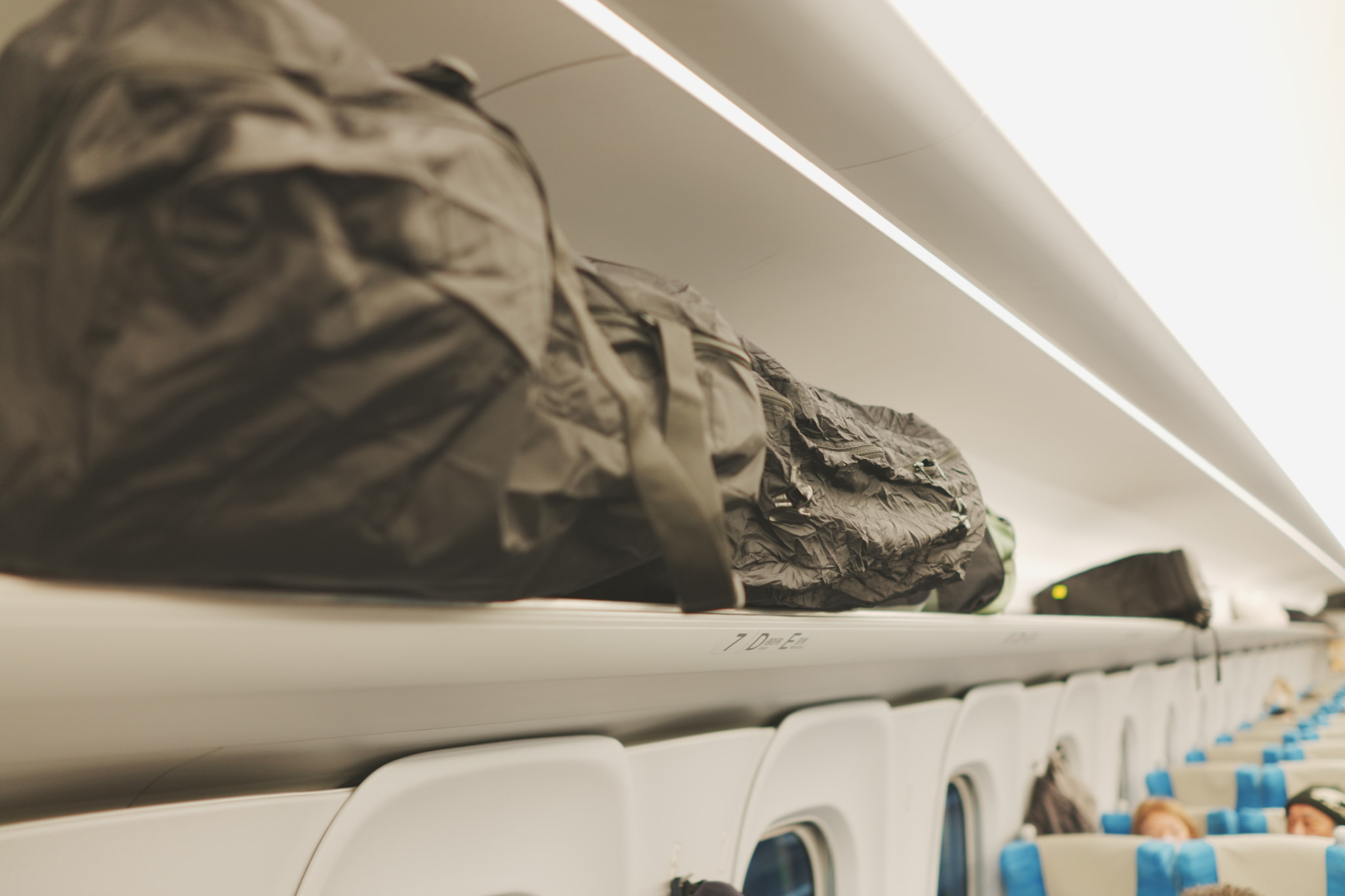
The folded Brompton fits perfectly on the luggage rack above the seat. With a road bike, you’re always hunting for space near the door and worrying about bumping into things, but with the Brompton, it’s surprisingly stress-free.
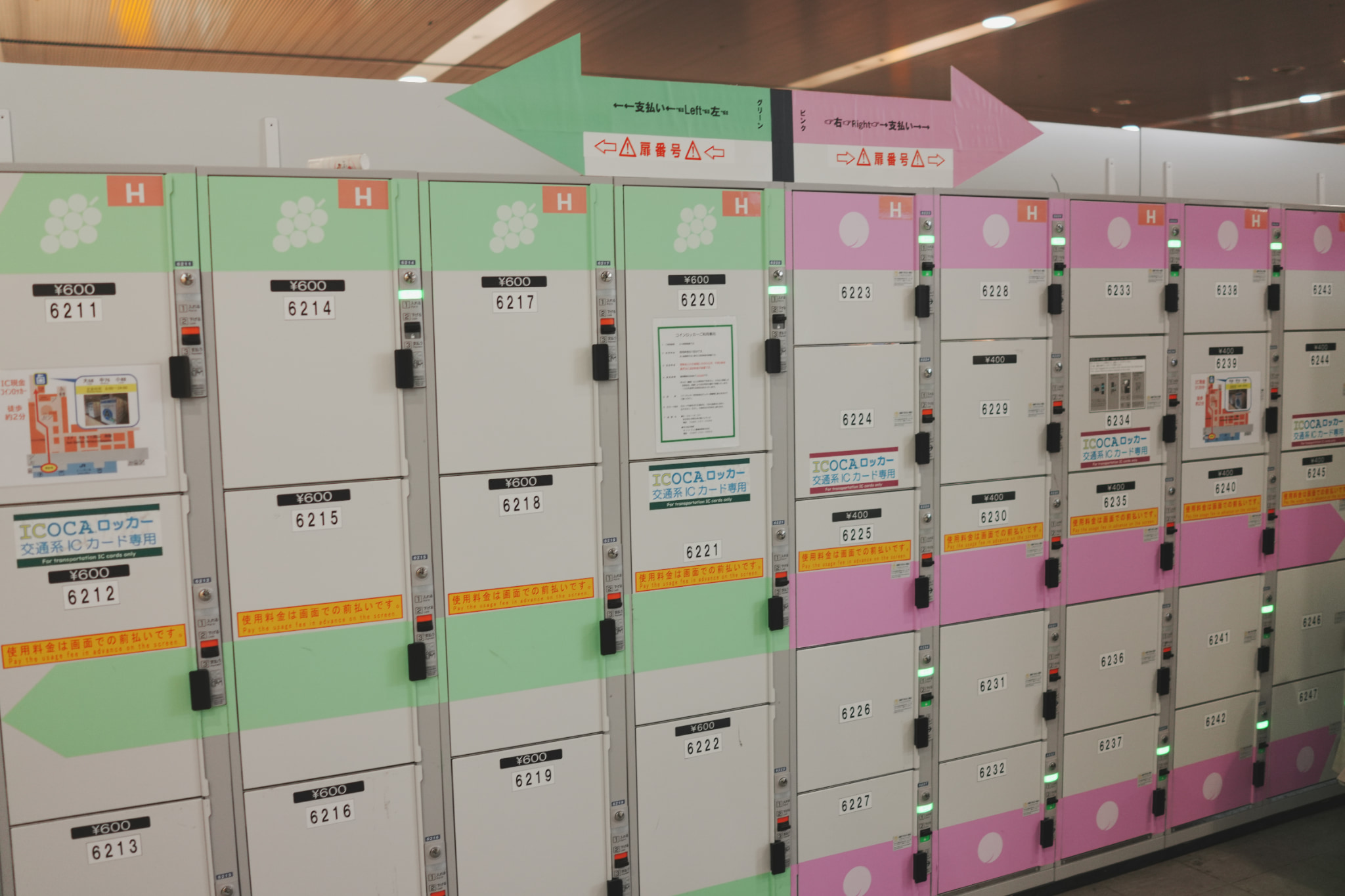
After about a three-hour Shinkansen ride, I arrived at Okayama Station. I dropped off the stuff I didn’t need for the ride in a coin locker at the station, lightened my load, and got ready to roll.
Chill and Enjoy the Kibiji Cycling Route
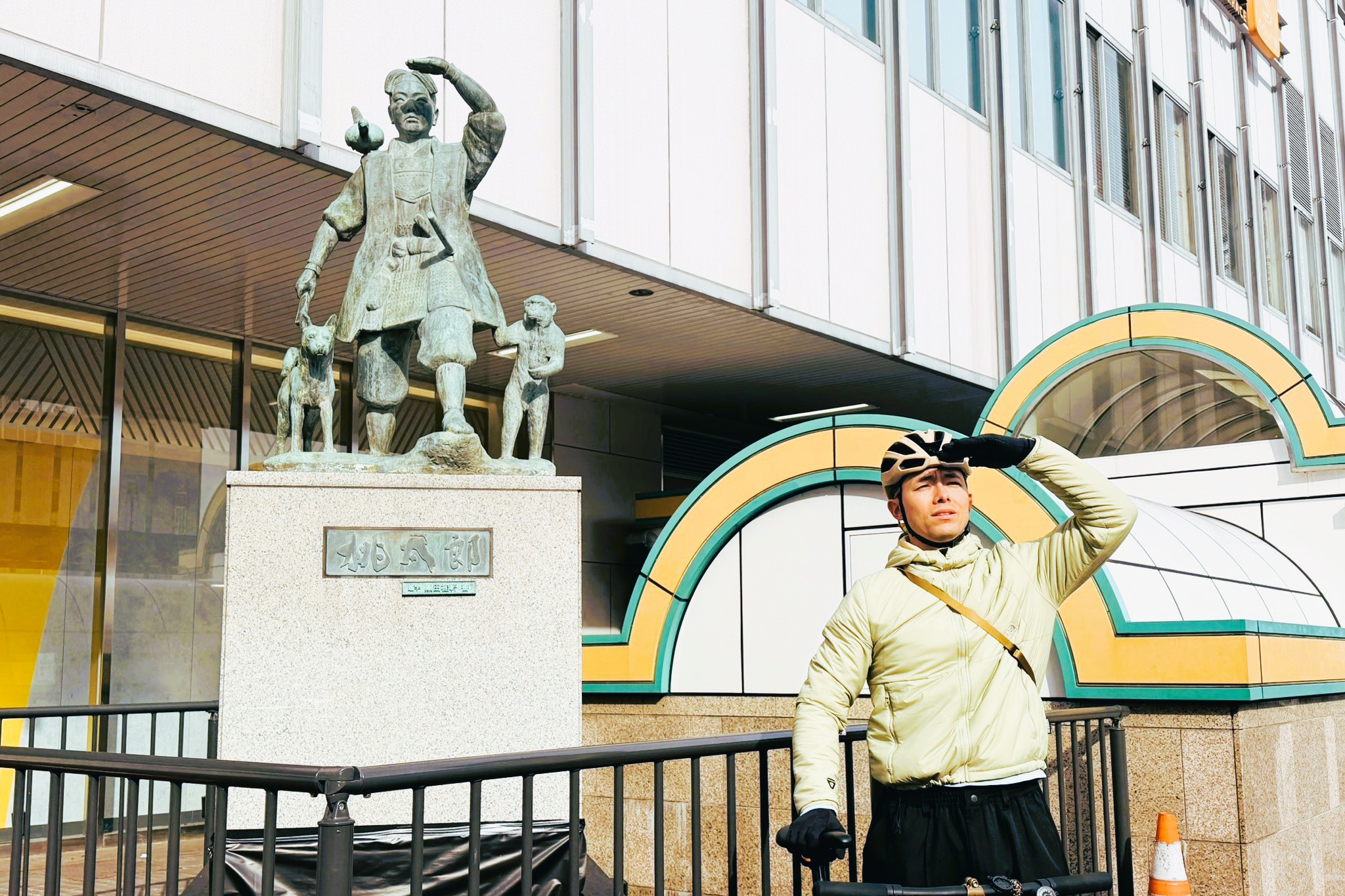
Once we were all set, we made sure to snap a memorable photo in front of the famous Momotaro statue at Okayama Station.
Off to Oni hunting… just kidding! We’re heading to the bread world of Soja City!
But before we hit the road, let me give you a quick rundown of the route for this trip.
In Okayama Prefecture, there’s a cool project all about sharing the awesome cycling spots around the area.「ハレいろ・サイクリング OKAYAMA」There are plenty of routes set up that everyone can enjoy, from beginners to seasoned travelers.
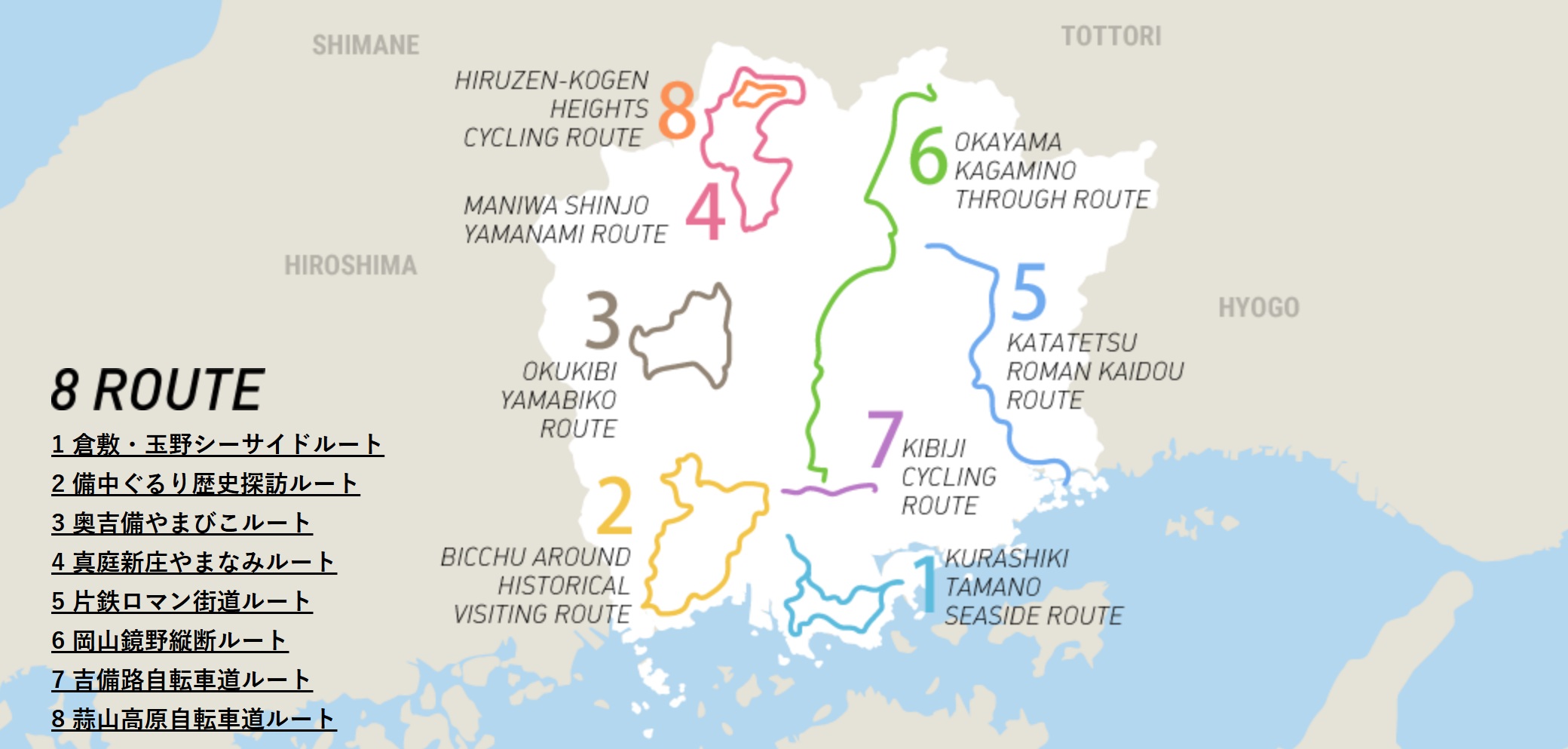
Out of the eight cycling routes recommended by Okayama Prefecture, we picked the Kibiji area this time. It’s flat and easy to ride, plus you get to dive into some ancient history and legends along the way. It’s the perfect route if you want to enjoy both sightseeing and cycling—definitely a “can’t-have-just-one” kind of adventure.「吉備路自転車道ルート」Just taking it easy and cruising along.
The cycling route is a bit on the shorter side, about 25 km, but it smoothly connects historical spots in Kibi like Kibitsu Shrine’s Momotaro legend and the Tsukuriyama Burial Mound along gentle paths. (On RWG, the total distance shows up as 40 km because it includes detours and some walking.)
Starting the ride from Okayama Station!
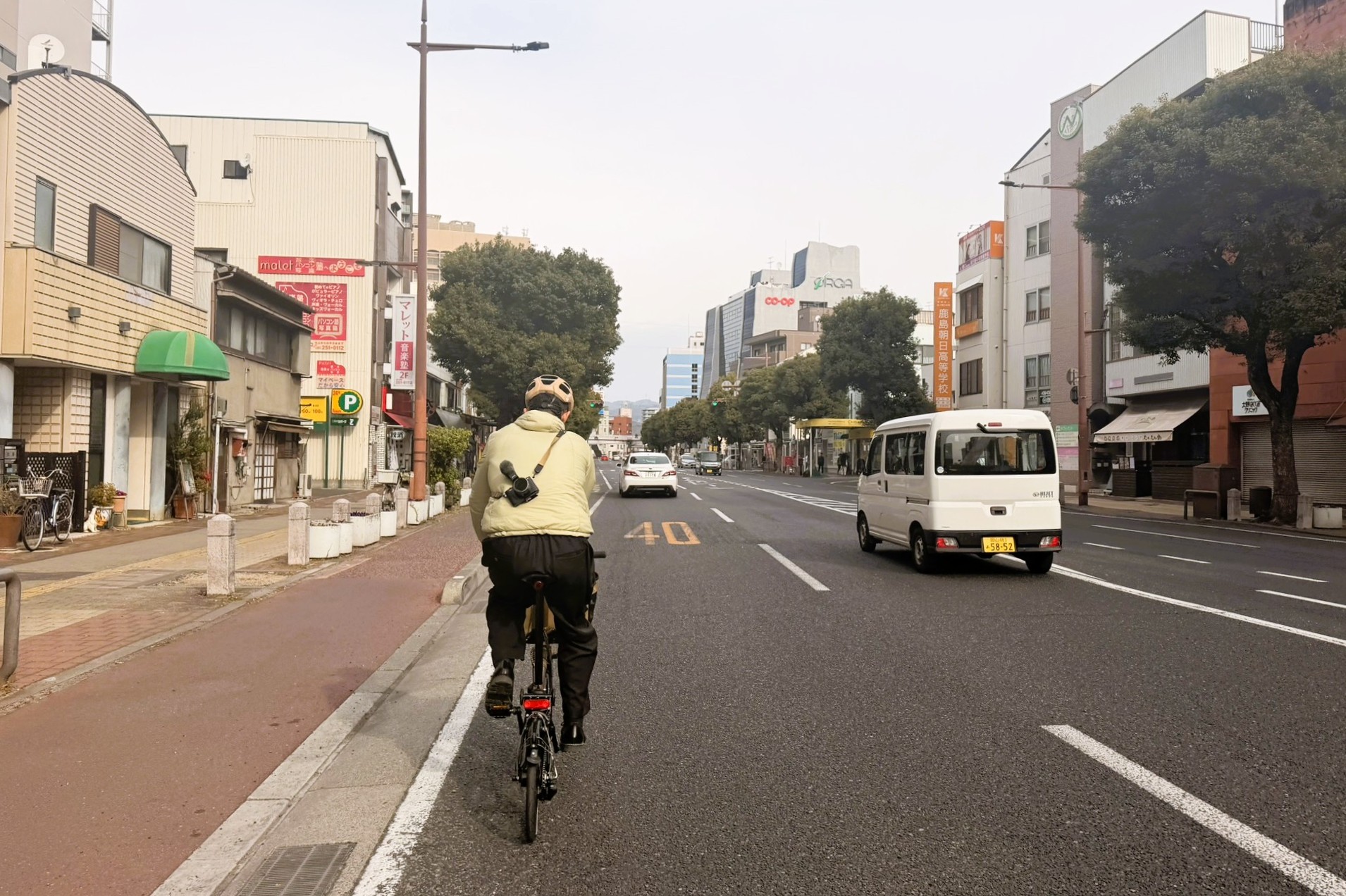
Starting from Okayama Station on a weekday morning. Since the morning rush hour had just settled down, the area around the station wasn’t as busy as I expected, making for a nice, relaxed start.
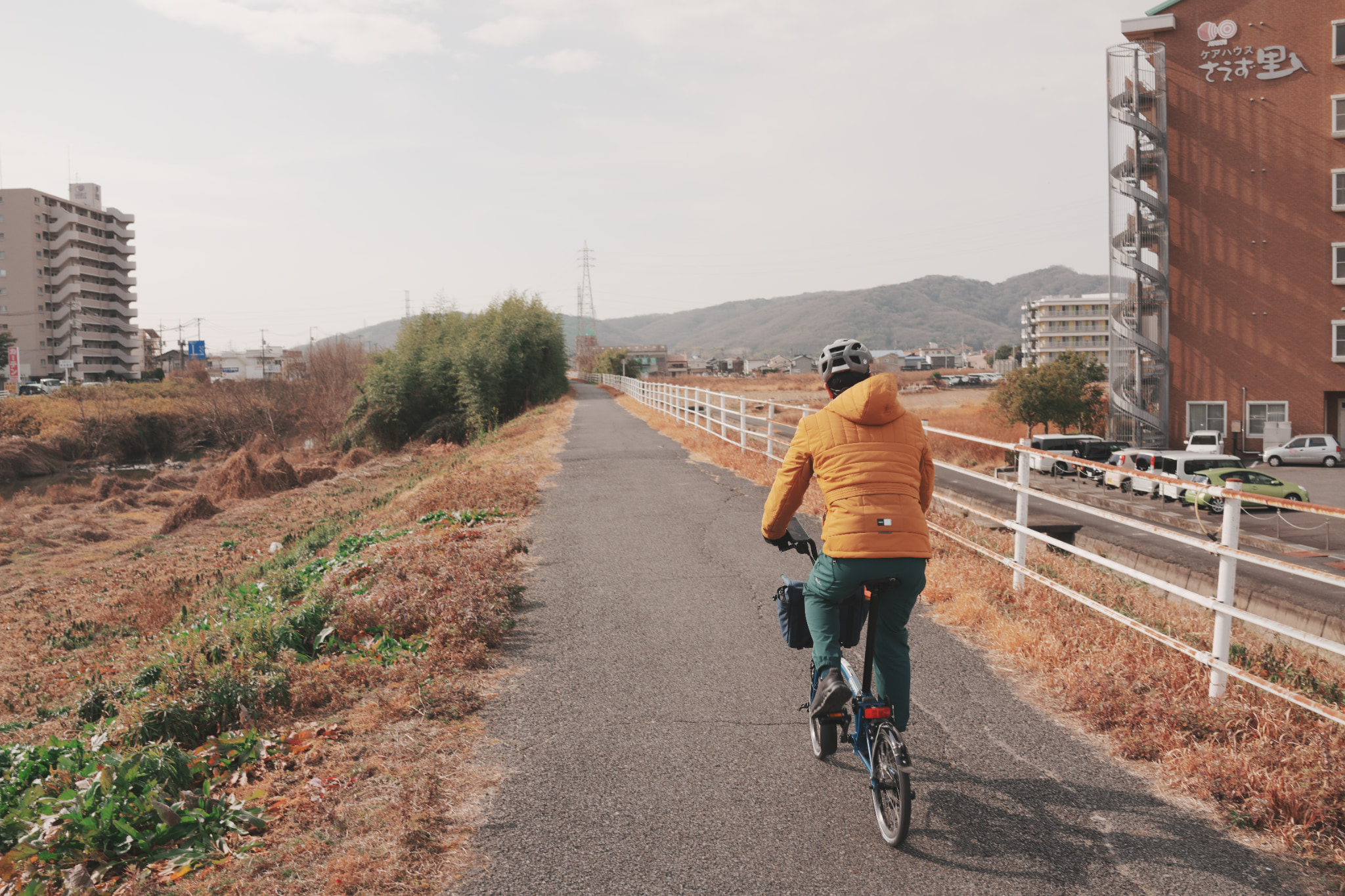
Around Okayama Station, you’ll find stretches where the bike lane shares the road with cars, but once you hit the path along the Sasagase River, things change completely. With barriers blocking cars out, you can kick back and enjoy a relaxing ride, soaking in the peaceful riverside views without worrying about traffic.
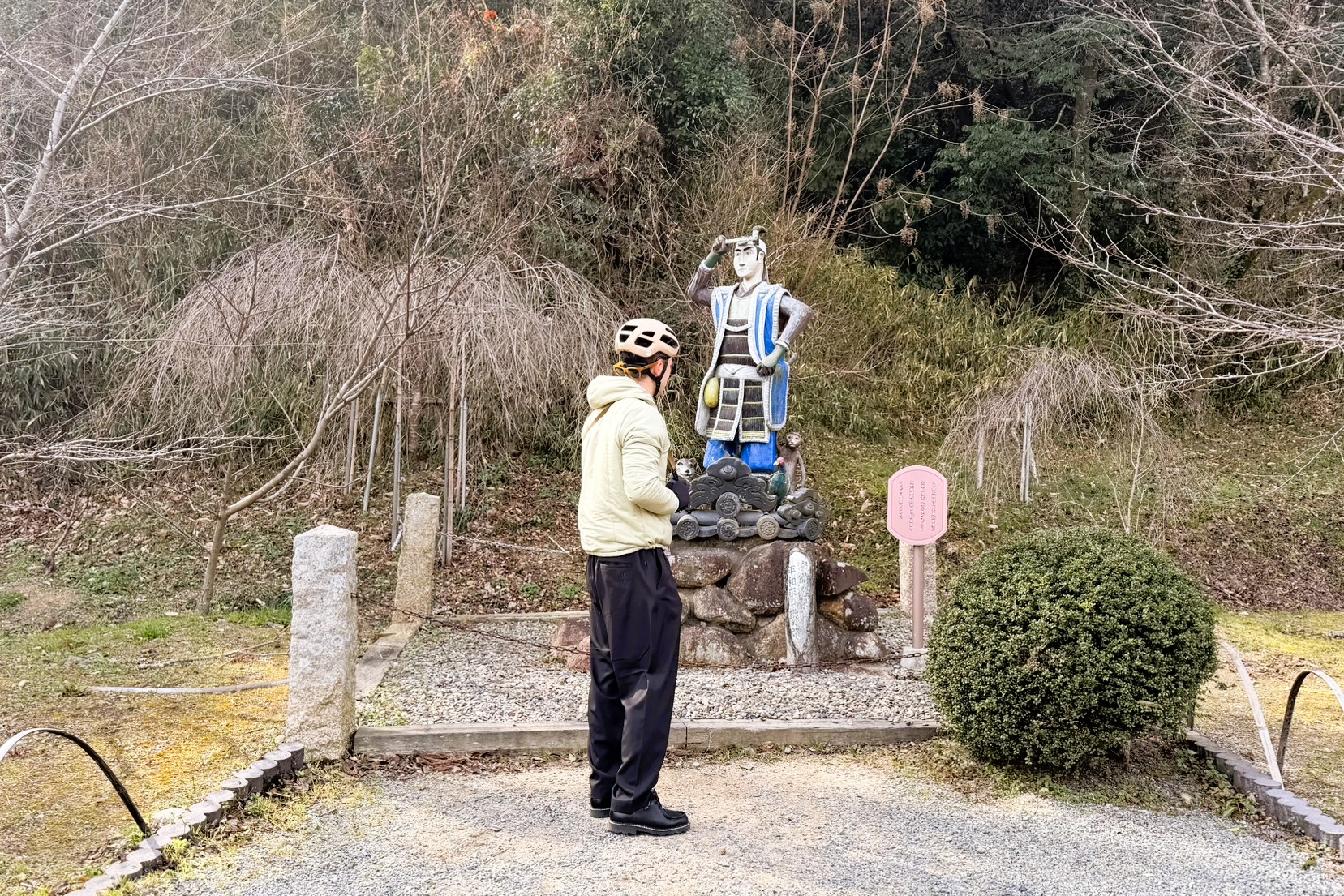
Along the route, I spotted a Momotaro statue tucked into a corner of the parking lot at Kibitsuhiko Shrine. Since it might have some connection to Momotaro, I decided to check it out up close.
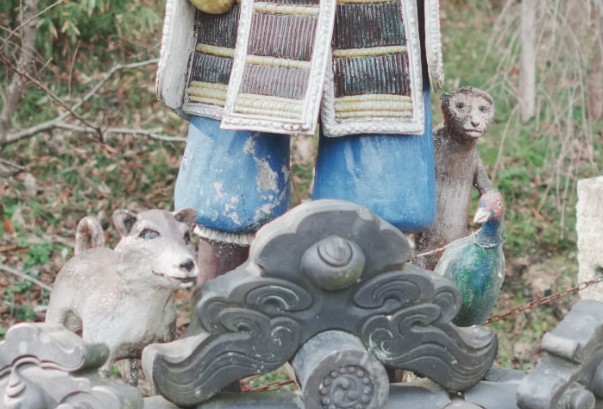
Up close, you can spot the animals popping out right at Momotaro’s feet. There’s the brave monkey ready to take on the demons… but instead of looking fierce, it’s got this super cute, laid-back vibe that’s totally heartwarming. Definitely more charming than fierce, and it’s hard not to feel a little soothed by it.
The Legendary Starting Point of Momotaro: Kibitsu Shrine
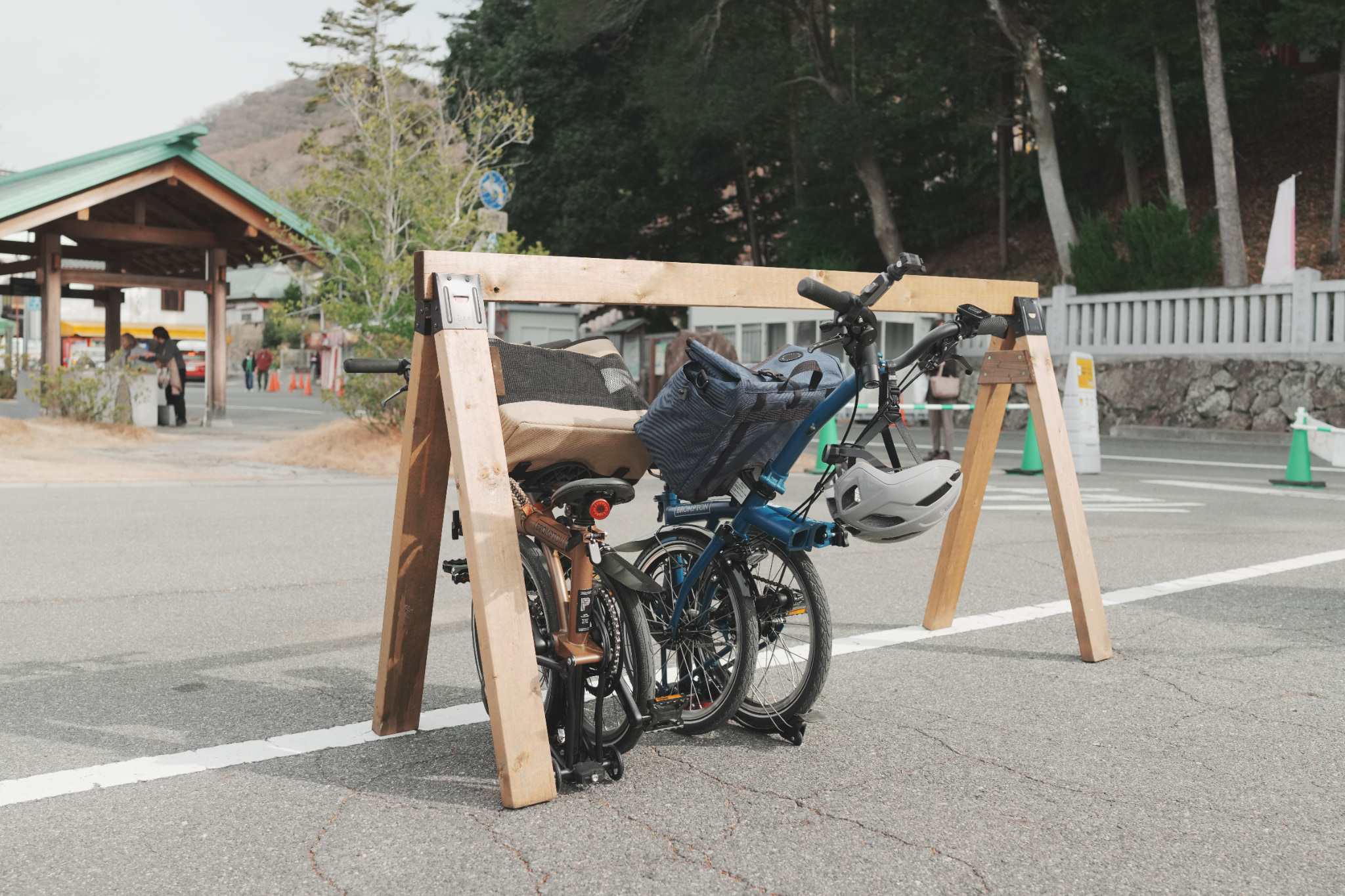
Kenta was curious about Kibitsu Shrine, tied to the legend of Momotaro, so we stopped by. The parking lot even had bike stands, giving off a really cyclist-friendly vibe—definitely a cool spot to check out.
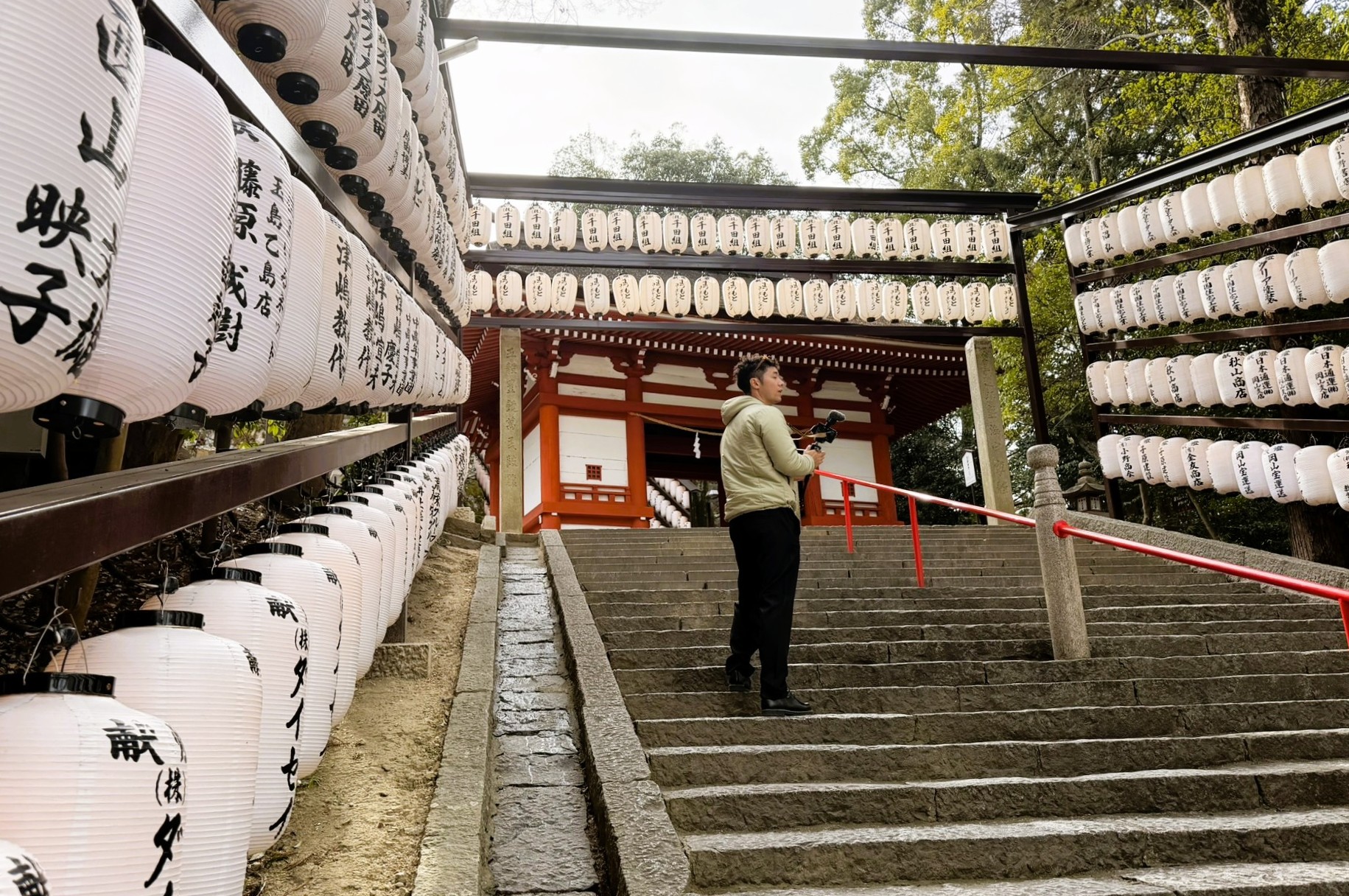
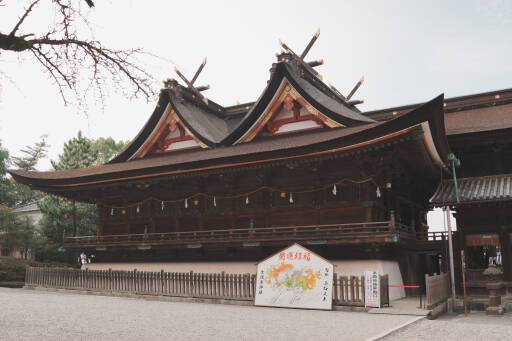
Kibitsu Shrine has this incredible, awe-inspiring vibe that really makes you feel the roots of the Momotaro legend. The moment you step onto the stairs leading up to the shrine, you can literally feel the atmosphere shift. Pictures just don’t do it justice—when you actually climb each step, you start to soak in the weighty, quiet power of the place.
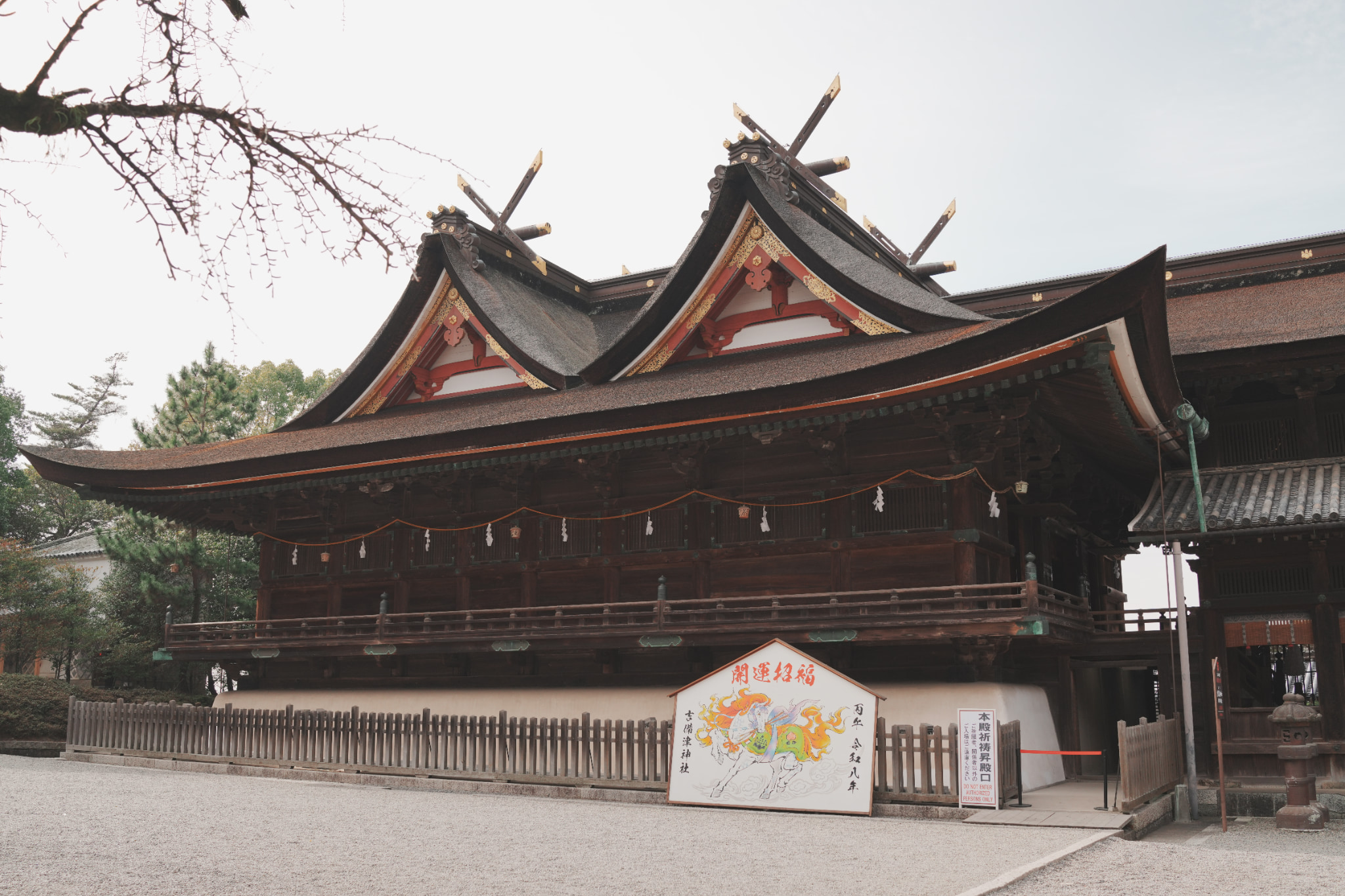
The main hall and worship hall feature a unique architectural style called “Hiyoku Irimoya-zukuri,” also known as “Kibitsu-zukuri,” which is the only one of its kind in the whole country. The overlapping roofs look super elegant and kinda remind you of an ancient palace. Today, this style is a national treasure and a symbol of Kibitsu Shrine.
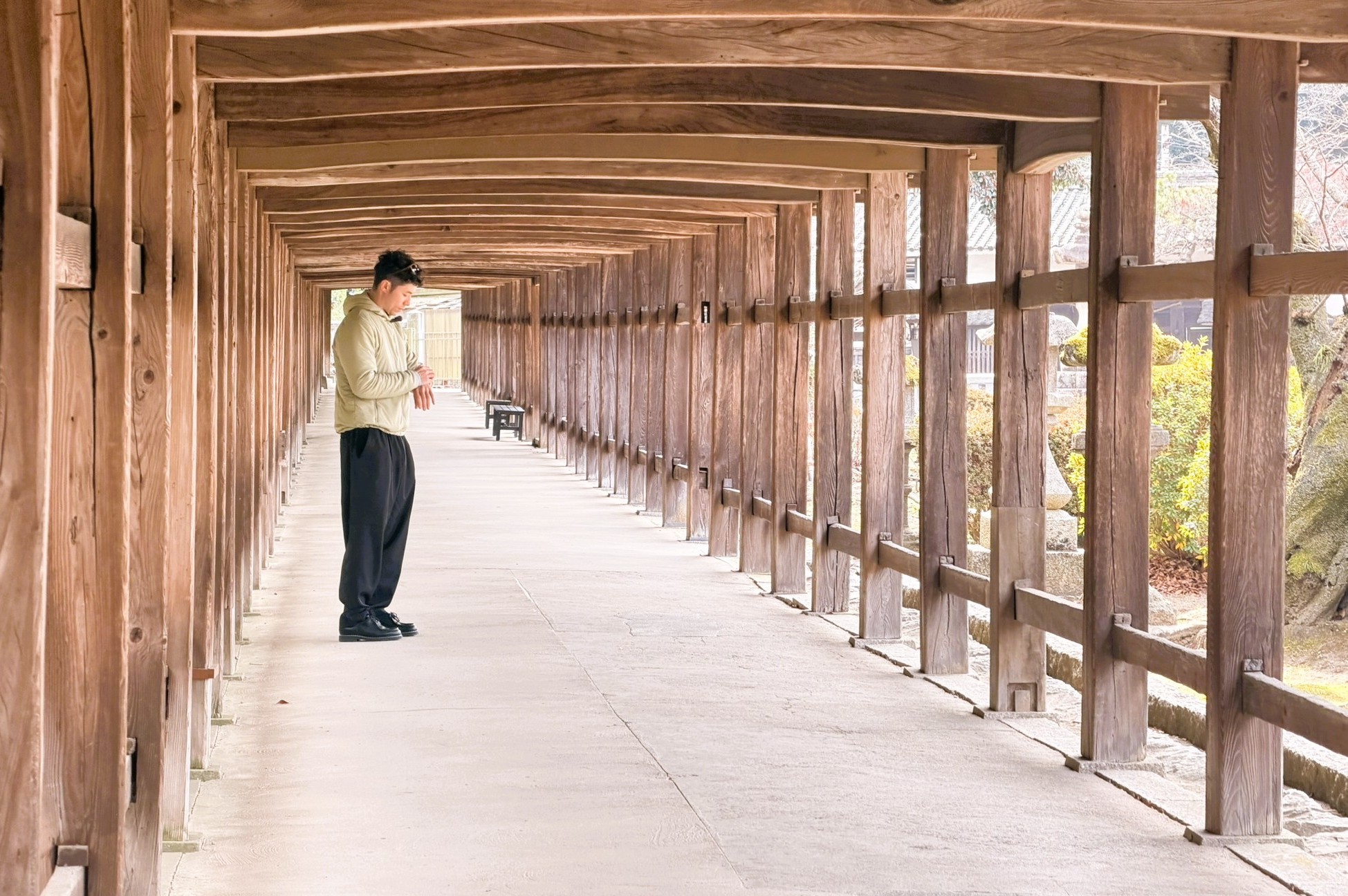
The biggest highlight of Kibitsu Shrine is its stunning corridor that stretches out in a straight line from the main hall. Walking along this beautiful corridor, which is about 400 meters long, you can’t help but stand a little taller and feel the air instantly become crisp and refreshing.
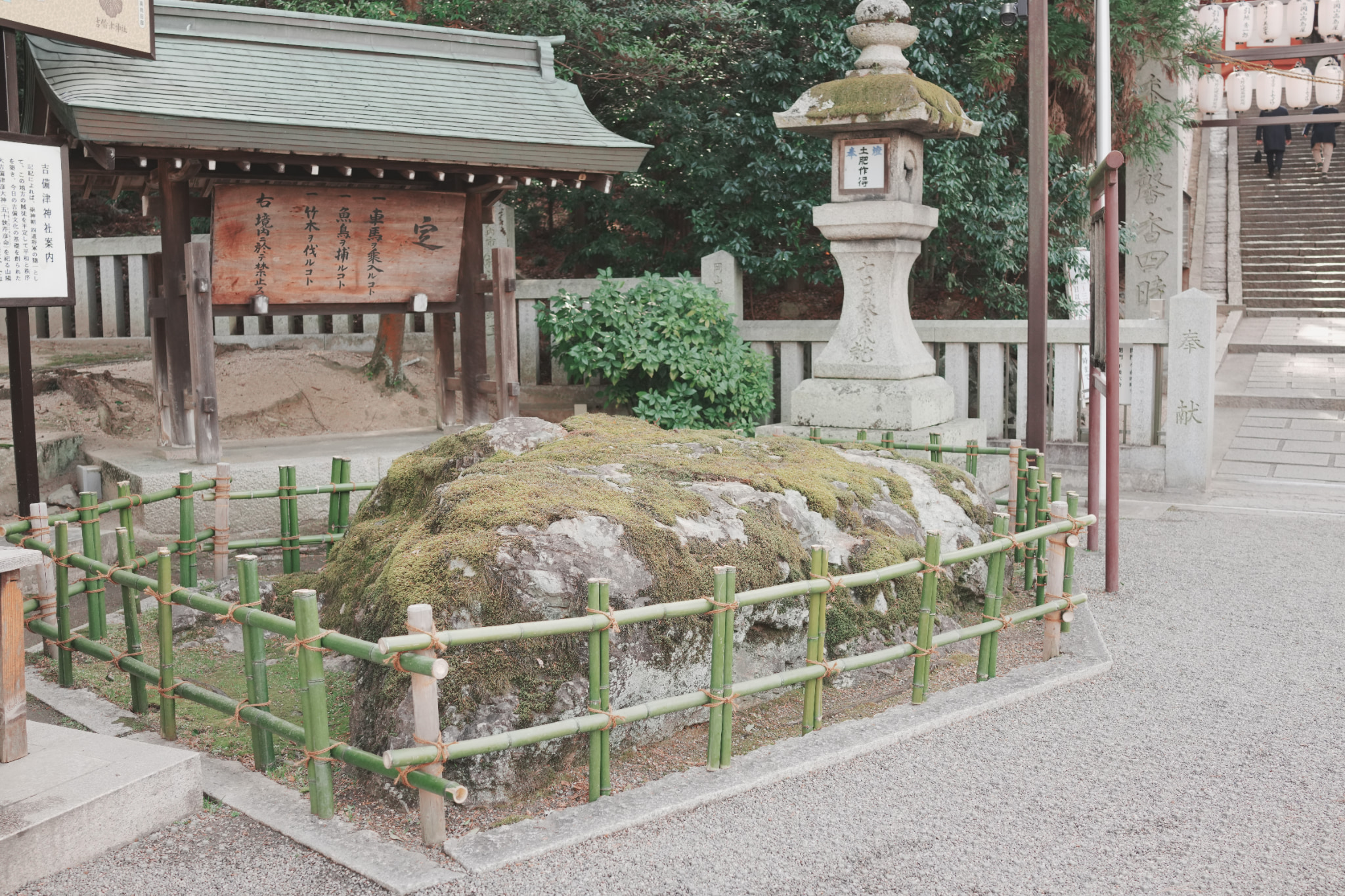
Finally, I caught sight of the massive rock called “Yaoki Iwa,” where Daikichibitsuhiko no Mikoto—the legendary figure said to be the model for Momotaro—placed the arrow that struck down the demon Ura. Leaving Kibitsu Shrine behind, I felt like I’d just stepped through a symbolic spot where myth and history quietly come together, keeping the legend alive even today.
A massive ancient burial mound appearing right in the middle of the fields
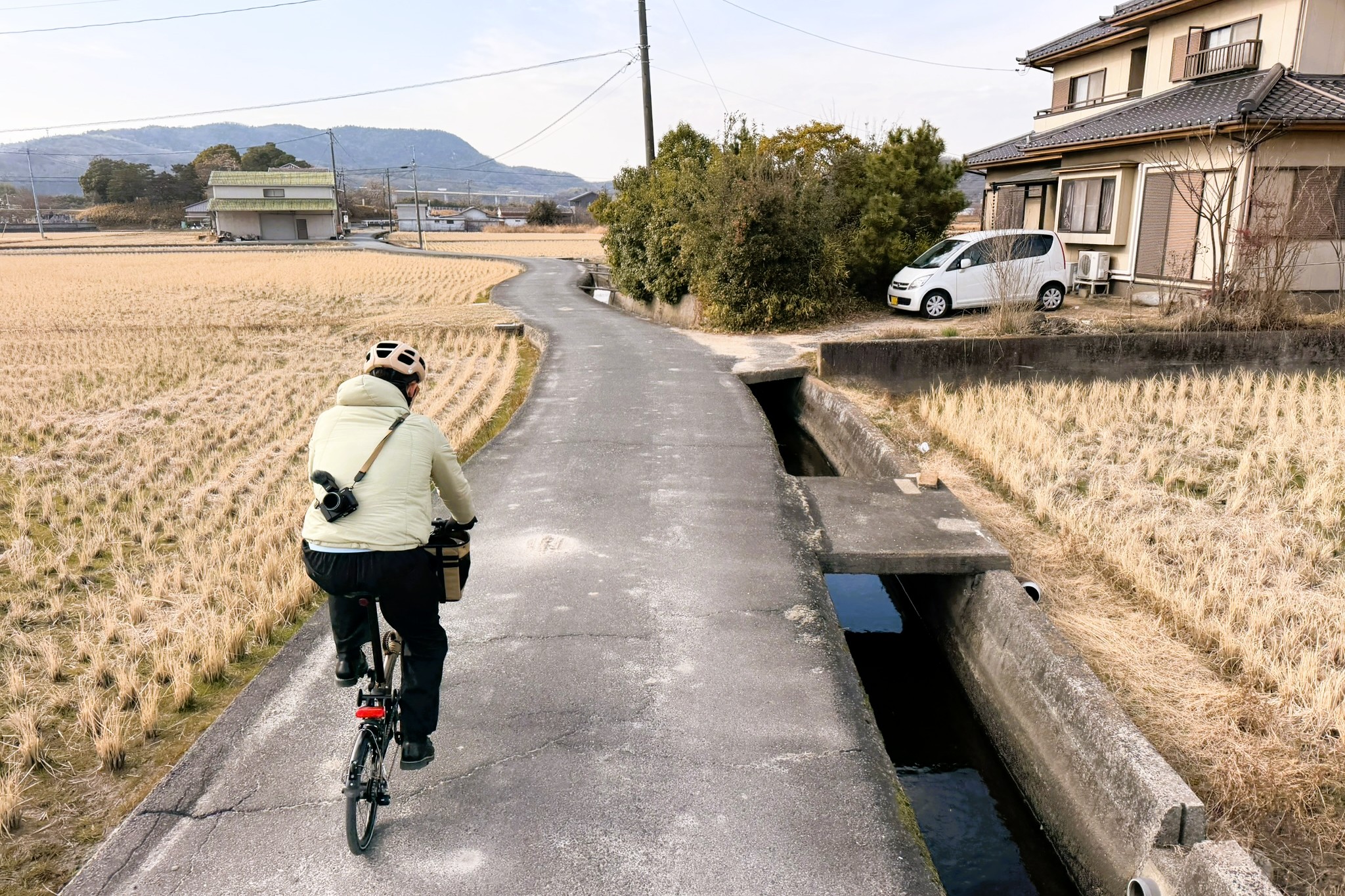
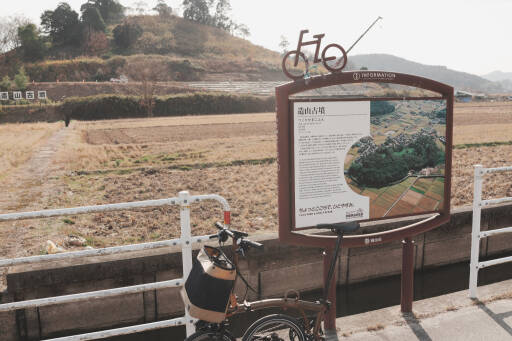
Getting a little taste of the Momotaro legend left me feeling pretty satisfied. Next up on the itinerary was the Tsukuriyama Burial Mound, known as one of Japan’s largest keyhole-shaped kofun. I cruised along the bike path that gently weaved beside flat farmland, taking it nice and easy.
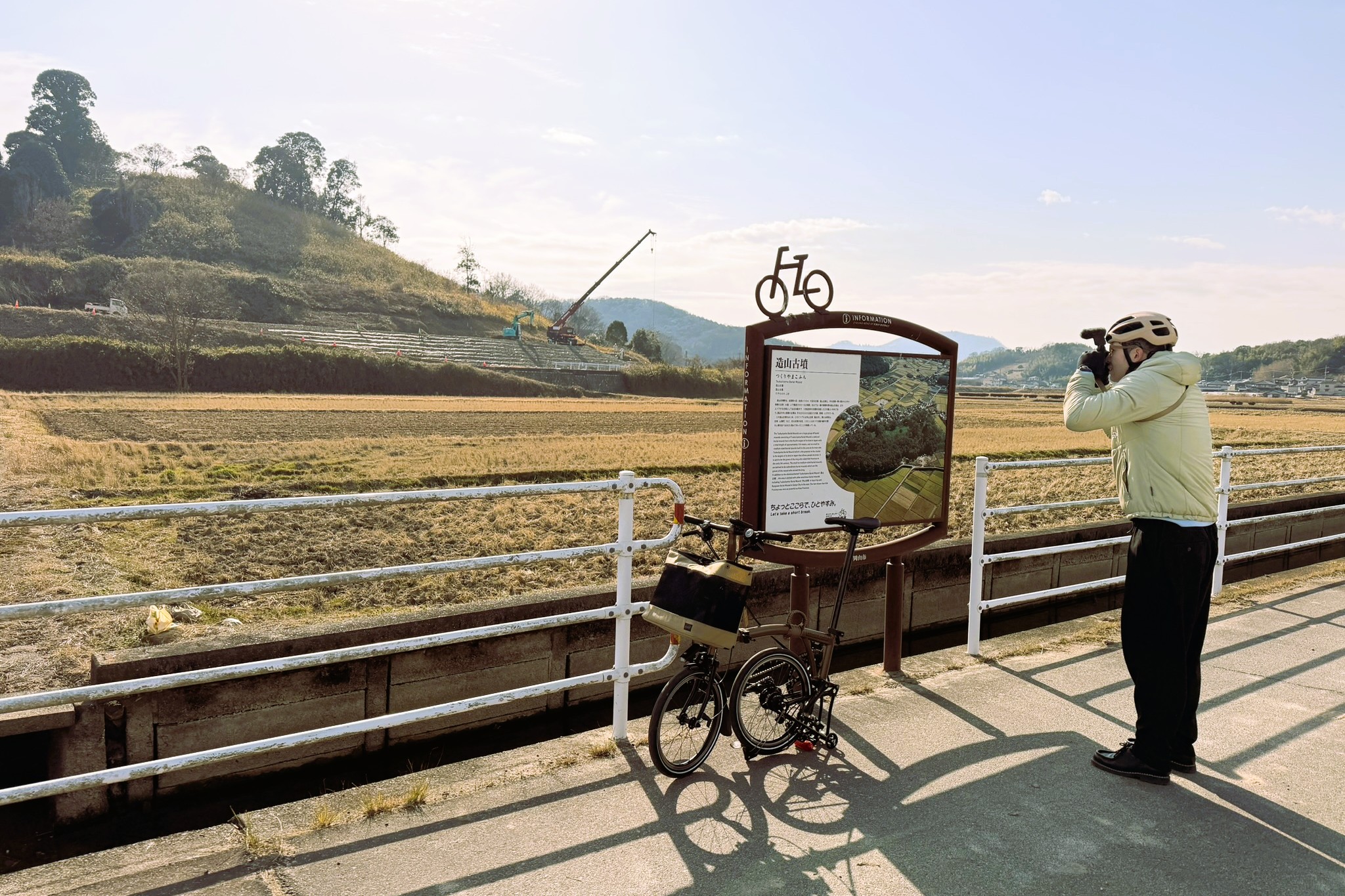
After riding for a bit, I spotted a little rise next to the fields that looked like a small hill. Getting closer, I realized it was actually one of Japan’s largest keyhole-shaped burial mounds—the Tsukuriyama Kofun.
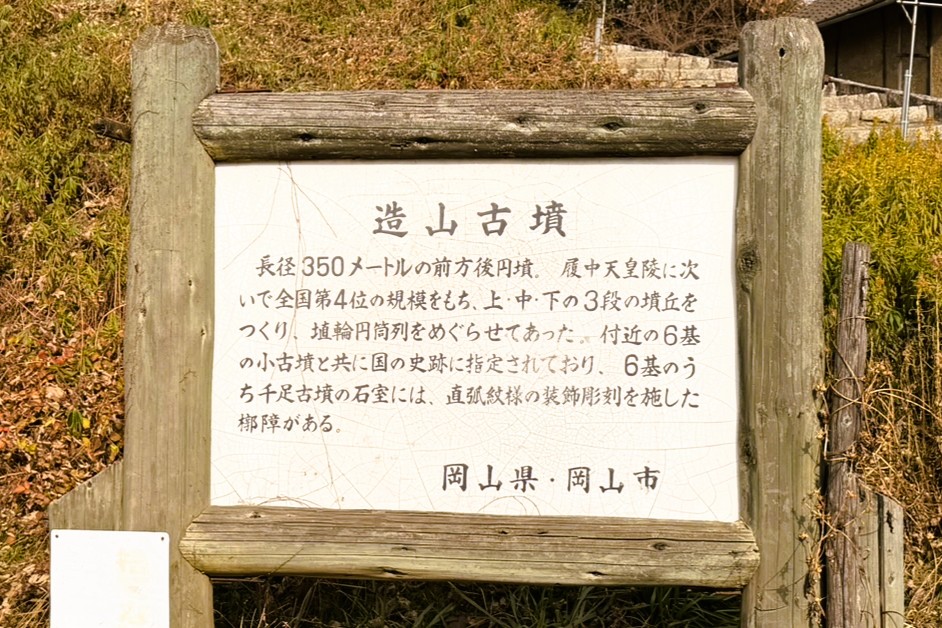
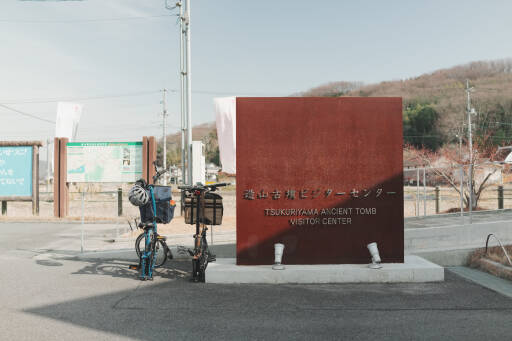
The Kibi area is dotted with tons of ancient burial mounds. Curious about why there are so many, I decided to stop by the Tsukuriyama Burial Mound Visitor Center to get some answers.
Heading to the visitor center to uncover the mysteries of the ancient burial mounds!
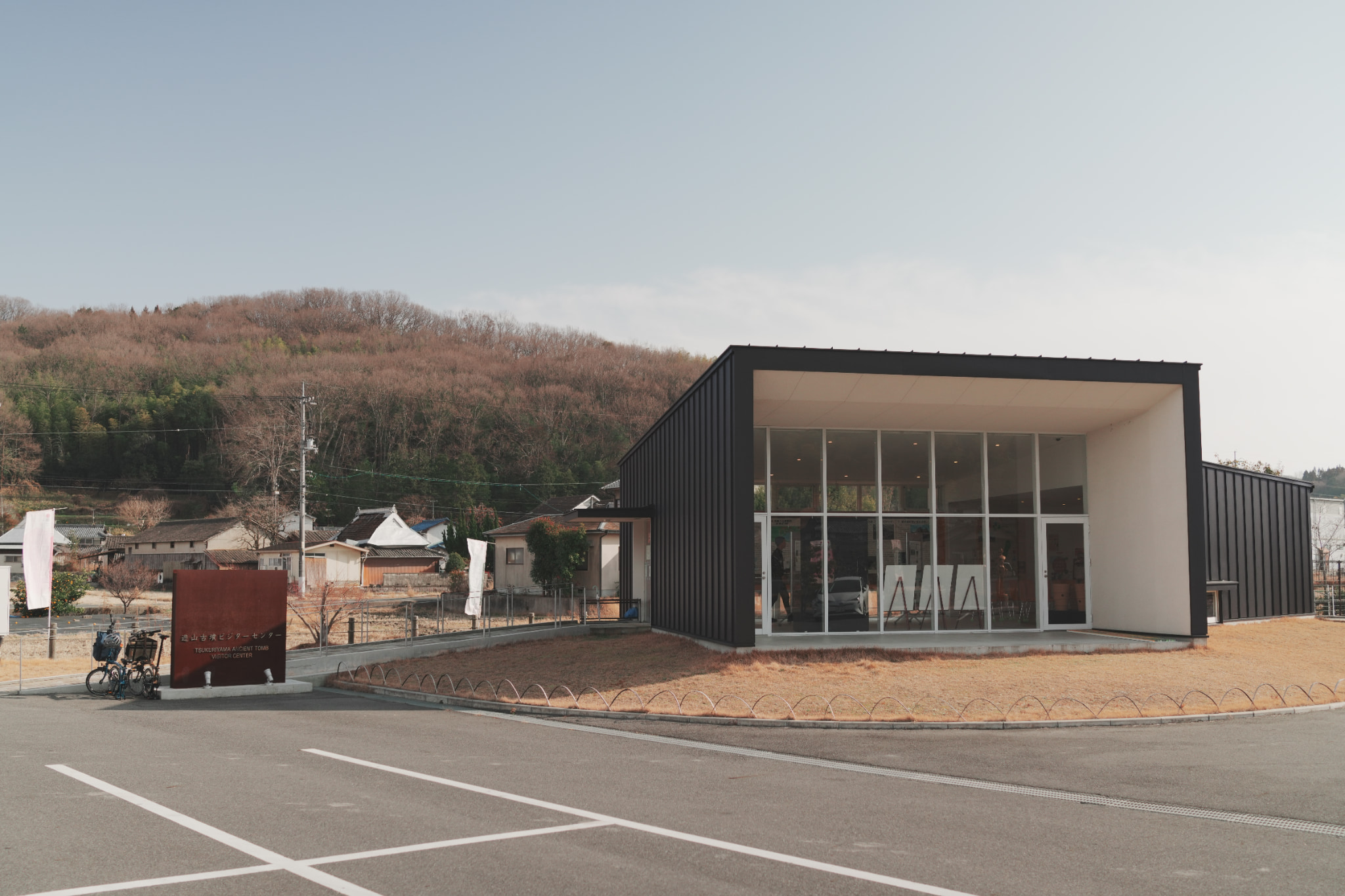
Right next to the Tsukuriyama Burial Mound stands the Tsukuriyama Kofun Visitor Center, the go-to spot for all things related to the kofun. This brand-new facility opened in April 2020 and makes it super easy to learn about the history of the Tsukuriyama Burial Mound and the whole Kibi area.
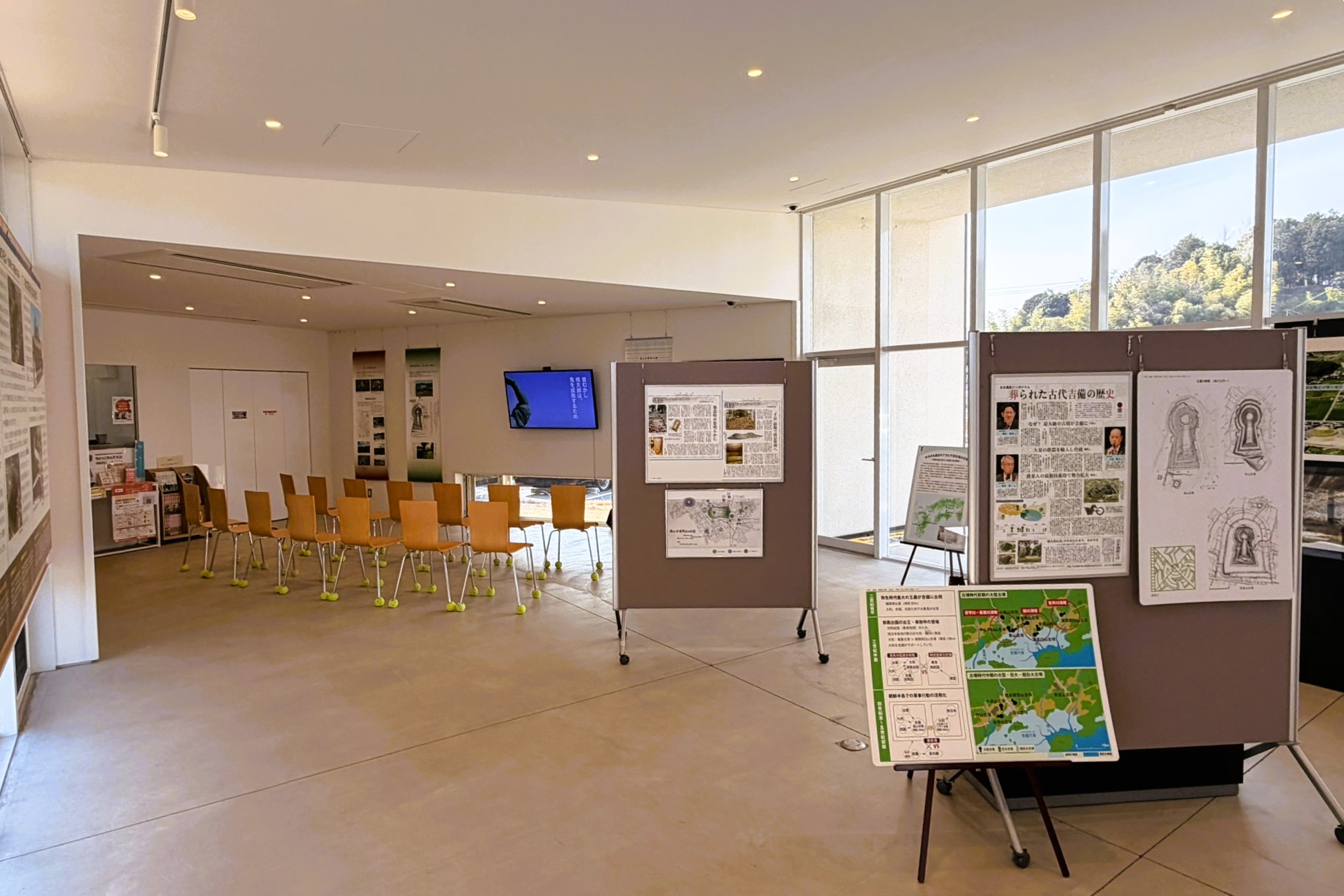
Inside the building, you’ll find plenty of panels showcasing the ancient Kibi Kingdom that thrived in this area. The history is brought to life through informative panels and videos.
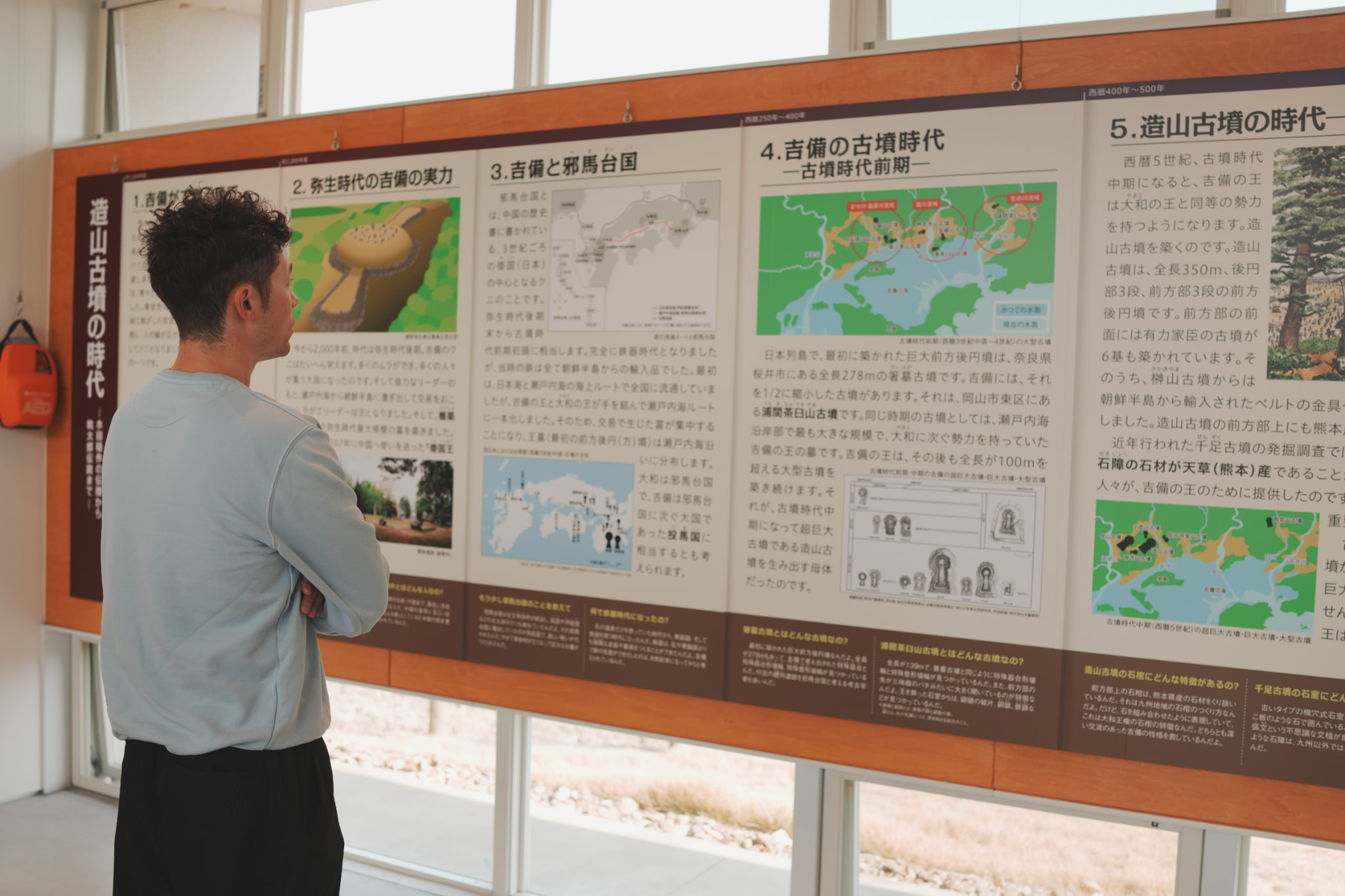 The Tsukuriyama Burial Mound, built around the 5th century, is believed to be the tomb of a powerful ancient Kibi chieftain. The fact that stones were brought all the way from Kyushu really shows just how massive and influential their power was.
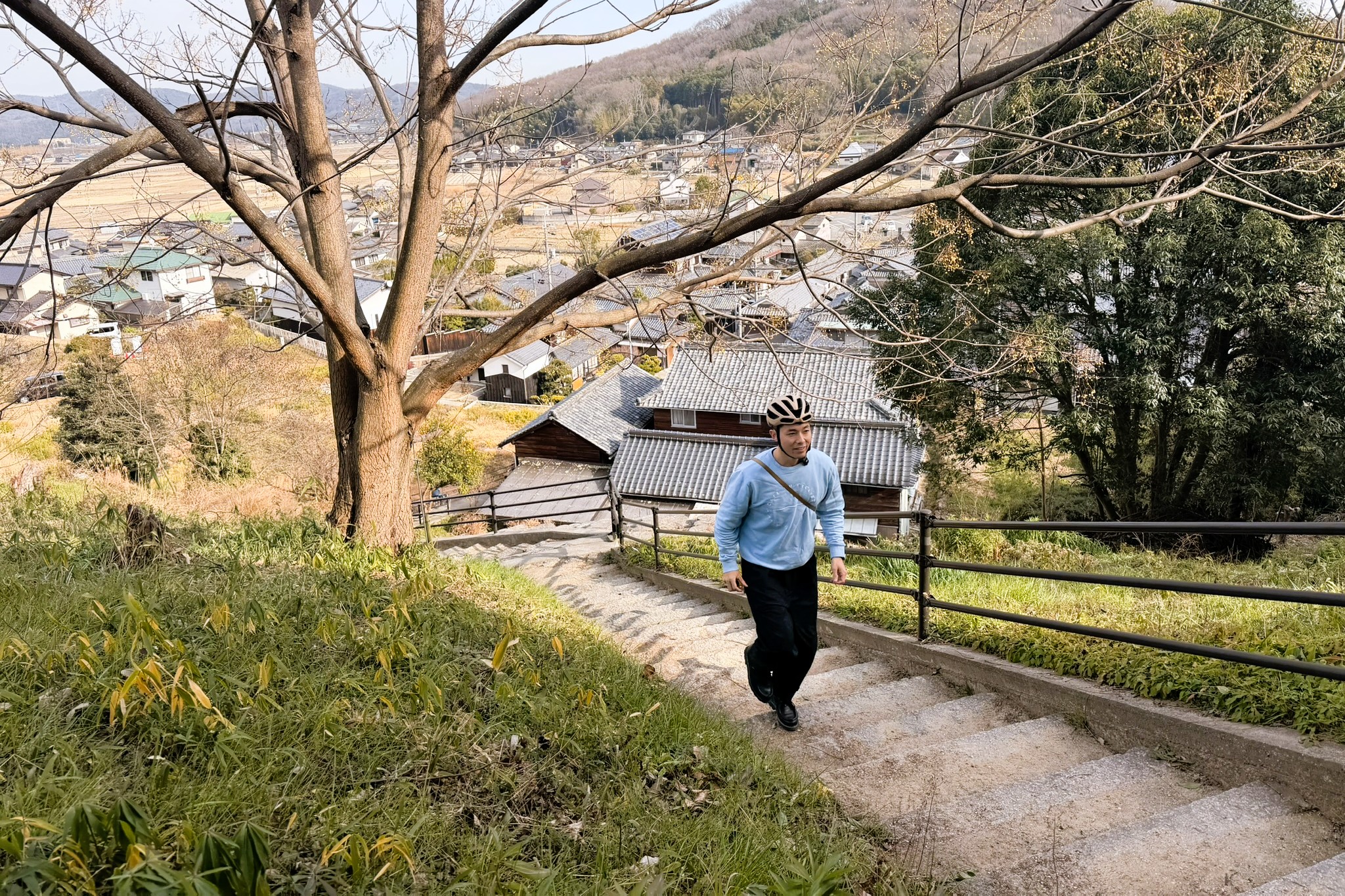
After getting a quick preview at the visitor center, it was finally time for the real deal. Right behind the building, you can hike up to the top of the burial mound. Climbing a kofun for the first time ever had me totally pumped. There’s something really cool about standing on a piece of history—it just sneaks up on you and makes the whole experience way more fun.
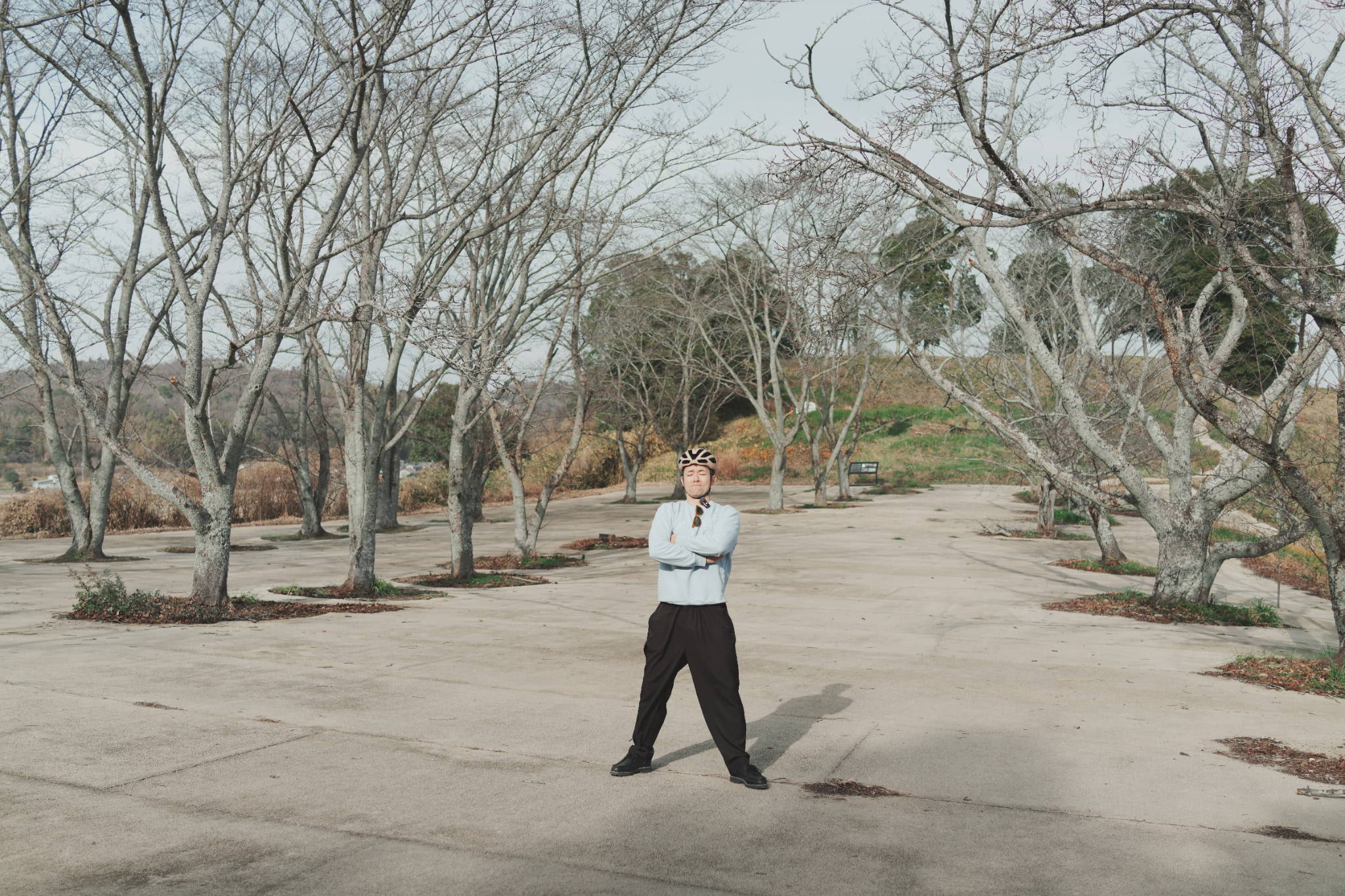
The Tsukuriyama Burial Mound is the fourth largest in Japan by size, but it’s actually the biggest ancient tomb you can climb up on. It’s a classic keyhole-shaped kofun, often called the origin of Japanese burial mounds. Just imagining that this massive structure was built entirely by hand is pretty awe-inspiring.
After checking out the burial mound, next up is the five-story pagoda.
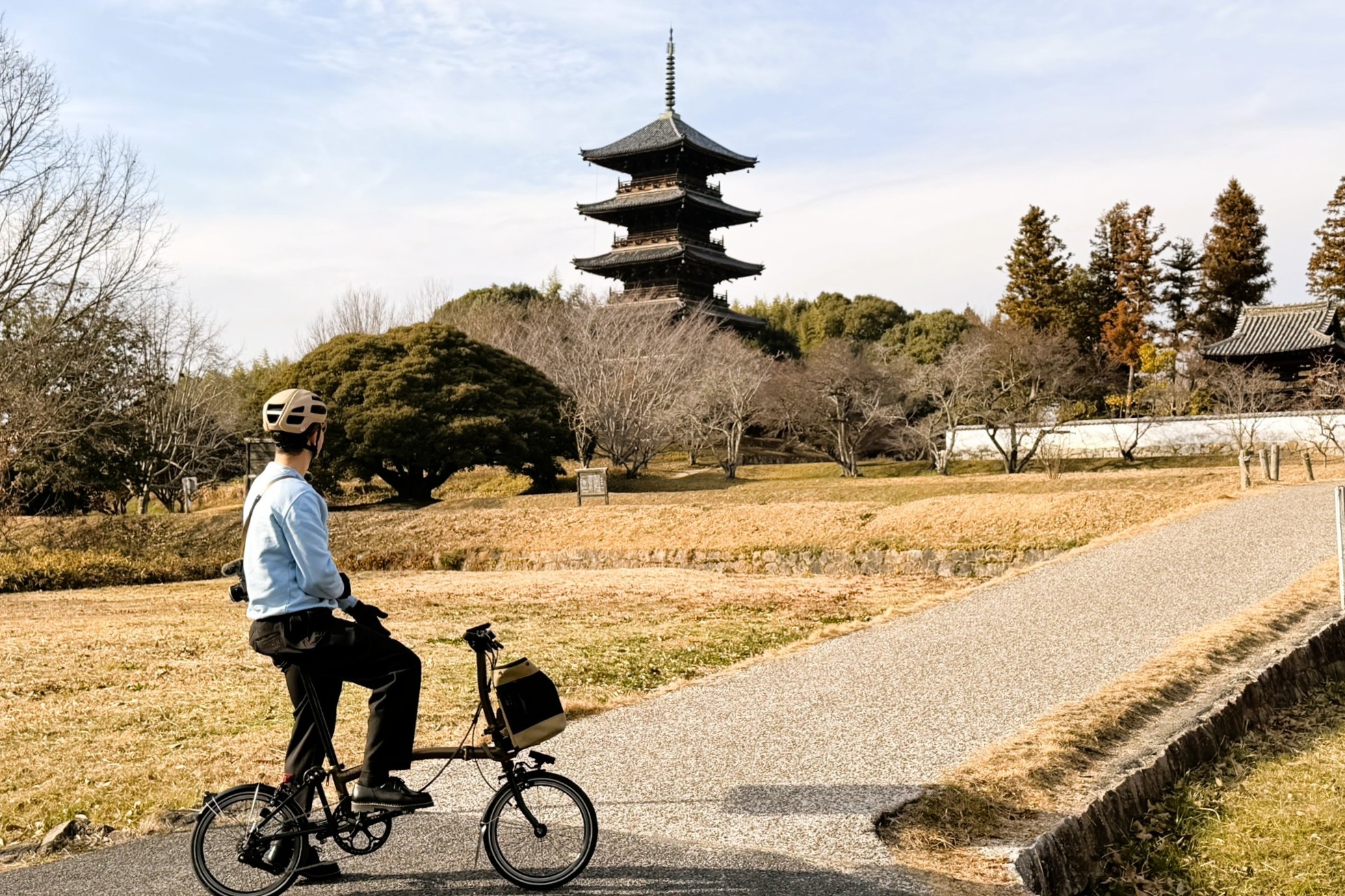
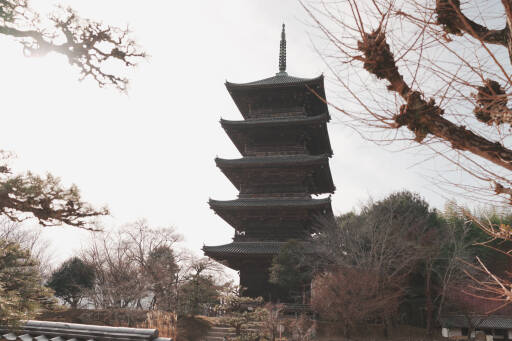
After soaking up some ancient history at the Tsukuriyama Burial Mound, head over to another historic spot, Bitchu Kokubunji. As you ride along the bike path, a peaceful rural landscape unfolds, and suddenly, there it is—a five-story pagoda popping into view.
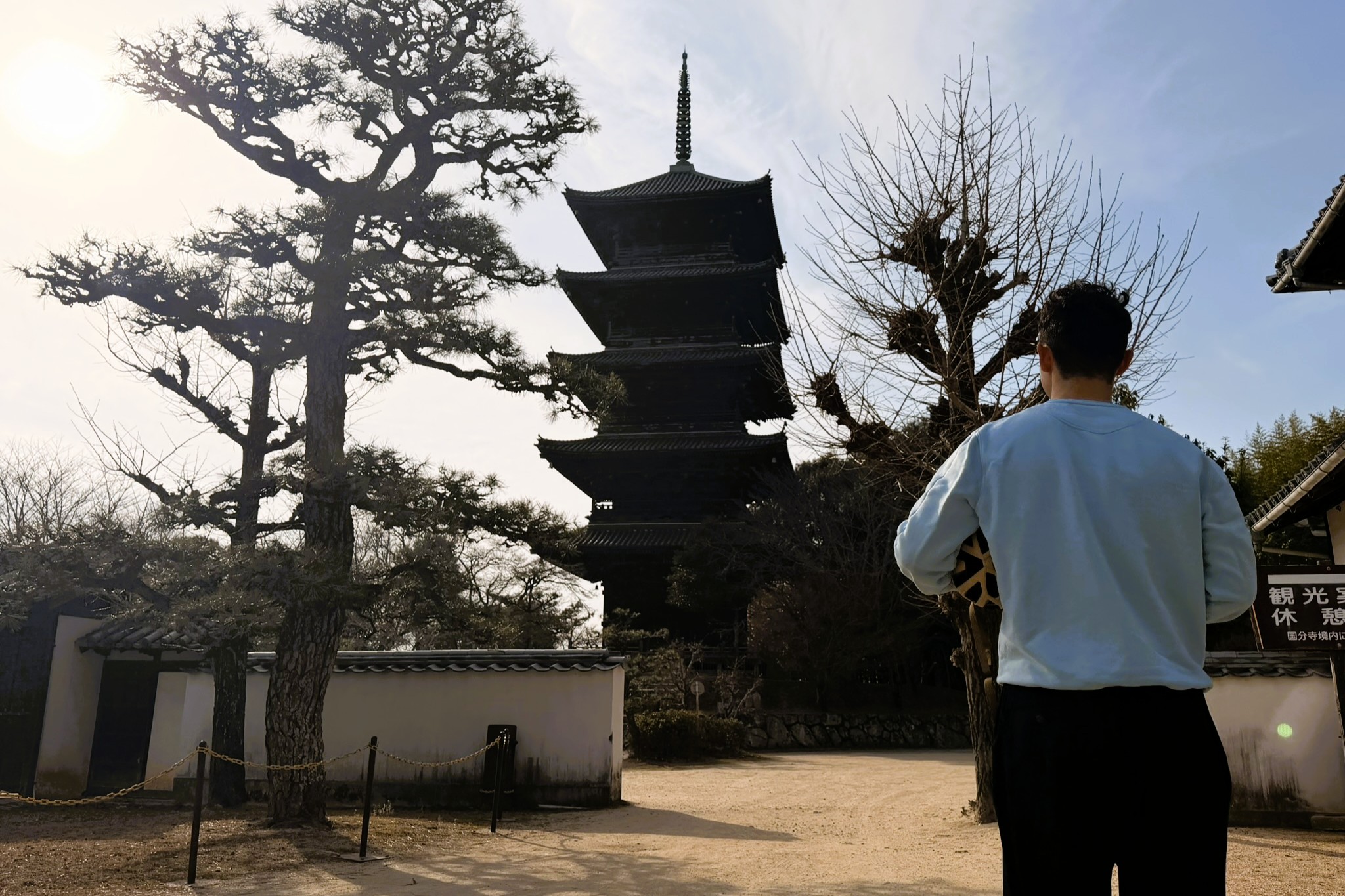
The ruins of Bitchu Kokubunji are one of the official temples established back in 741 by Emperor Shomu, who hoped to protect the country and its people from natural disasters and famines through the power of Buddhism. It’s a spot in the Kibiji area where you can really feel the history of prayer and protection.
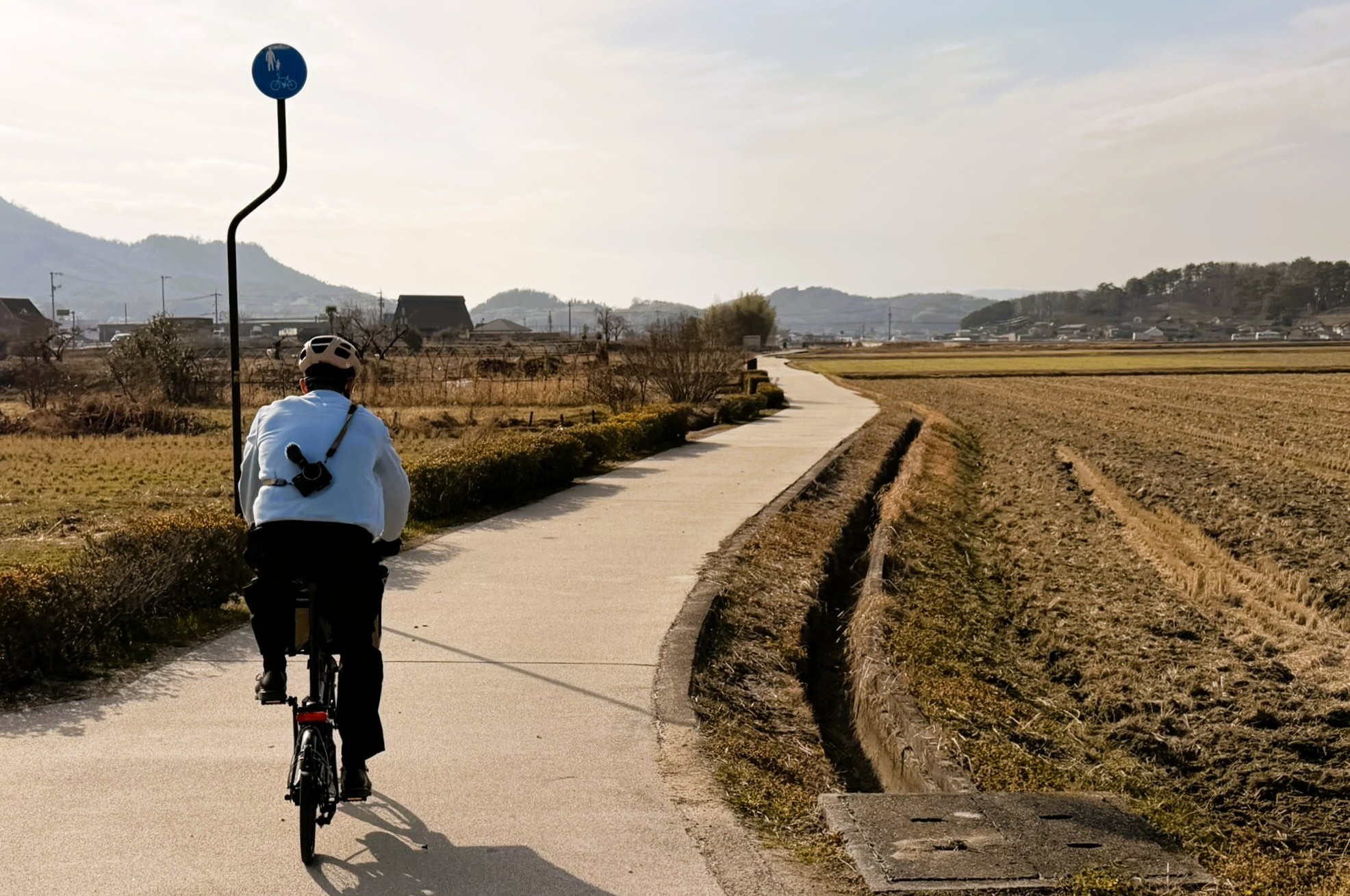
Riding along the bike path, I realized that the entire Kibi area is basically one big flat plain as far as the eye can see. To build massive structures like burial mounds and five-story pagodas, this kind of open, unobstructed terrain must have been perfect—not just for ease of work but also for making those structures stand out. As I rode, I couldn’t help but imagine that the spots were carefully chosen to make these monuments look even more impressive.
Lunch at “Shunkan Hiroba,” where everything’s fresh and in season
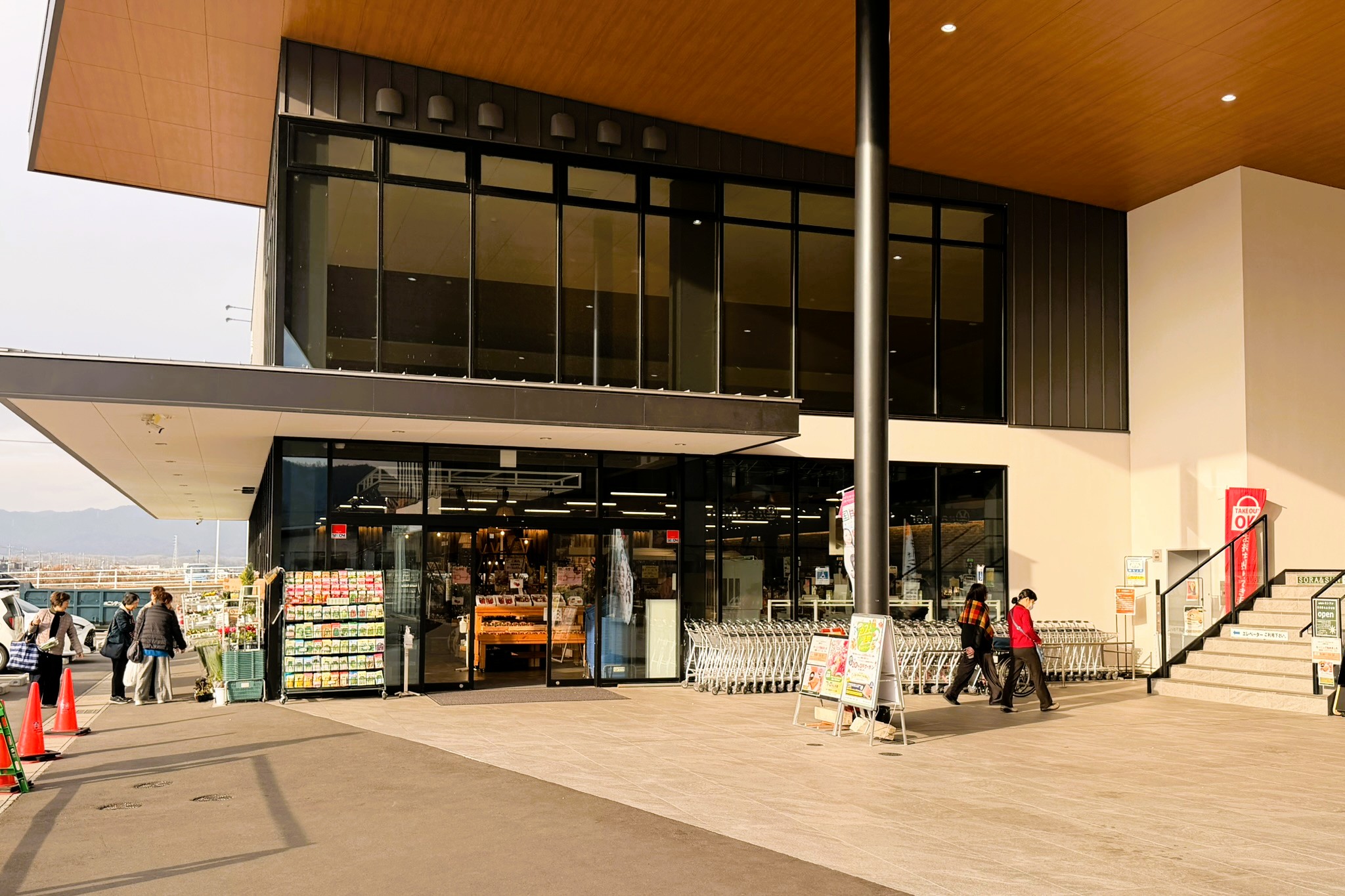
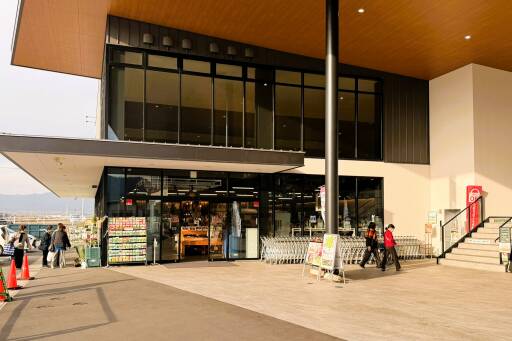
We stopped by the JA facility called “Shunkan Hiroba” for a slightly late lunch along the way.
On the first floor, you’ll find the fresh farm and livestock market “Hare Nochi Hare,” and upstairs there’s the cozy café restaurant “SORA & SUN” where you can enjoy the local food scene. It’s a great spot to soak up the flavors of the area.
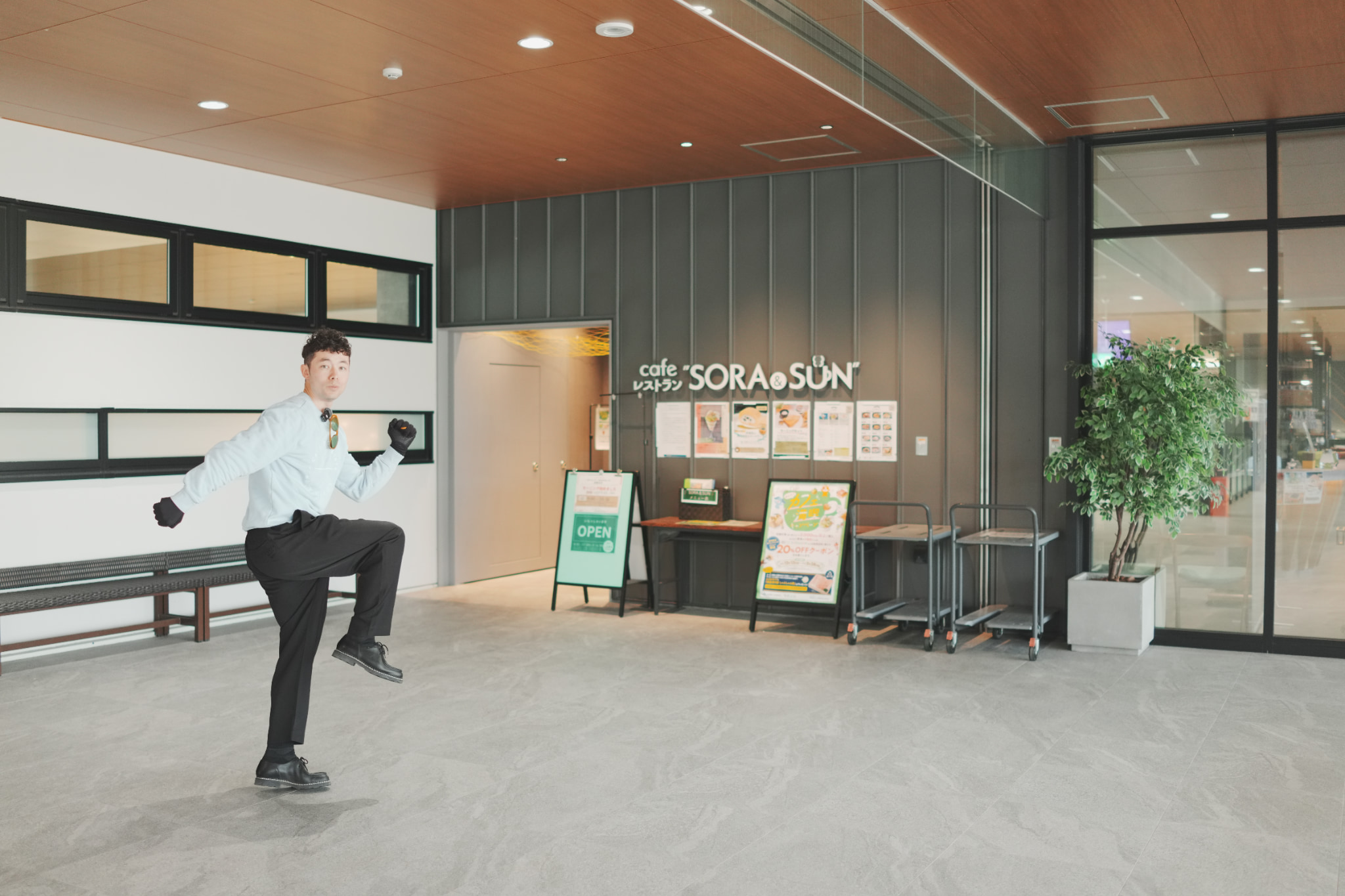
Up on the second floor, the café “SORA & SUN” offers a buffet featuring local veggies during lunchtime, which sounded super tempting. Unfortunately, we arrived a bit late this time and missed the lunch window.
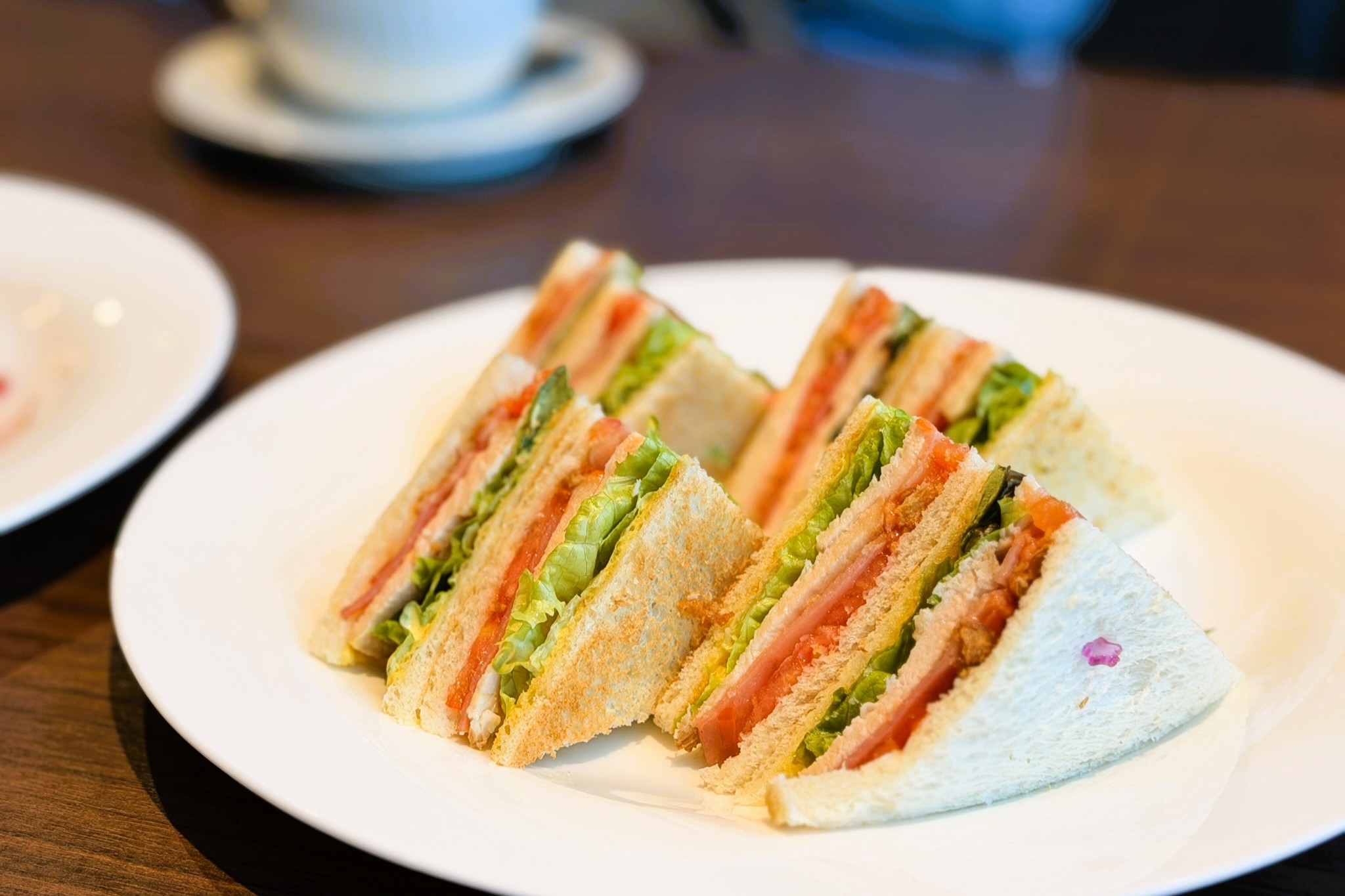
During café time, you could also order light snacks, so I went with a clubhouse sandwich made with local veggies and a mixed berry danish. Both had super chewy bread, and the veggies and fruit were surprisingly fresh.
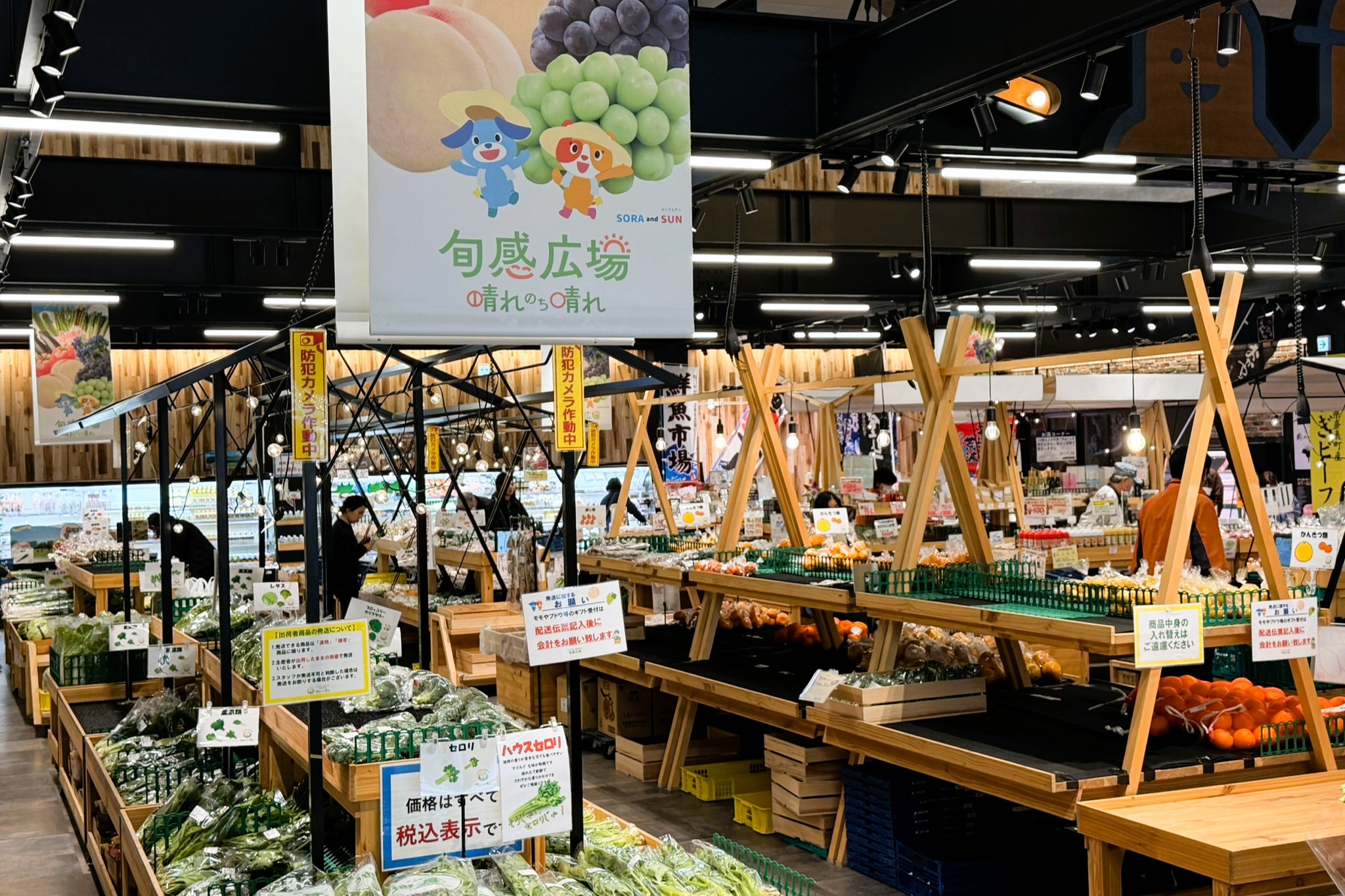
After eating, I headed down to the farm and livestock produce market on the first floor. Every vegetable on display looked so fresh and vibrant, it totally lifted my spirits. I couldn’t exactly take the veggies home, but I picked out some long-lasting bagels as souvenirs instead.
Stopping by Ponte to Discover Leather Goods
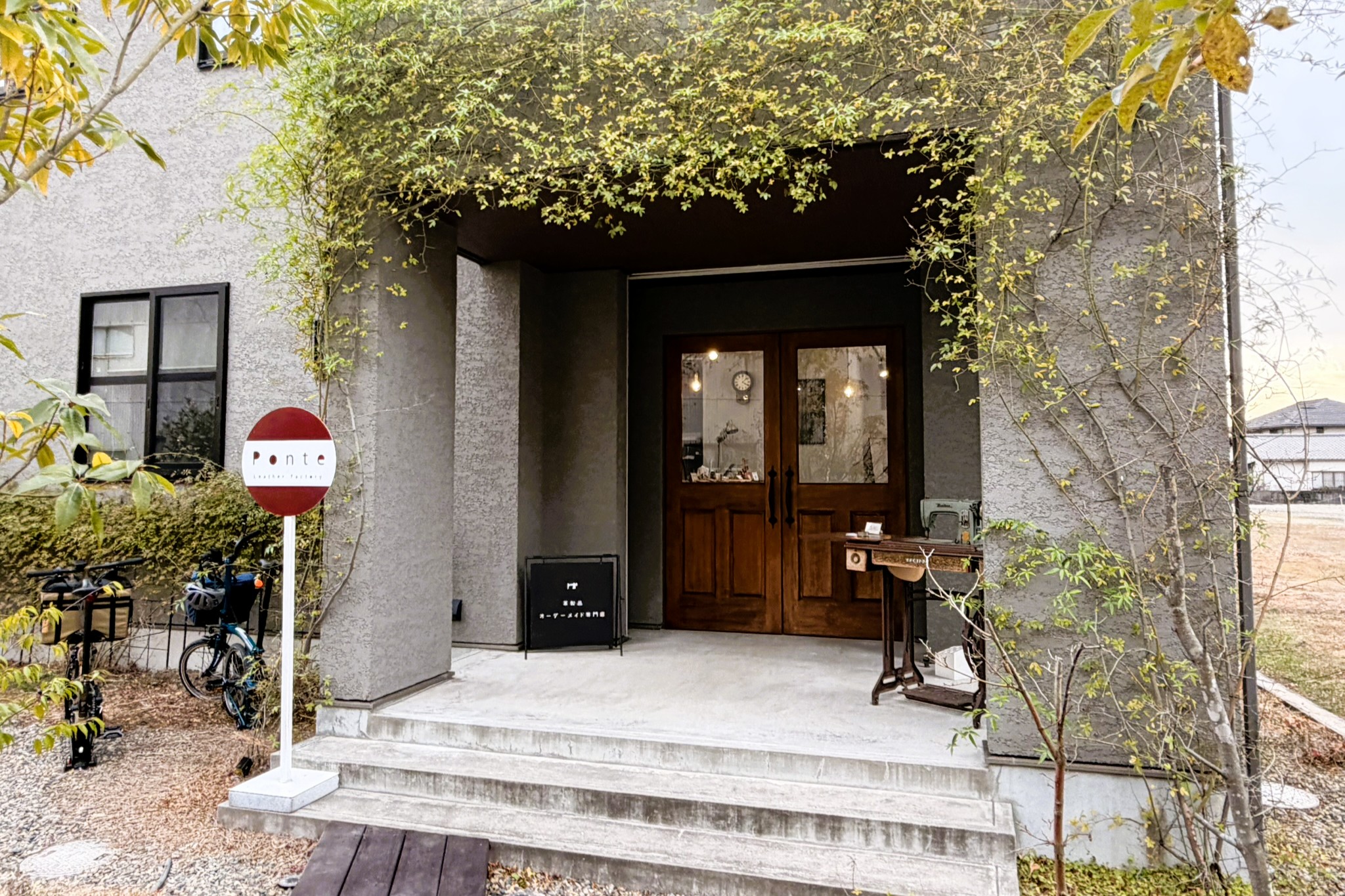
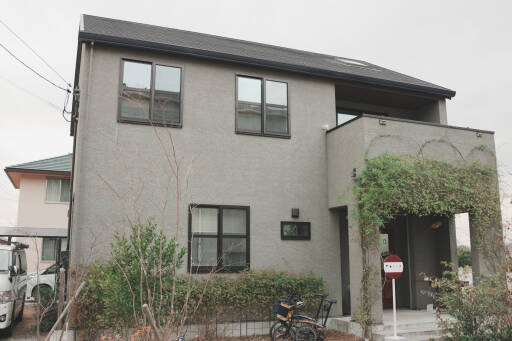
After filling up, head over to “Ponte,” a leather goods shop near Shunkan Hiroba. It’s a stylish building with the workshop and shop on the first floor of a two-story house.
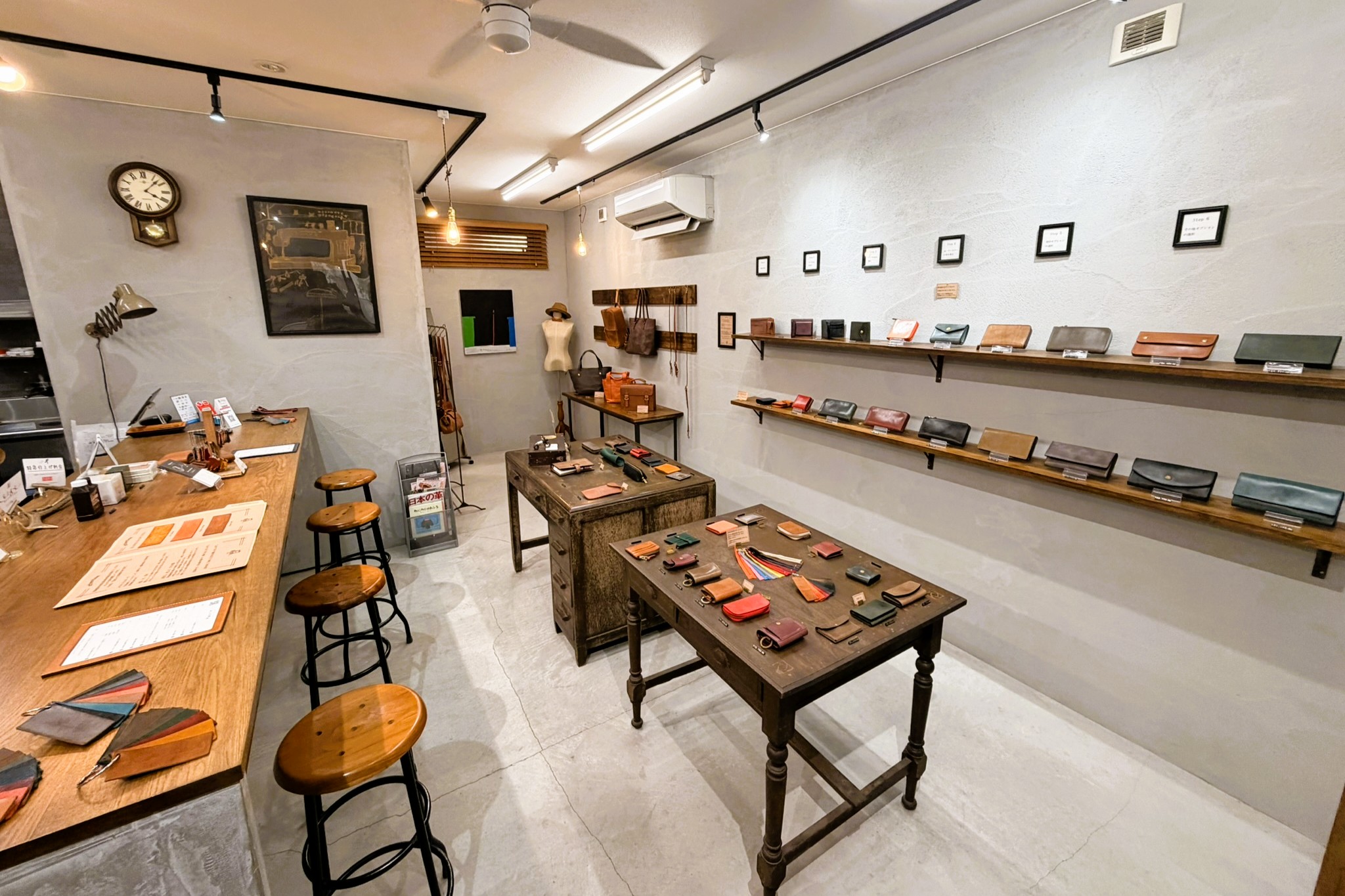
This time, I (Tsuchi) stopped by a shop I’d been wanting to check out. The moment I stepped inside, the rich scent of leather hit me, and I couldn’t help but take a deep breath. The place was filled with original leather goods, and just browsing around got my excitement slowly building up.
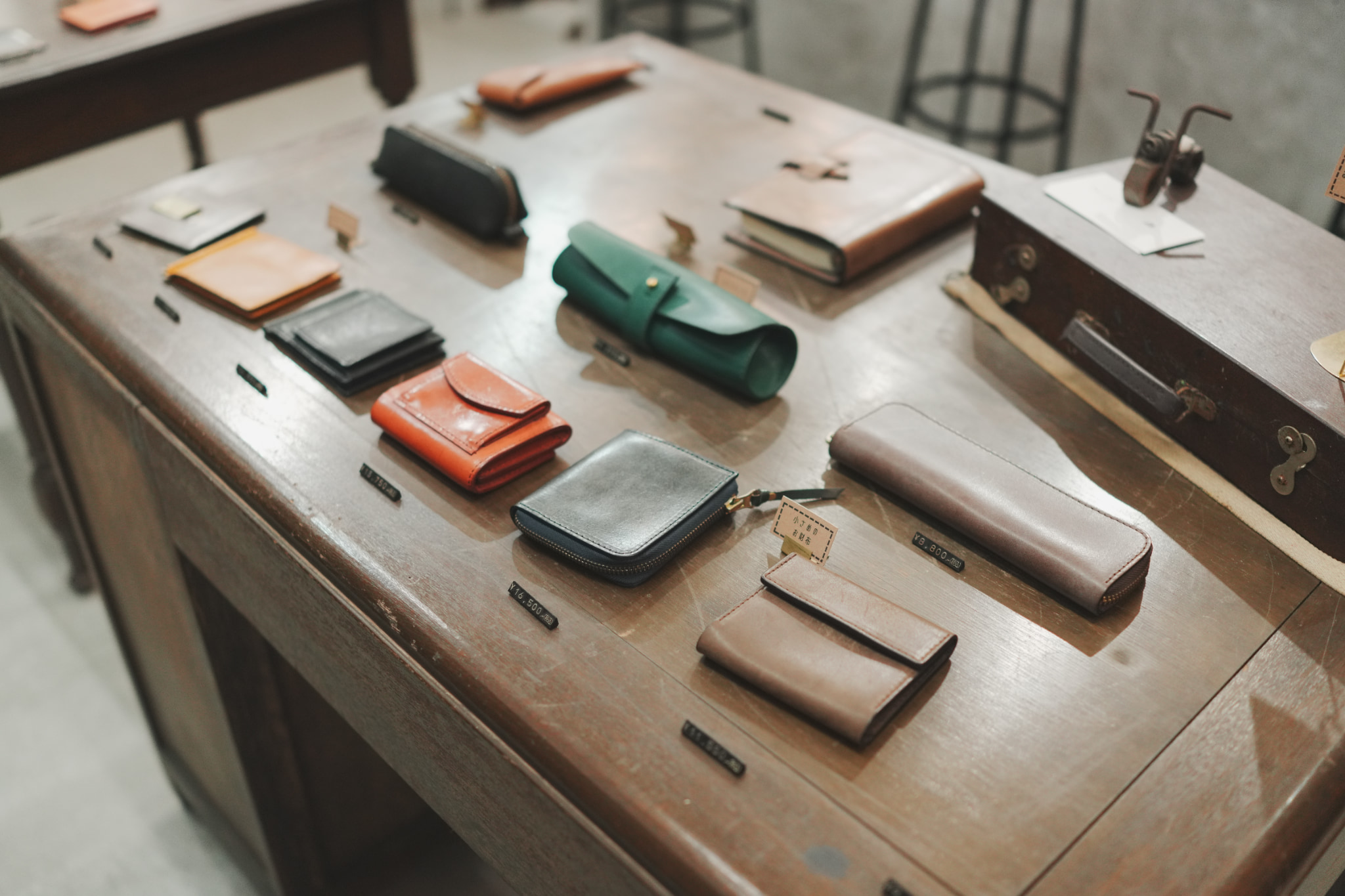
They all feature simple, timeless designs that never get old. Despite the careful craftsmanship, the prices are surprisingly reasonable, making you quietly nod in approval and think, “This is really good…”
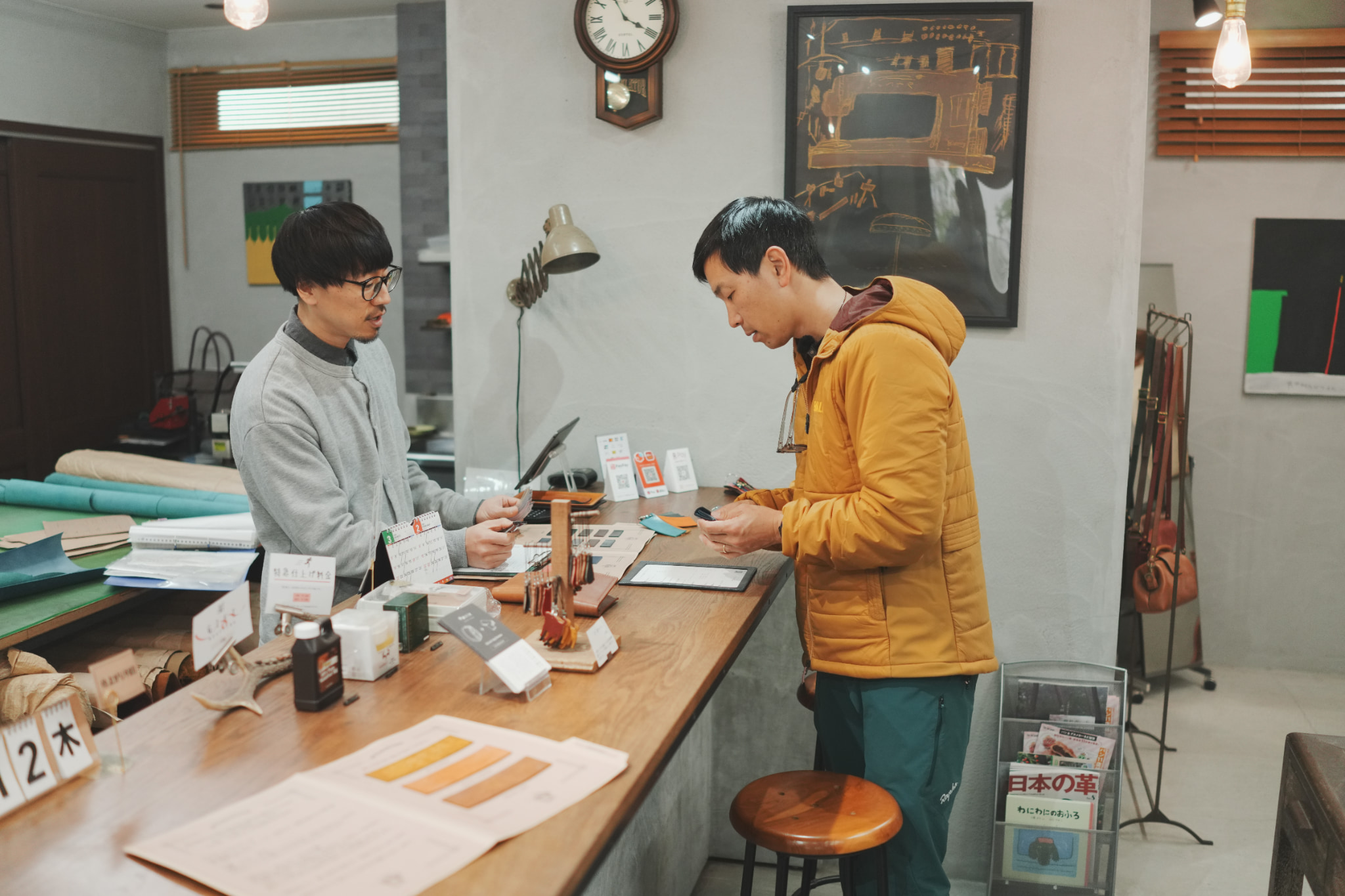
For a travel keepsake, I semi-custom ordered a coin pouch. Picking out the leather color and zipper style was a blast, and they even ship it straight to your home once it’s done. It takes about a month to arrive, but honestly, waiting for it just adds to the whole travel vibe.
Taking it slow and soaking in the views at Tanchou no Sato
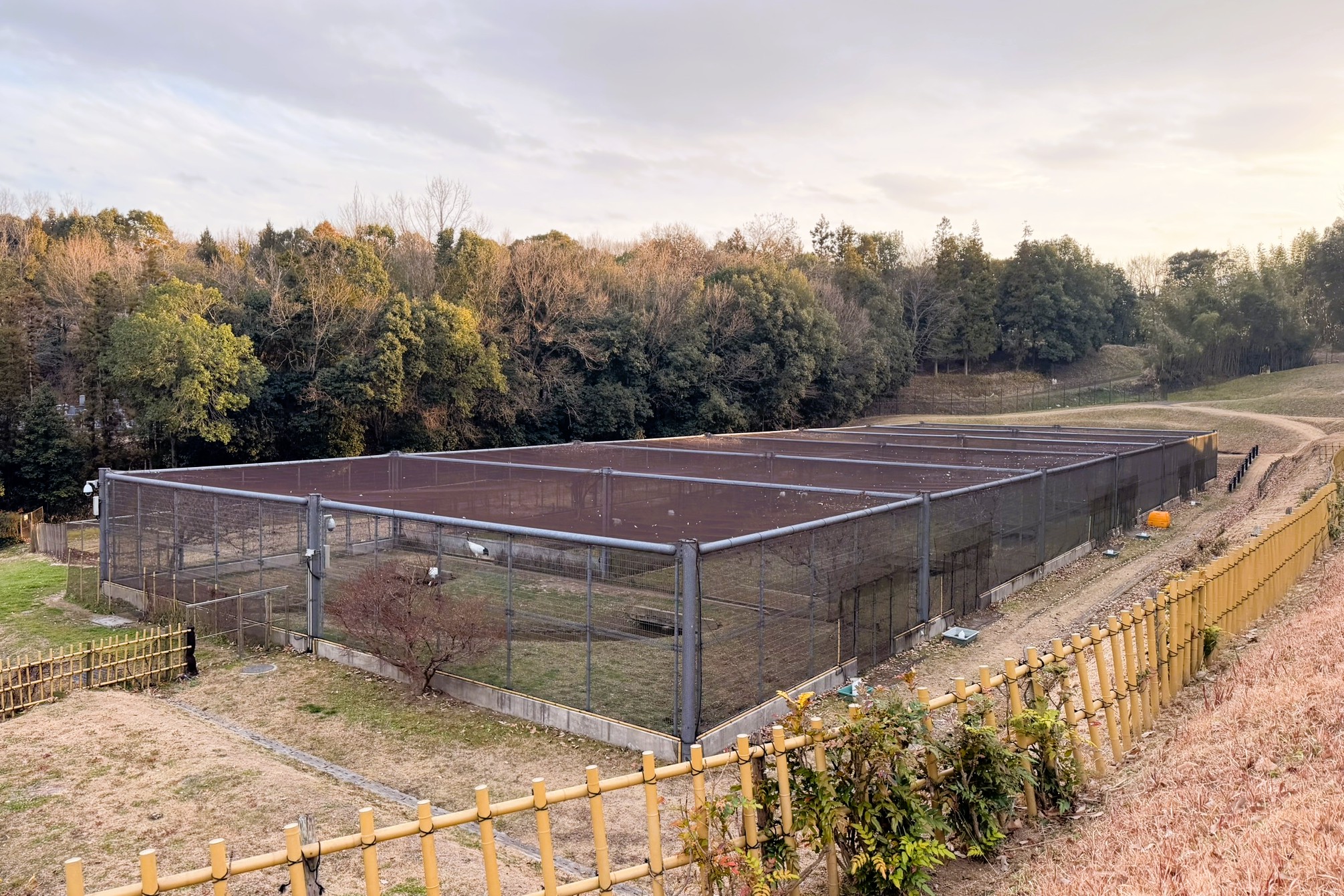
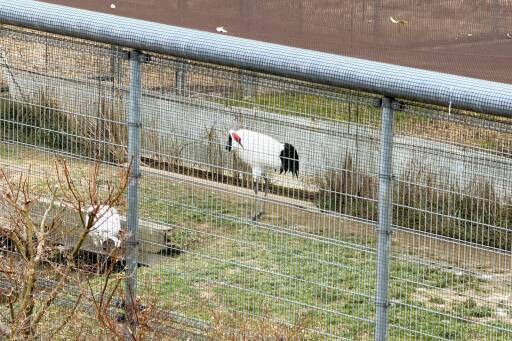
After some shopping, I stopped by “Kibiji Tsuru no Sato.” Fun fact: Okayama leads the nation in raising red-crowned cranes. Here, they’re actively protecting, raising, and breeding these elegant birds. It’s a quiet, special spot where you can get up close and admire their graceful beauty.
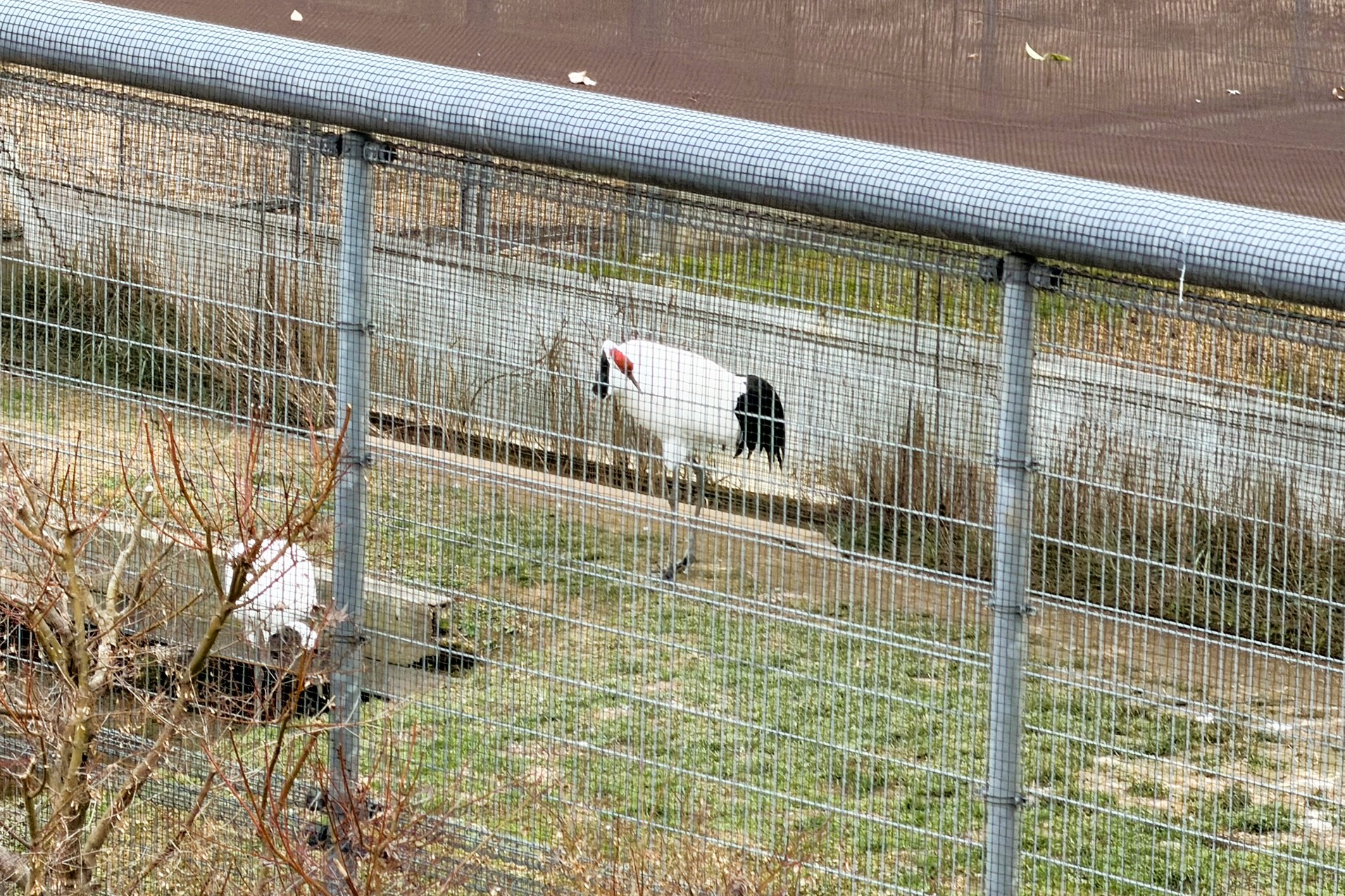
This place usually lets you get up close to the red-crowned cranes and even feed them, but this time, due to bird flu restrictions, things are limited. Unfortunately, we couldn’t get too close and had to watch from a bit of a distance.
Heading to Soja City, where the love for bread is overflowing!
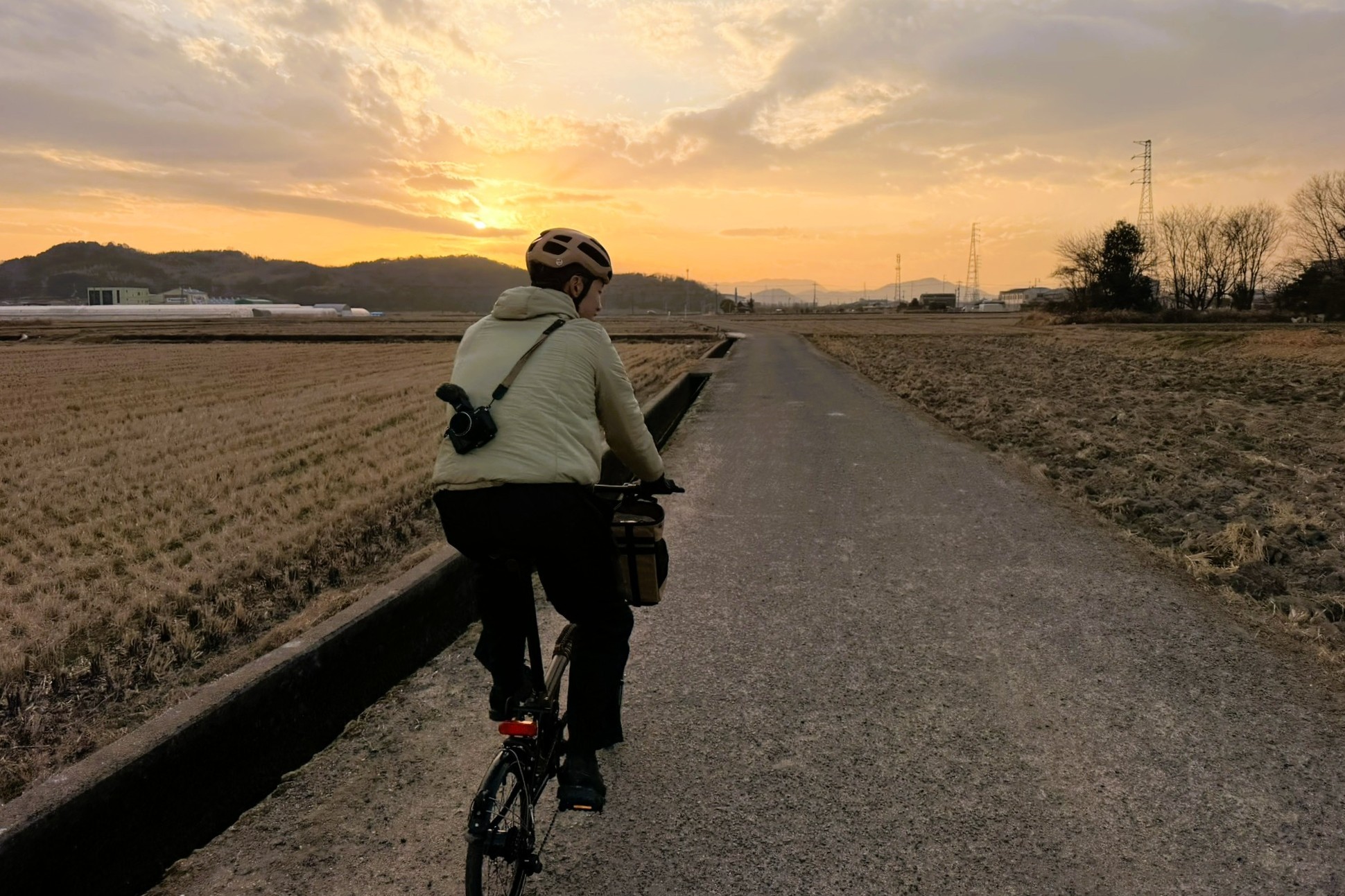
As the sun started to dip, we made our final push toward Soja City, known as the bread town and our goal for the day. Fun fact: Okayama City, the prefectural capital, is said to be one of the top places in Japan for bread consumption per household.
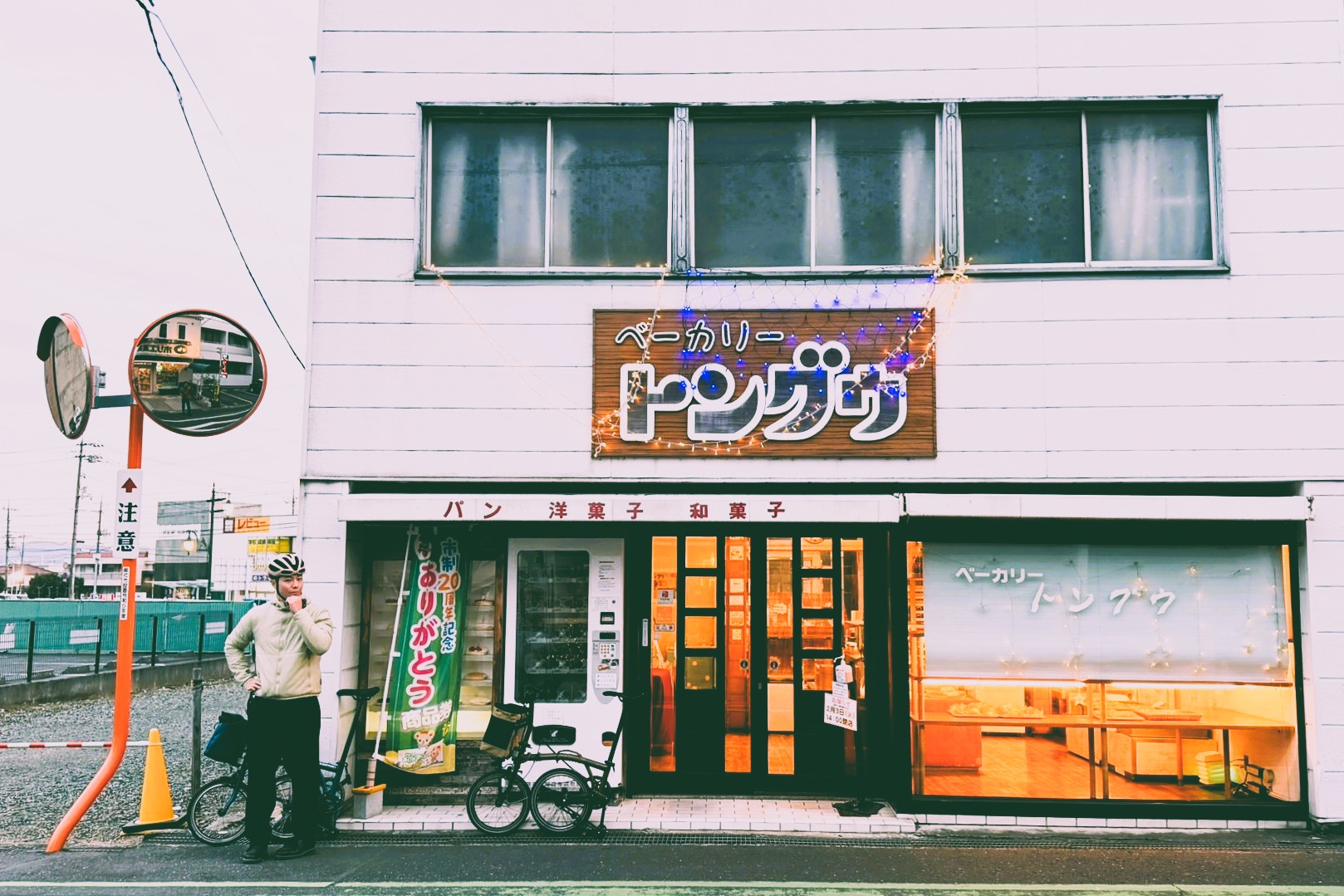
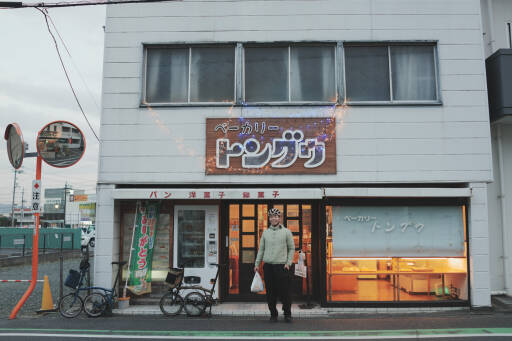
Among all the places in Okayama, Soja City stands out with some of the highest bread production and shipment volumes in the entire prefecture.“パンわーるど総社市”The whole town is all about promoting bread. Among the many famous spots, you can’t miss Tongu, a long-established bakery that’s insanely popular with the locals.
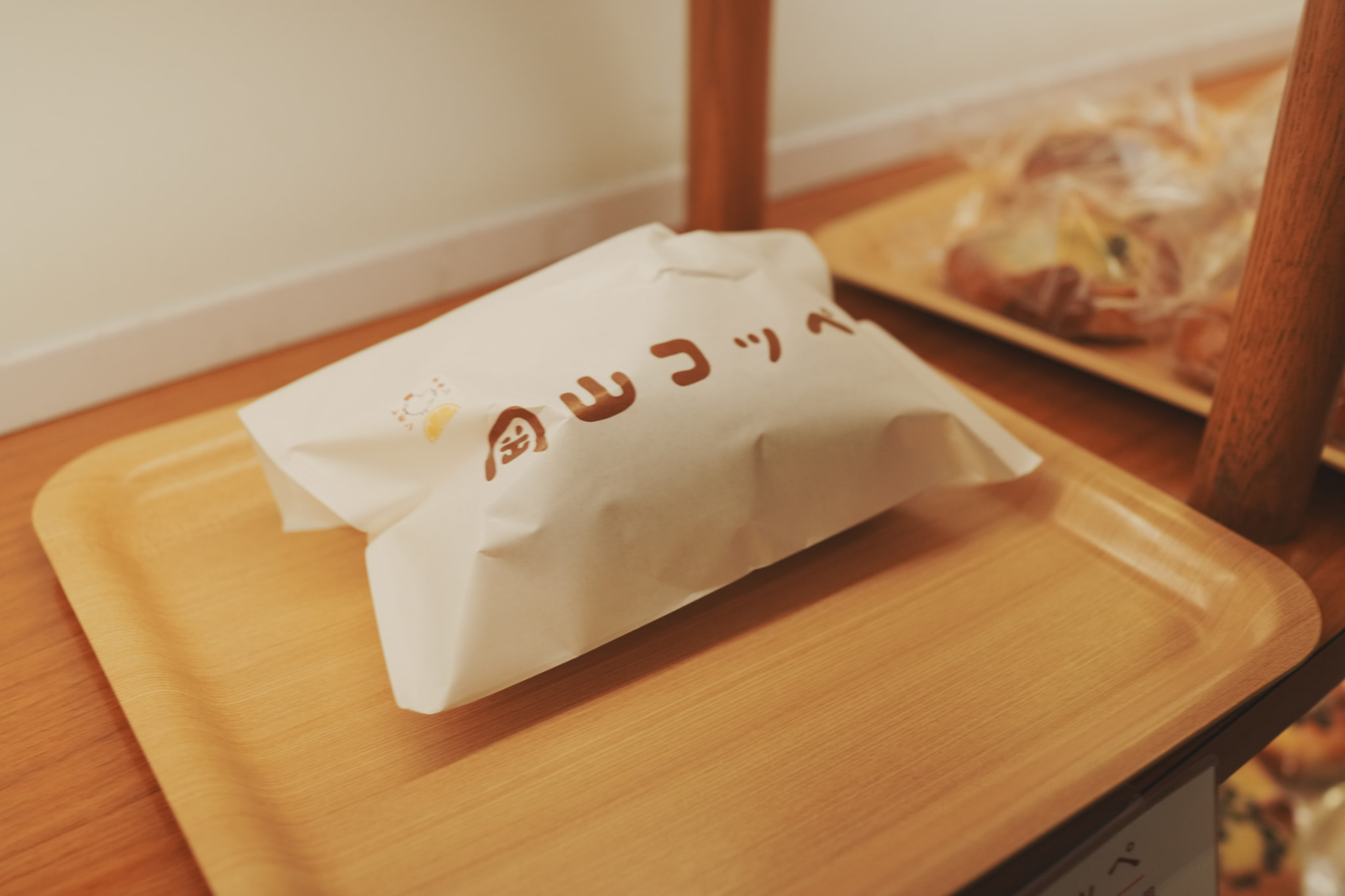
Inside the shop, there was a whole lineup of old-school koppepan and uguisu bread. Since I got there in the evening, most of the shelves were already pretty much sold out. But luckily, I managed to snag a few of the popular breads that were still left.
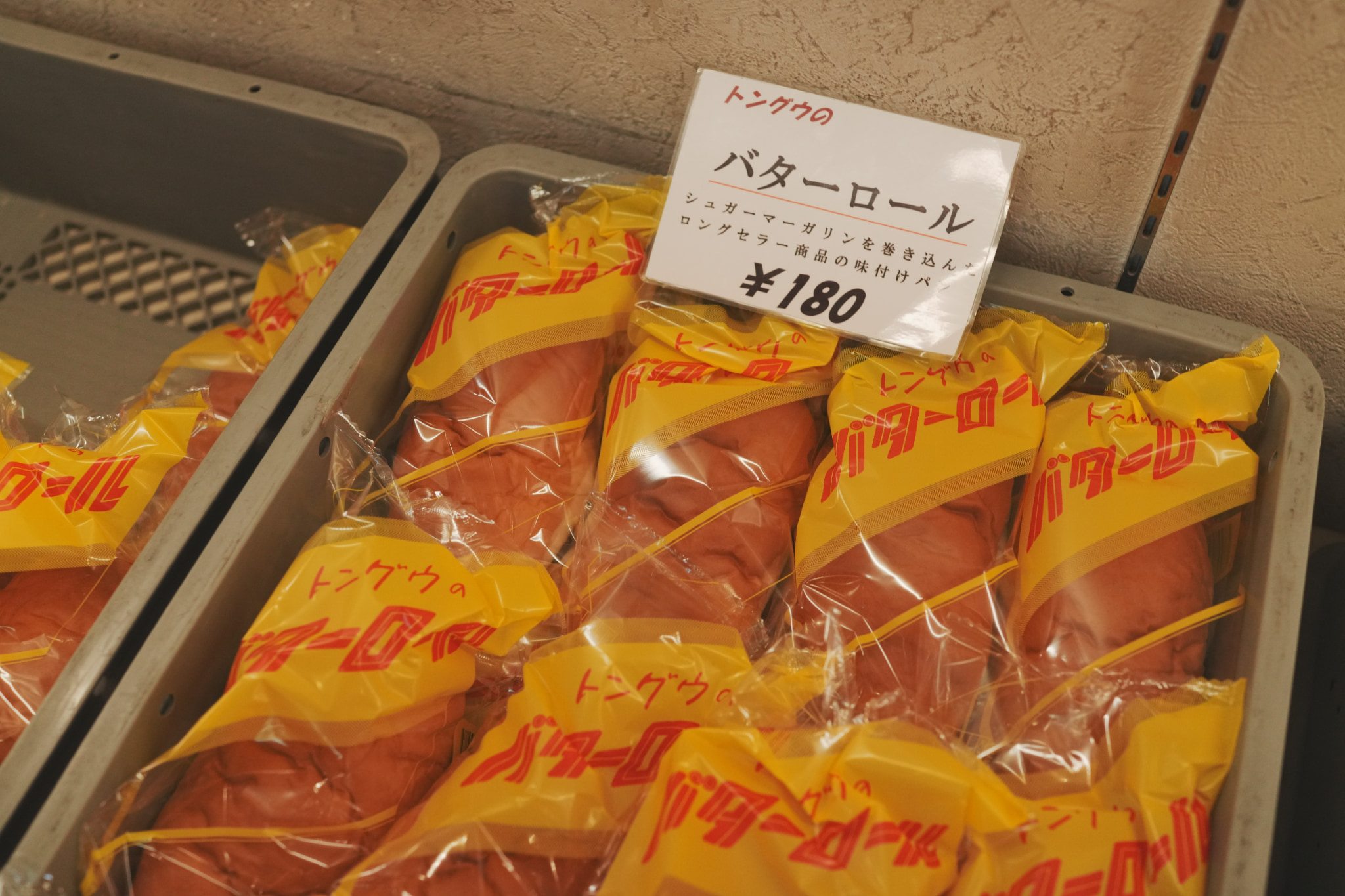
This is Tongu’s second most popular item, the “Butter Roll.” What’s really awesome is how surprisingly affordable it is. They just pile them up in a container for sale—a style that feels a bit nostalgic now but somehow refreshingly new.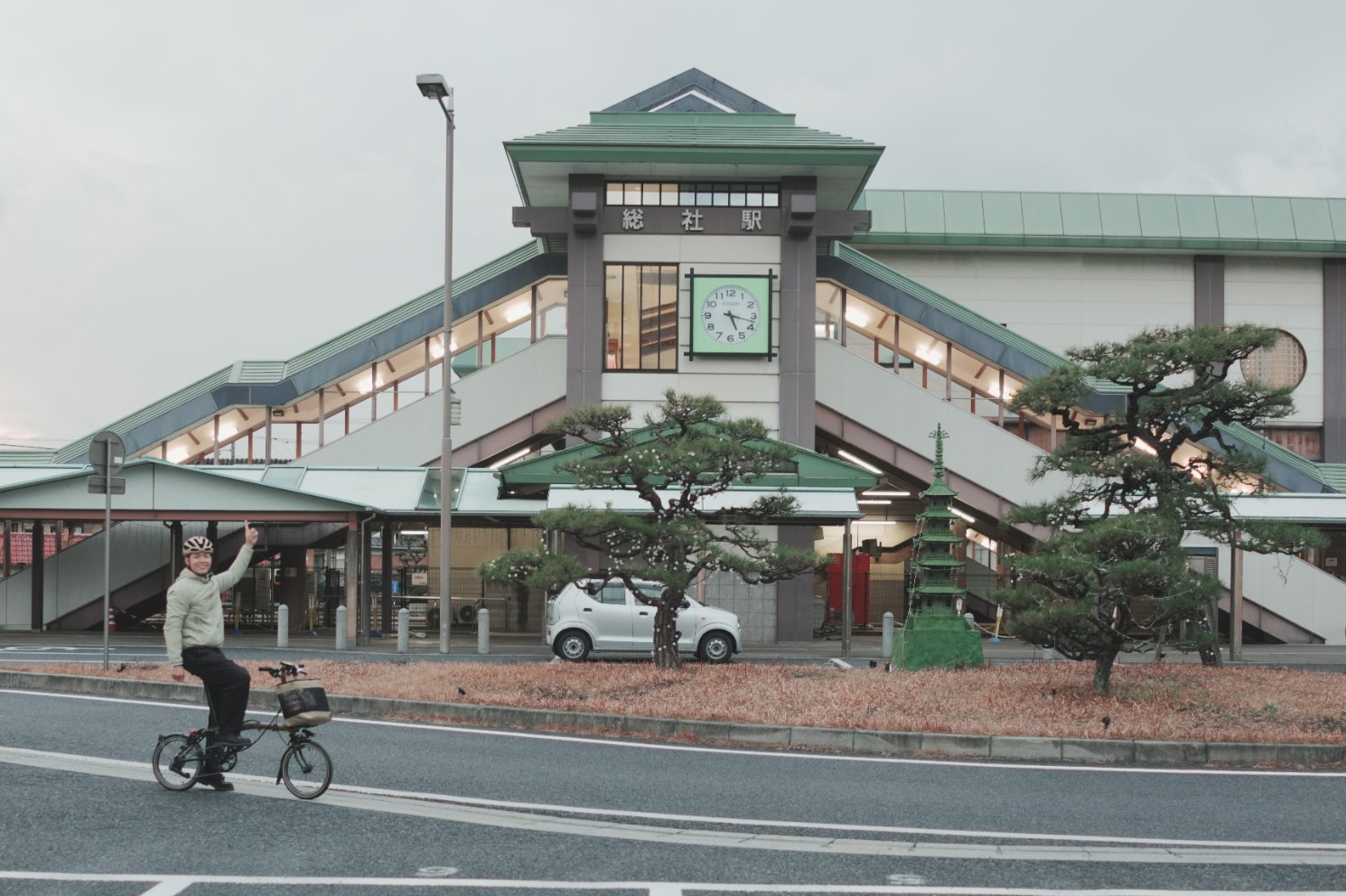
I stocked up on plenty of bread at Tongu, but there was still some time before the train from Soja Station. Thinking, “Why not hit up one more spot while I’m at it?” I decided to check out some nearby bakeries.
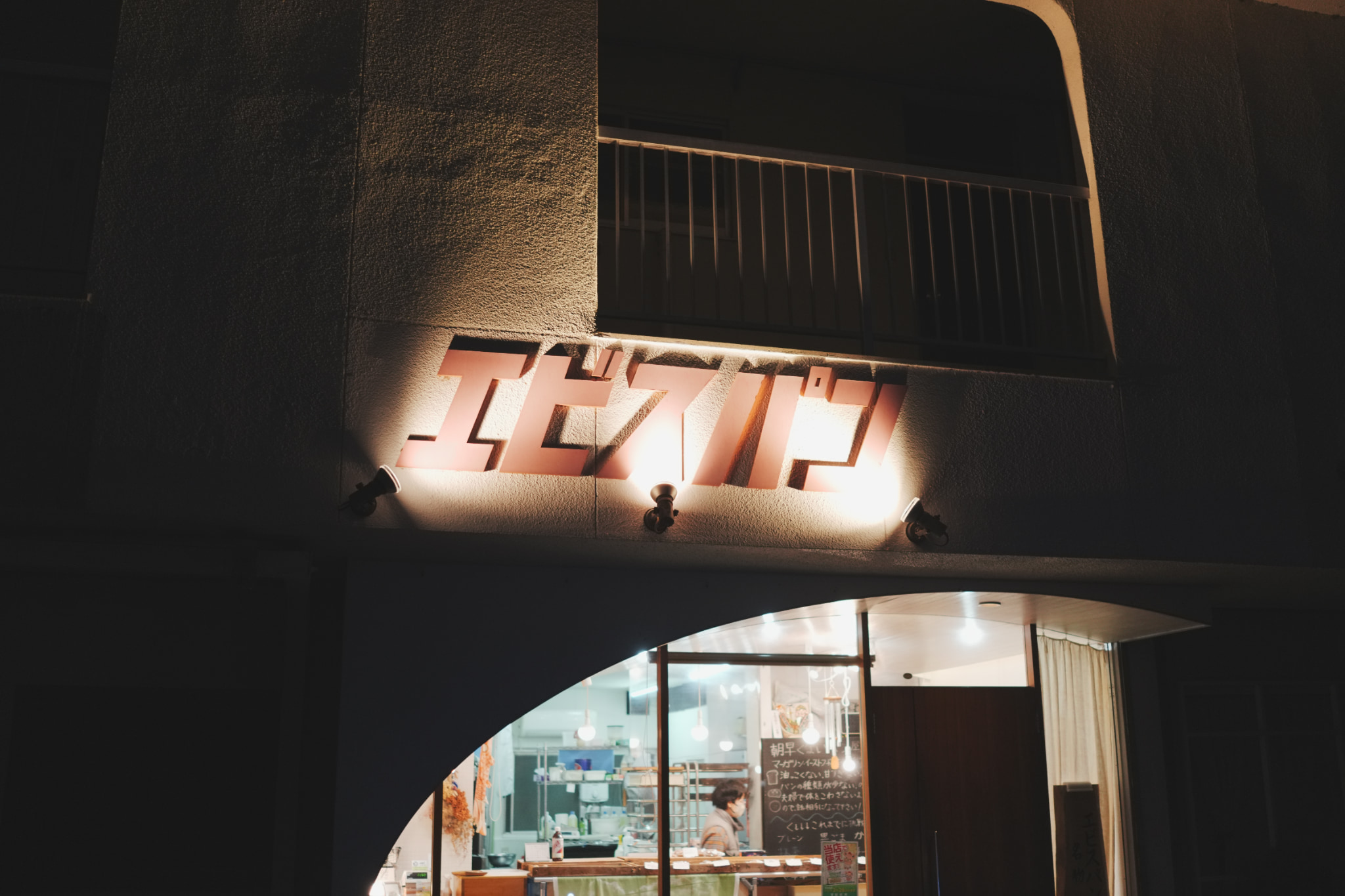
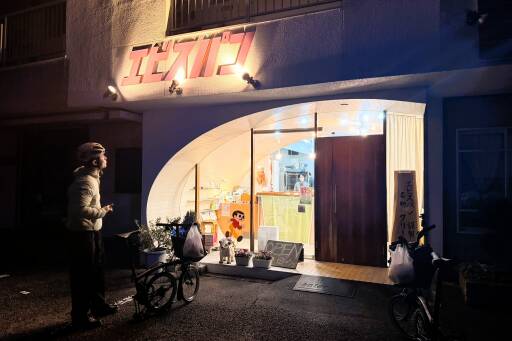
After looking it up, I found a cream-filled bread shop called “Ebisupan” just about a 10-minute bike ride from Soja Station.
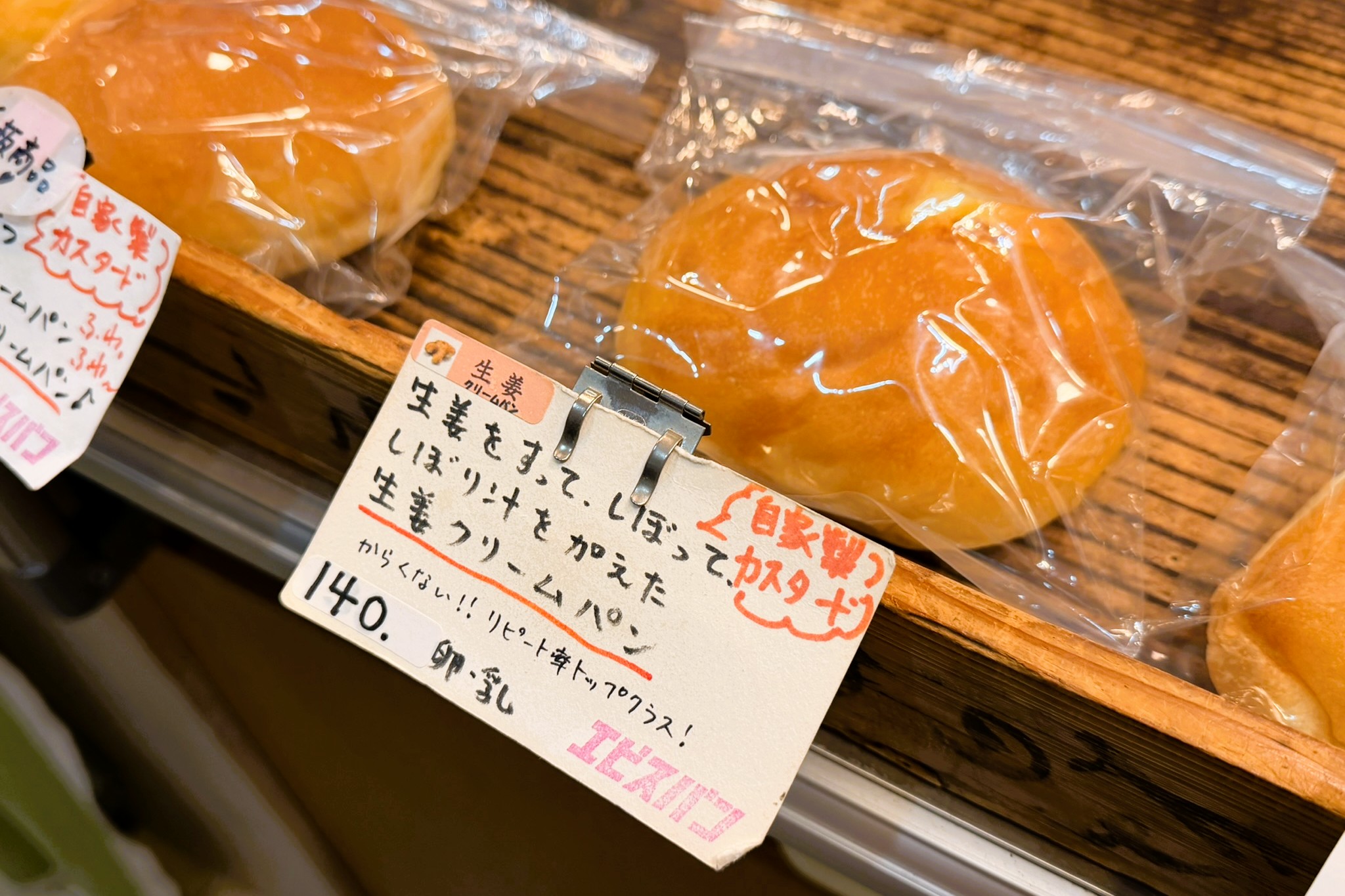
Step inside, and you’re in cream bun heaven. They’ve got the classic custard, of course, but also unique flavors like ginger cream and banana cream buns all lined up.
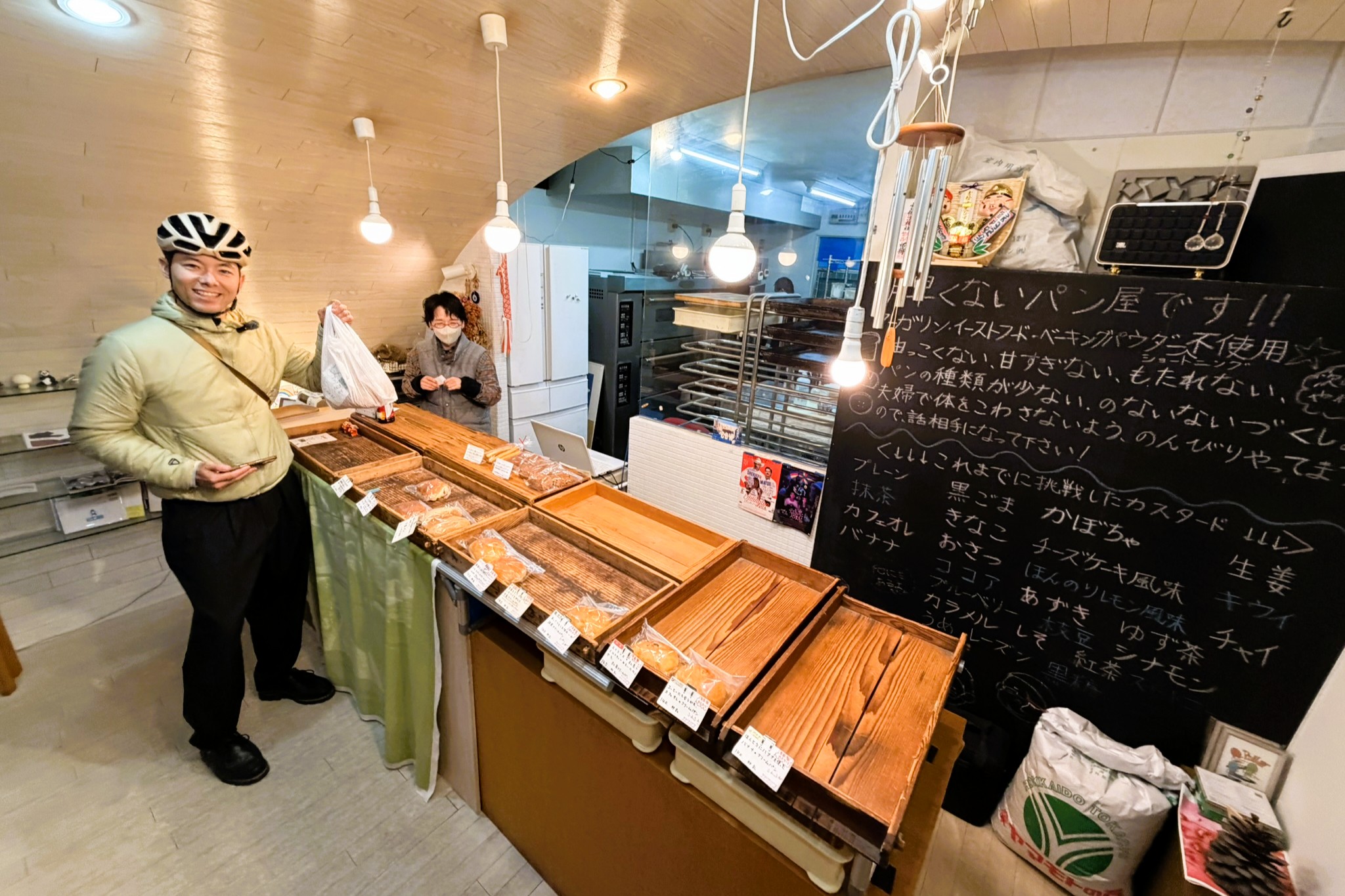
Everything’s priced around 150 yen, which is super easy on the wallet. Before I knew it, my tray was piled high with cream-filled bread. By the way, Ebisu Pan calls itself “the bakery that’s not open early,” with hours from 9:30 AM to 7:00 PM. So even if you roll in late afternoon, it’s a trusty spot for all you bread lovers out there.
Heading back to Tokyo with a bit of a bittersweet feeling
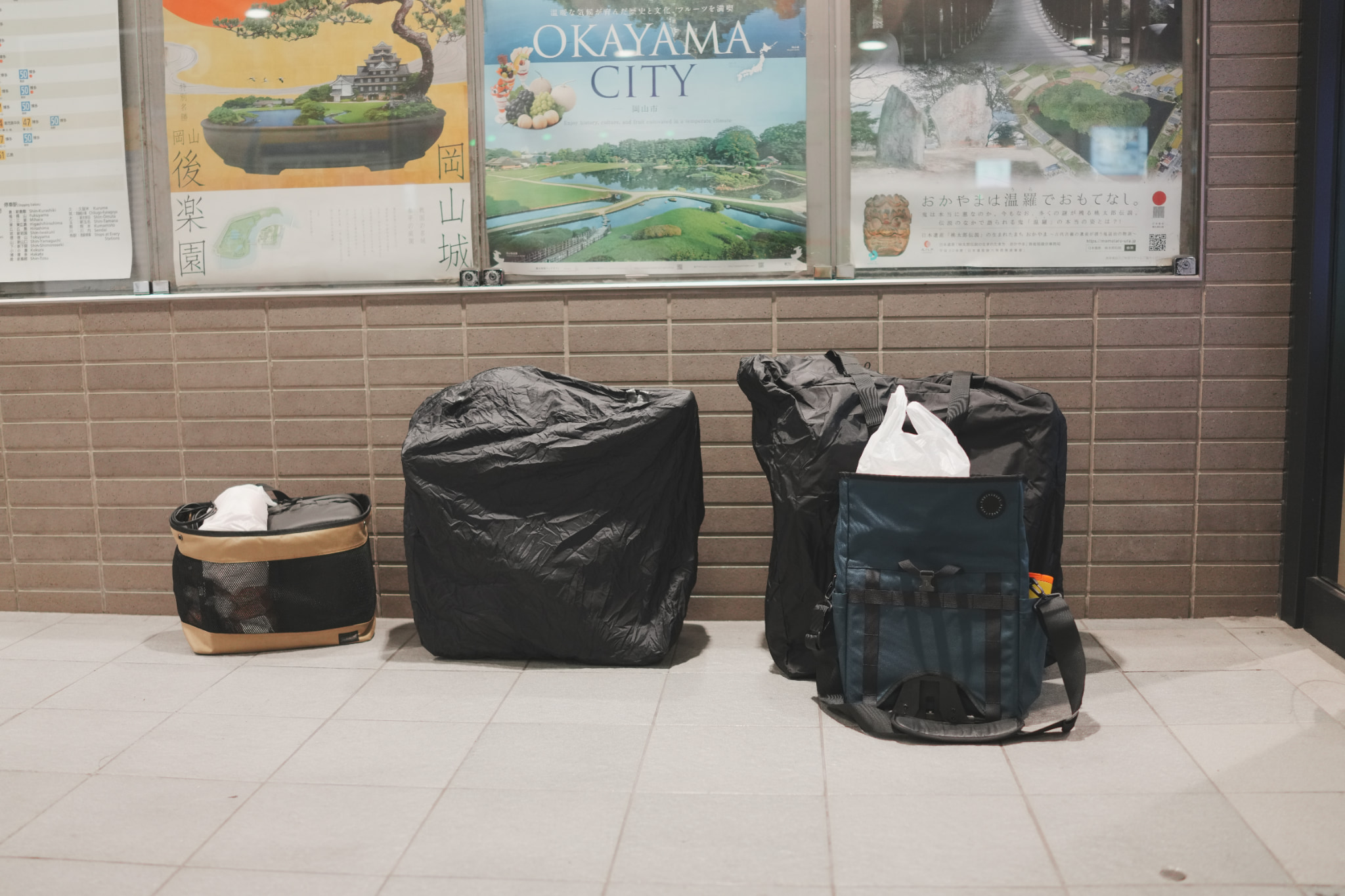
I scored a ton of souvenir bread for my family in Soja and was super happy about it. Then, carefully holding onto my bag full of bread, I hopped on the train from Soja Station to Okayama Station with my bike.
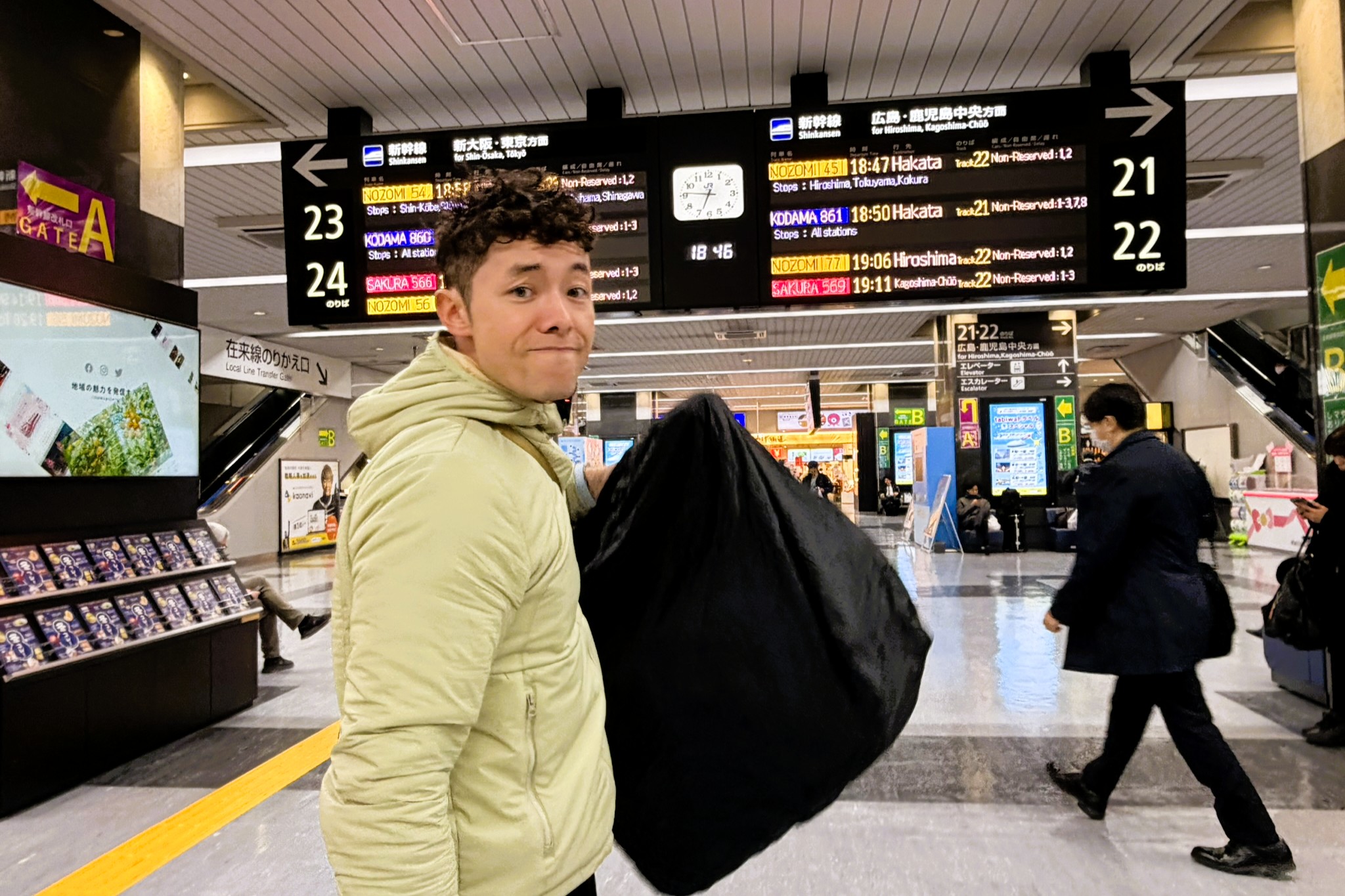
After arriving at Okayama Station, I grabbed my stuff from the coin locker and hopped on the Shinkansen heading to Tokyo Station.
Honestly, I wish I could’ve stayed overnight and explored Okayama city at night, but this time, the schedule just didn’t allow it, so I had to head back. Still, I felt totally satisfied having packed such a rich and full day of riding into the trip.
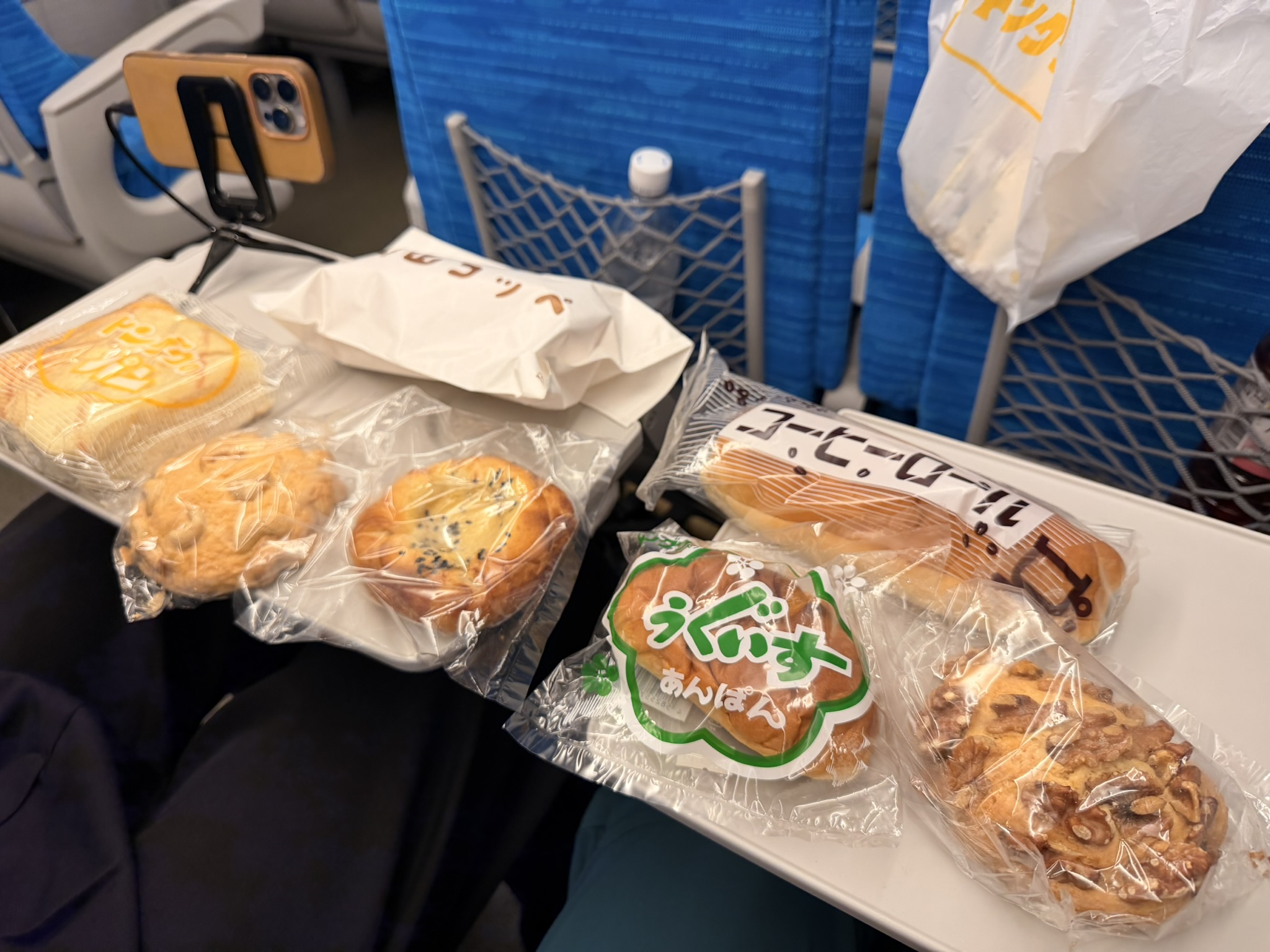
On the Shinkansen, we shared the bread we picked up in Soja, splitting it in half as a substitute for dinner on our way to Tokyo.

Tongu’s bread has that classic, nostalgic flavor that gets better the more you chew. The cream bread from Ebisu Pan features a gentle, homemade dough paired with a simple, not-too-sweet cream that’s just perfect. It made for a spot-on in-car dinner, and I found myself nodding in agreement with every bite.
Short but seriously fun!
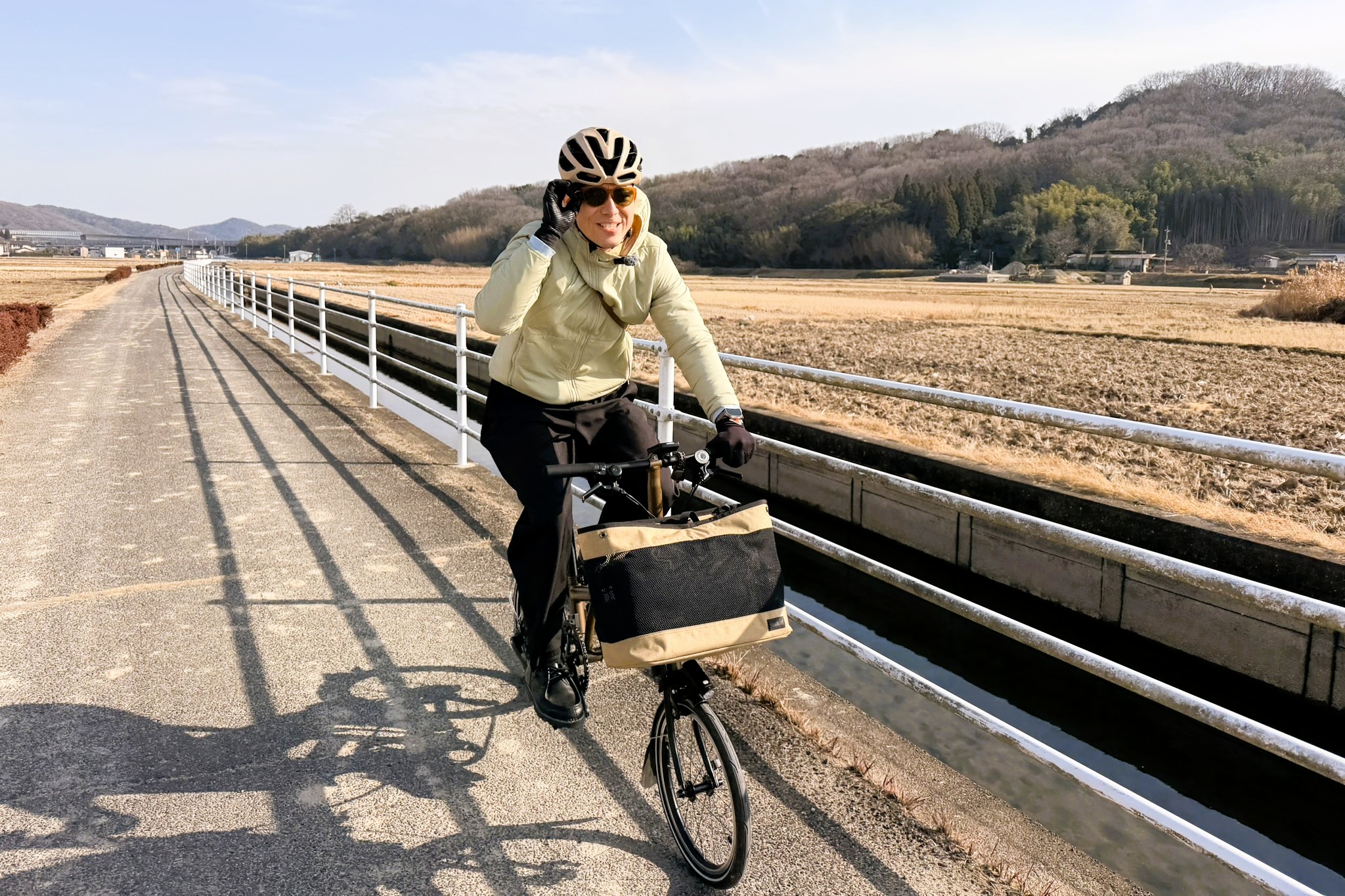
This ride was a bit more “intense” on the sightseeing side, really soaking in the local spots. Even though the distance was on the shorter side, there were plenty of stops and discoveries, making it a super satisfying day. Thanks to the Brompton, hopping on trains with the bike was way easier, which gave me a whole lot more freedom to get around—definitely one of the biggest wins of the trip.
Okayama has so many awesome bike trails beyond just the Kibiji route, and it’s got me really curious about the hidden gems of this area. I can’t wait to come back and ride again in a different season.
旅のしおり
| 6:50 | Depart Tokyo Station on the Shinkansen |
|---|---|
| 10:15 | Arrive at Okayama Station |
| 10:40 | Start at Okayama Station |
| 12:30 | Check out Kibitsu Shrine |
| 13:30 | Visit Tsukuriyama Burial Mound |
| 14:15 | Explore Bitchu Kokubunji |
| 14:45 | Grab lunch at Shunkan Hiroba |
| 16:00 | Ponte Leather Shop |
| 14:30 | Stop by Kibiji Tsuru no Sato |
| 17:00 | Pick up some treats at the bakery Tongu |
| 17:0 | Grab some goodies at Ebisu Pan |
| 17:50 | Finish the ride at Soja Station |
| 18:00 | Train back to Okayama (with bike) |
| 18:50 | Depart Hiroshima on the Shinkansen |
| 22:15 | Arrive back at Tokyo Station |