3 Days on the Noto Peninsula: Day 1

Why Ride Noto Now?
The Noto Peninsula earthquake in January 2024 touched a lot of hearts as people saw the situation on TV and online. Many cyclists have probably been wondering, “How’s Noto doing right now?” or “Is it okay to visit by bike?” It’s totally understandable to have mixed feelings about it.
This time, Discover Ride teamed up with cycling travel blogger Kagurazaka Tsumuri (aka Tsumuri) and Kenta for a 3-day, 2-night trip to see the real, current Noto Peninsula with our own eyes. And of course, I, Tsucchi, was along for the ride too.
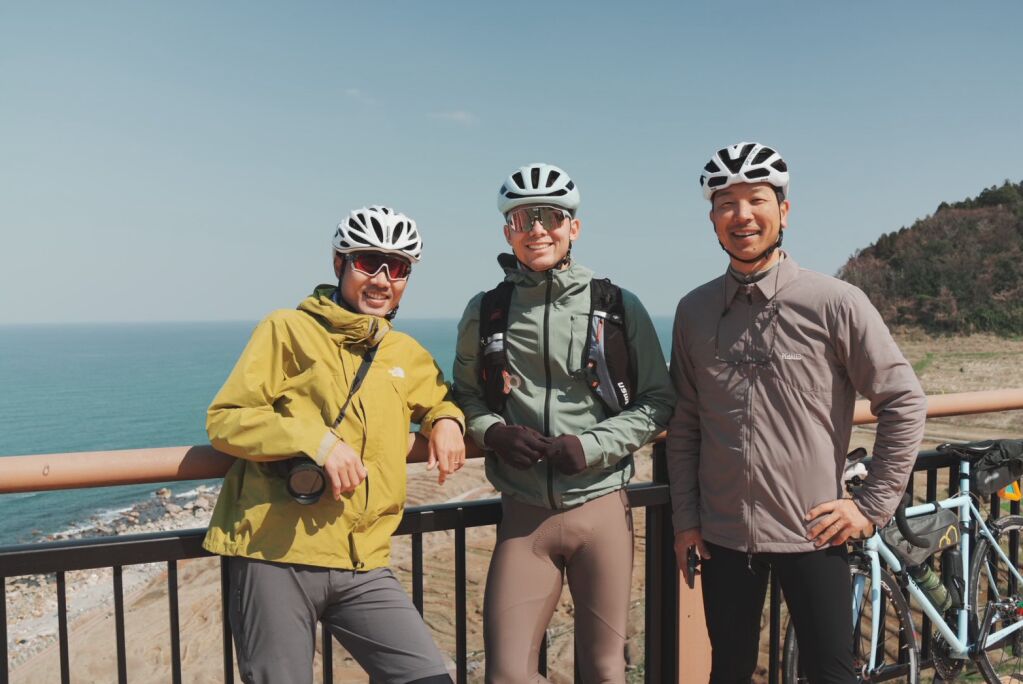 In this report, I’ll dive into the local vibe, the real conditions of the roads, and the timeless charm of Noto Peninsula that didn’t quite come through in the video. Following the journey step-by-step, you’ll get the full picture. It’s a record of our trip to Noto, woven together by Kenta’s positive outlook, my foodie curiosity, and Tsumuri’s passionate storytelling.
Starting Your Noto Adventure by Train and Bike
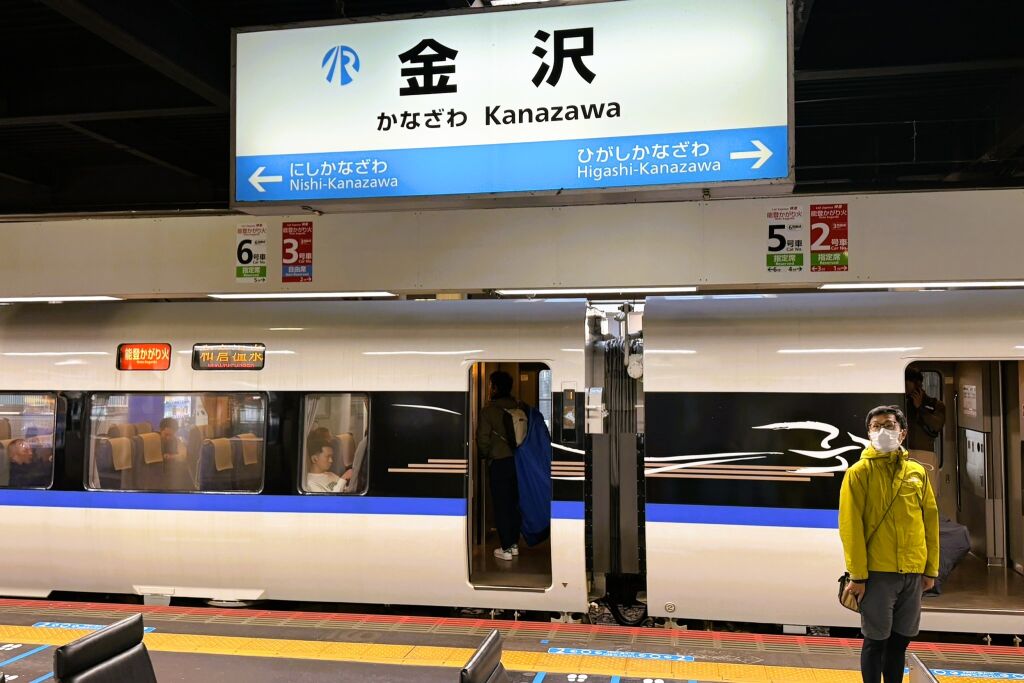
The trip kicks off at Omiya Station on the Shinkansen. In the crisp early morning air, I pack up my bike into its travel bag and head toward Kanazawa. At Kanazawa Station, I meet up with Kagurazaka Tsumuri, who arrived by train and bike from Osaka. It’s been a while since we last saw each other, and our conversation naturally flows as we catch up and chat about the route ahead.After a one-hour ride on the limited express “Kagaribi,” we’re heading to Wakura Onsen Station, where our cycling adventure kicks off.
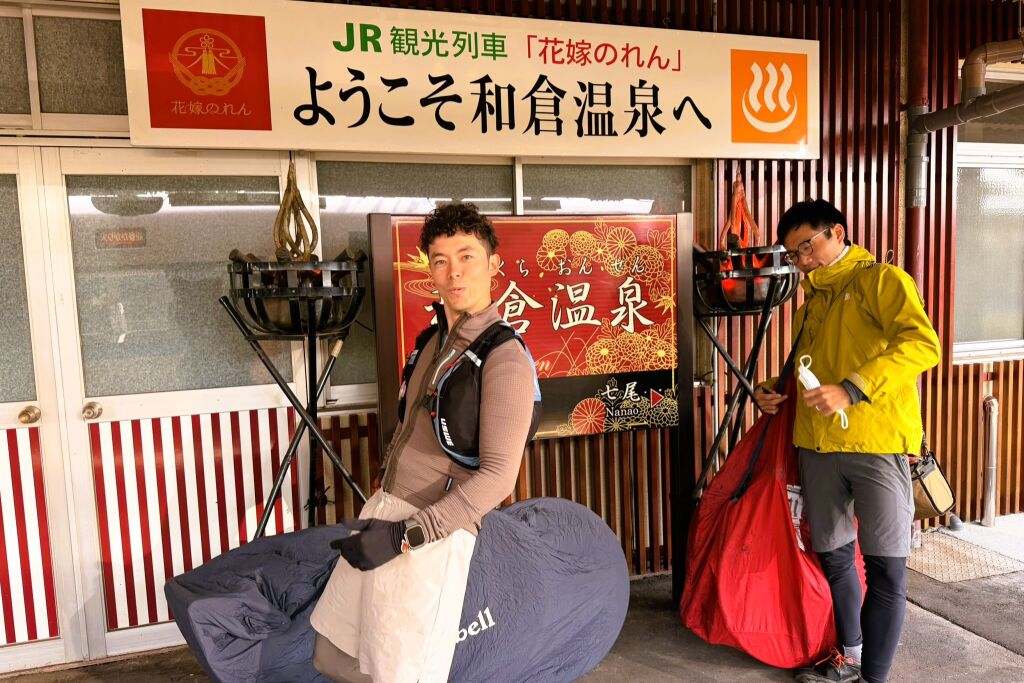
Catching up after a long time, our conversation flowed easily, and before we knew it, we had arrived at Wakura Onsen. I’d met Tsumuri at Cycle Mode before, but this was our first time riding together. Since Tsumuri has been to Noto so many times, I left the entire route planning up to them.
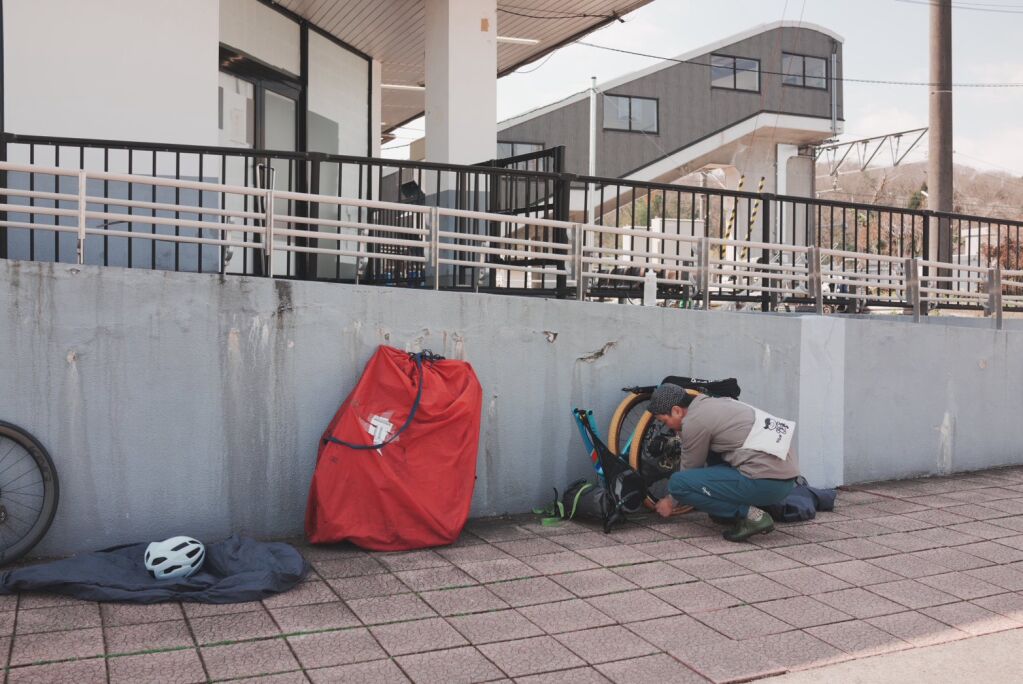
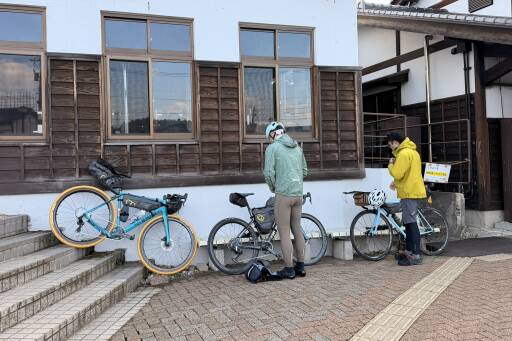
When we arrived at Wakura Onsen Station, we quickly packed up our bikes right there in the station’s rotary. For this trip, we loaded all our overnight gear and bike bags onto the bikes.Bikepacking styleWith just a light setup, the adventure around Oku-Noto clockwise—eventually looping back to Anamizu Station—is finally kicking off right here.
Wakura Onsen: The Heart of Ongoing Recovery
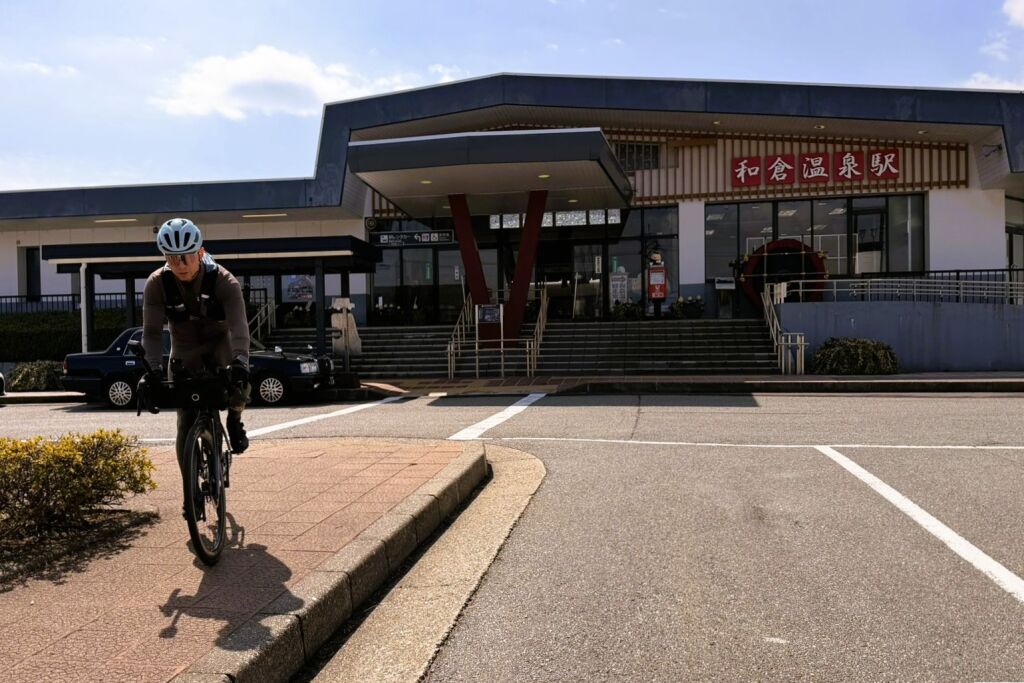
We kicked off the ride just before noon, aiming for our first-day destination, Wajima City. In mid-March, temperatures in Noto range from 2 to 10 degrees Celsius—pretty much winter weather—but with the sun shining, it felt closer to 15 degrees. Wearing full winter gear felt a bit too warm for the conditions.
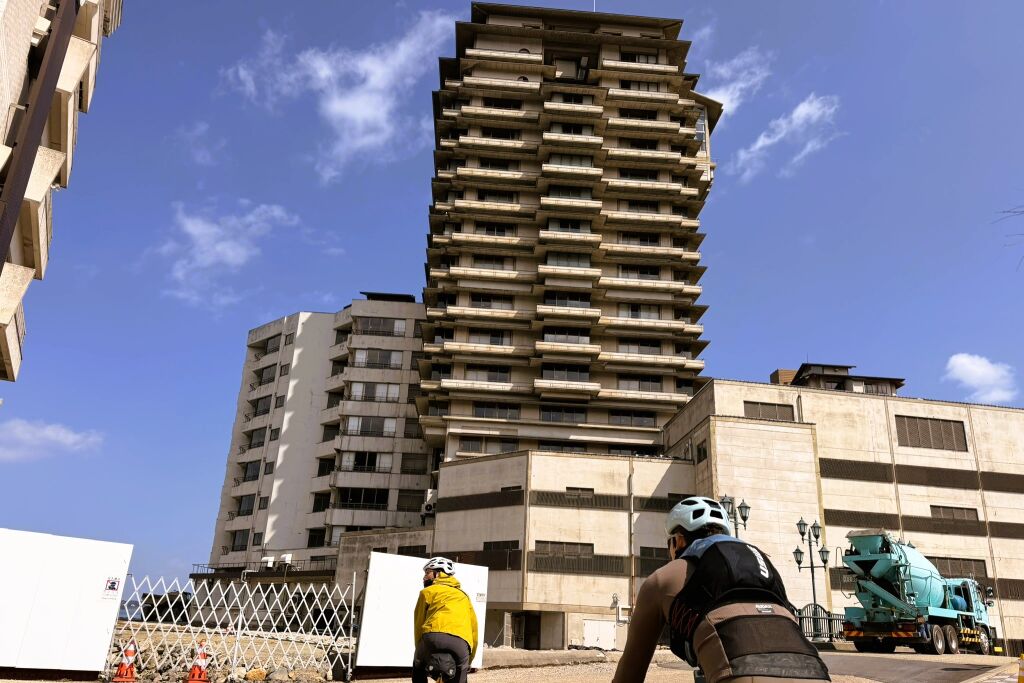
First up, we headed to the heart of Wakura Onsen in Nanao City. This is one of Japan’s top hot spring spots, lined with famous long-established inns like Kagaya. Before the earthquake, it was bustling with tourists, but now, many facilities are closed due to ongoing recovery efforts. Some places are even being torn down as part of relocation and reconstruction.
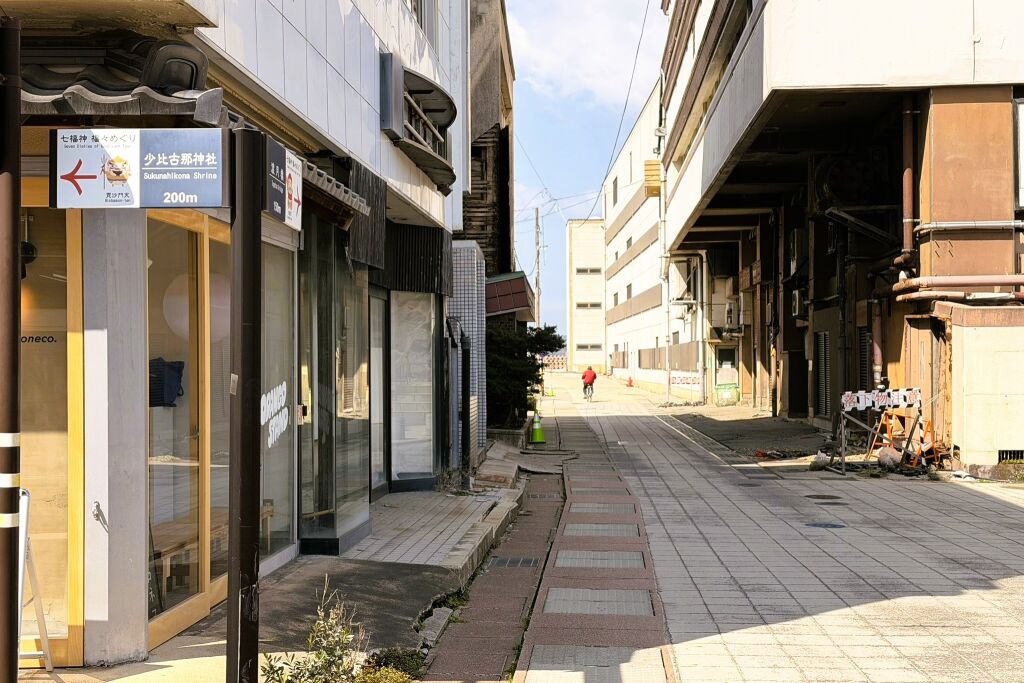
The heart of the hot spring town is pretty quiet these days. The iconic Kaga-ya in Wakura Onsen is scheduled for demolition, but a new inn is being built about 550 meters west of the original site, aiming to reopen in winter 2026. With the reconstruction, everyone’s hoping the area will buzz with life again.
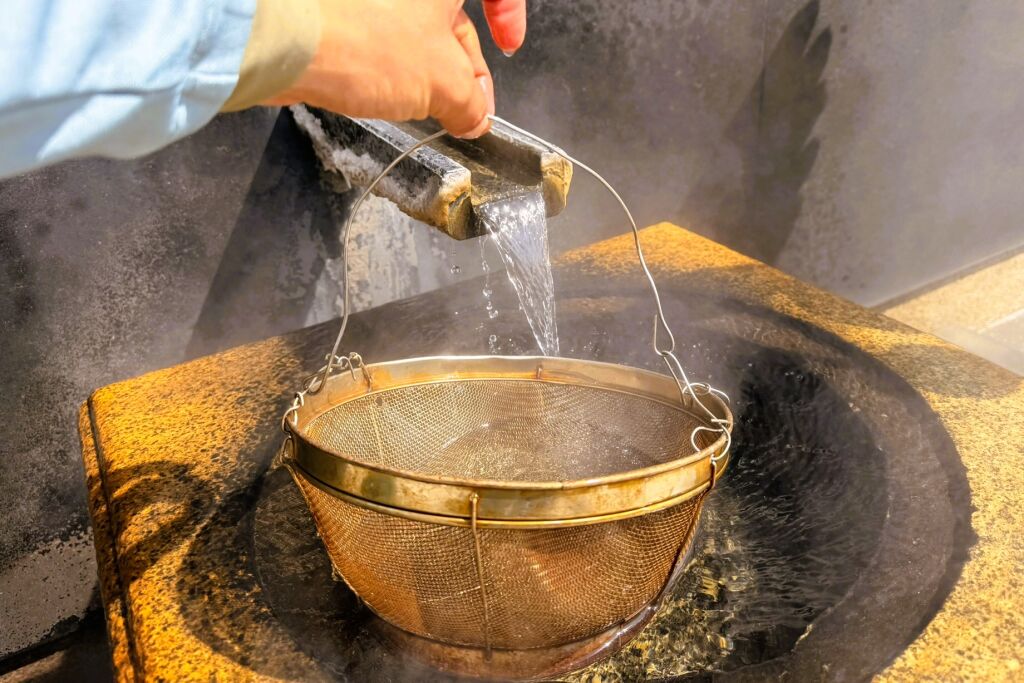
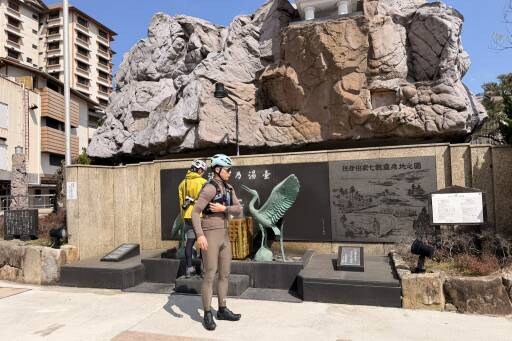
Since I’m in the middle of a ride, I can’t actually soak in the hot springs, but I stopped by the Yumoto Square to touch the spring water as a way to mark my visit. This spot, where people even come on weekends to make onsen eggs, has a quiet vibe that still feels full of everyday life, and it brought a little calm to my heart.
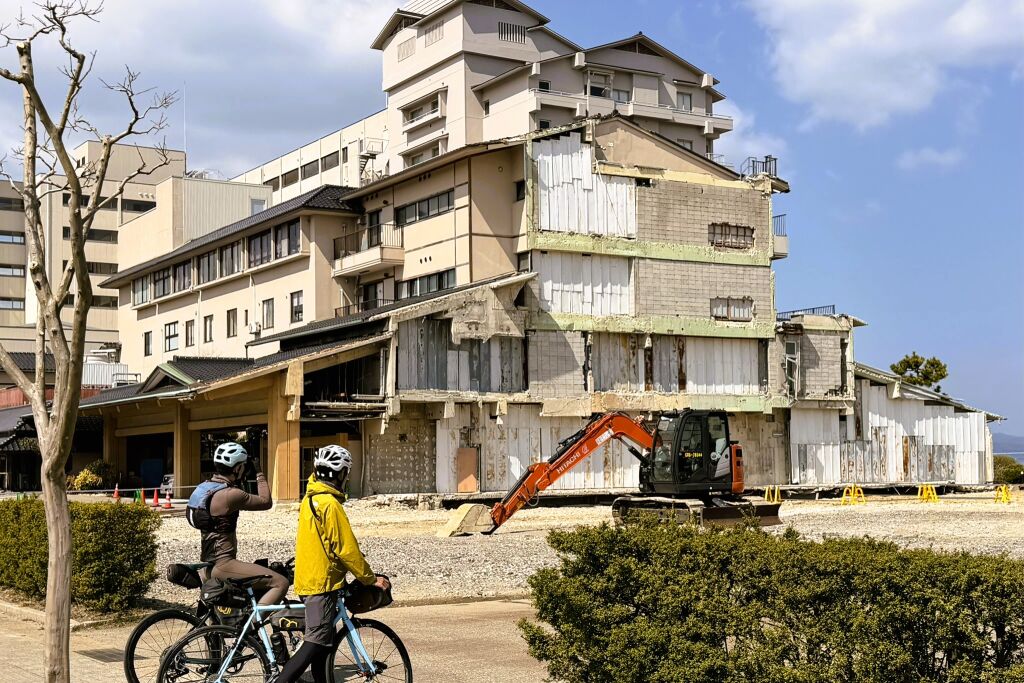
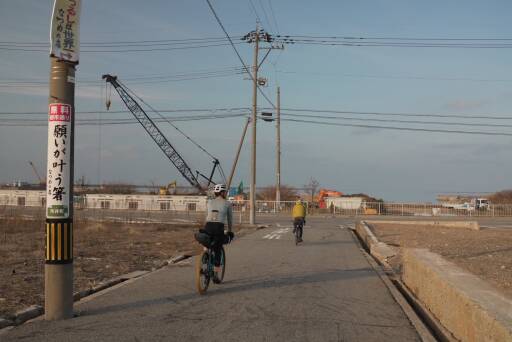
All around town, buildings—including inns—are being torn down, and the streets are filled with vehicles and trucks involved in the ongoing recovery efforts. Seeing this firsthand, rather than just on the news, really drives home how much work still lies ahead in the reconstruction.
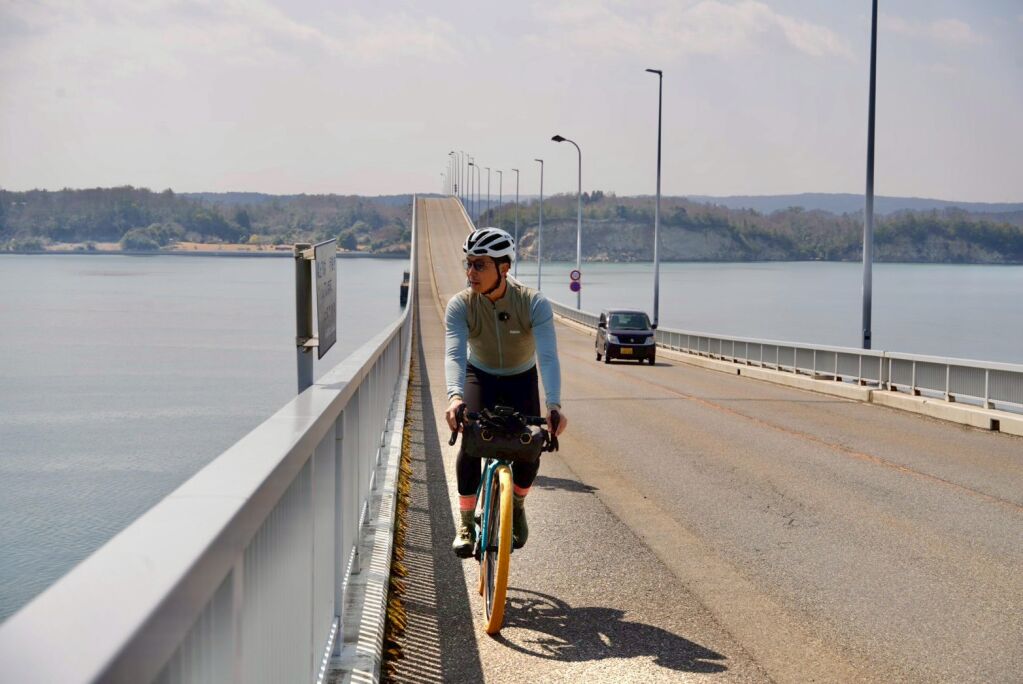
Leaving Wakura Onsen behind, we crossed the Notojima Bridge and headed into the next area. The scenes of damage were tough to take in, but we’d decided that while we’d acknowledge the ongoing recovery efforts, we’d also focus on the positive side of things. So, we set off with the usual upbeat vibe of a Discover Ride.
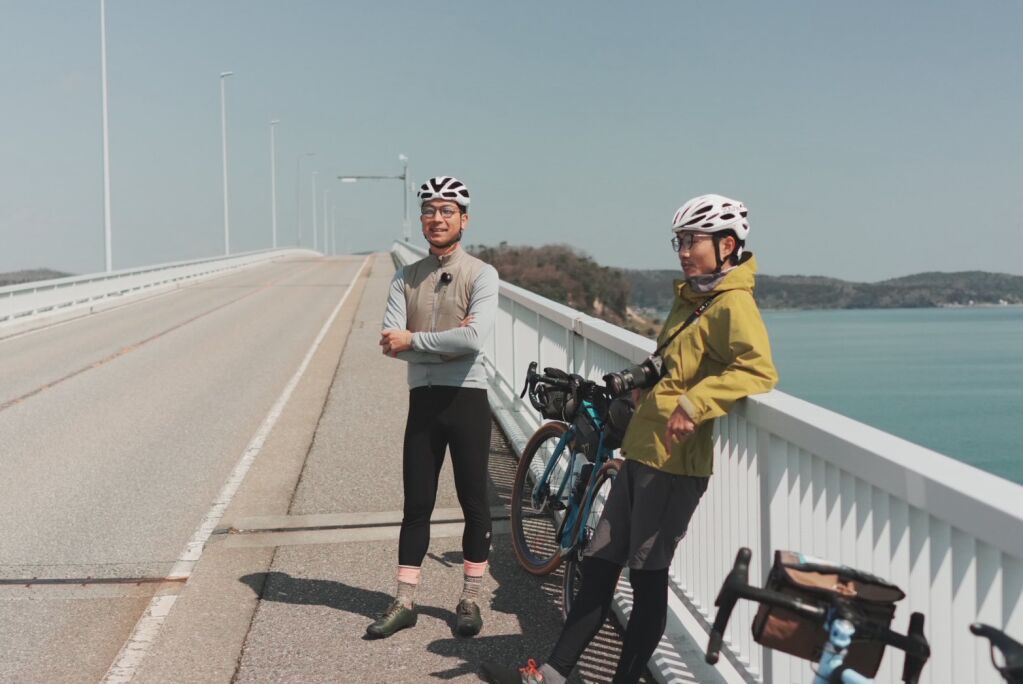
We just had to stop and soak in the view from Notojima Ohashi Bridge, looking out over the sea right from the bridge. Tsumuri said, “It’s pretty rare to get such a clear day in Noto during winter.” With no wind and calm waves, it was honestly perfect weather for cycling.
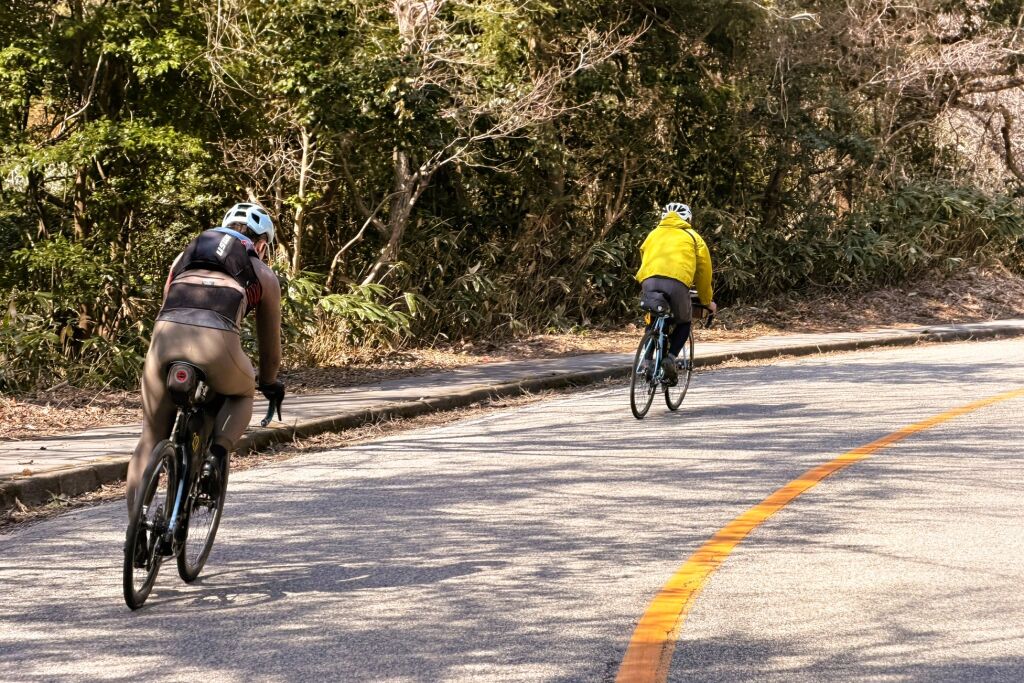
After looking into it later, I found out that Ishikawa Prefecture has the “Ishikawa Satoyama Satoumi Cycling Route,” which has been developed since 2016. The traffic is light, there’s just the right amount of ups and downs, and honestly, it felt like a really easy and enjoyable ride. This time, I’m basing my ride on that route.
Lunch with a View of Nanao Bay at a Cozy Café
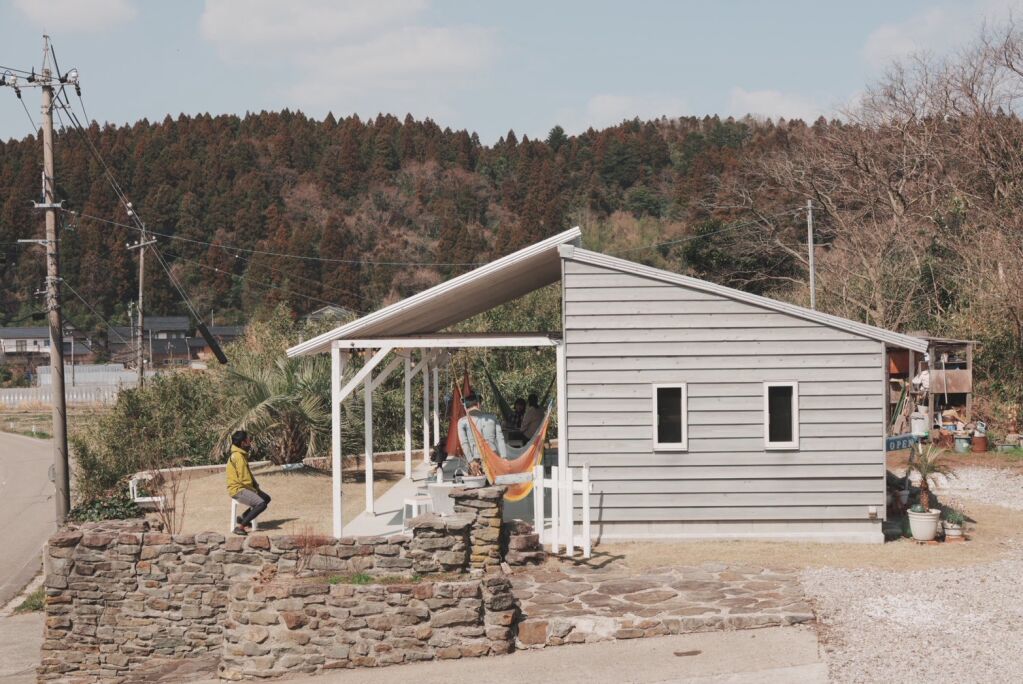
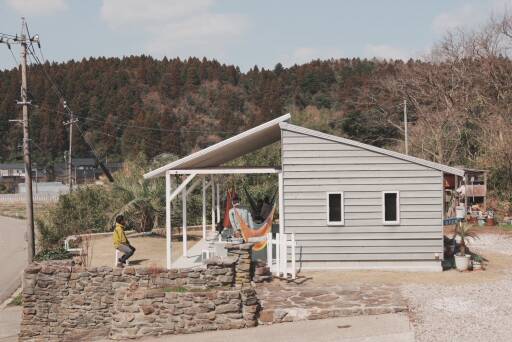
For lunch on the first day, we headed to “mucoco,” a spot Kenta picked out. It’s a cozy place perched on a hill overlooking Nanao Bay. Since the ongoing recovery efforts have limited the number of open restaurants, it’s a good idea to check ahead to make sure they’re open.
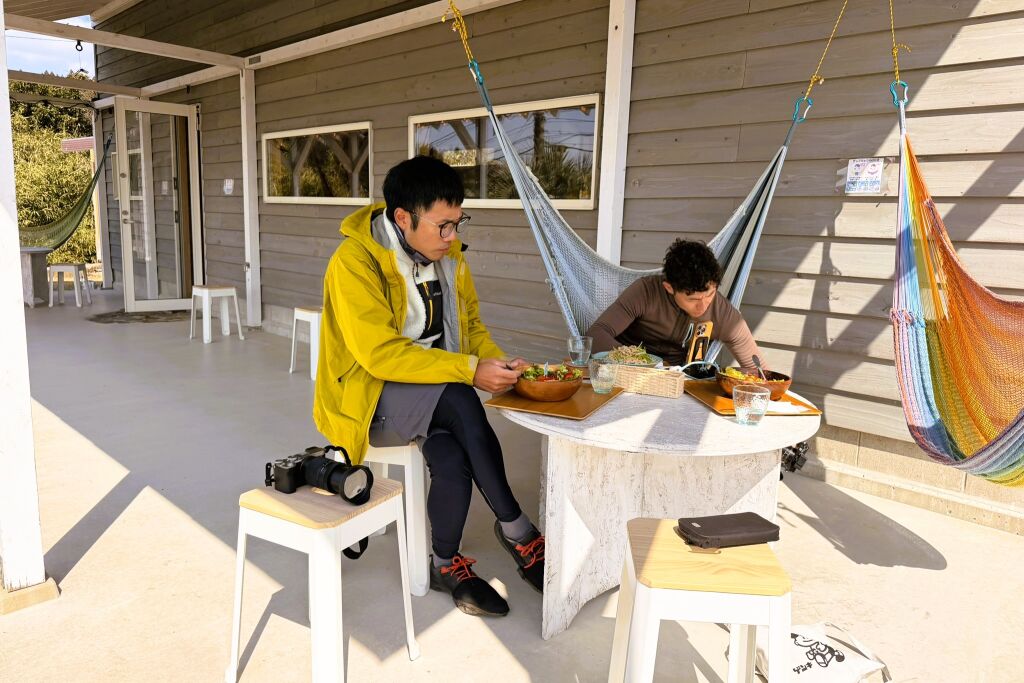
Since it’s just run by one person, your order might take a bit, but kicking back in the hammock on the terrace while soaking in the view of Nanao Bay is seriously relaxing. Between the scenery and the chill vibe, it’s the perfect way to unwind.
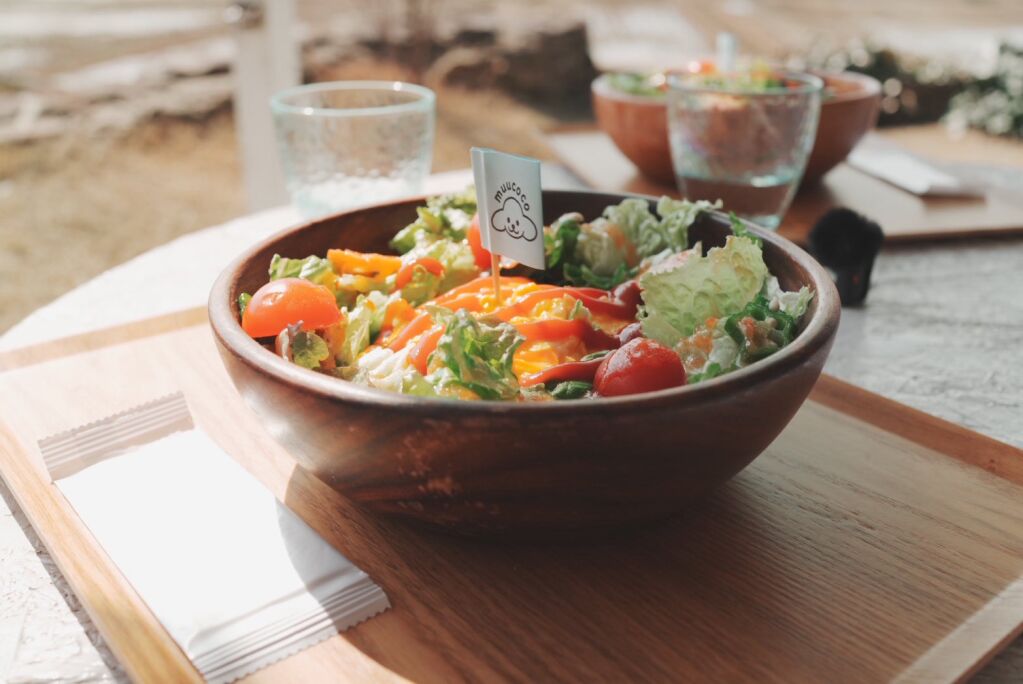
You can choose between omelet rice or pasta for your meal. This time, I went with their signature omelet rice. It was loaded with veggies and really satisfying, and I enjoyed a coffee afterward. The parfait looked tempting, but I decided to skip it this time to save room for later. After lunch, it was time to head to the next destination.
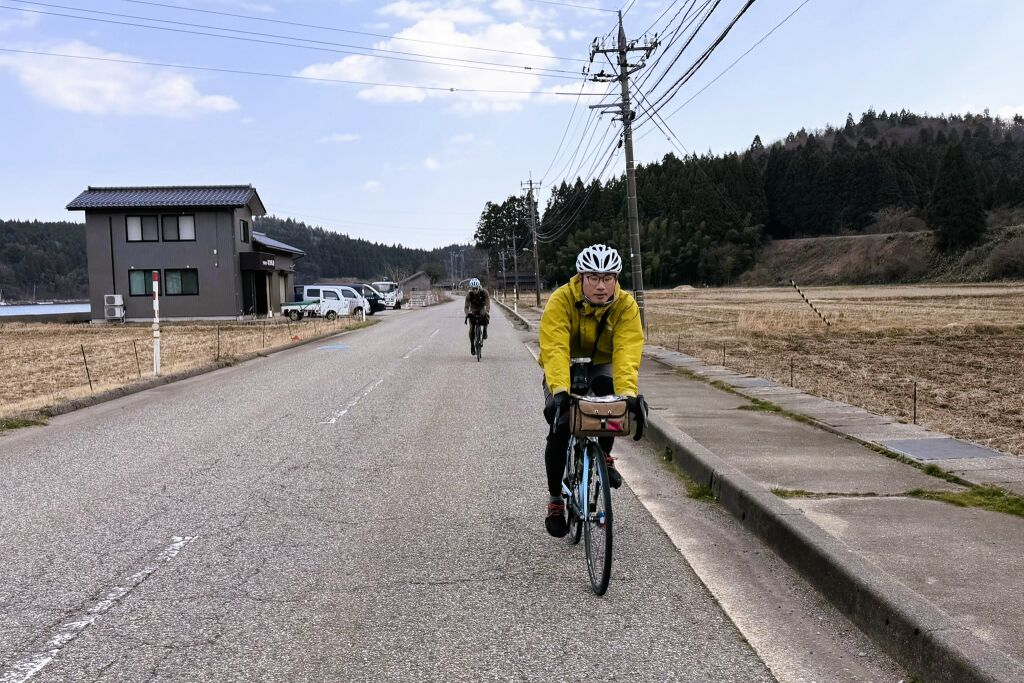
Next up, we’re heading to a spot that Tsumuri was really eager to check out—the Noto Railway’s…Nishigishi StationWhen I asked what kind of station it was, I didn’t get a clear answer, so I just kept pedaling, my excitement growing.
Blowing Up with Excitement at the Anime Hotspot, Nishigishi Station!
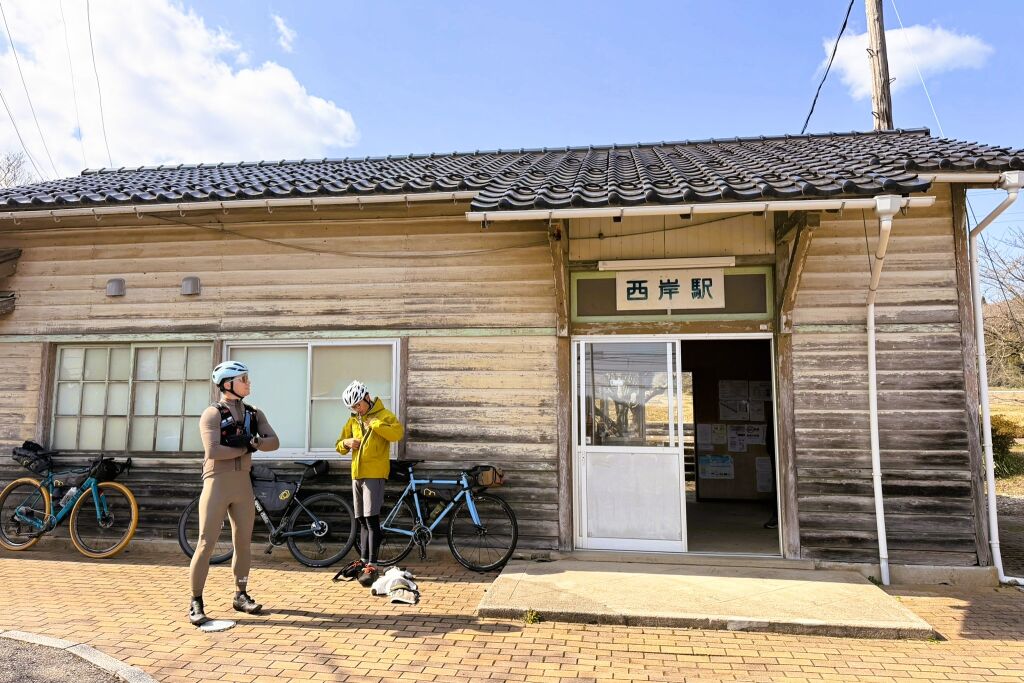
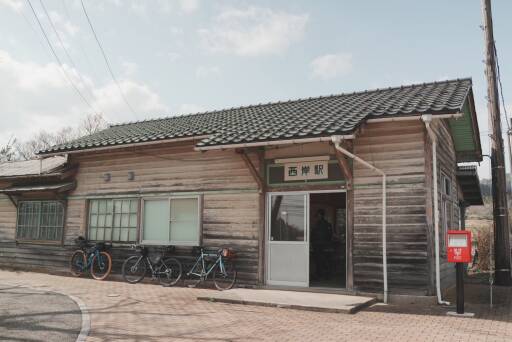
We arrived at Saigan Station. The little unmanned station has a charming vibe, but as soon as we got there, Tsumuri’s excitement shot through the roof. Turns out, this spot was the inspiration for “Yunosagi Station” in the anime Hanasaku Iroha.
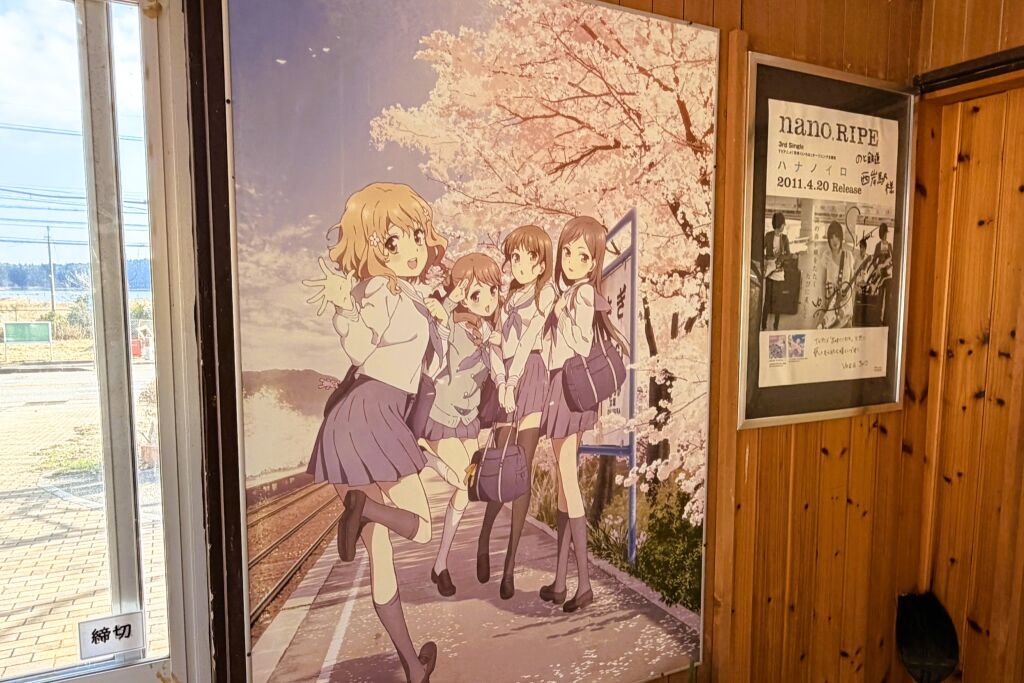
Feeling the vibe difference with Tsumuri, we headed to the station building. Inside, there were anime posters and fan memory notebooks lined up, making it one of the sacred spots for “Hanasaku Iroha” fans.
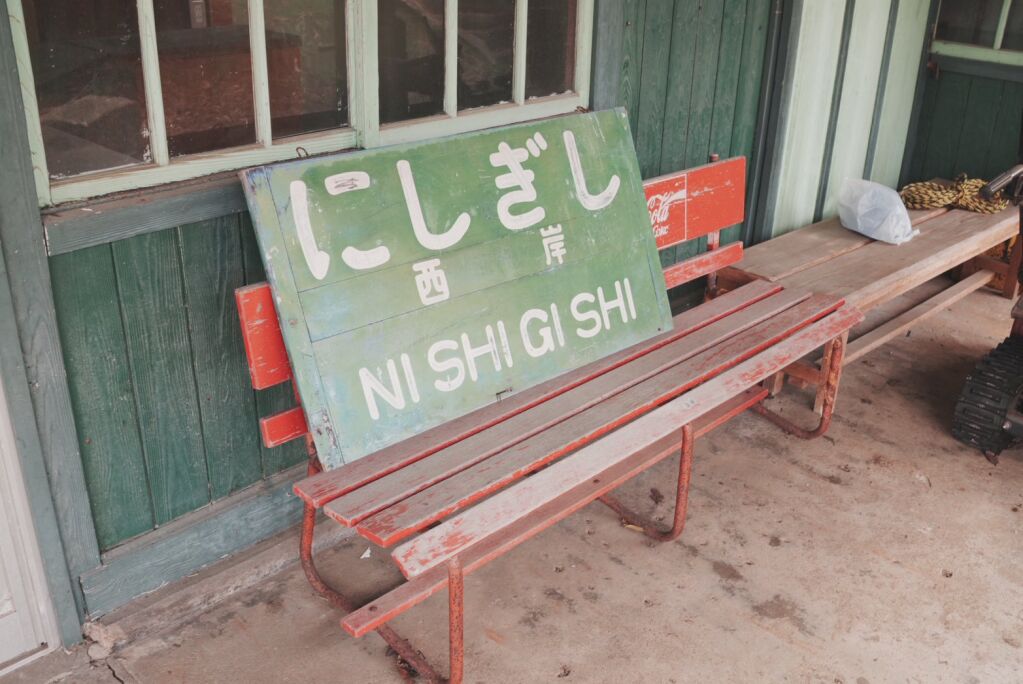
The official name is “Saigan Station,” but the platform also has a sign that says “Yunosagi,” the station name from the anime. If you’re not familiar with the show, it might be a bit confusing, but that’s part of what makes this station unique.
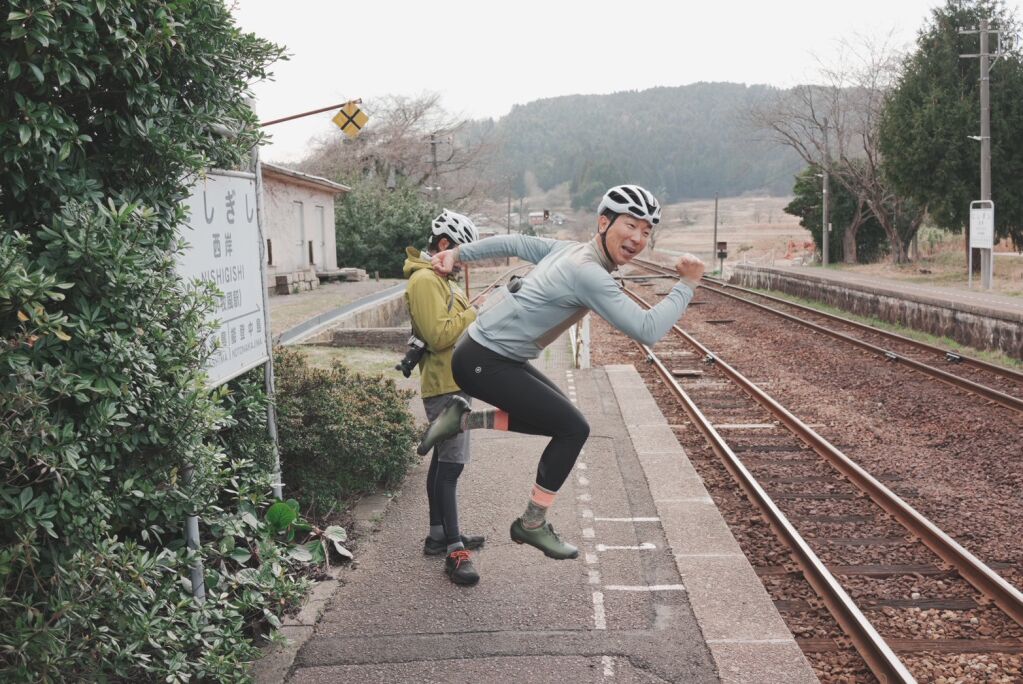
Tsumuri mentioned that one of the most memorable scenes at this station is the moment of boarding the arriving train. Even though I haven’t watched the anime, I thought I’d try to capture the vibe just for fun.
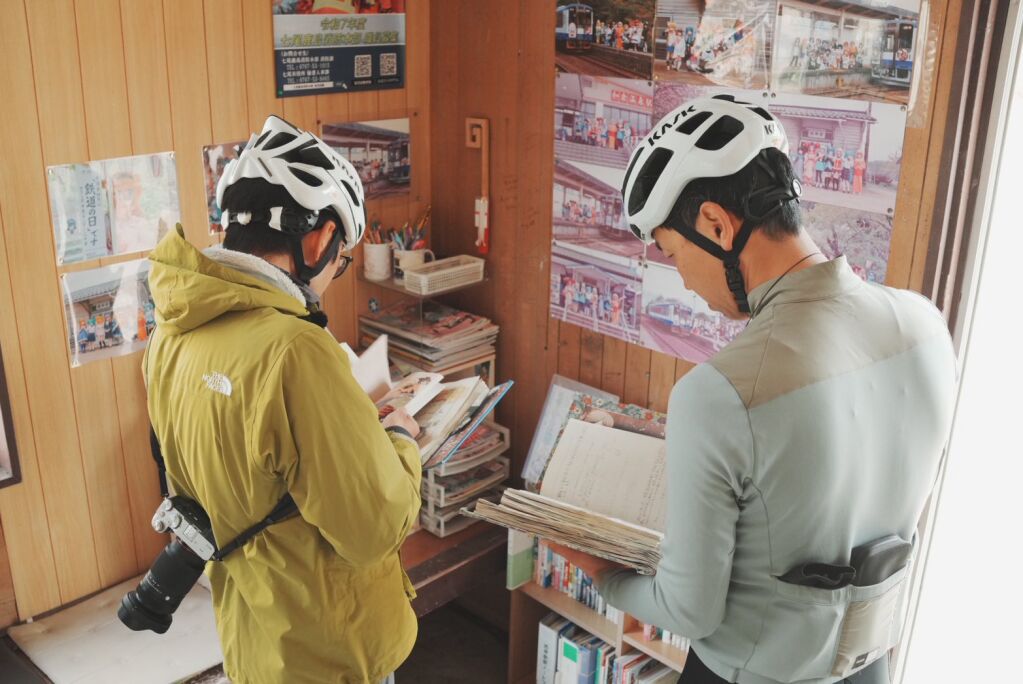
Tsumuri had visited this station 14 years ago and tried to find any old notes from back then in the memory book at the station. But they couldn’t find the right notebook this time, so no luck checking it out.
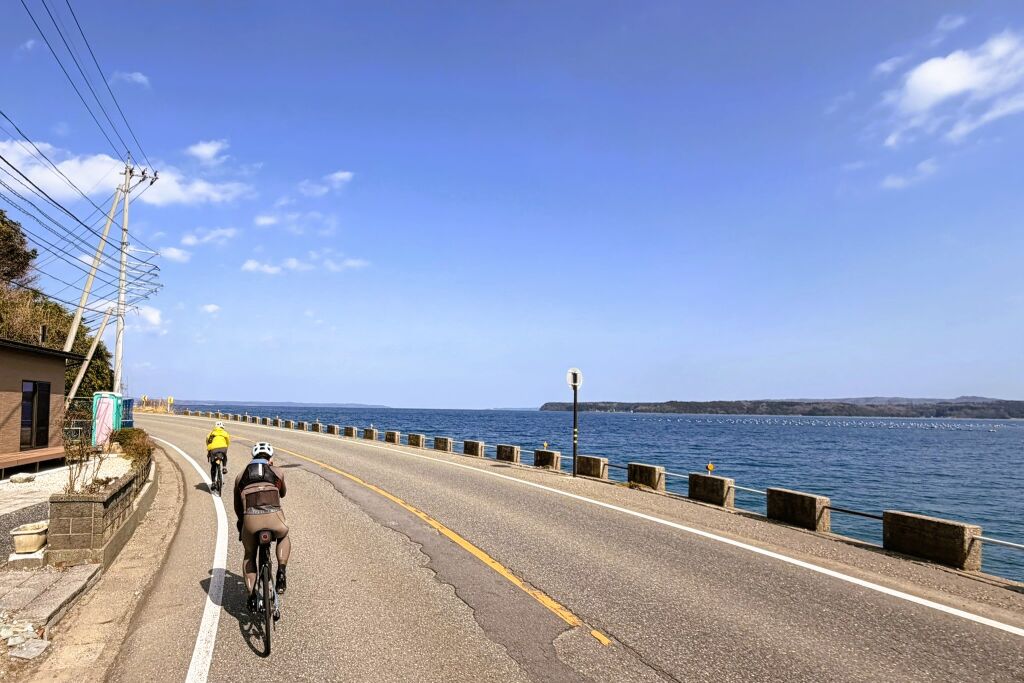
Stopping by from a different perspective than usual feels refreshing. Even works I didn’t know before spark my interest once I actually visit them. With Tsumuri feeling satisfied too, we hit the road again.
Taking a Sushi Bento Break in Anamizu
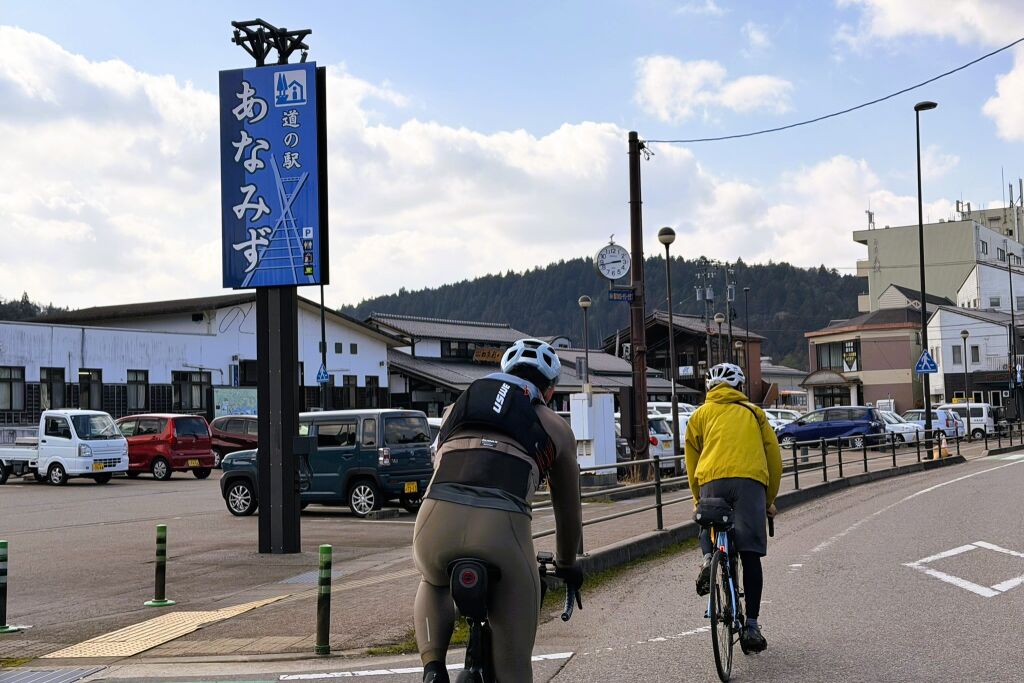
We rolled into Anamizu Town, the halfway mark about 30 km in. On the last day, Anamizu Station will be our finish line, and after the ride, we’ll catch the Noto Railway to head back by train.
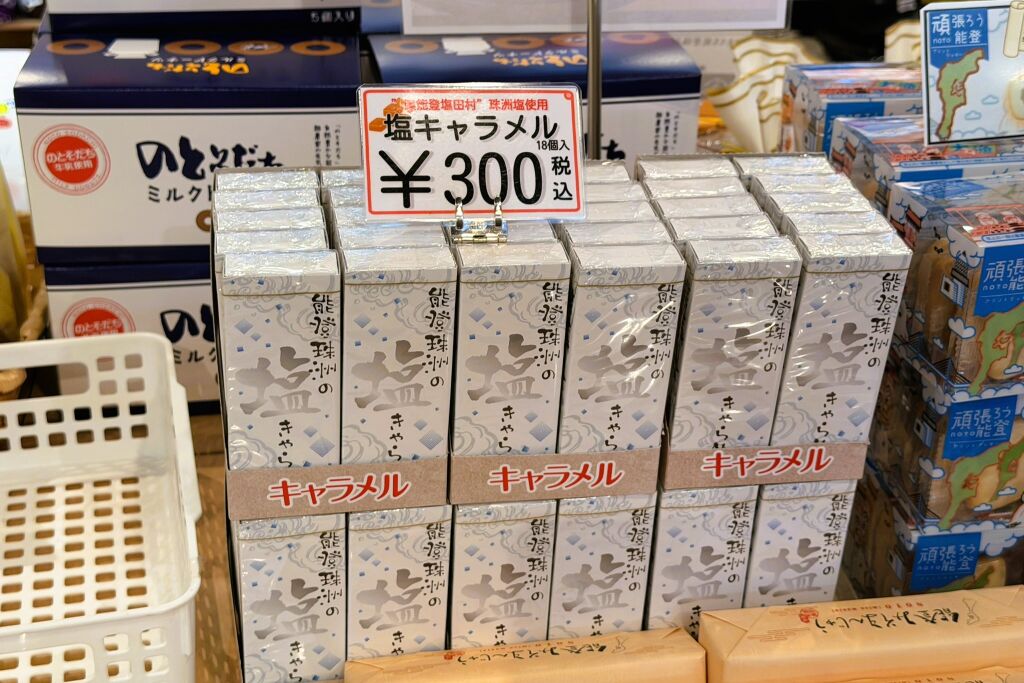
Taking a break, we grabbed some salt caramel at the souvenir shop in Anamizu Station for a quick snack. Noto is famous for its natural salt, made using Japan’s last remaining traditional Agehama-style salt production method.
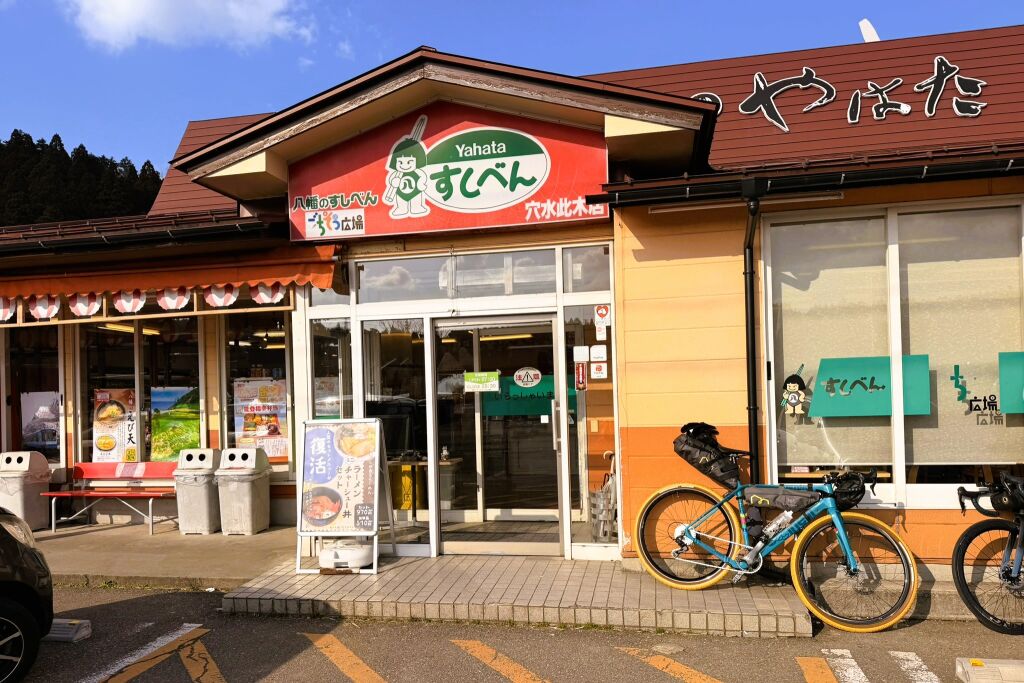
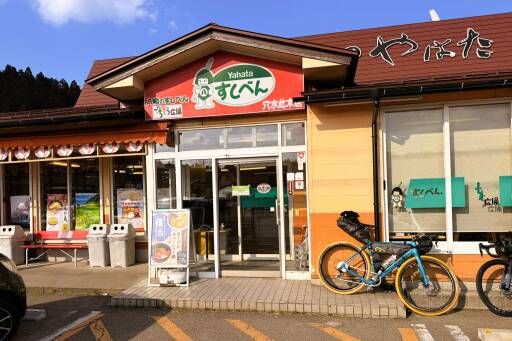
While taking a break in the town of Anamizu, we stopped by a local supermarket.SushibenIt’s a chain based in Ishikawa Prefecture where you can order ramen or udon right inside the shop and dig in on the spot. They also serve up homemade side dishes, making it a favorite hangout for the locals.
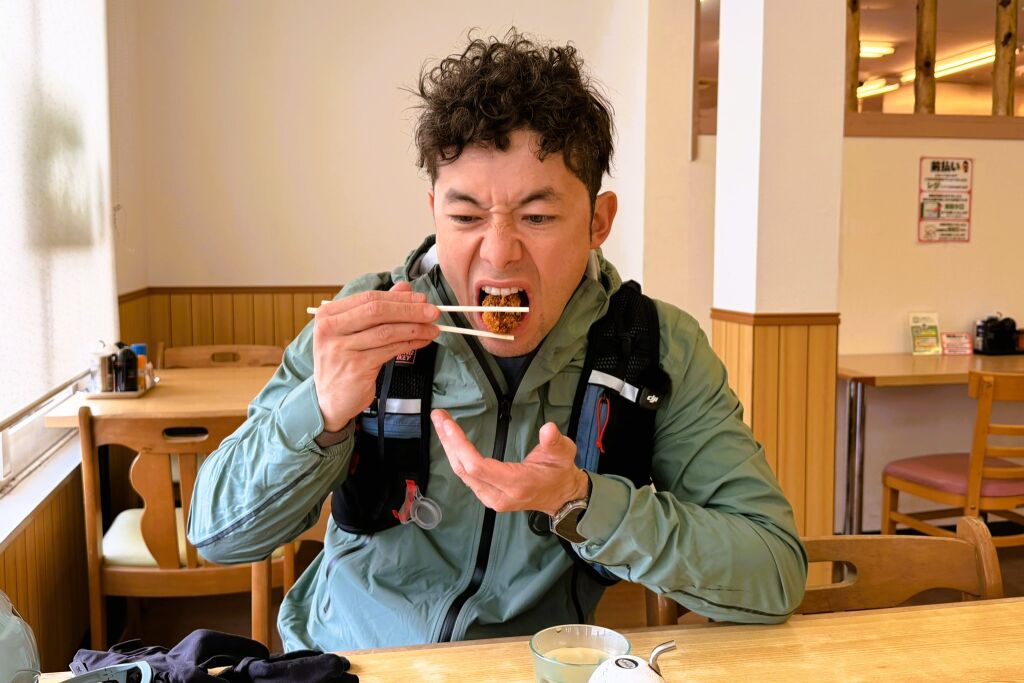
While grabbing some supplies, I enjoyed a freshly fried oyster right there at the eat-in spot. At around 100 yen each, the quality is seriously impressive for the price. They also have bottled drinks and snacks, making it a super convenient pit stop for cyclists. After refueling properly, I geared up to tackle the second half of the ride.
Riding Through Recovery Zones into Wajima City
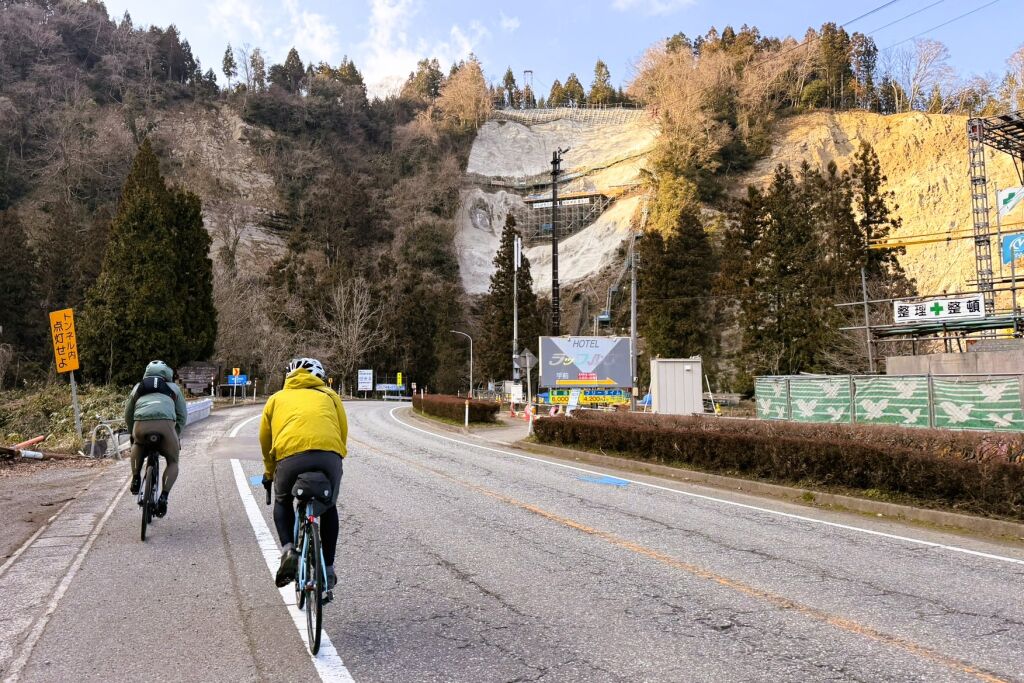
Heading north on Prefectural Route 1 from Anamizu, we’re aiming for Wajima City. Along the way, near the Kumano Tunnel on the Mitsui side, you’ll see the entire mountainside reinforced with concrete. This is part of the ongoing recovery efforts to fix the slopes that were damaged in the earthquake. Since this route is a crucial connection to Wajima, the repair work is moving at a rapid pace. You might just catch a glimpse of this in a quick video, but when you’re actually riding through, the scale of the restoration is truly overwhelming.
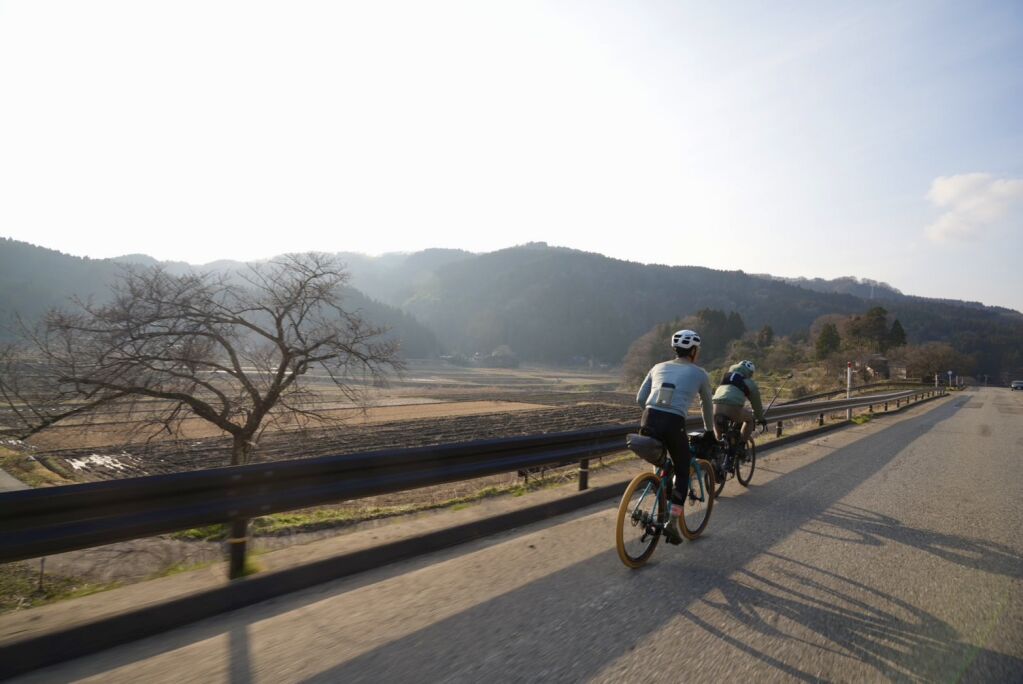
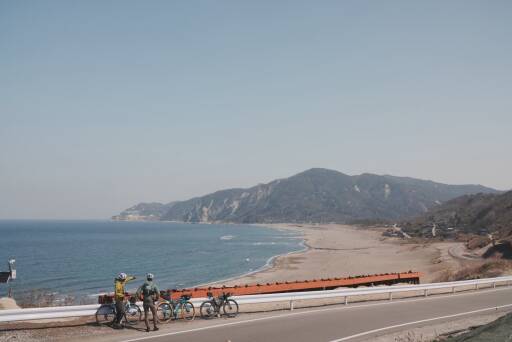
After cruising through the Kumano Tunnel, the road to Wajima City mostly rolls downhill. The sunset spreading out ahead is absolutely breathtaking, and as you pedal, it naturally lifts your mood. It’s the perfect stretch to finish strong and soak in the ride all the way to the finish line.
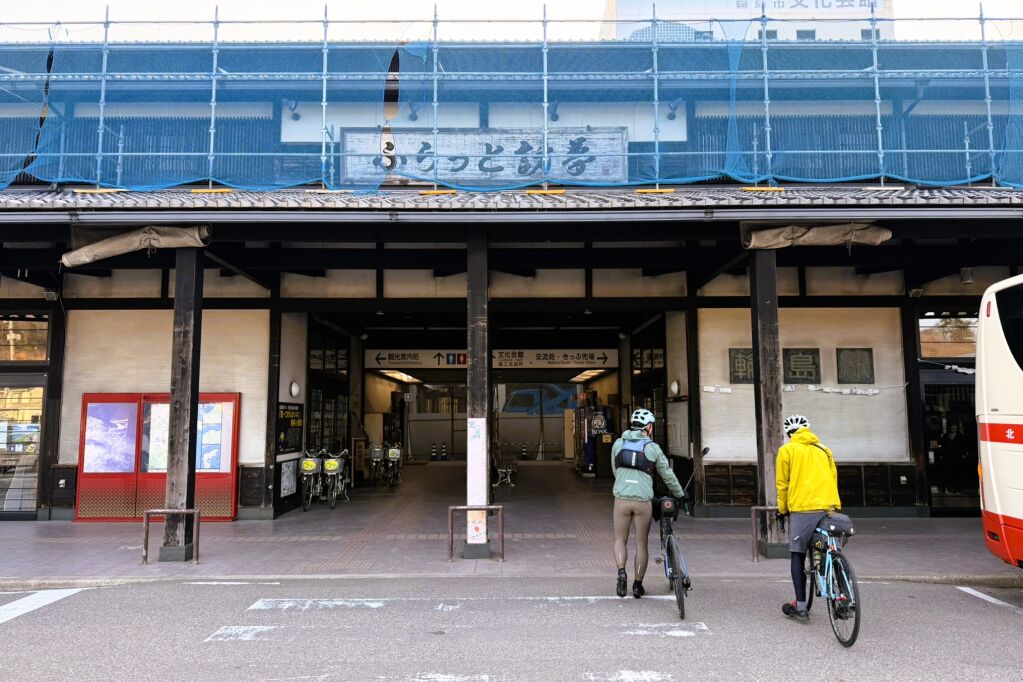
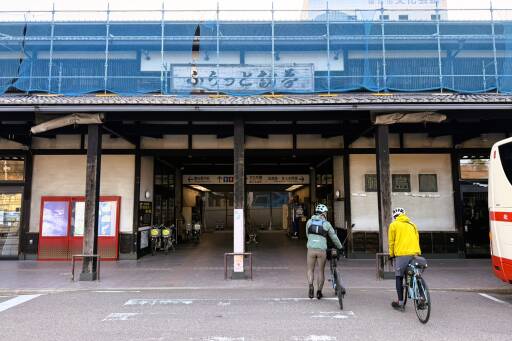
We rolled into Wajima city and stopped by the roadside station “Michi-no-Eki Wajima Flatto Tōmu (Home).” This spot used to be the final stop on the railway line until 2001, but after the train service ended, it was revamped into a roadside station. Now, it’s a hub with a tourist info center, shops, and places to grab a bite.
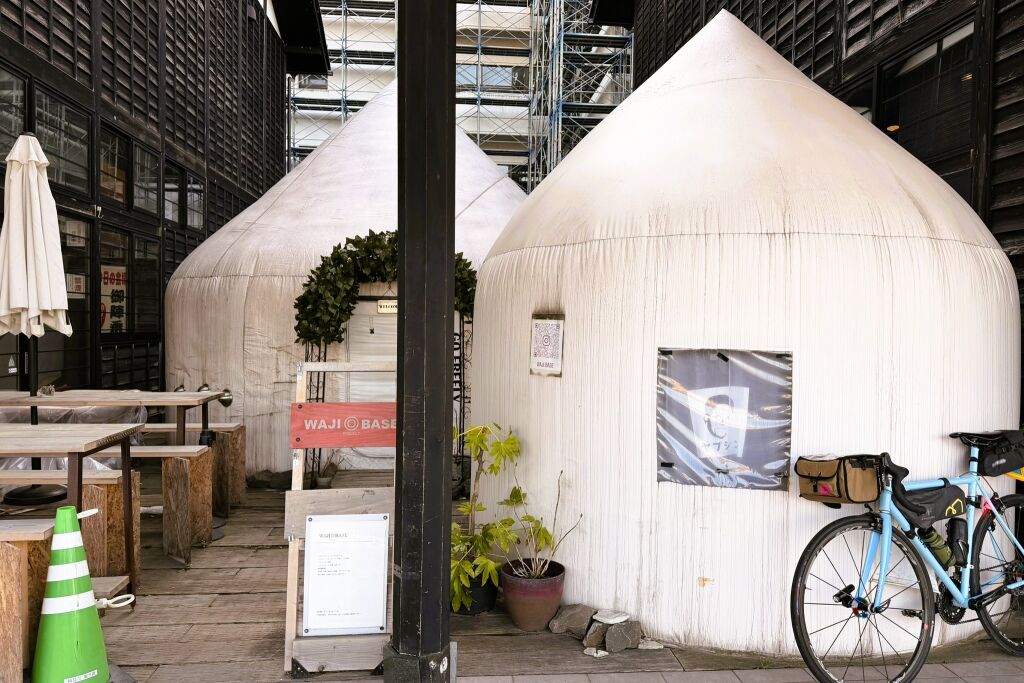
Between the buildings, there were these tent-like setups. After checking it out, I learned they’re called “Instant Houses”—simple, urethane-made temporary homes that can be put up quickly. The ones at the roadside station can be reserved ahead of time and used for free, making them great spots for overnight stays or meetups.
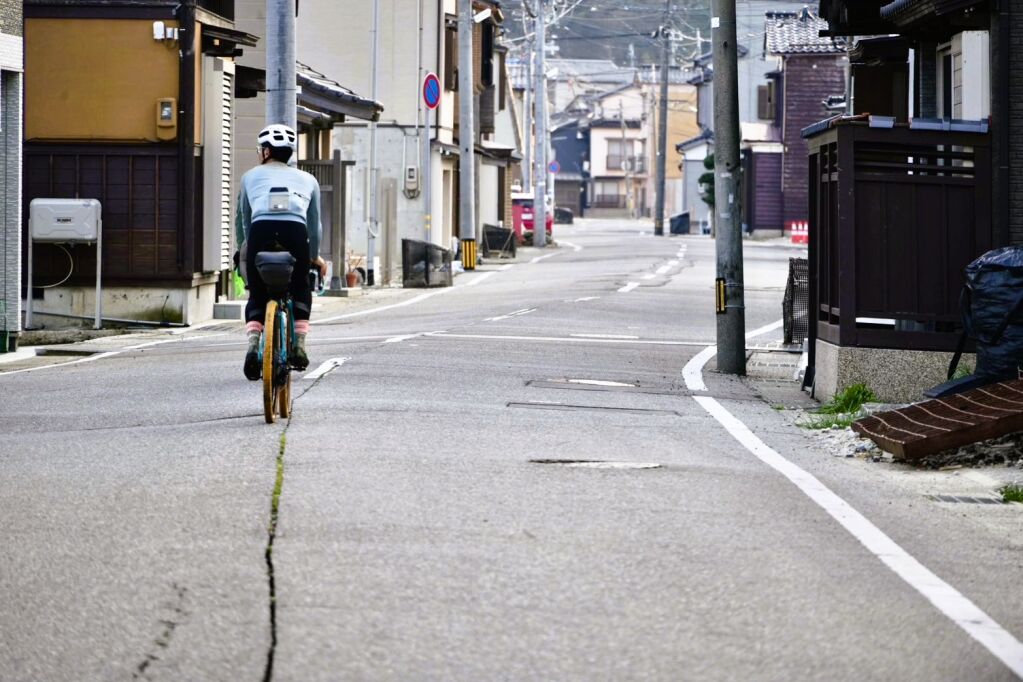
As we got closer to Wajima city, the road cracks from the earthquake became more noticeable, so we had to be extra careful while riding. Especially,Durable, wider tires (30C or bigger)That way, you can ride worry-free and just enjoy the ride even more.
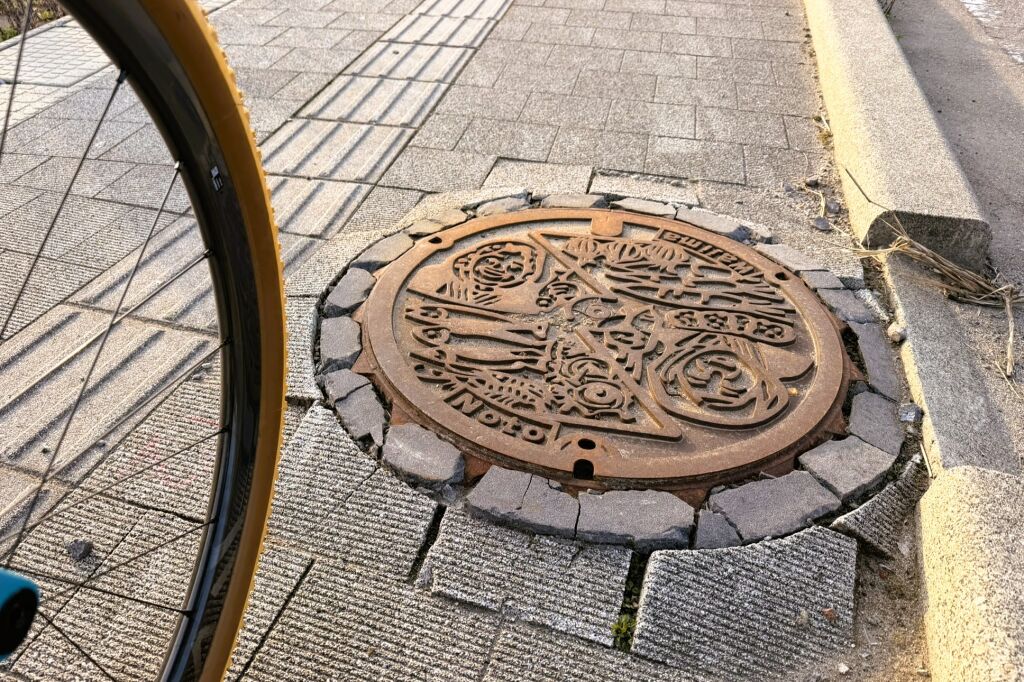
You can see manhole covers popping up from the road in several spots, showing that the road repairs are still a work in progress.
What’s Left of the Wajima Morning Market Today
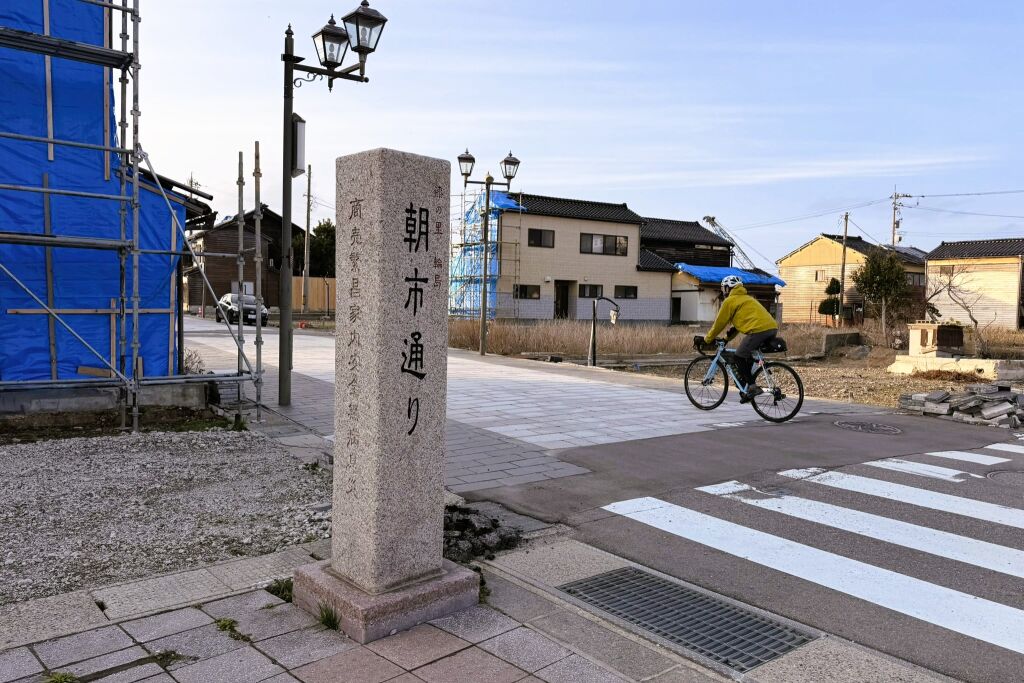
Rolling into the heart of Wajima City, I made a pit stop at “Asaichi Street,” one of Japan’s top three morning markets, before heading to my place to stay. I’d heard that because of fire damage from the earthquake, the market wasn’t running in its usual spot, but this was my first time checking it out in person.
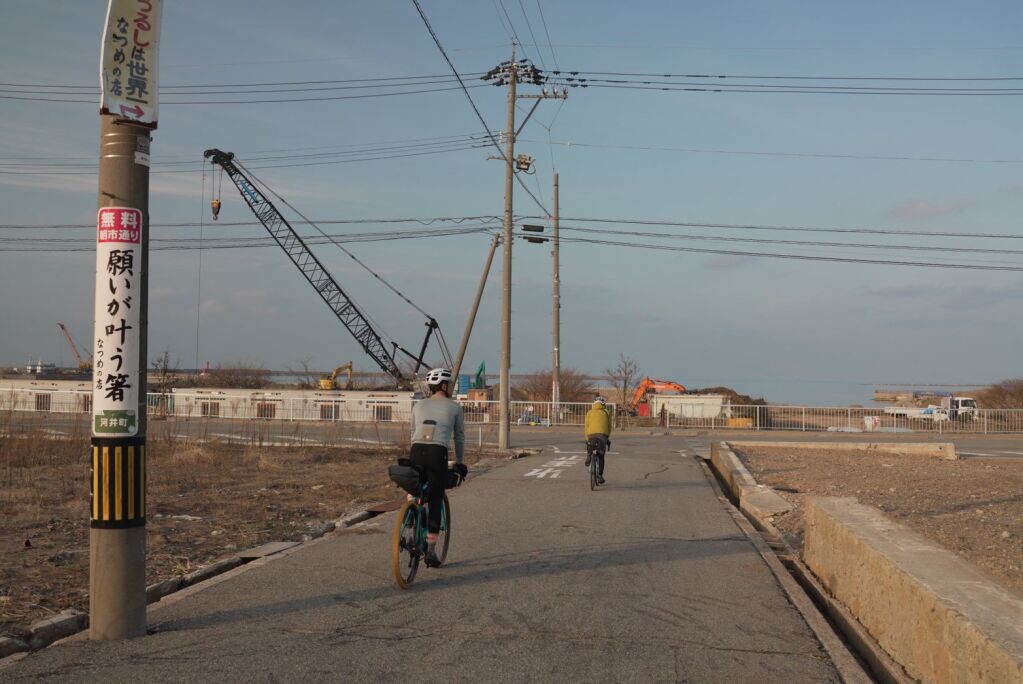
I’d seen photos in the news before, but actually visiting the place was something else—the massive fire caused by the earthquake had wiped out the area, and it was hard to believe this was once home to one of Japan’s top three morning markets. Even Tsumuri, who knew how it was before the disaster, was left speechless by the changes.
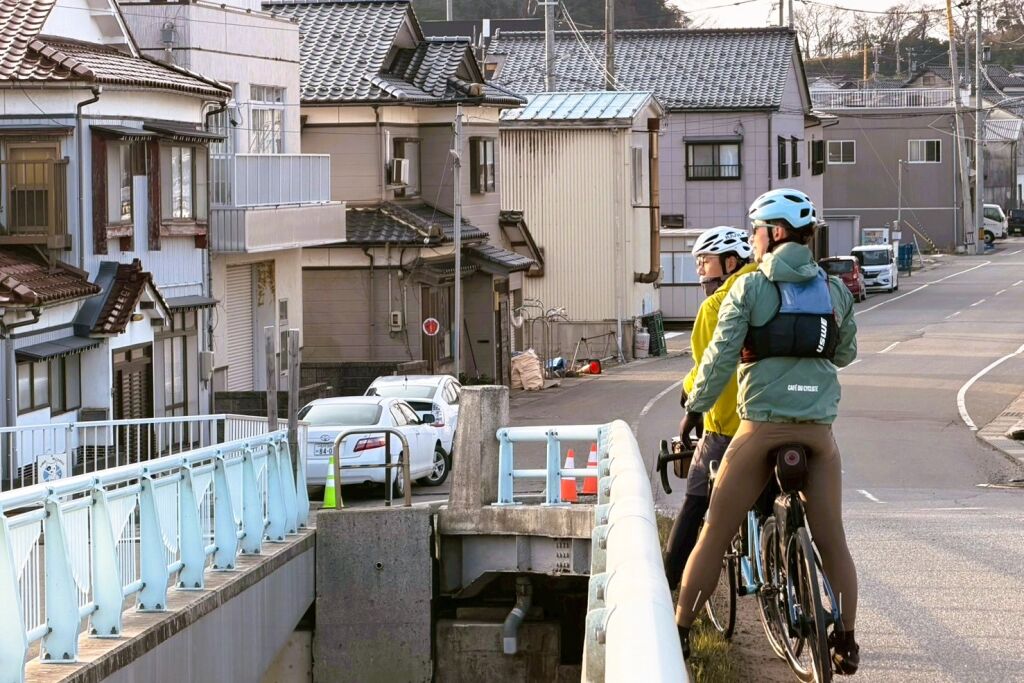
In front of where the Wajima Morning Market used to be, Kenta and Tsumuri exchanged words. Neither Kenta nor I had seen what it was like before the earthquake, so we could only imagine, but for Tsumuri, who knew how it used to be, it was probably a scene that left a strong impression.
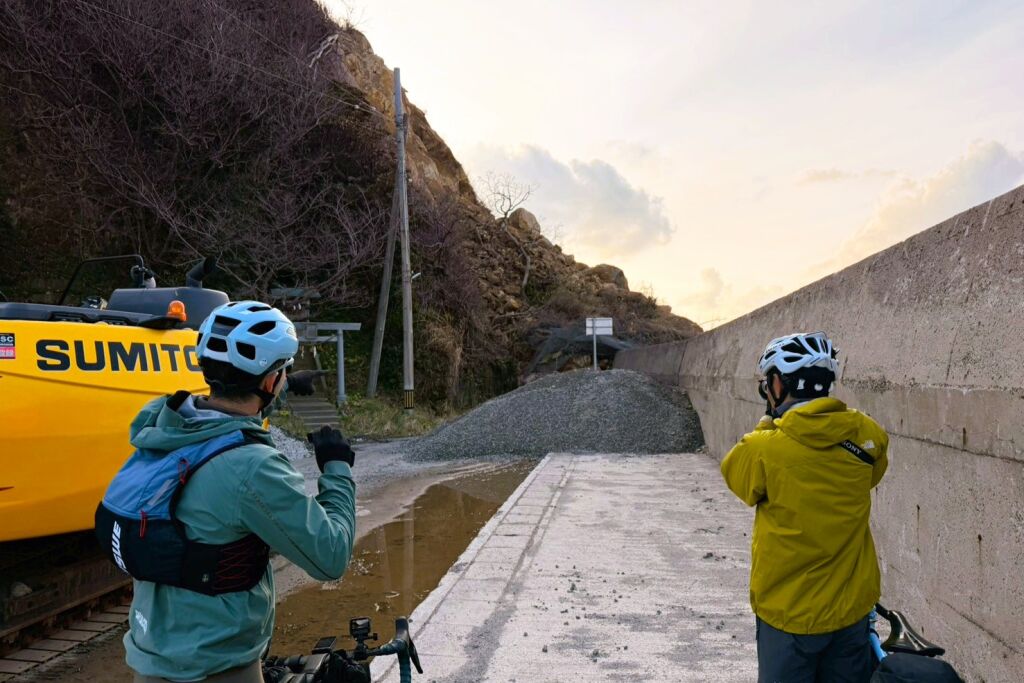
Shaking it off, we rode out to Kamogauru at the edge of town to catch the sunset. Along the way, we came across a road that used to be open but was now totally blocked by a landslide—a clear sign that the ongoing recovery efforts from the earthquake are still very much a part of life around Wajima. It really drives home just how powerful nature can be.
Sunset Views and Scenes from Wajima City
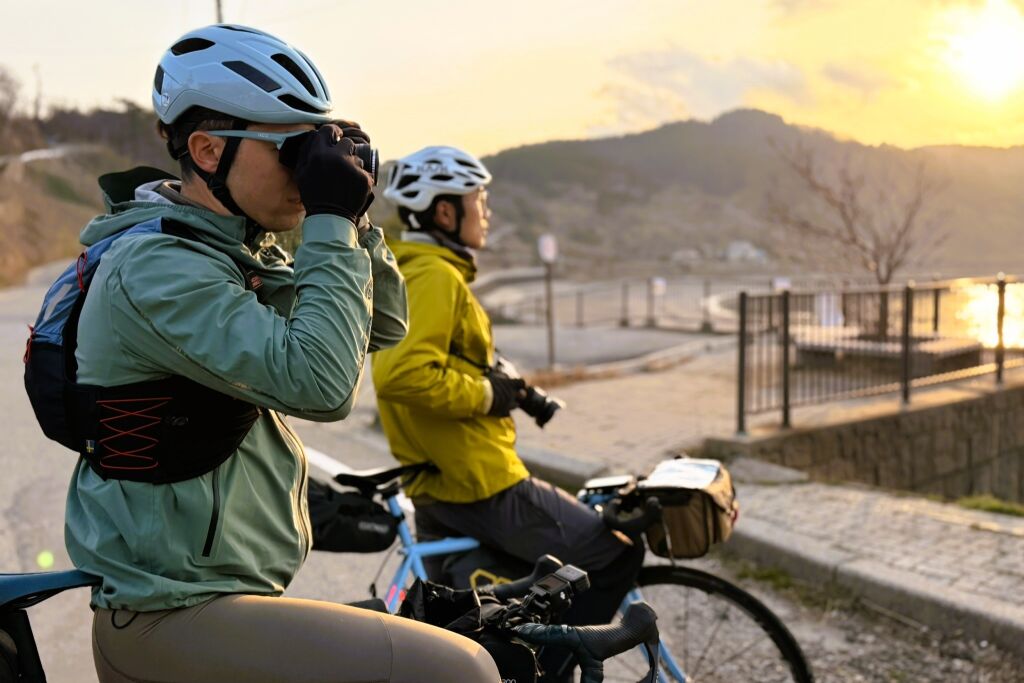
We couldn’t make it to Kamogauru, so we took a detour to Sodegahama. From there, we caught a beautiful sunset. Even amid the scenes that still show the impact of the earthquake, taking in this view helped calm my mind a bit. It was a moment that really reminded me why traveling by bike is so worthwhile.
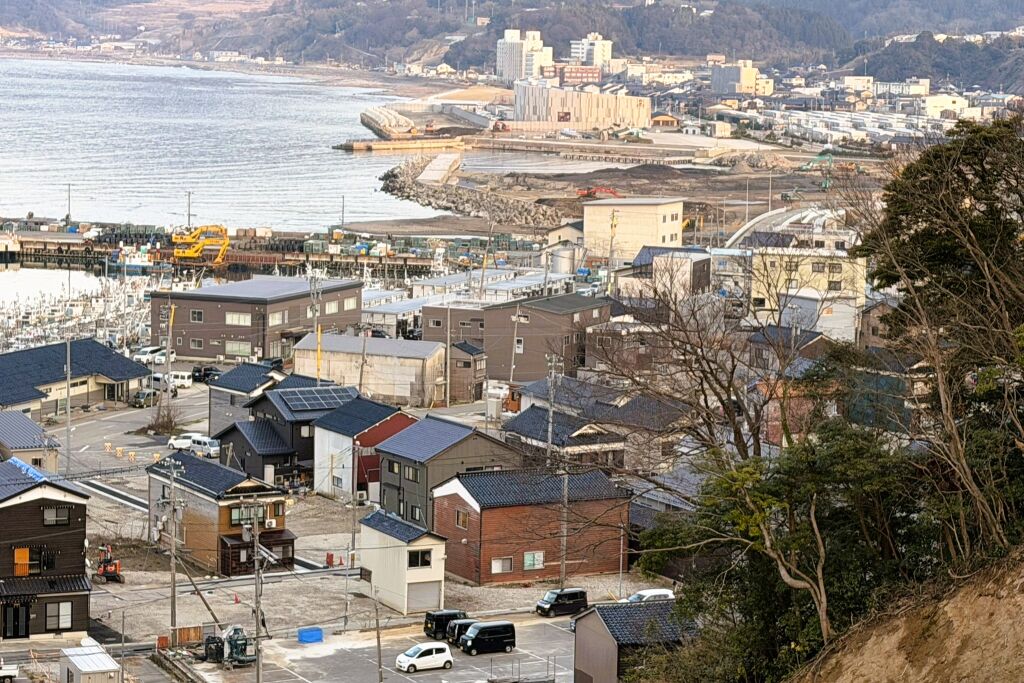
Climbing up a nearby hill, you get a full view of Wajima city. In the distance, you can see where the Wajima Morning Market used to be, and in the neighborhoods, empty lots stand out—likely still a result of the earthquake’s impact. The setting sun seemed to shine like a beacon of hope for Noto’s ongoing recovery.
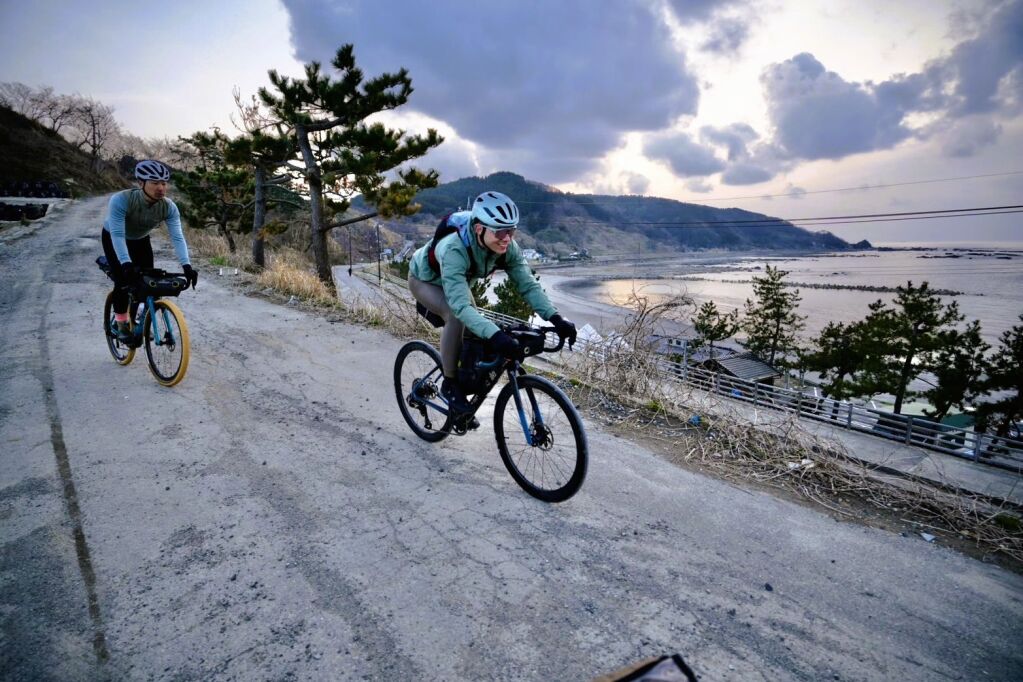
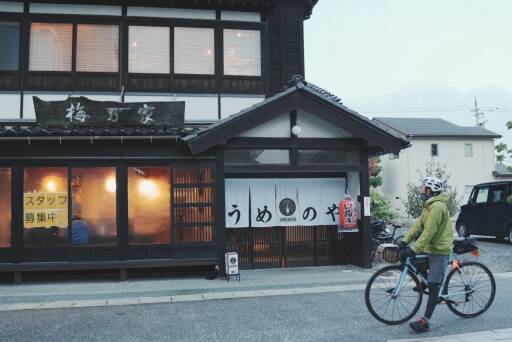
After watching the sunset and as the surroundings started to grow dim, we headed to today’s lodging, “Umenoya.”
Guesthouse “Umenoya” and the Ultimate Yakiniku Experience
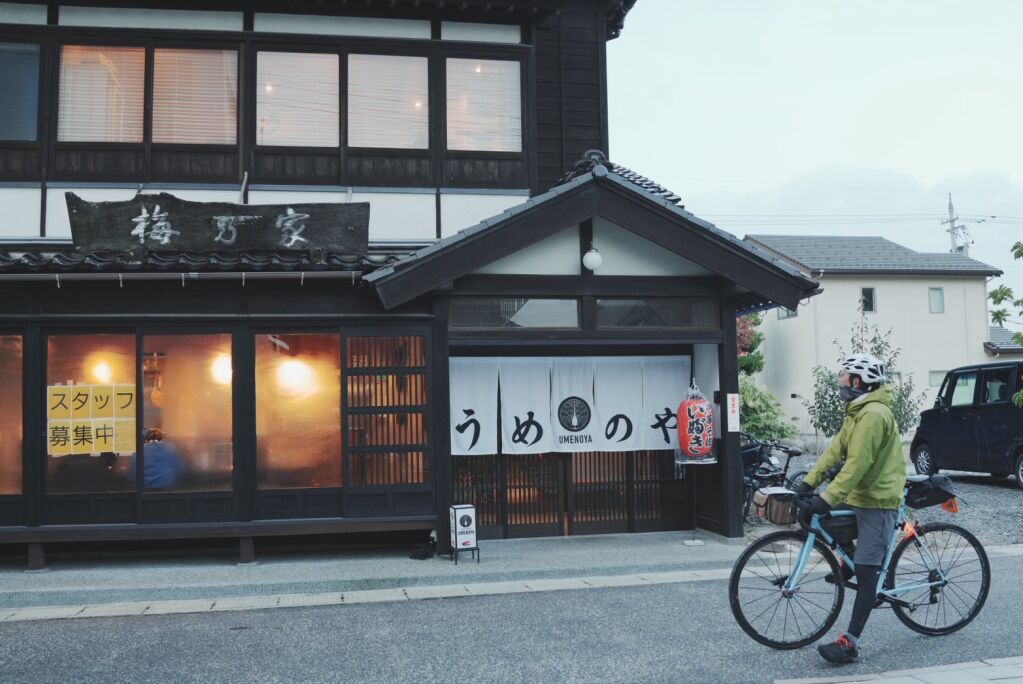
We made it safely to “Umenoya GUESTHOUSE.” Since this trip was an all-guys adventure, we went with a guesthouse to keep things budget-friendly. There aren’t many places open in Wajima city because of the ongoing recovery efforts from the earthquake, and a lot of rooms are taken by workers involved in the reconstruction, so spots fill up fast. Definitely recommend booking early!
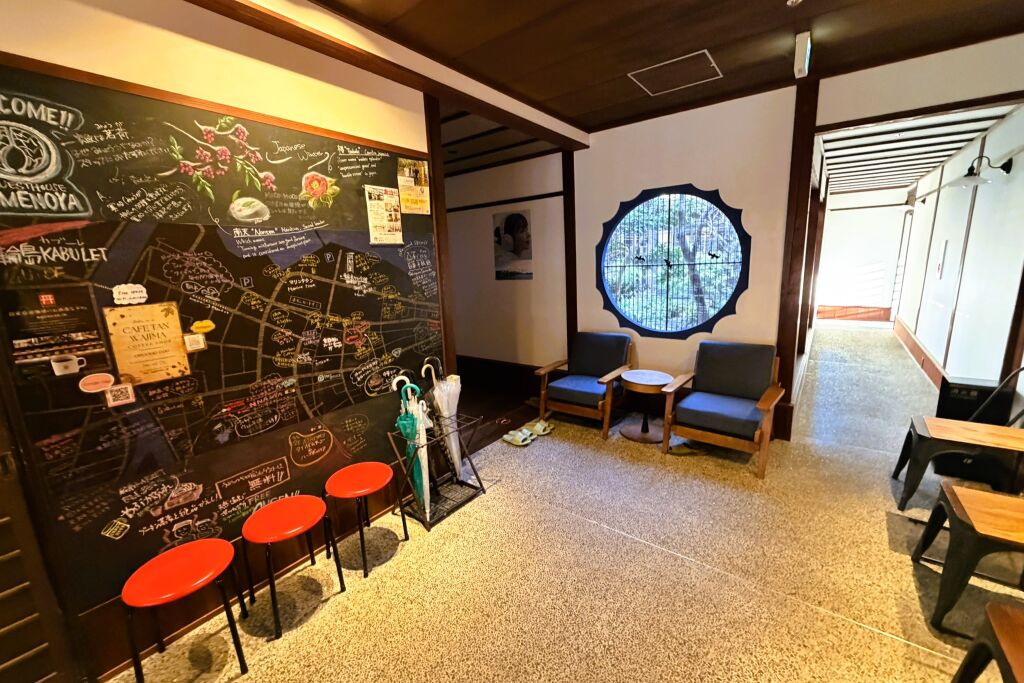
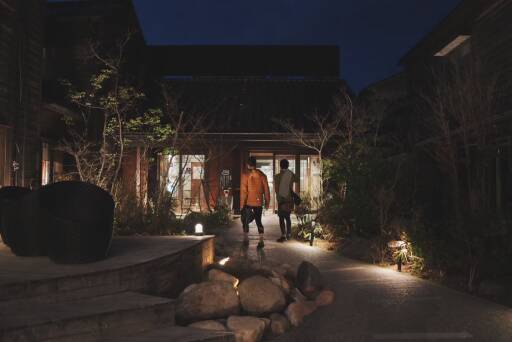
“Umenoya GUESTHOUSE” is a renovated townhouse that’s over 70 years old. It has a calm, cozy vibe and feels super clean. Right at the entrance, you’ll find a map featuring recommended local spots around town, so your adventure starts the moment you arrive.
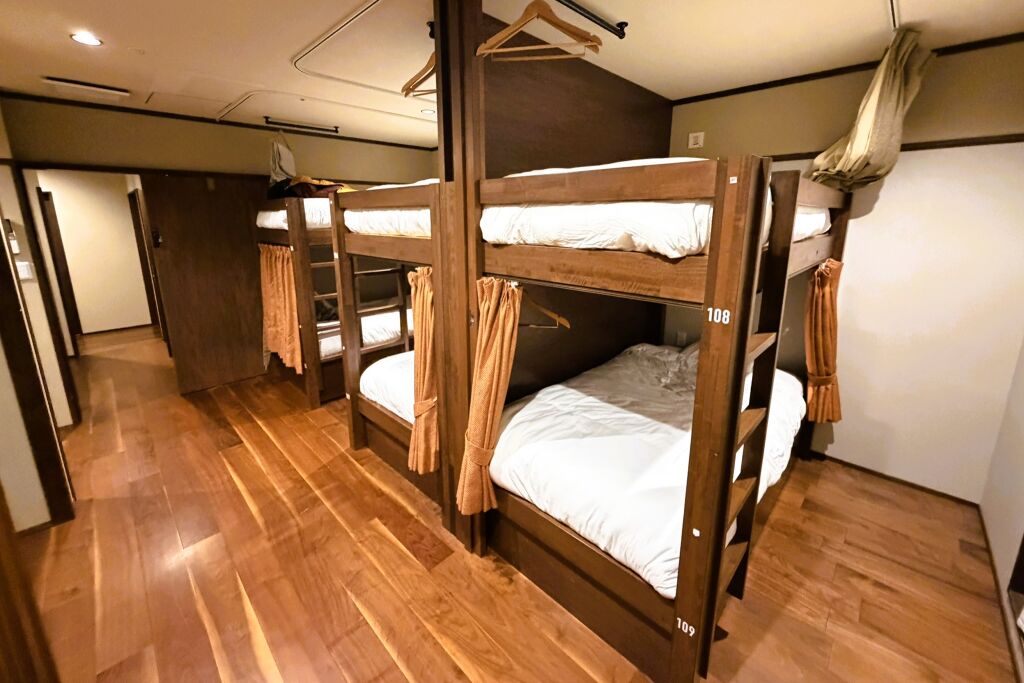
This time, I stayed in a dorm-style room with bunk beds. Each bed was separated by a curtain, so I had plenty of privacy and was able to relax comfortably.
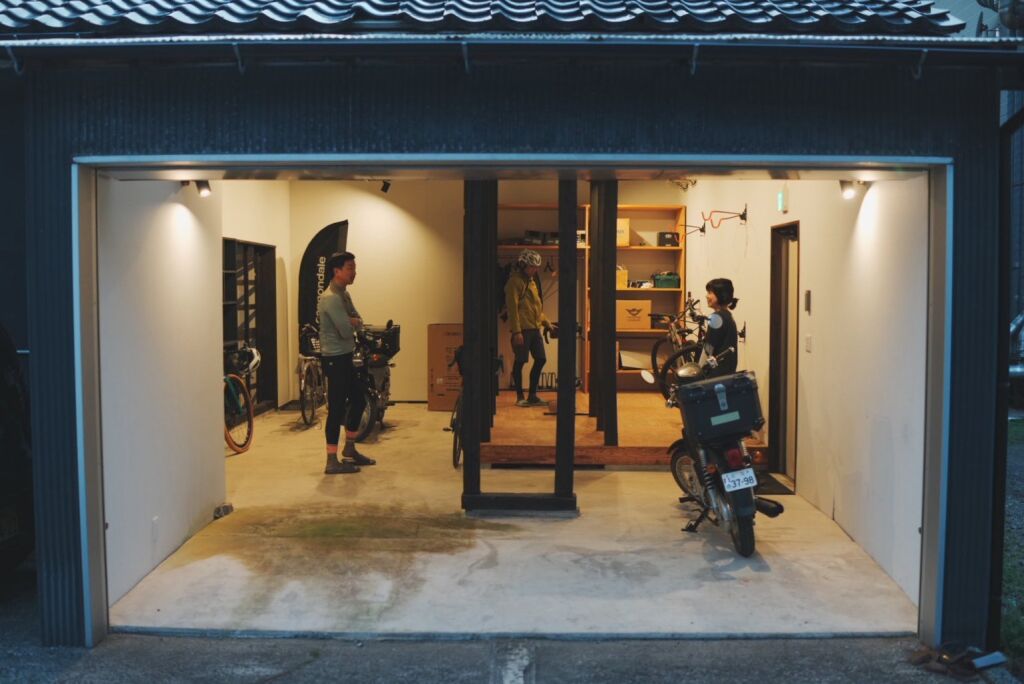
You can park your bike in the garage right next to the inn. It’s got an electric shutter and plenty of space, so you can rest easy knowing your bike is safe and sound.
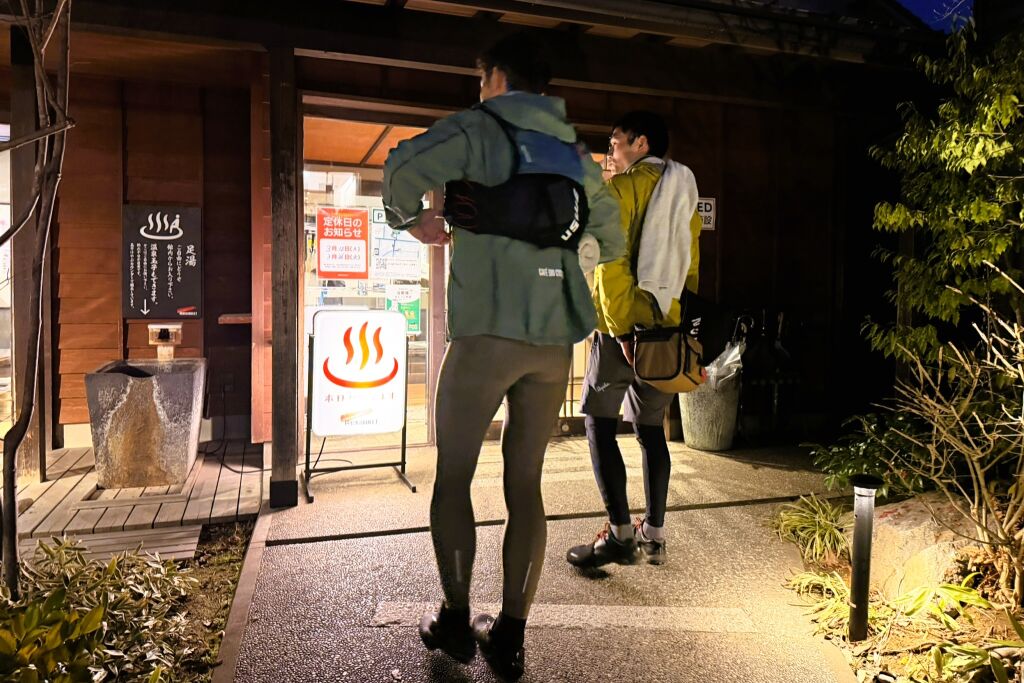
After checking in, the first stop is the bath. It’s about a 10-minute walk from the guesthouse to San-no-yu and Nana-no-yu inside Wajima KABULET. These hot springs have fresh, flowing natural water, and it’s great that guests staying at Umenoya GUESTHOUSE can use them for free.
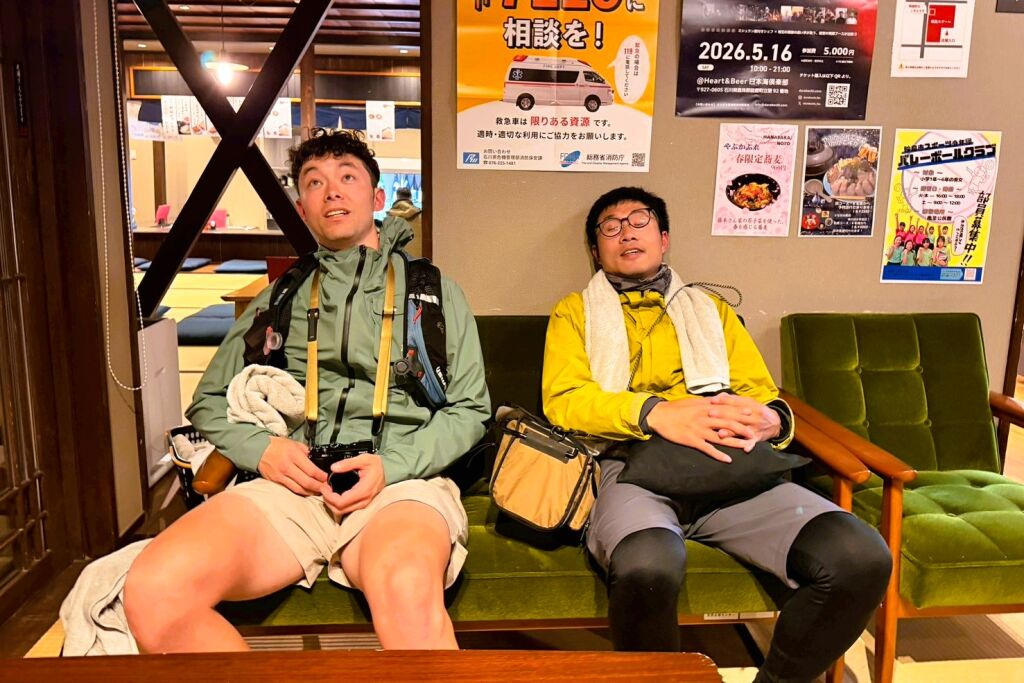
We soaked thoroughly in the super salty hot springs to wash away all our fatigue. Kenta and Tsumuri looked totally relaxed and refreshed.
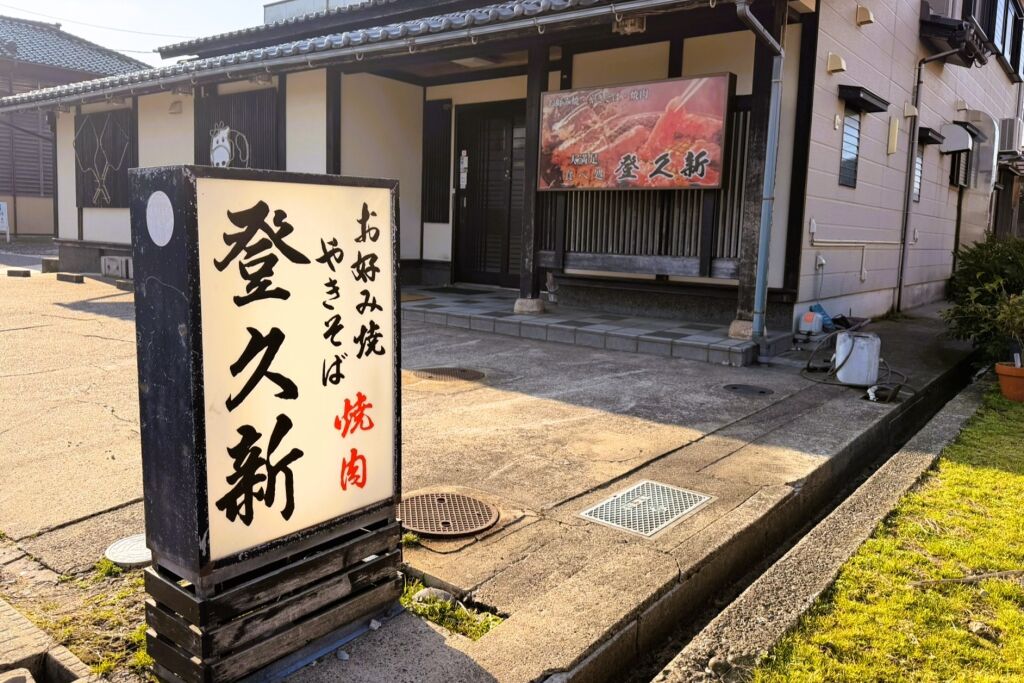
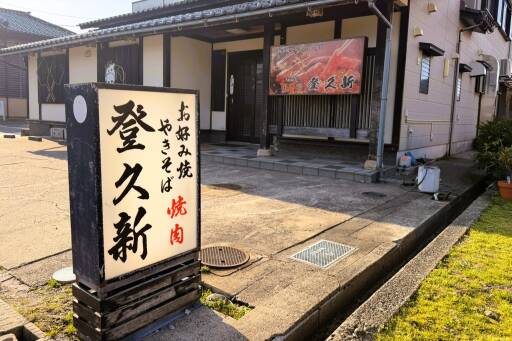
After the bath, the three of us headed out for some food. We went to the yakiniku spot “Tokushin” right across from the guesthouse.
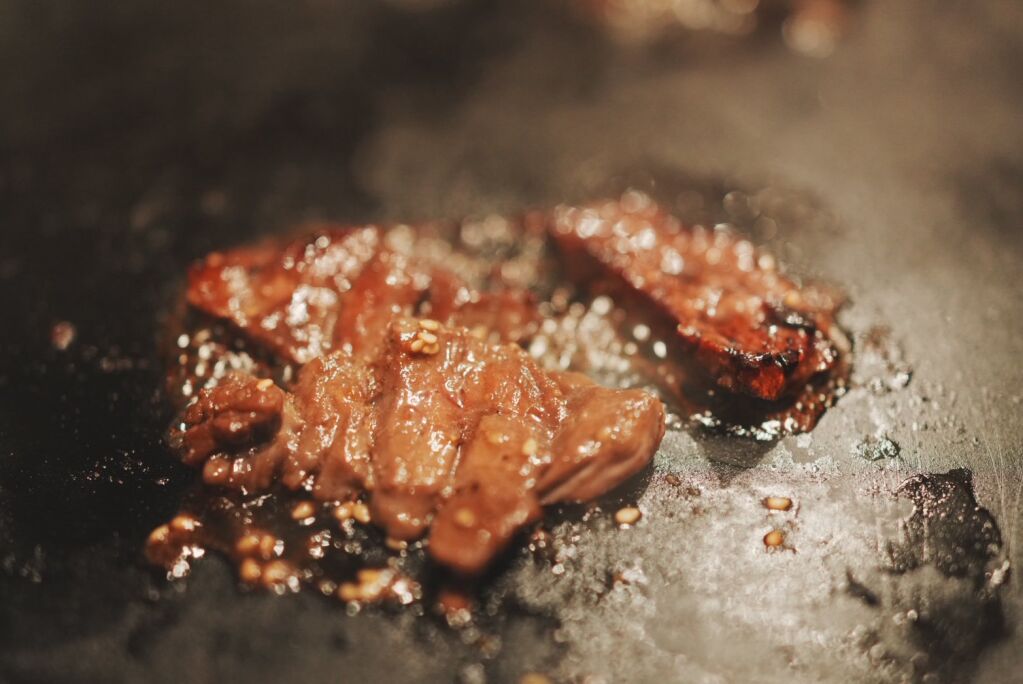
When you think of Noto, fish usually comes to mind, but hunger won out, and we all unanimously went for some hearty yakiniku and beer.
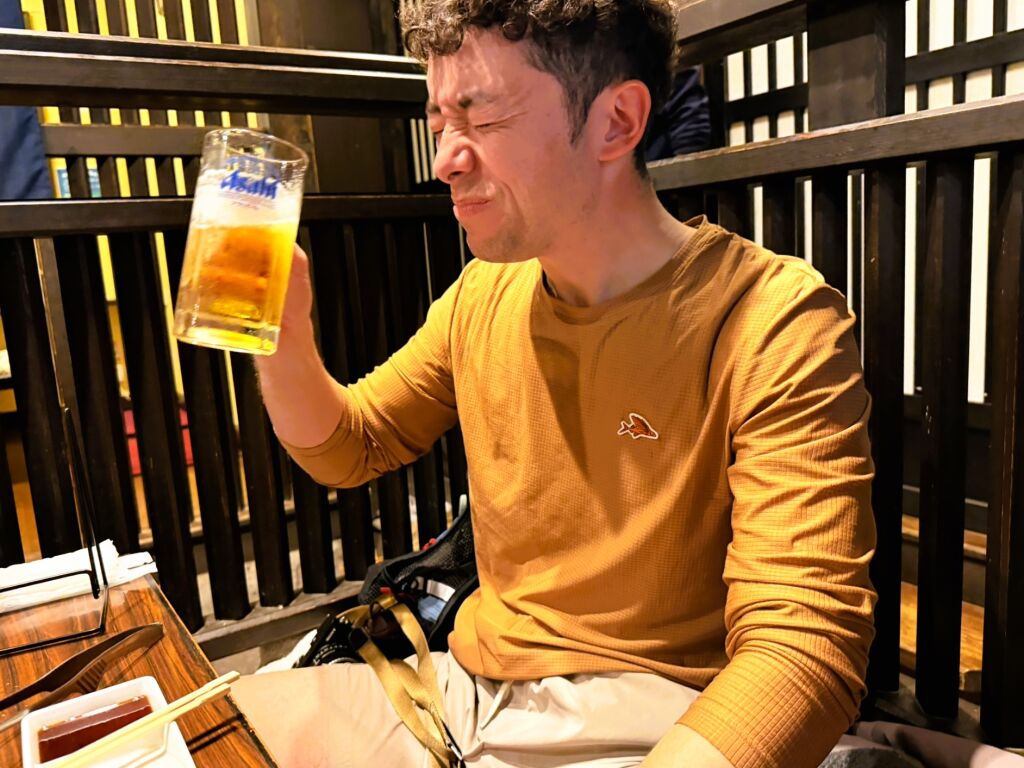
“Yeah, exactly. We’re out here for moments like this,” I said, nodding seriously at Kenta’s words.
Riding to Really Get the Land: Deepening Your Connection Through Cycling
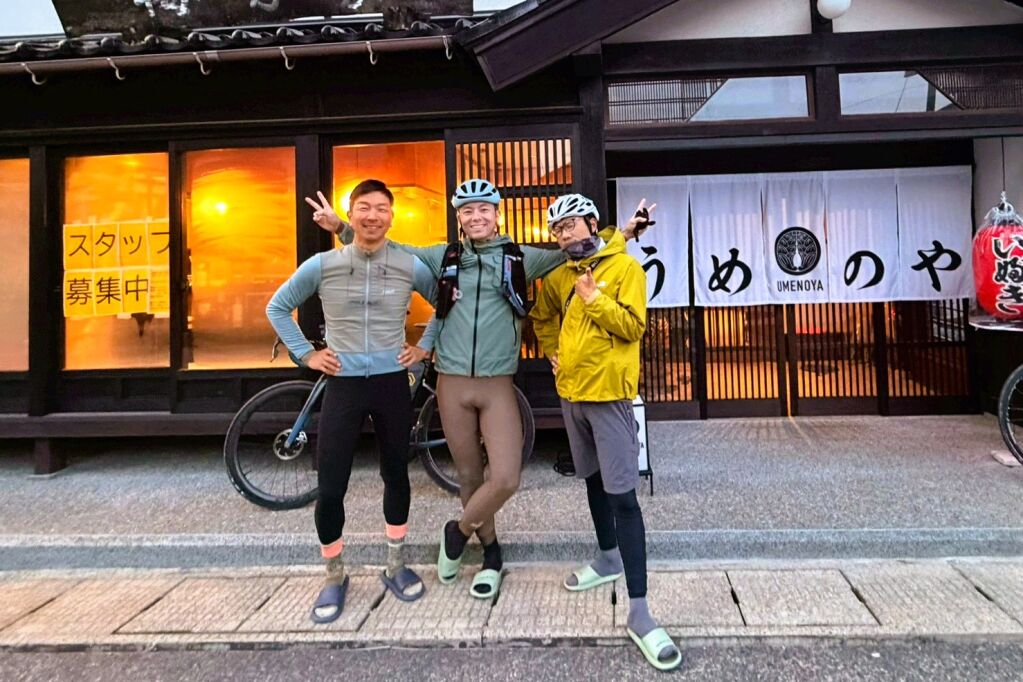
So, the first day was a half-day ride. While cycling and seeing the marks left by the earthquake, it was a day where I could really feel the differences in damage from town to town and the progress of road reconstruction. At the same time, I got to fully enjoy the classic Noto mix of mountains and sea, making it a ride that felt different from any bike trip I’ve done before. Riding with an awareness of the current situation really deepened my understanding of this place.
After fueling up properly, I hit the sack early to get ready for day two. I rested my body, excited to see what kind of route the next day would bring.
旅のしおり
| 7:40 | Shinkansen from Omiya to Kanazawa |
|---|---|
| 10:00 | Transfer to limited express at Kanazawa Station |
| 11:00 | Arrive at Wakura Onsen |
| 11:30 | Ride starts |
| 11:45 | Stop by Wakura Onsen town |
| 13:00 | Lunch at muucoco |
| 14:45 | Stop at Anamizu Station |
| 15:30 | Break at Hachiman no Sushiben Anamizu Konoki |
| 16:30 | Visit Michi-no-Eki “Flatto Homu” |
| 18:00 | Finish at Umenoya GUESTHOUSE |