3 Days on the Noto Peninsula: Day 2

Kicked off day two of our Noto trip with pro cyclist Tsumuri joining us as a support rider. The weather was great again—perfect for riding. We set out from Wajima City and headed counterclockwise along the Noto Peninsula’s coastline, aiming for our day two finish in Noto-cho.Here’s the report from Day 1!>
Day 2 Kickoff and Juzo Shrine Visit
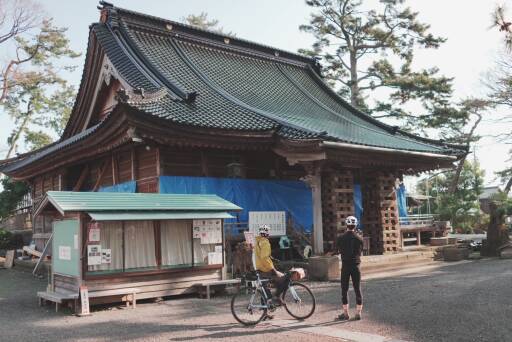
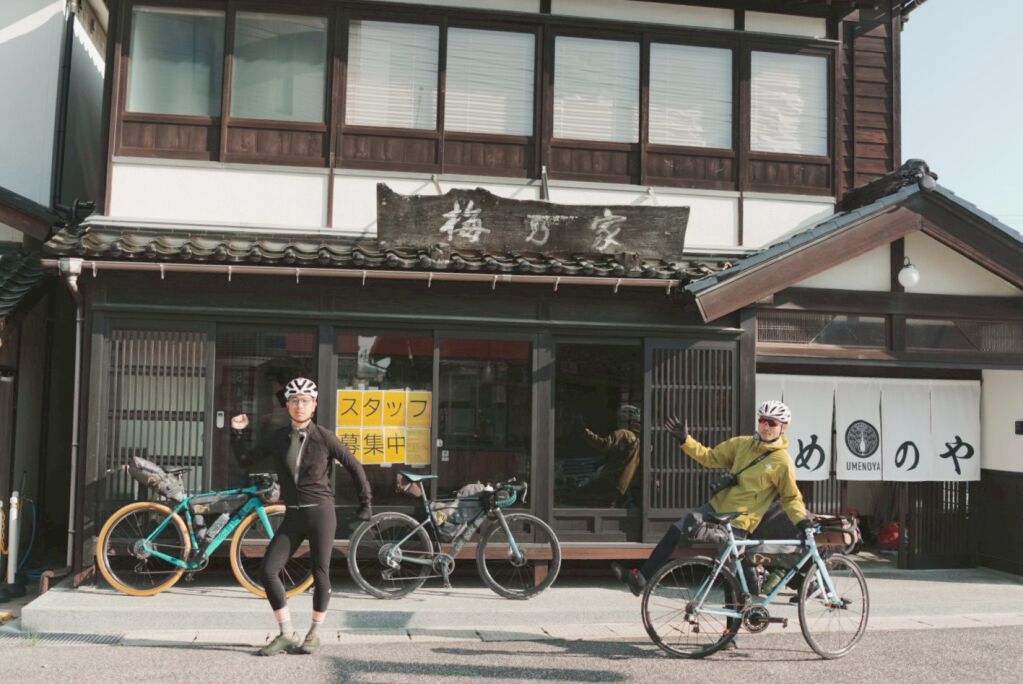
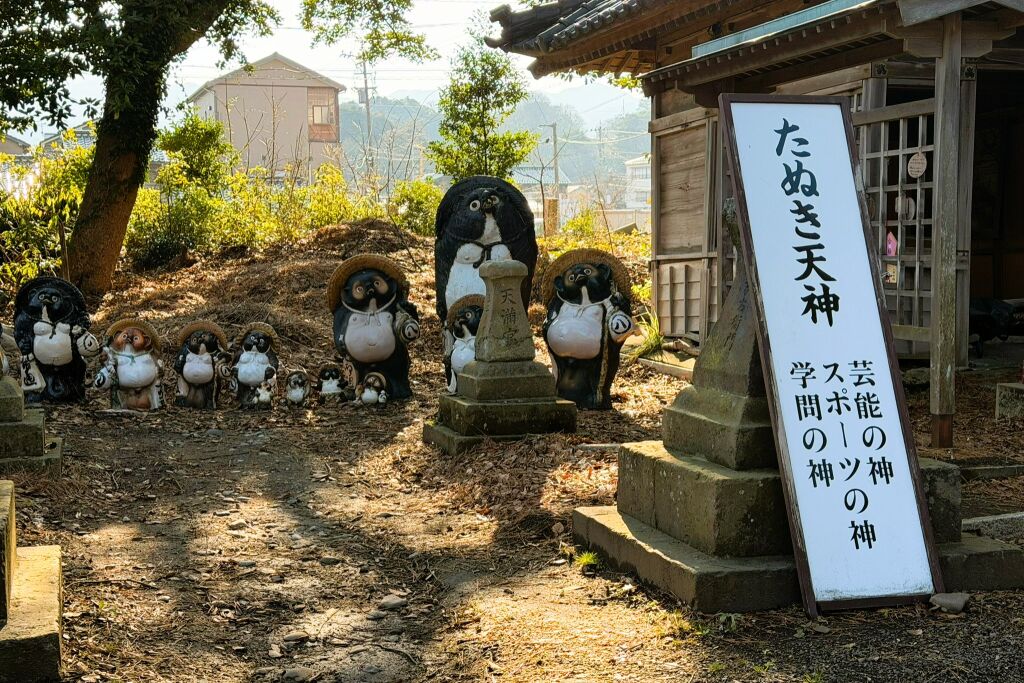
Last night it was too dark to notice, but right next to the guesthouse “Umenoya GUESTHOUSE” where I stayed, there’s the Juzo Shrine. It’s one of the historic shrines in Wajima city and has been a beloved spot for the local community. On the shrine grounds, there’s also a small shrine called “Tanuki Tenjin,” known for its unique charm.
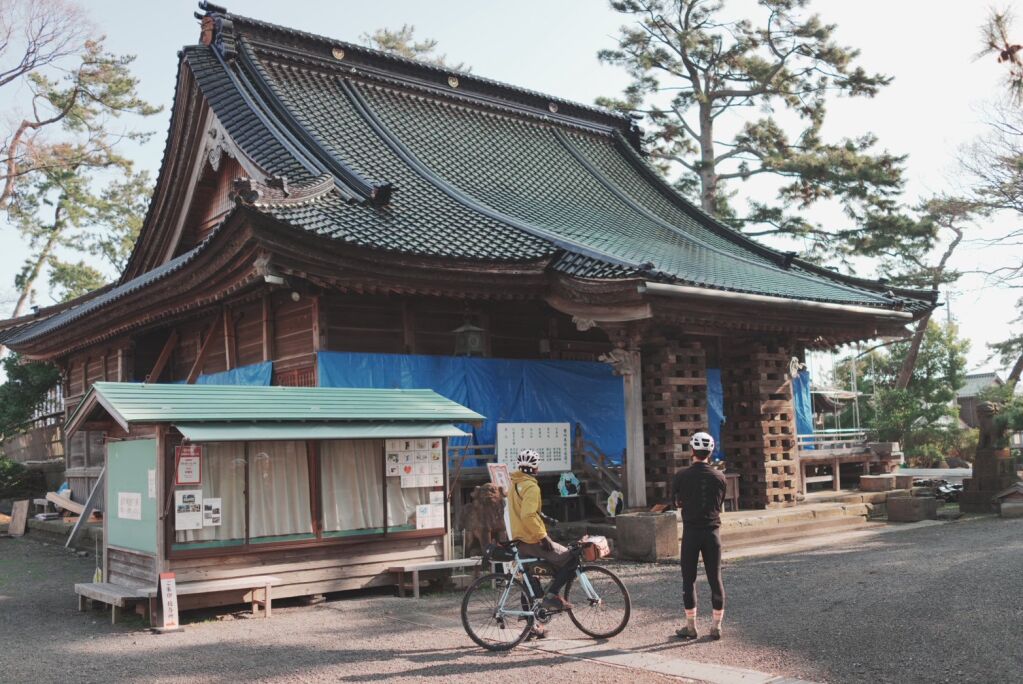
When we stopped by Jujo Shrine, the main hall was covered with blue tarps because of earthquake damage. The building was still leaning, and it looked like the recovery efforts hadn’t really gotten underway yet. It really made me realize just how huge the impact of the earthquake has been.
Breakfast at the Wajima Morning Market on a Business Trip
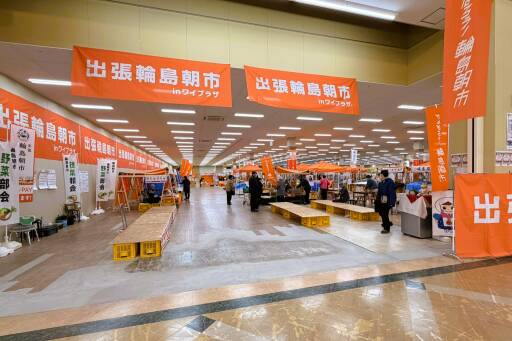
Since breakfast wasn’t included at our lodging, we decided to grab breakfast at the Wajima Morning Market. After some research, we found out that the market had moved locations and scaled down a bit, but it’s now operating inside the Power City Wajima Wi Plaza shopping mall in Wajima. So, we decided to check it out in person.
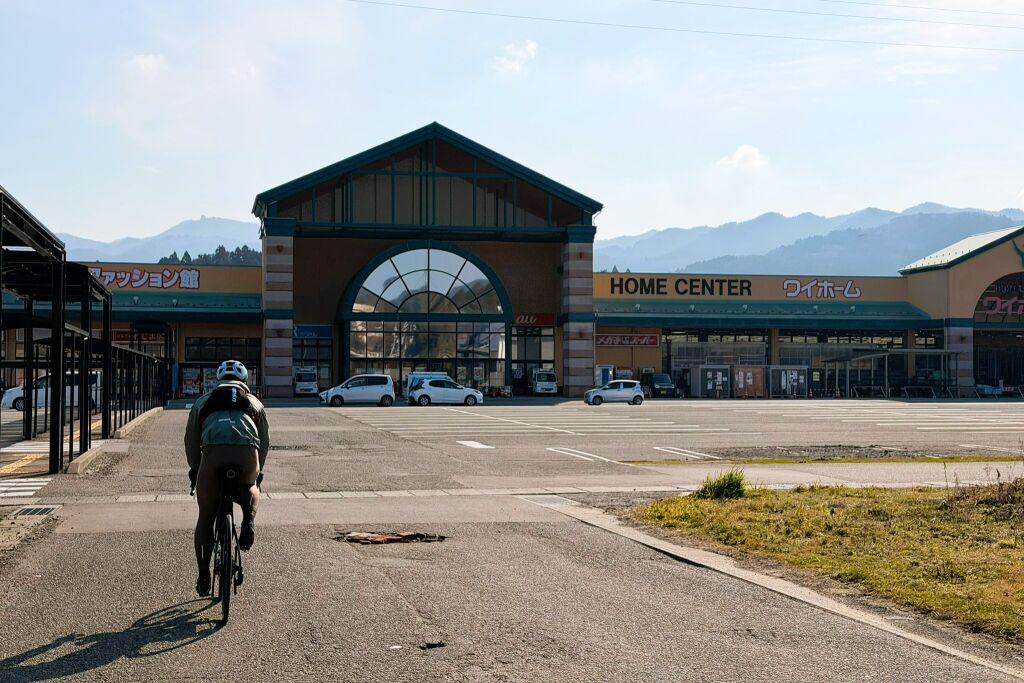
At a corner of Power City Wajima Wi Plaza, they were hosting a Wajima Morning Market pop-up. Since the usual market street is still closed due to fire damage from the earthquake, they’ve been keeping the market alive on a smaller scale. It’s open from 9 AM to 1 PM (closed on Wednesdays). It’s a great spot to get a feel for how the Wajima Morning Market is doing these days.
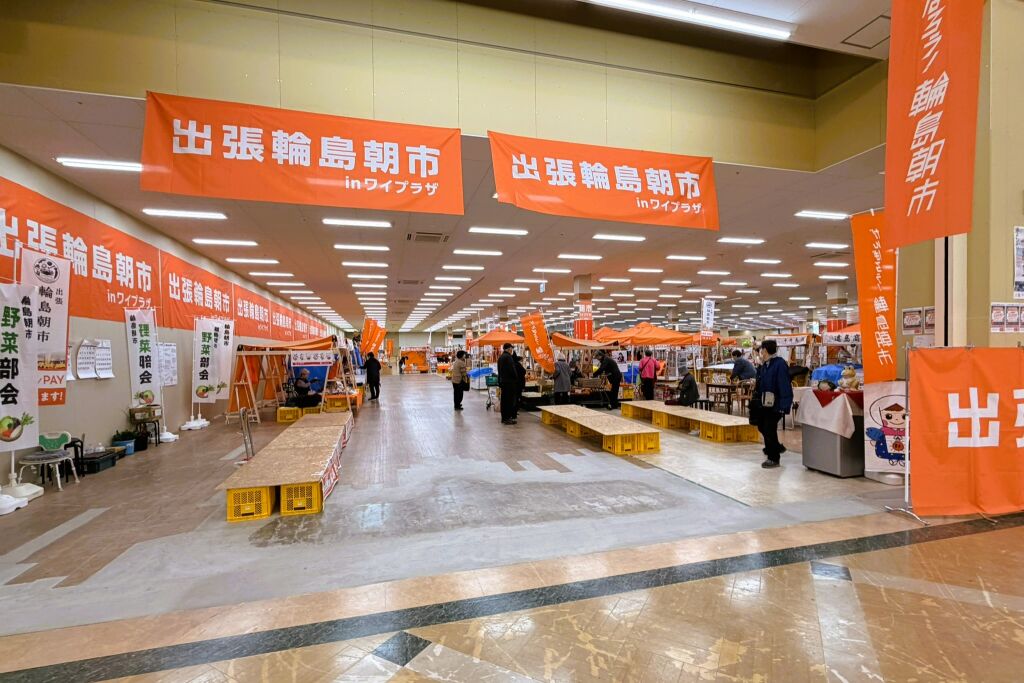
We wandered around, popping into shops in search of breakfast. Chatting with local moms while shopping made for a really fun time. Seafood, fruits, and crafts were all on display. Though the market’s smaller than before the earthquake, it was still buzzing with lively voices and energy.
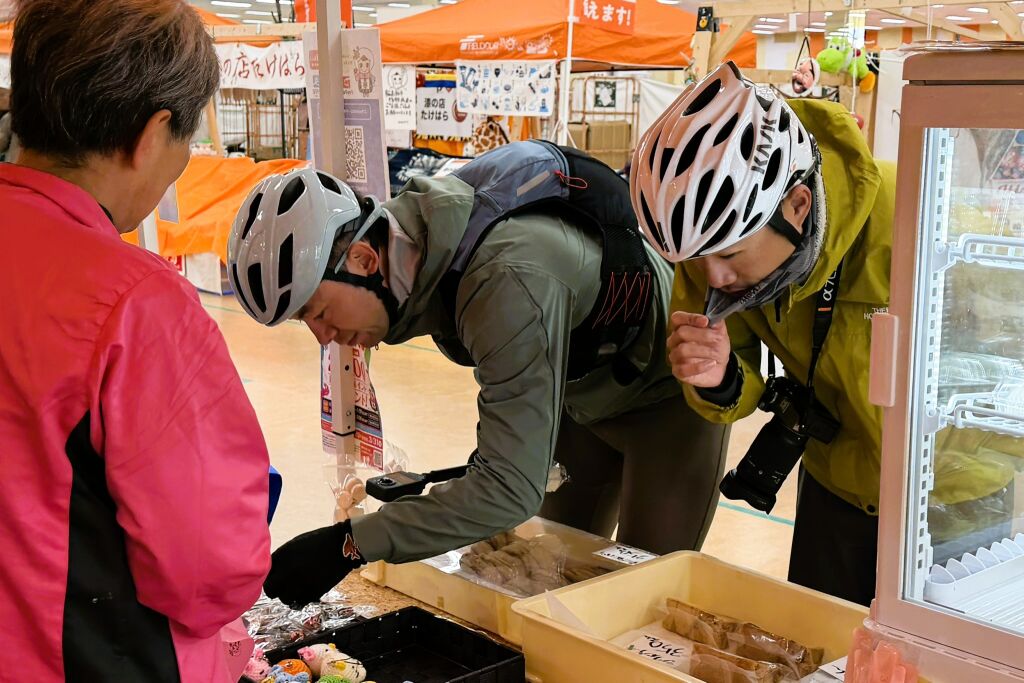
I picked up some handmade onigiri and manju. At just 100 yen each, they’re super affordable and easy to grab. Their simple, comforting flavors made me want to reach for another one right away.
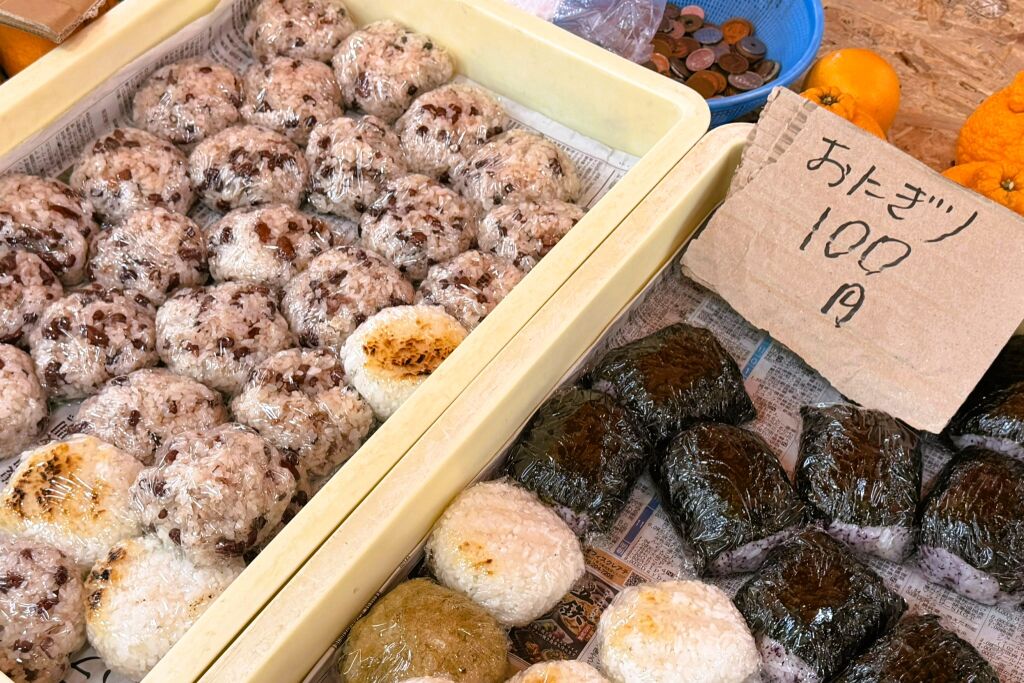
I grabbed a quick bite, munching on an onigiri in the cozy eat-in spot. The lively chatter of the local moms gave me a natural boost of energy, and I headed straight to my next destination.
A Sweet Detour at the Bakery
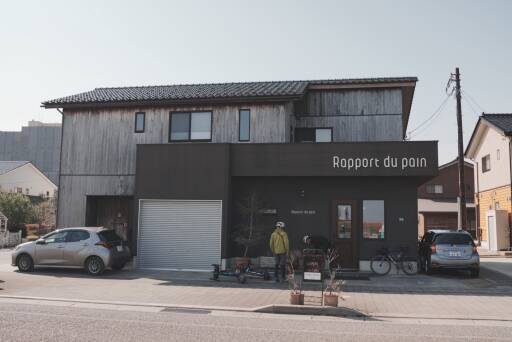
After breakfast, at Kenta’s request, we stopped by a bakery in town called Rapport du Pain.
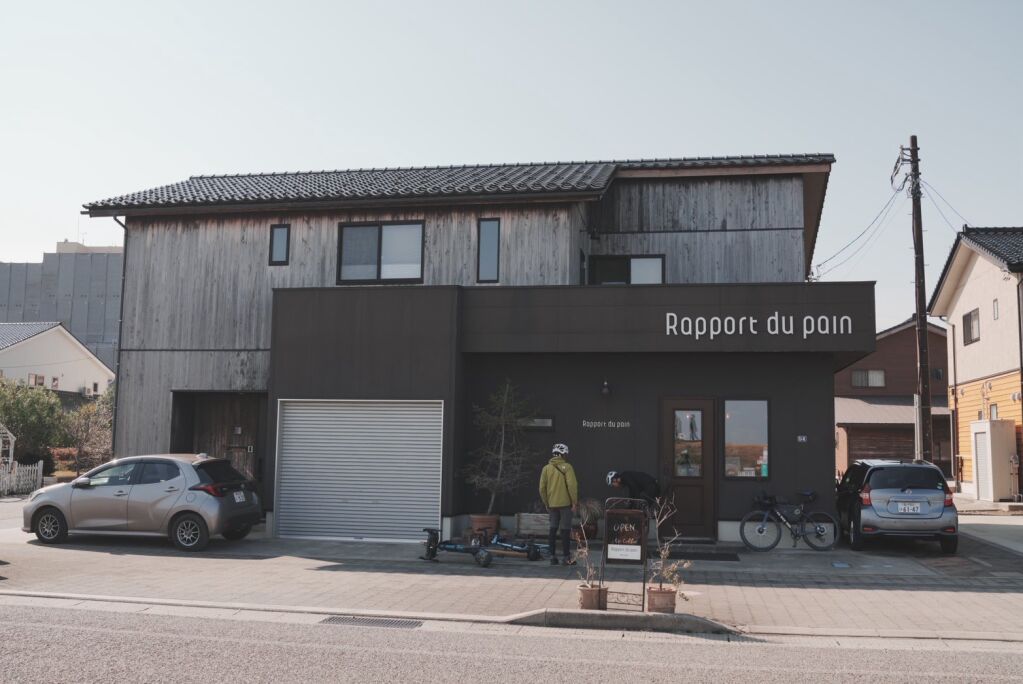
When I stepped into the shop, my eyes instantly landed on the showcase packed with all kinds of mouthwatering breads. They looked so perfectly made, and with so many options, I had a tough time choosing which one to go for.
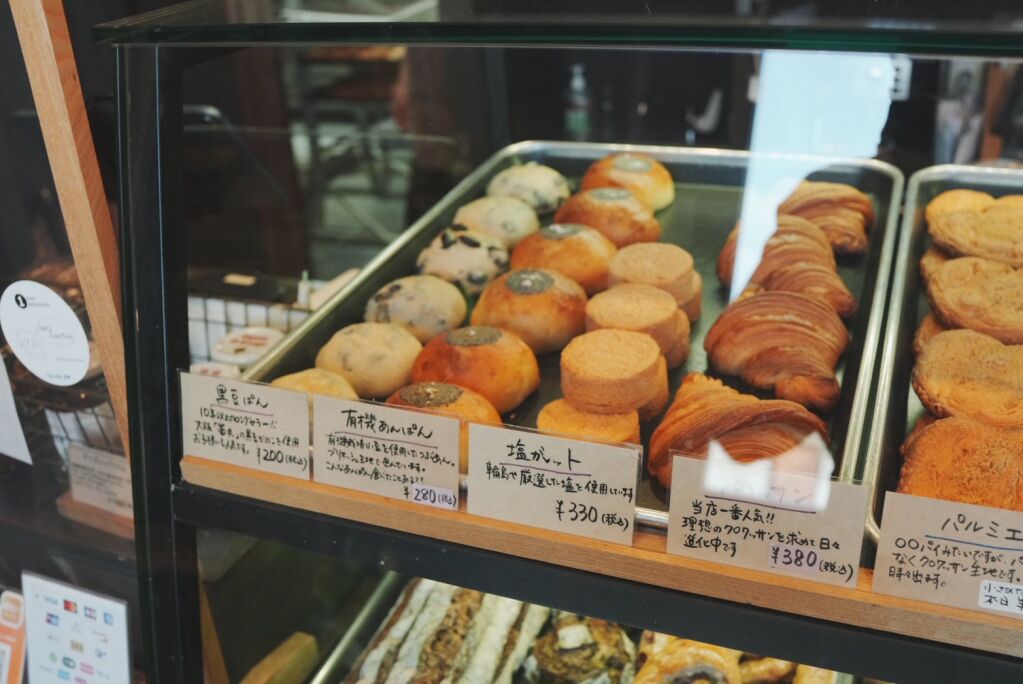
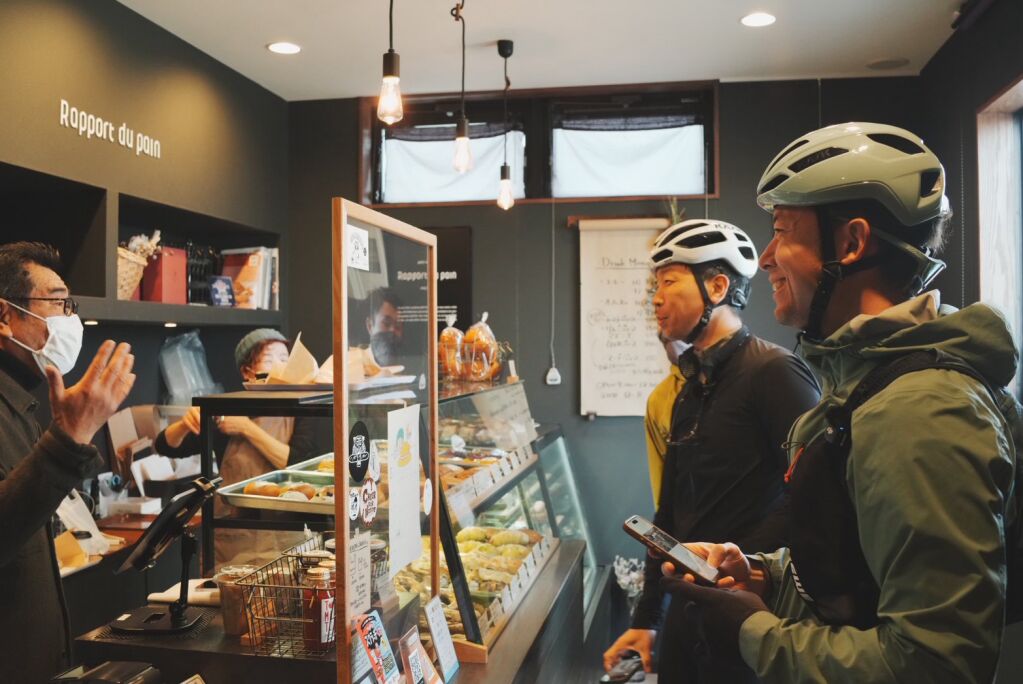
Faced with a colorful spread of bread, Kenta and Tsumuri’s excitement instantly skyrocketed. Even though they’d just eaten rice balls at the morning market, they couldn’t help themselves and ended up buying more than they planned. This family-run shop has the son baking the bread while the dad lends a hand, and you can really feel their passion for quality baked goods.
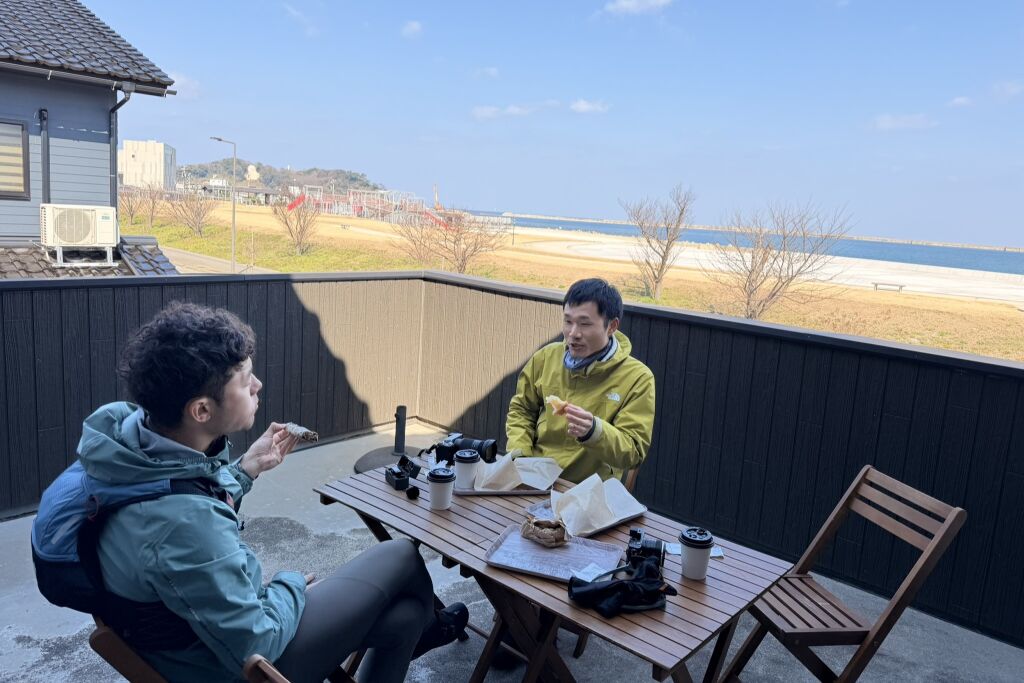
After buying our bread, we headed up to the shop’s second-floor balcony. Enjoying coffee and bread while gazing out at the Sea of Japan was the perfect combo. Every loaf was top-notch, packed with flavor. Kenta and Tsucchi were totally impressed too—it was the kind of place that makes you want to come back again.
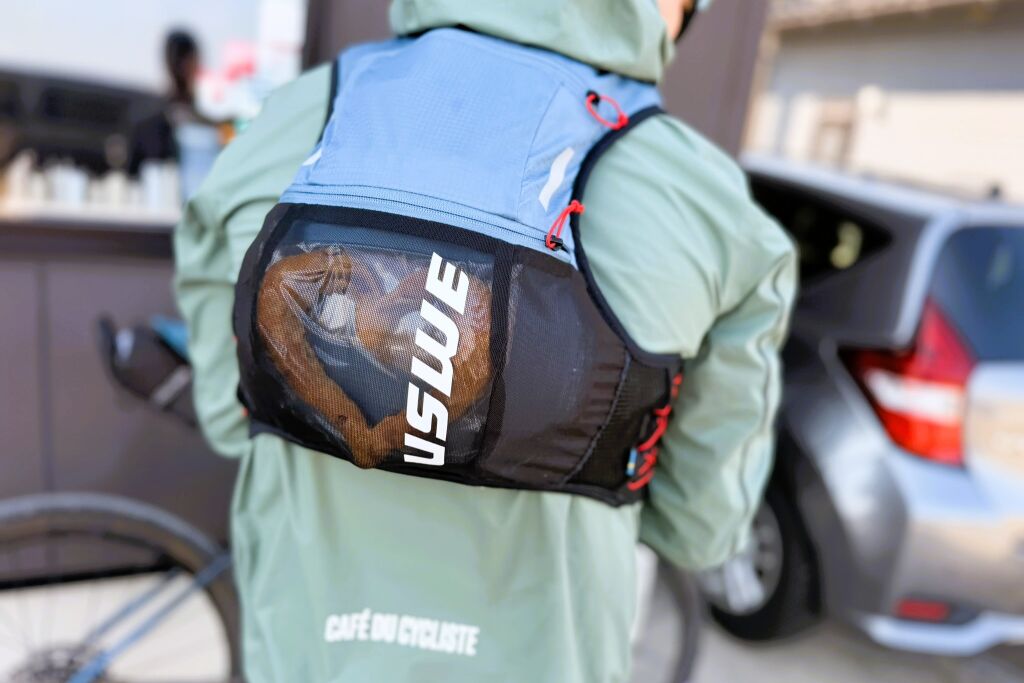
By the way, Kenta picked up some extra bread as souvenirs for his family. He loved it so much that he stuffed every empty nook in his bikepacking gear with bread—and even carried some on his back because it just wouldn’t all fit!
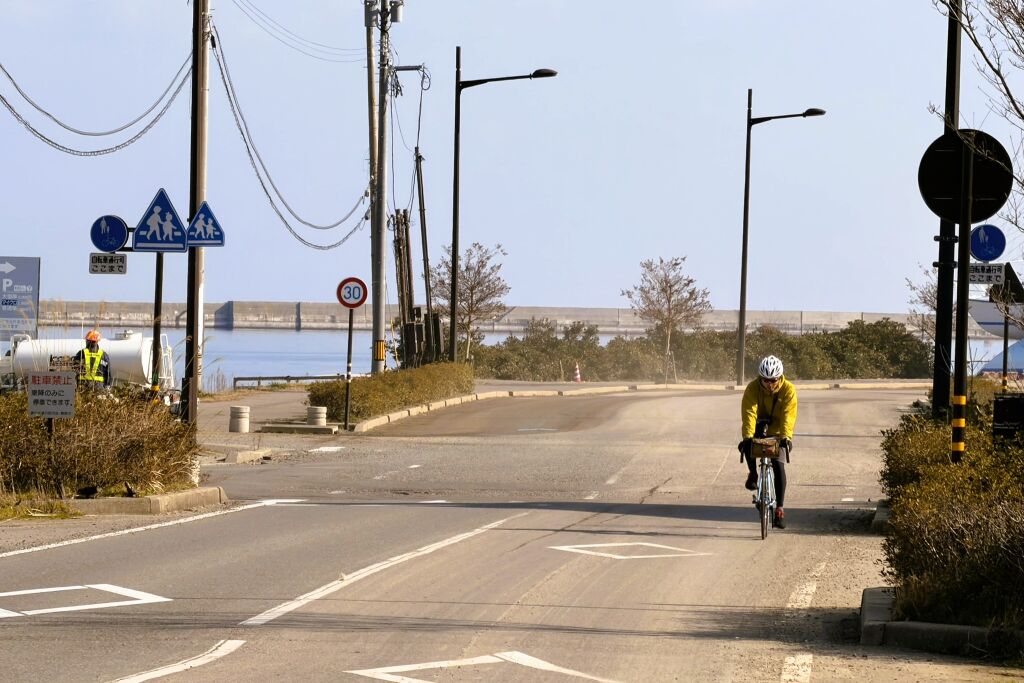
Now the ride really gets going. Heading east along Route 249 by the coast, the goal is to reach Rokkosaki Lighthouse at the eastern tip of the Noto Peninsula. Along the way, there are some one-way sections because of ongoing recovery efforts, so it’s important to stay alert while riding.
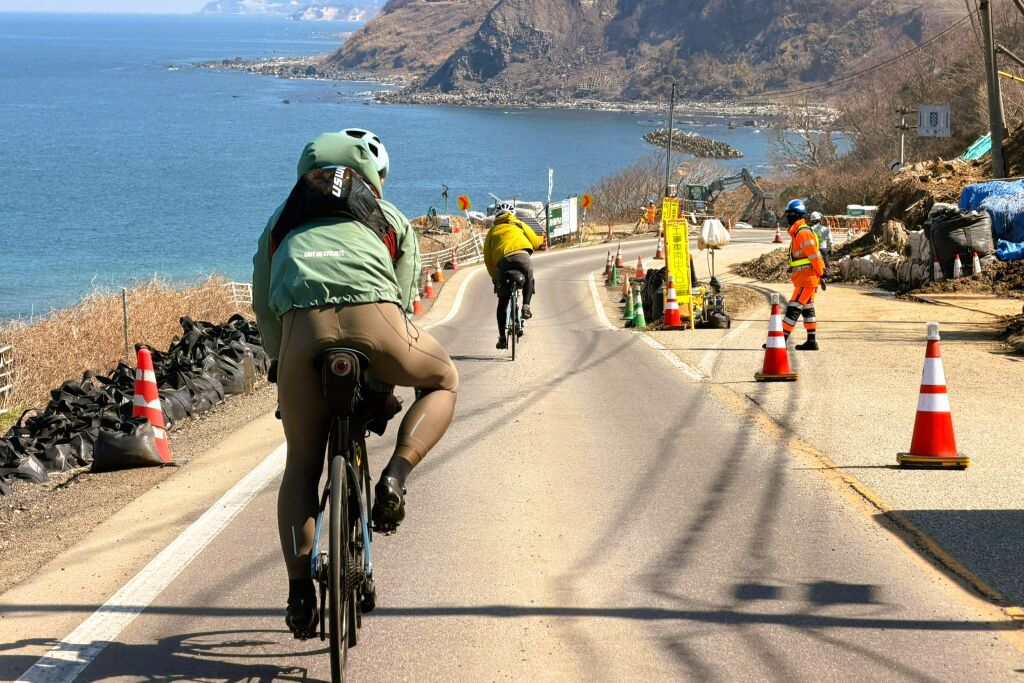
Coastal Ride and the Stunning Senmaida Rice Terraces
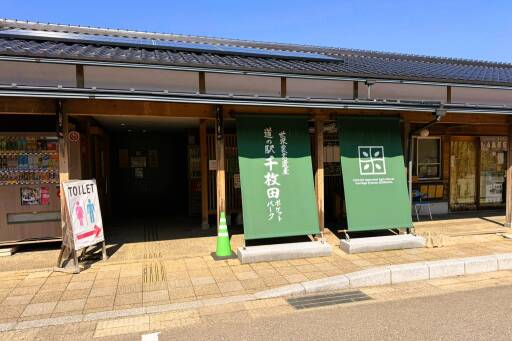
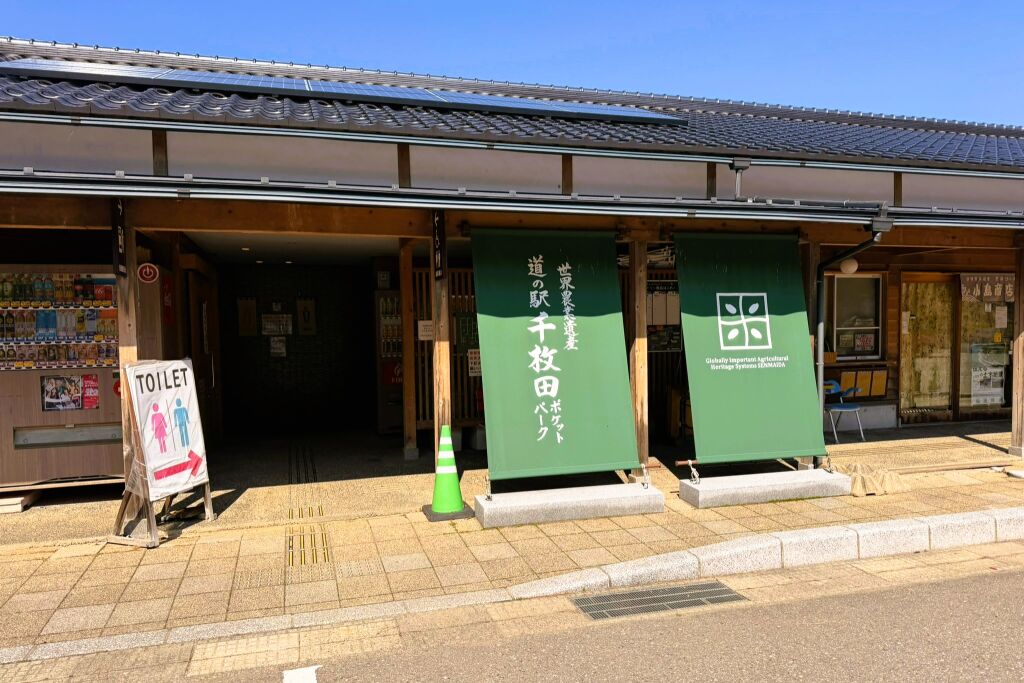
After cycling about 10 km from downtown Wajima, we rolled into the “Michi-no-Eki Senmaida Pocket Park.” It’s a perfect spot to take a bathroom break, and there’s a little shop too. You can even snag some rice balls made with rice harvested from the nearby Shiroyone Senmaida rice terraces.
From the parking lot, you get a full view of the “Shiroyone Senmaida” rice terraces. Since this area is on a peninsula with limited flat land, these terraced fields were developed to maximize harvests. The unique landscape features stair-step terraces running down the slopes facing the sea, and locals still maintain them today. As the name suggests, the terraces eventually expanded to around 1,000 individual plots.
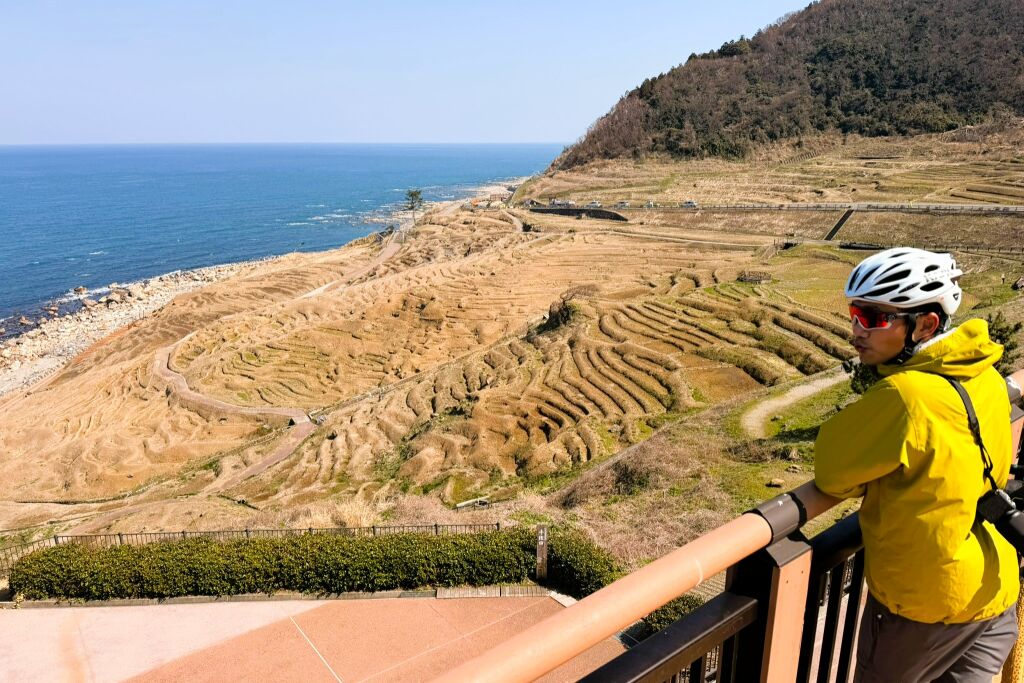
As Tsumuri was admiring the terraced rice fields, she noticed something had changed. Before the earthquake, the coastline was just beyond the terraces, but now it’s shifted quite a bit. The Noto Peninsula earthquake caused the land to rise because of crustal movement, pushing the coastline back. *The red line in the photo shows where the coastline used to be before the quake.
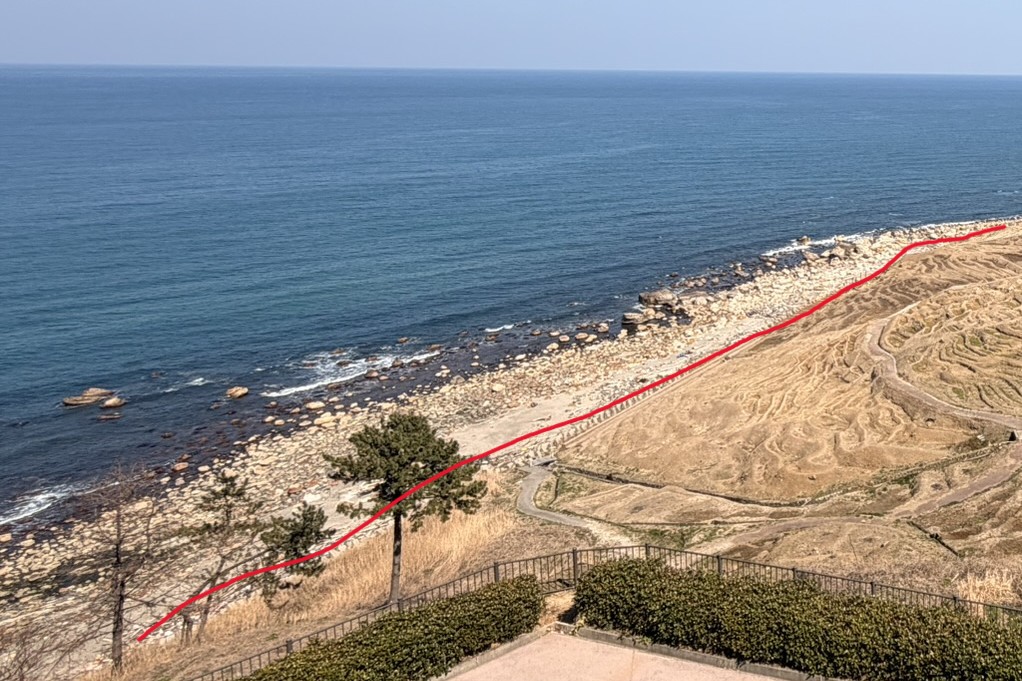
Rugged Coastlines and Ongoing Recovery Efforts
Just the morning of our ride, news broke that the coastal uplift from the Noto Peninsula earthquake stretches about 100 km, making it one of the longest in the world. Along most of the route we were cycling, they confirmed uplift of several meters.
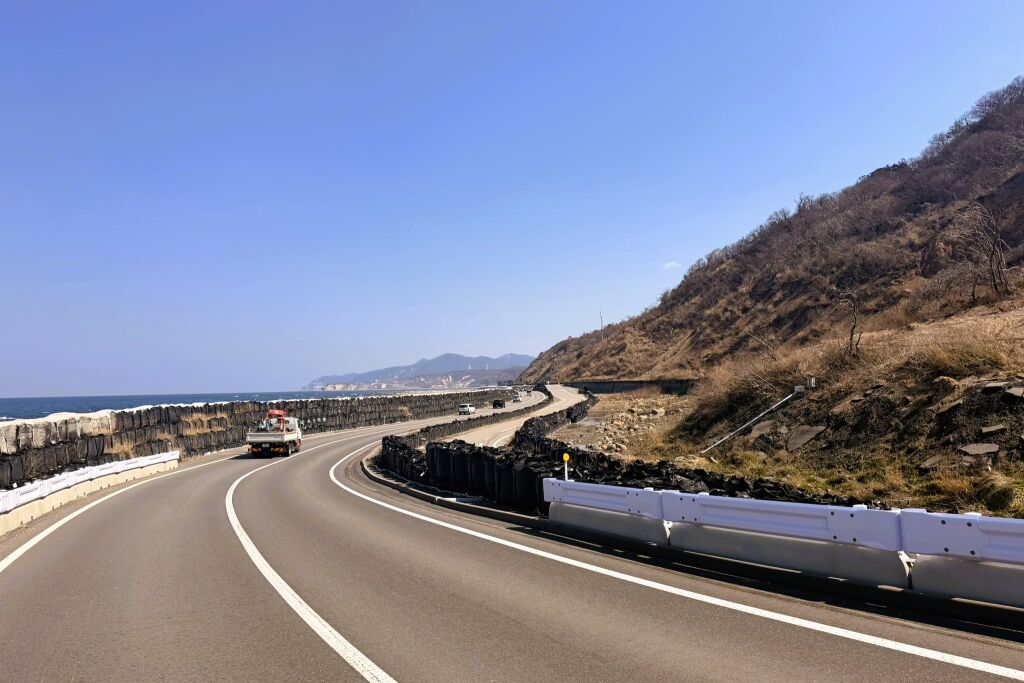
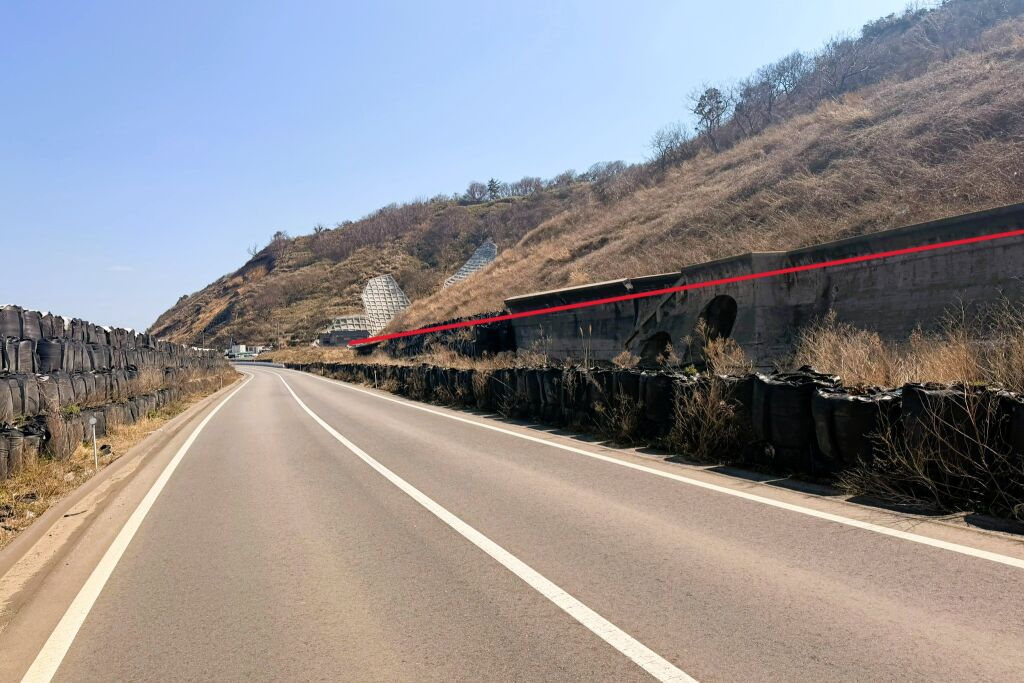
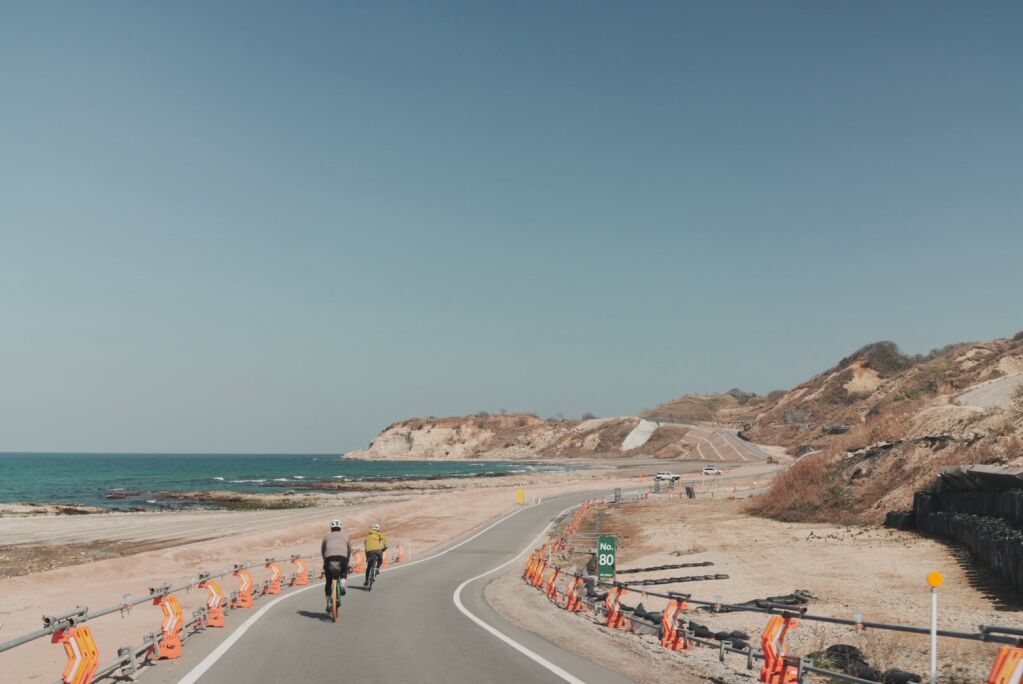
The road you see in the photo (Route 249) was temporarily closed due to landslides from the earthquake. Because of that, they set up a detour along a newly raised sandy beach. Looking toward the mountains, you can still see the original embankment and road, clearly showing how the landscape has changed. It’s a striking sight that really makes you feel how the ground lifted by about 3 to 5 meters. *The red line in the photo marks the old road level.
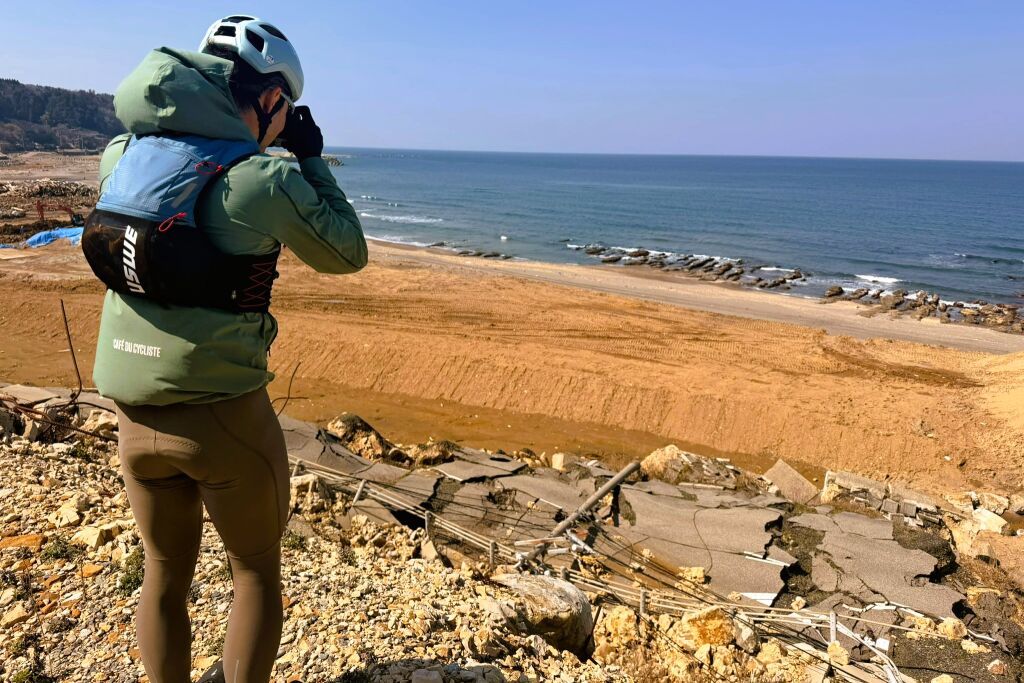
Here and there, you can still spot remnants of the old Route 249 roadbed, fallen utility poles, and tangled power lines left just as they were. Seeing it up close really drives home the sheer power of the earthquake’s force.
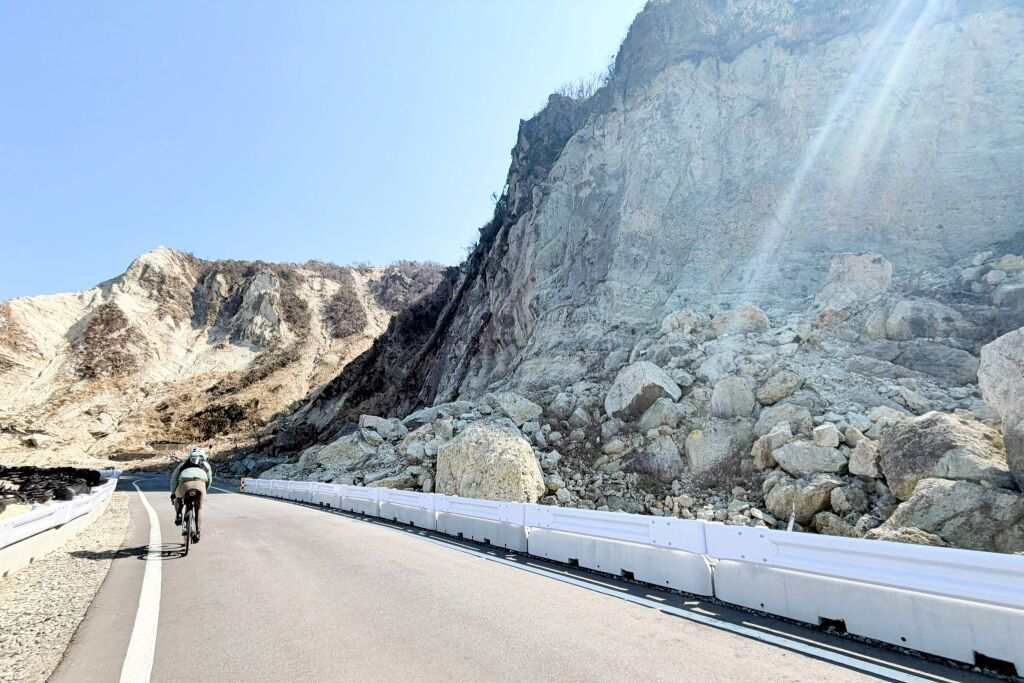
The Oosaka Tunnel in Suzu City was blocked by the earthquake, so a detour route has been set up for now. Alongside the detour, you can see the mountainside, which was originally a rocky cliff hit by waves—it’s clear from the view that this wasn’t meant to be a road in the first place.
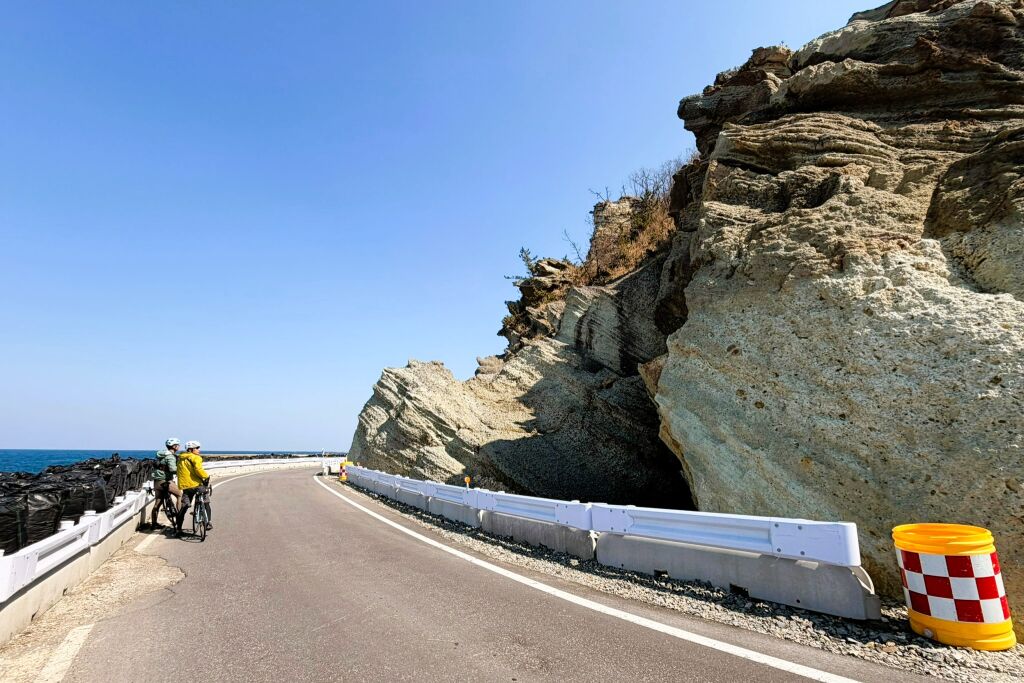
That route runs along the mountainside, skirting right past some fallen rocks. Even without knowing how the road used to be, you can tell from the scene that the recovery efforts are going to take some time.
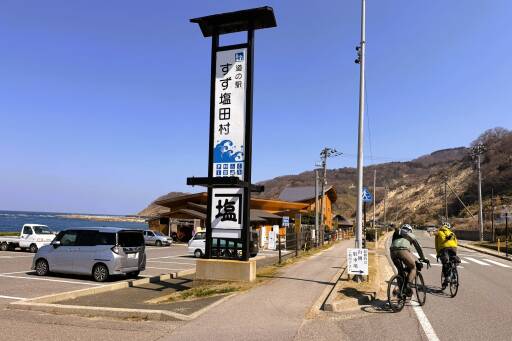
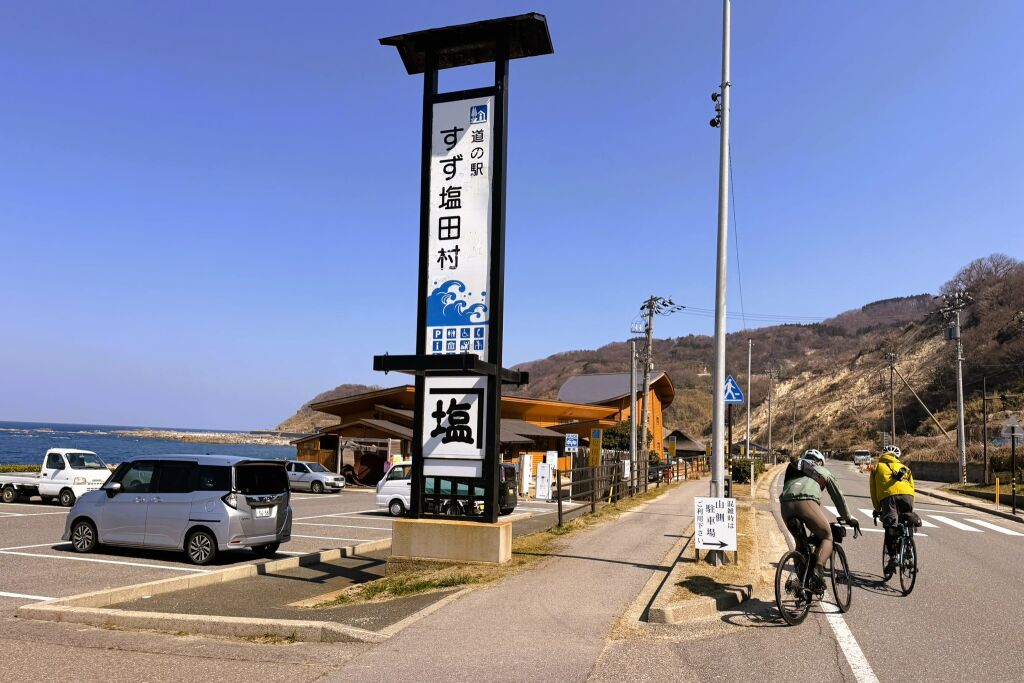
As we rode along, we were amazed by the landslides and the uplift of the sea caused by the earthquake, so we took a break at the roadside station “Suzu Shiotamura” on the outskirts of Suzu City. On the Oku-Noto Scenic Road, it’s a handy spot to rest and use the restroom.
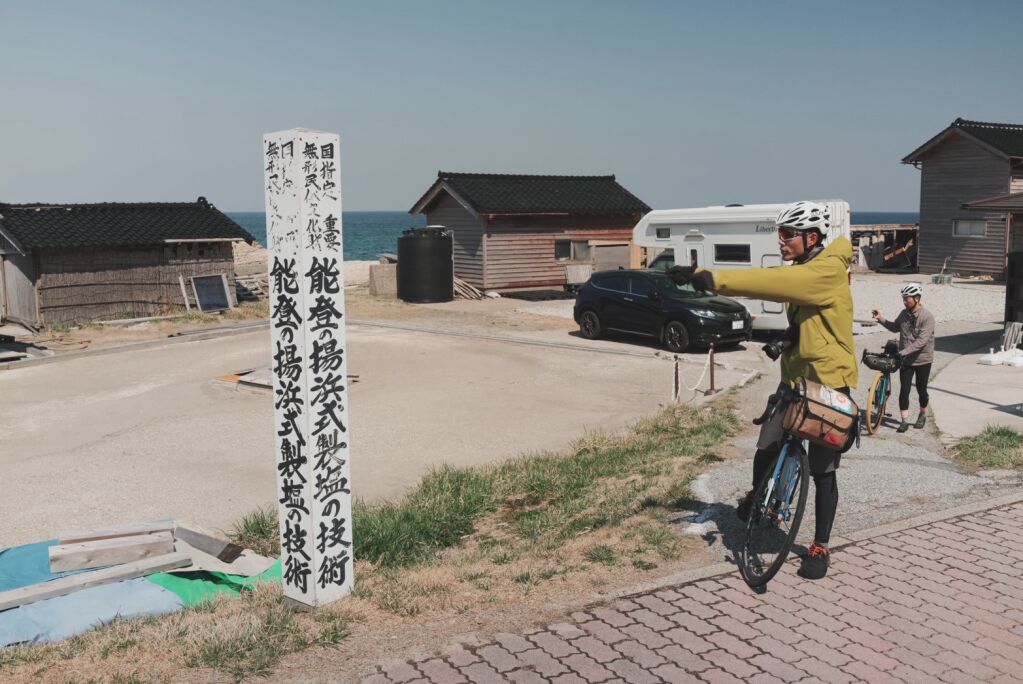
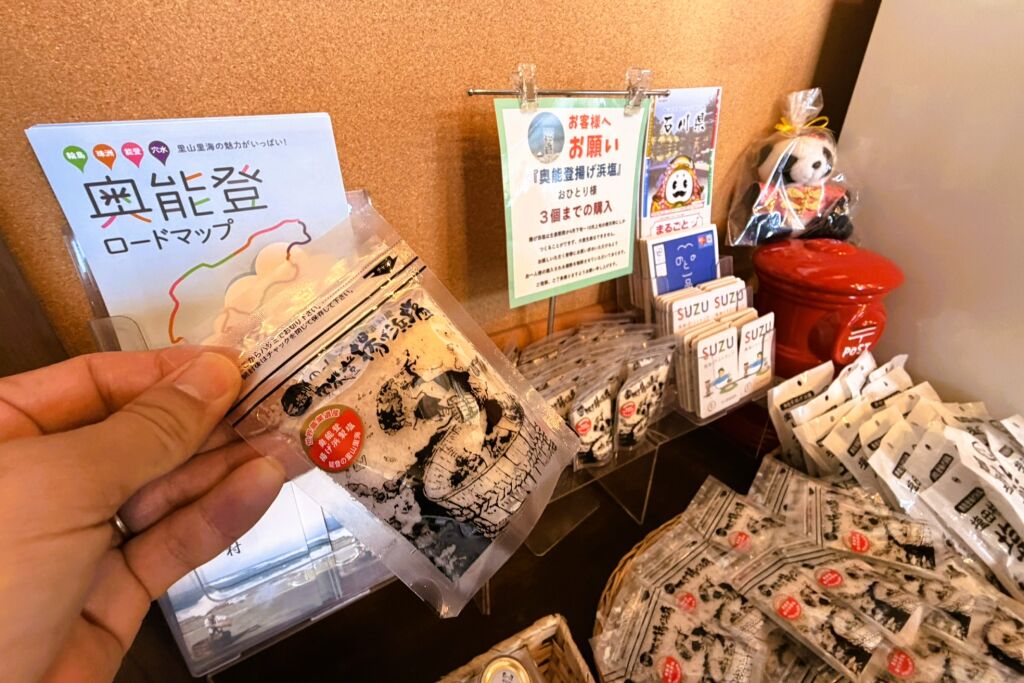
Agehama salt, or “Age-shio,” is crafted using traditional methods along the coast of Masaki and Sasanami in Suzu City. It’s made with the Agehama-style process, where seawater is concentrated using beach sand, preserving the pure, natural taste of the sea. You can even try making salt yourself right there on site!
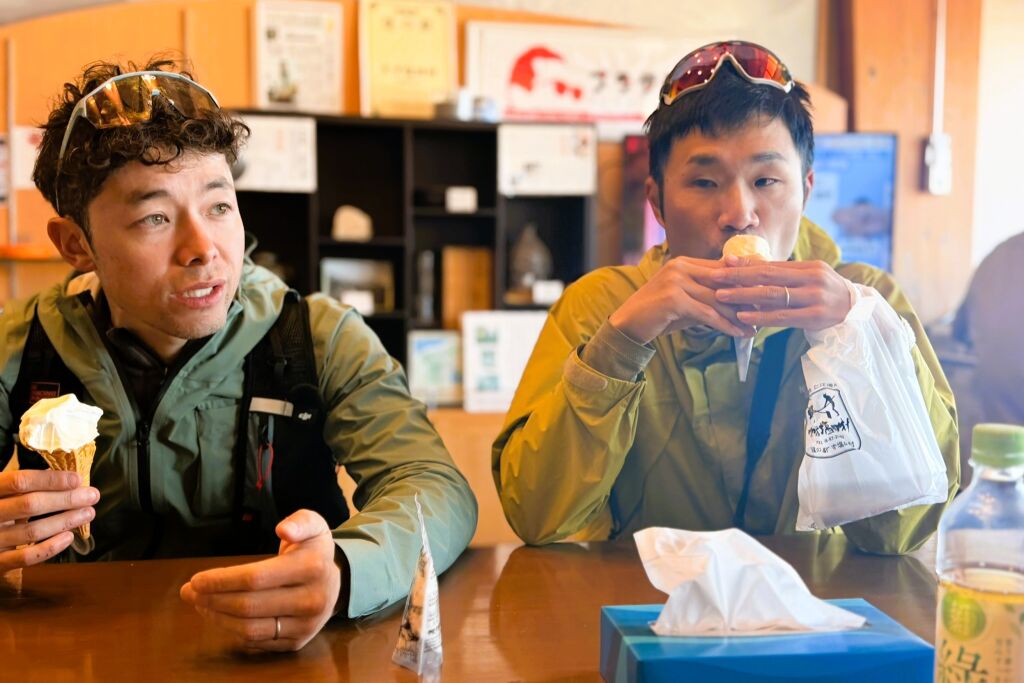
At the Salt Museum in Shiodamura, I tried their famous salt soft serve. It had a strong salty kick but finished clean and refreshing, making it easy to enjoy every last bite. I also had a chance to chat with the staff about how things were before and after the earthquake and learned about the ongoing recovery efforts.
I grabbed some handmade Agehama salt as a souvenir. It’s made using a traditional, time-intensive method, and since only a few artisans can make it, there’s a limit of three per person. The grains are firm, and when you taste it, you get a smooth salty flavor with a subtle hint of sweetness.
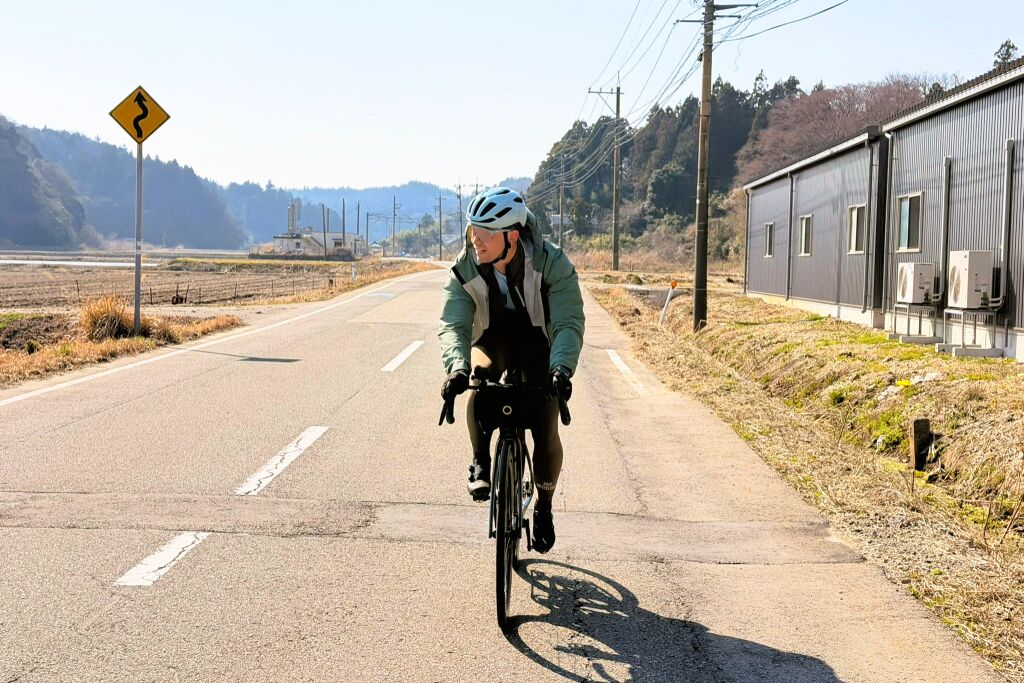
As you ride inland from Suzu City, the roads generally get smoother since you’re moving away from the coast. Even within Suzu, you can really notice how the terrain influences the extent of the damage as you cycle through.
Reaching the Edge: Rokkosaki Lighthouse Adventure
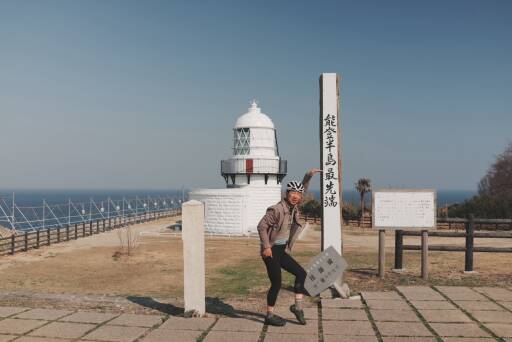
We were seriously behind schedule, so we skipped lunch and rolled up to Rokko Saki Lighthouse—the northernmost tip of the Noto Peninsula—around 2 PM. Rokko Saki is the closest spot on land to the “center of Japan,” according to the Geospatial Information Authority. The actual center point is out in the Sea of Japan near Toyama Prefecture, but there’s a monument here marking it as the “Center of the Japanese Archipelago.”
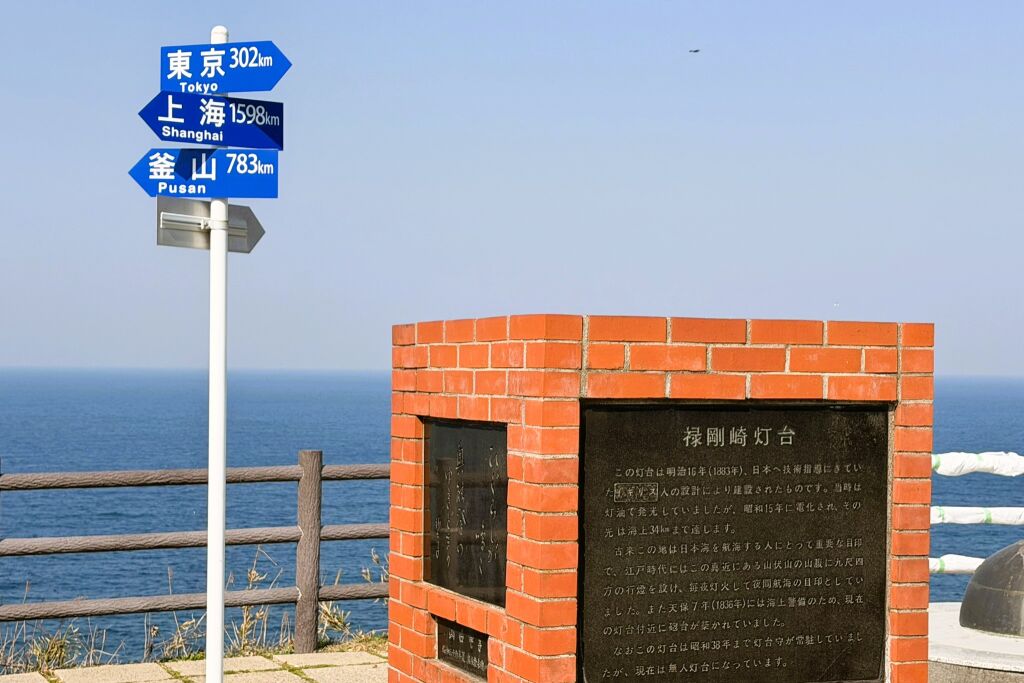
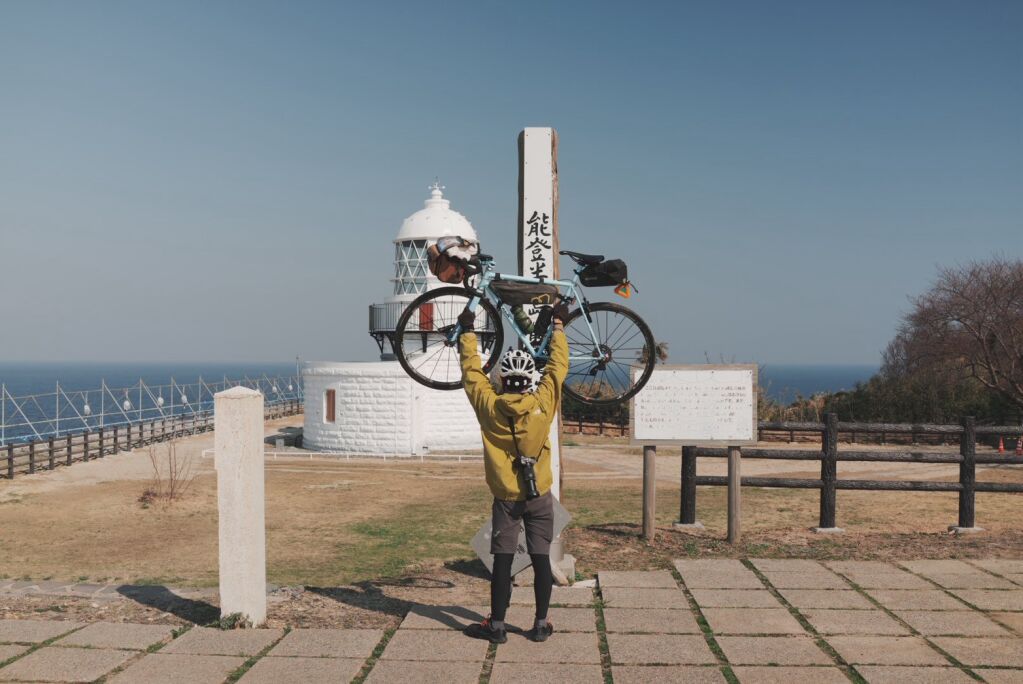
This lighthouse, built back in the Meiji era and designed by a Japanese architect, stands tall in its classic white. Tsumuri mentioned she visited here 14 years ago, so it holds a special place in her memories. After snapping some commemorative photos, we said goodbye to the lighthouse and moved on.
Cafe Vibes and the Second Half of the Ride in Suzu
Getting a bit hungry after skipping lunch, we made our way to a cafe in Suzu city. We rolled along the gently winding coastline, keeping pace with Tsumuri’s chill rhythm.
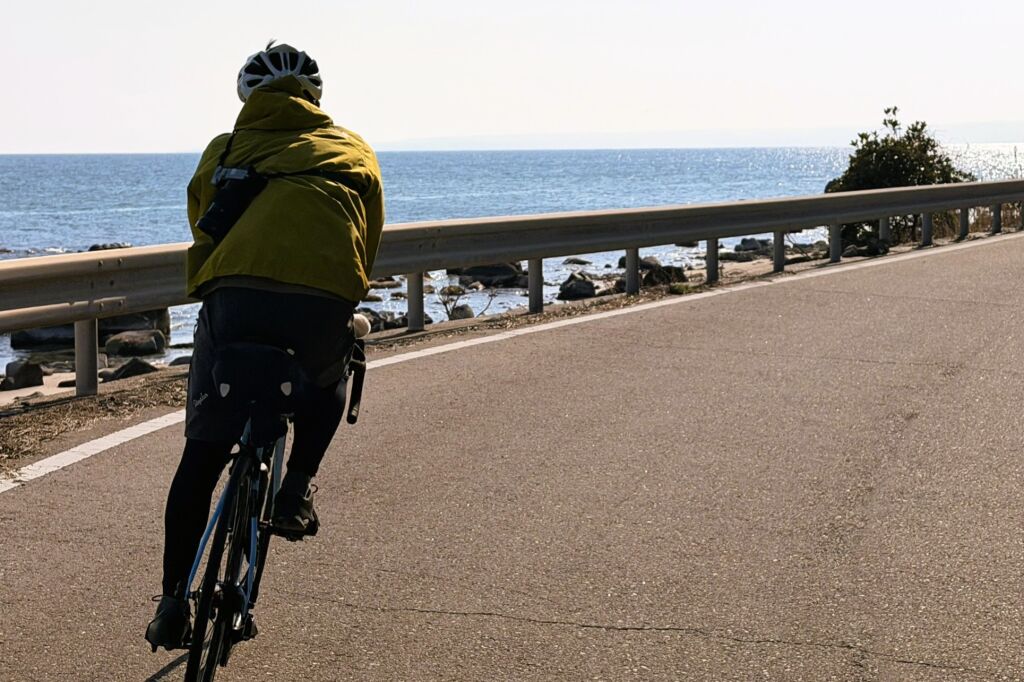
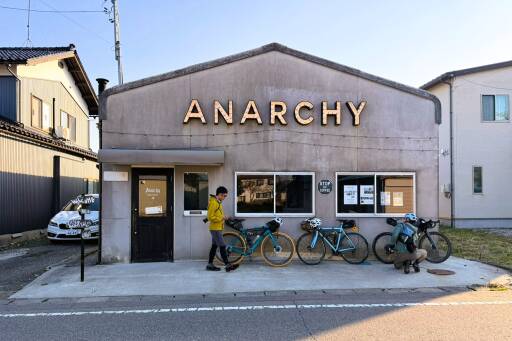
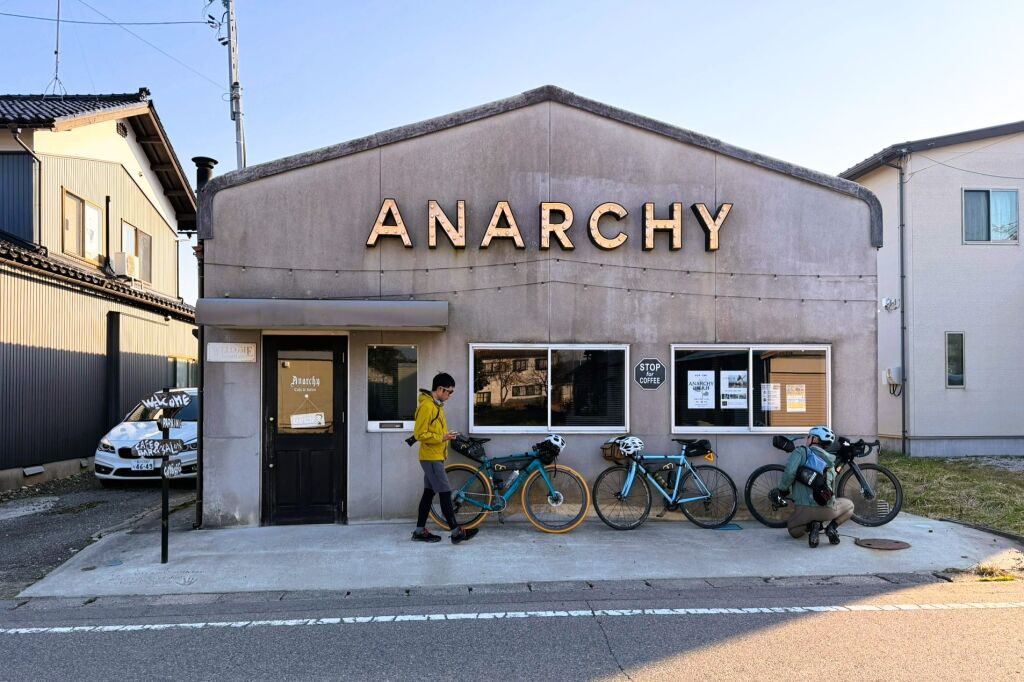
After biking about 20 km from the lighthouse, we rolled up to this cool spot called “ANARCHY.” It’s not just a cafe—it’s also an event space. Lunch orders were taken until 3:30 PM, and we just barely made it in time.
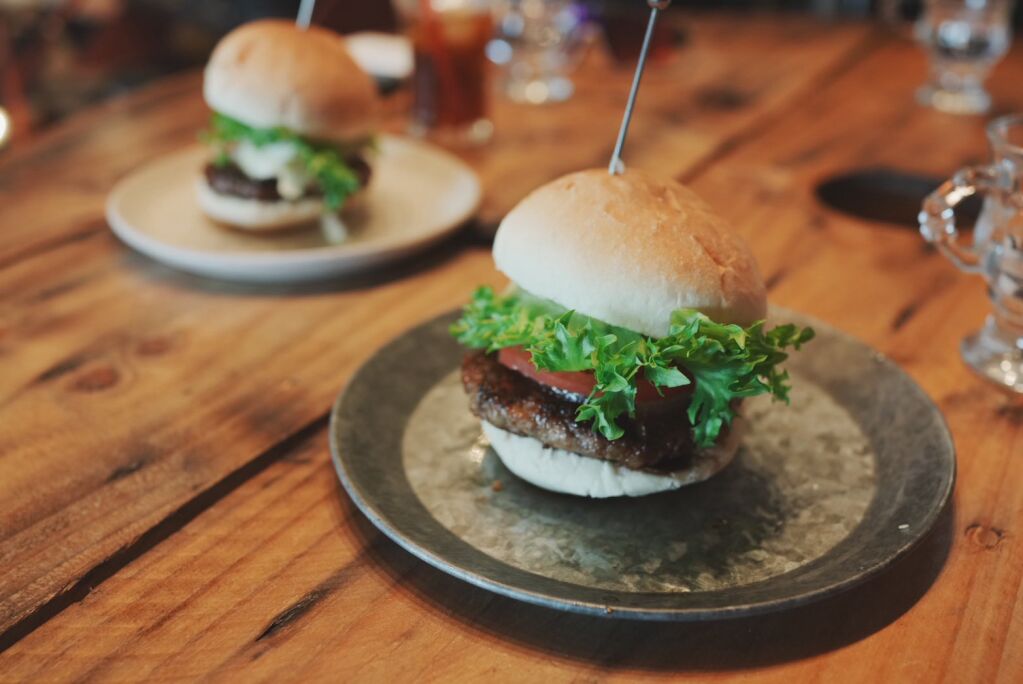
The handmade sauce combined with the Noto-sourced beef and pork blend patty makes this burger just as big as it looks in the photo. Usually, burgers turn out smaller than the pictures, but here, it’s exactly as hefty as you’d expect. It’s got a solid, satisfying bite packed with juicy flavor. After all the riding, this burger hits the spot perfectly.
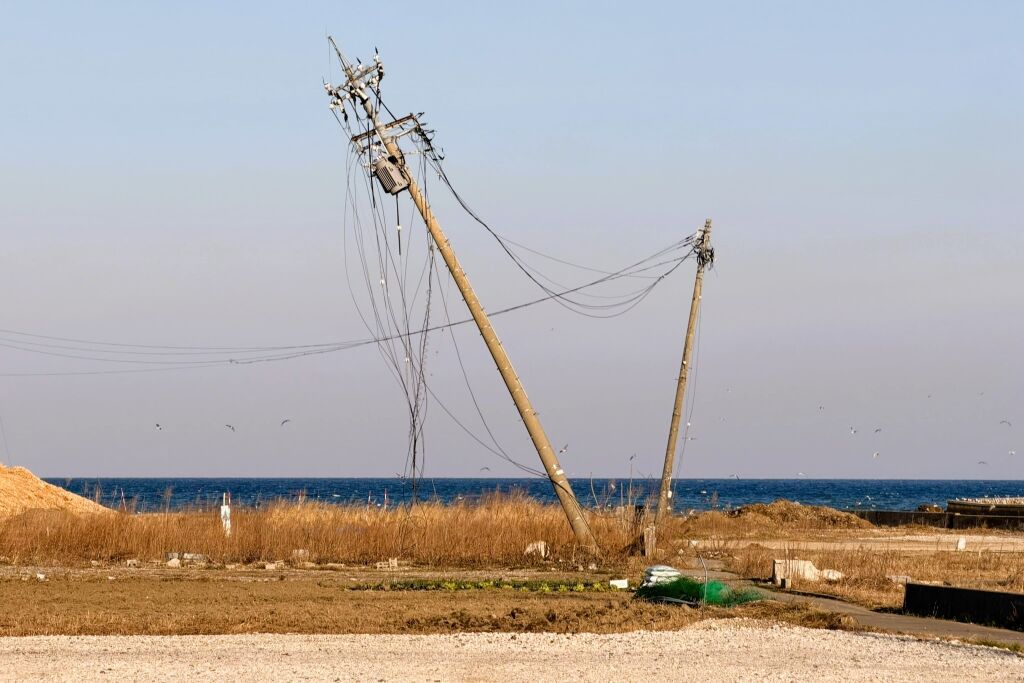
After finishing our meal, we hit the road again with about 30 kilometers left to our place for the night. In Suzu City, you can still see the impact of the earthquake—some signs are still leaning, and a few bridges have collapsed, so you can’t get through in certain spots. The recovery efforts are definitely still underway.
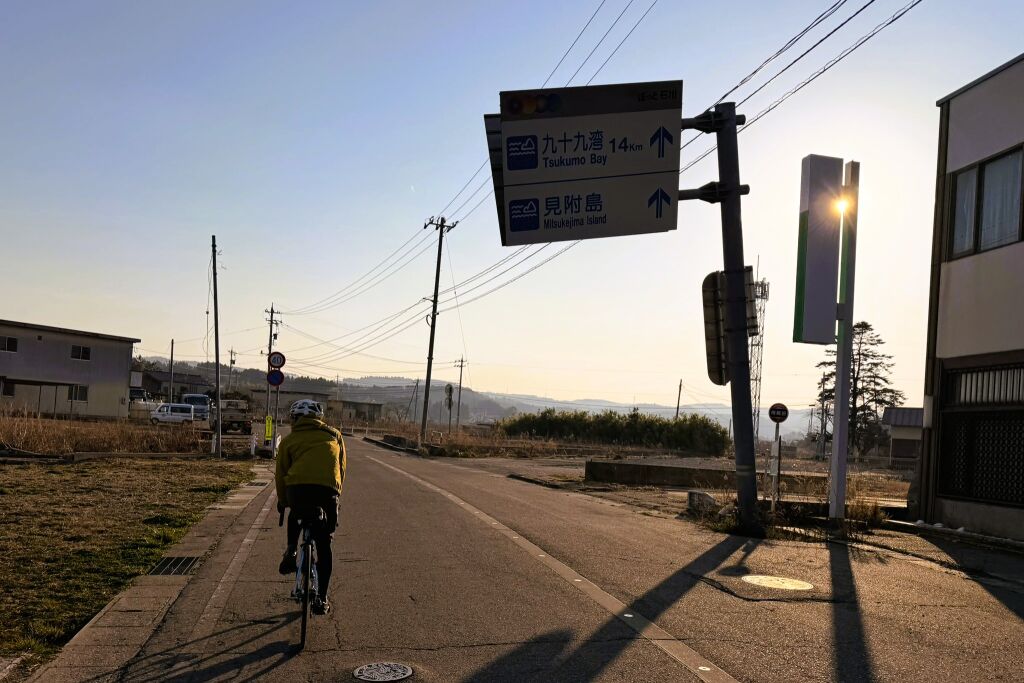
There are spots where just a leaning utility pole stands on cleared land, and even two years after the earthquake, the signs of damage are still clearly visible.
Mitsukejima and the Changing Noto Coastline
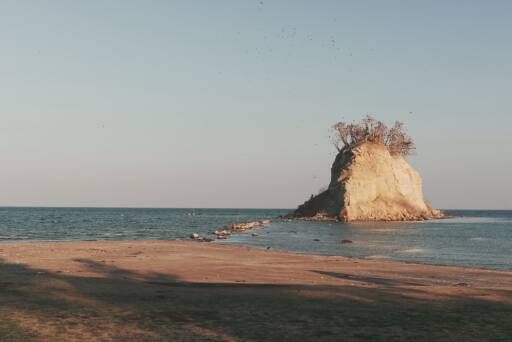
At Tsumuri’s request, we stopped by Mitsukejima, the iconic symbol of Noto—also called Gunkan Island. This towering 28-meter rock stands tall and was once famous for its dramatic look, like a warship sailing right toward you.
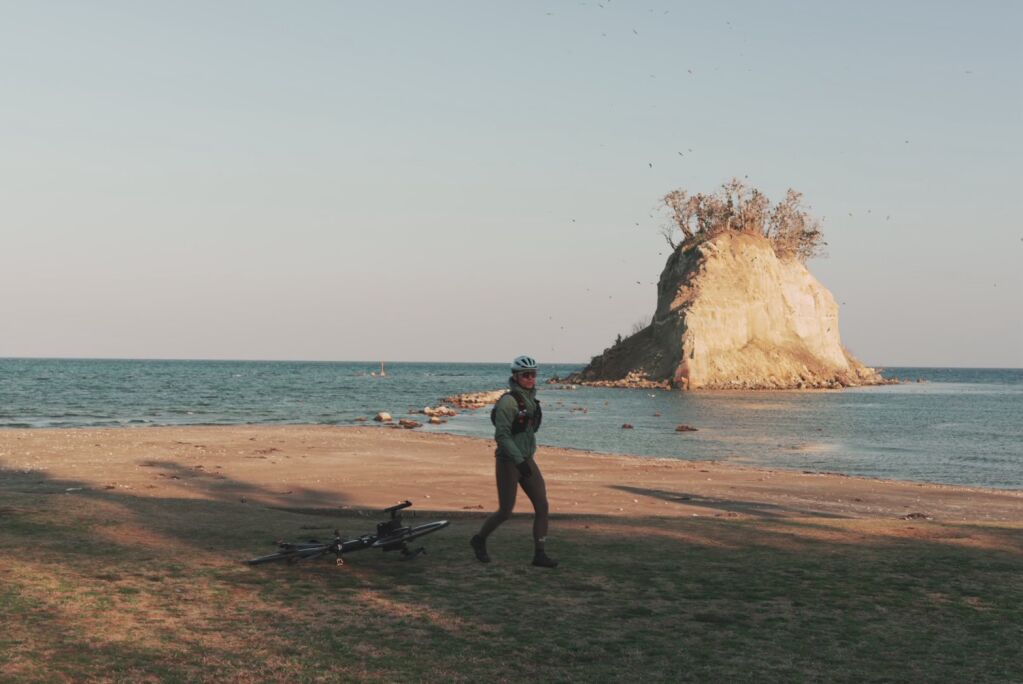
However, because of the earthquake, part of it collapsed pretty badly, so it looks quite different now. There’s a really easy-to-understand 3D video that shows how its shape changed before and after the quake—checking that out will give you a clear idea. (Here’s a super clear 3D explanation.)
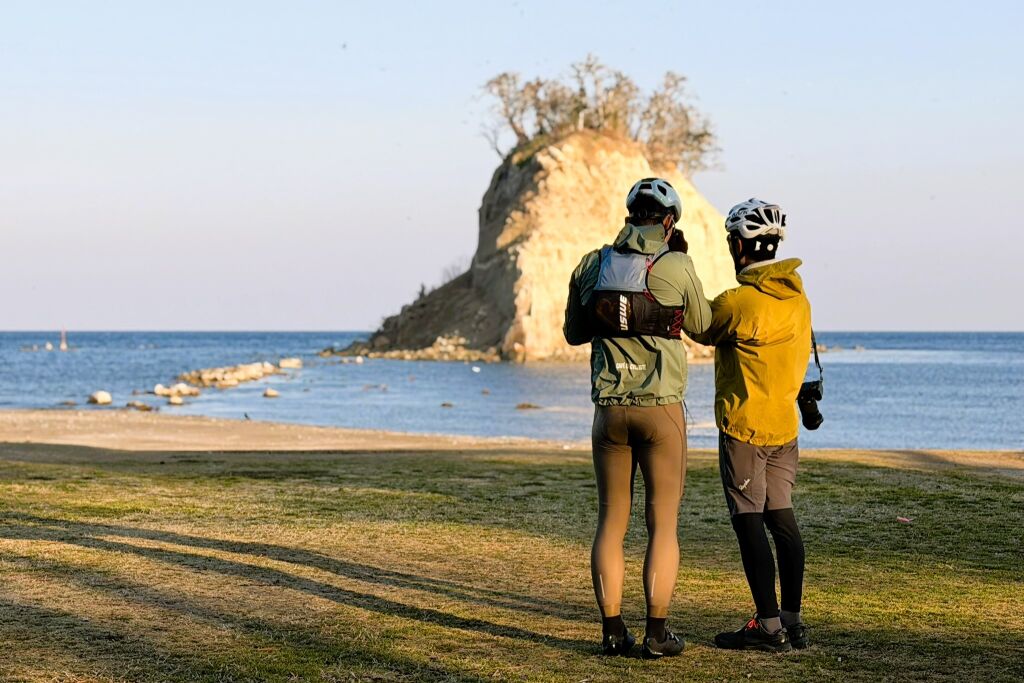
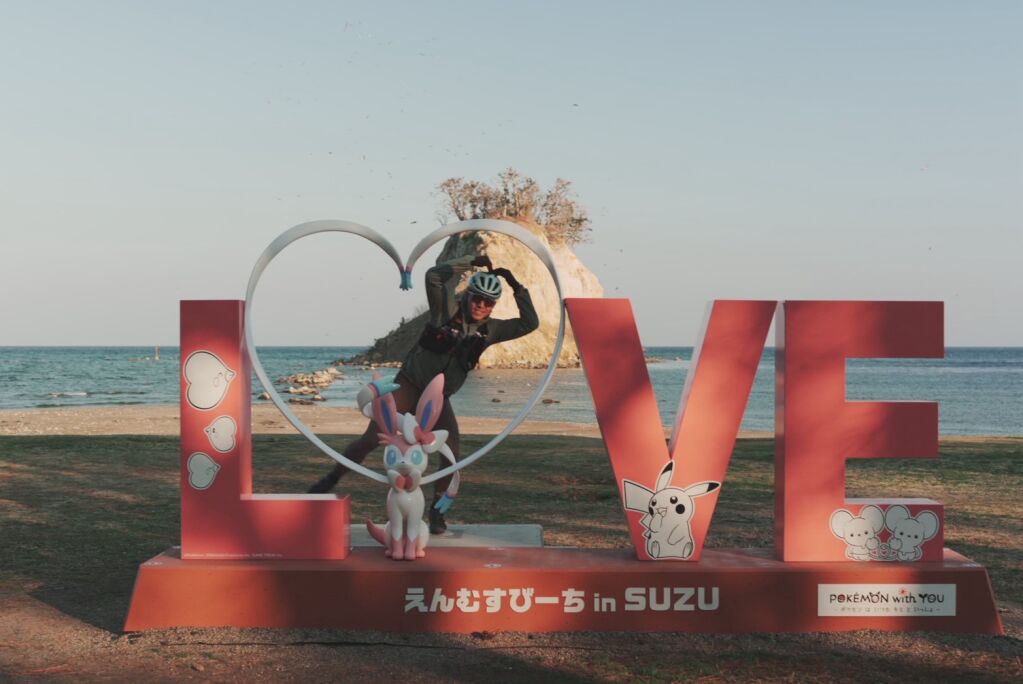
The coastline where Mitsukejima Island stands was originally known as “Enmusubi Beach,” a popular spot for couples and often called a lovers’ sanctuary. While it’s unfortunate that the earthquake changed its shape, this transformation could actually make it an even more interesting place to watch in the future.
As the sun started to dip, we hurried over to today’s lodging, “Flat.” The northern Noto Peninsula has lots of flat stretches and light traffic, making it easy to keep a steady pace. It’s a great area to ride comfortably on a road bike.
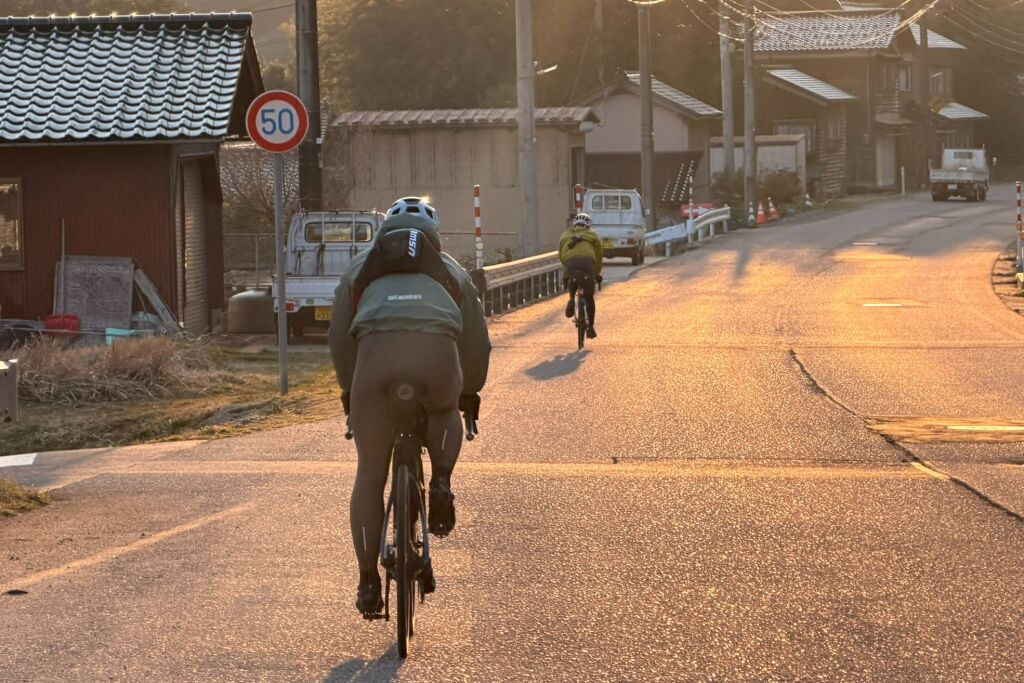
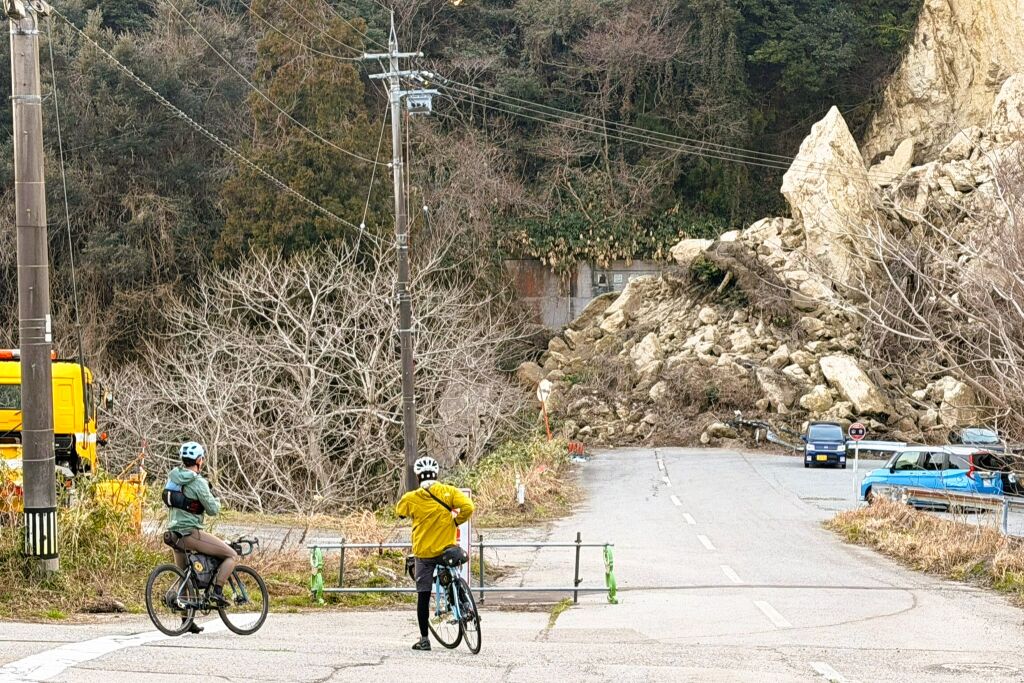
On the way to Noto-cho, where our inn is located, we saw some roads blocked by landslides. While the main roads are mostly passable, you can still tell that recovery efforts haven’t quite caught up on some of the less prioritized routes.
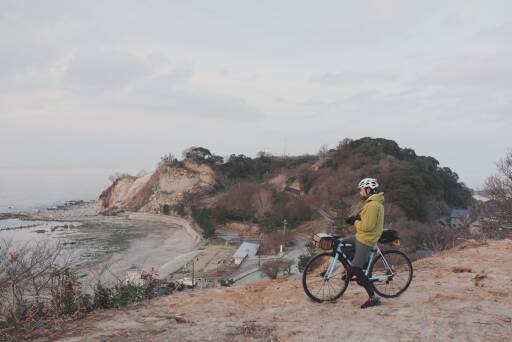
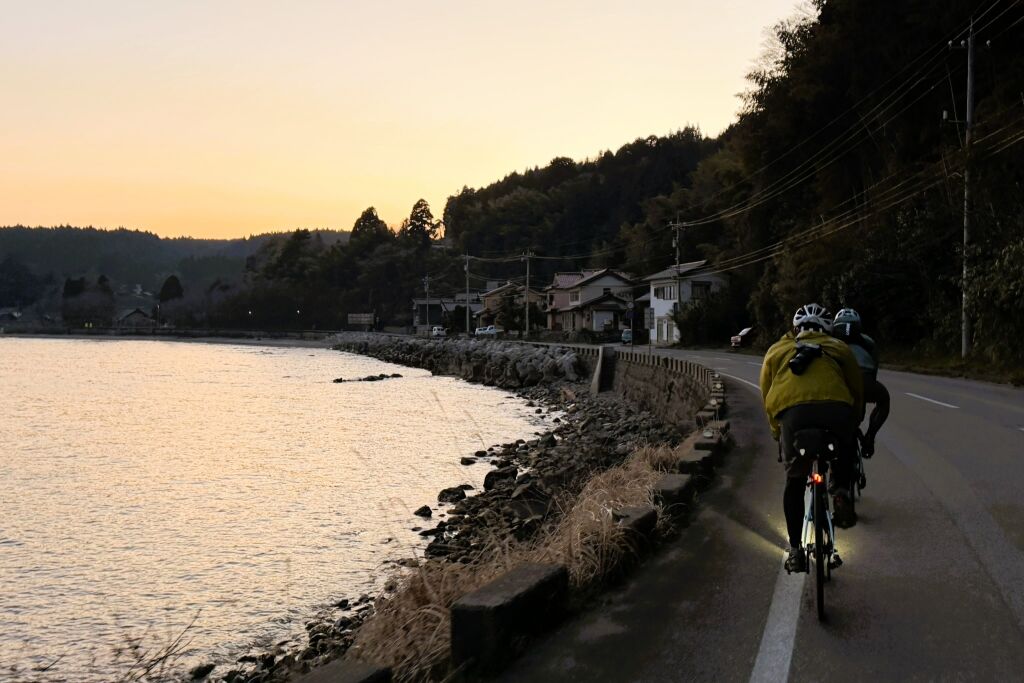
For the final stretch, I cruised along the coastline with Toyama Bay on my left, feeling great. As the second day’s ride was winding down, I realized I’d hit 100 kilometers. Blessed with perfect weather and stunning views, the ride stayed comfortable right to the end. I didn’t want it to end! It was a truly fulfilling day.
Wrapping Up Day 2 at Inn “Flat”
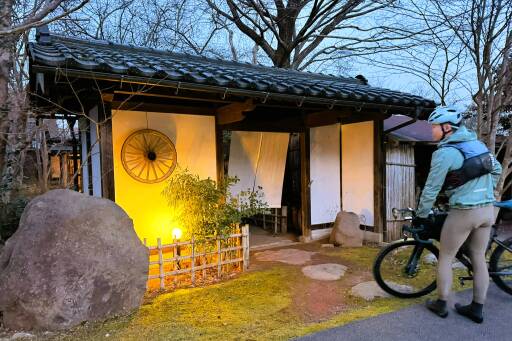
We made it safely to our second night’s stay at “Flat.” The inn is a bit off the beaten path from downtown Noto-cho, with a calm and welcoming vibe that really stands out. It’s run by a chef from Australia and a landlady who was born and raised right here in Noto.
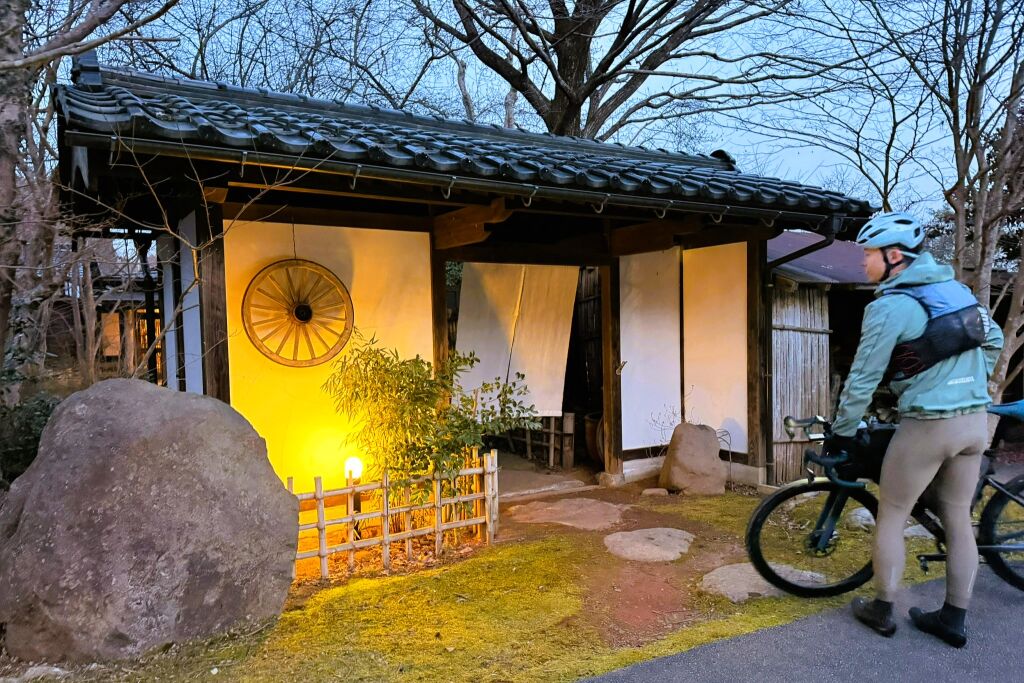
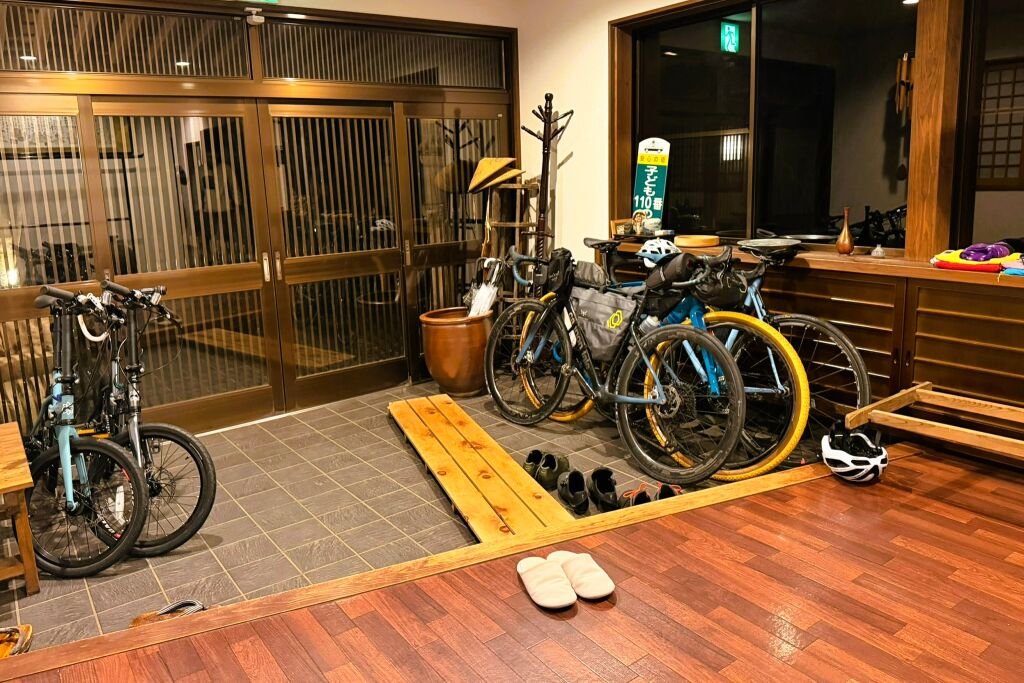
We were able to store our bikes safely in the spacious entrance area, so we didn’t have to worry about them. Since it was a weekday, we were the only guests staying that night.
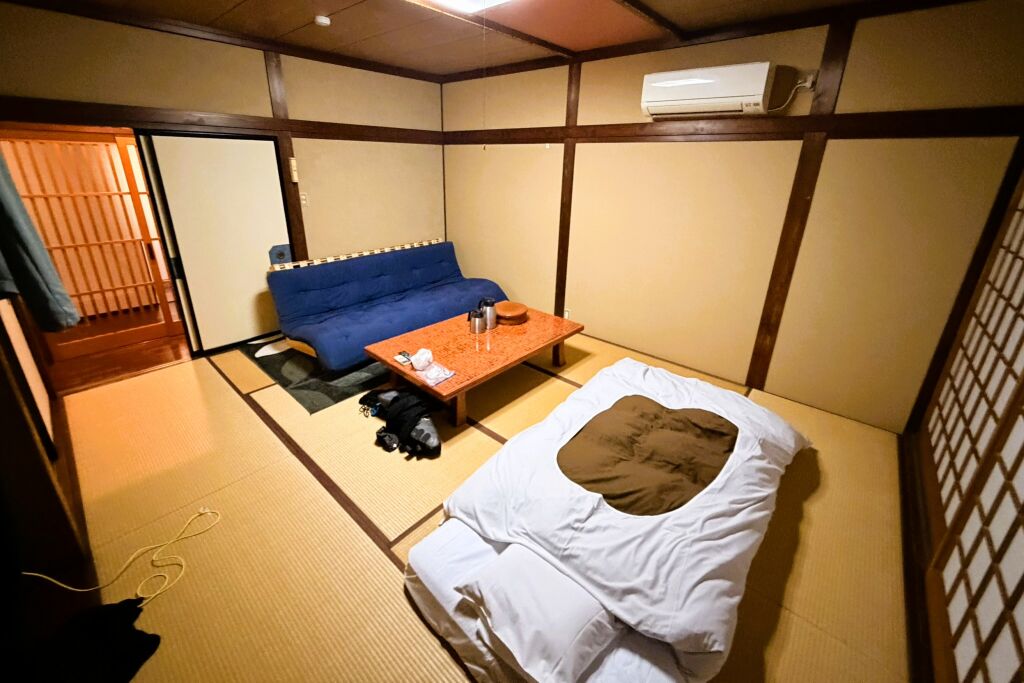
The room was a roomy 8-tatami mat Japanese-style space. The bath was shared, but it was a clean, soothing cypress wood bath that really helped me unwind. It was the perfect place to fully recharge after a long ride.
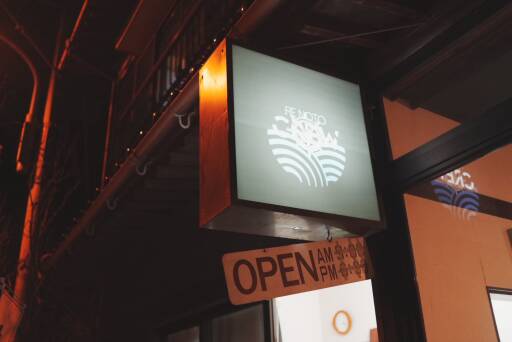
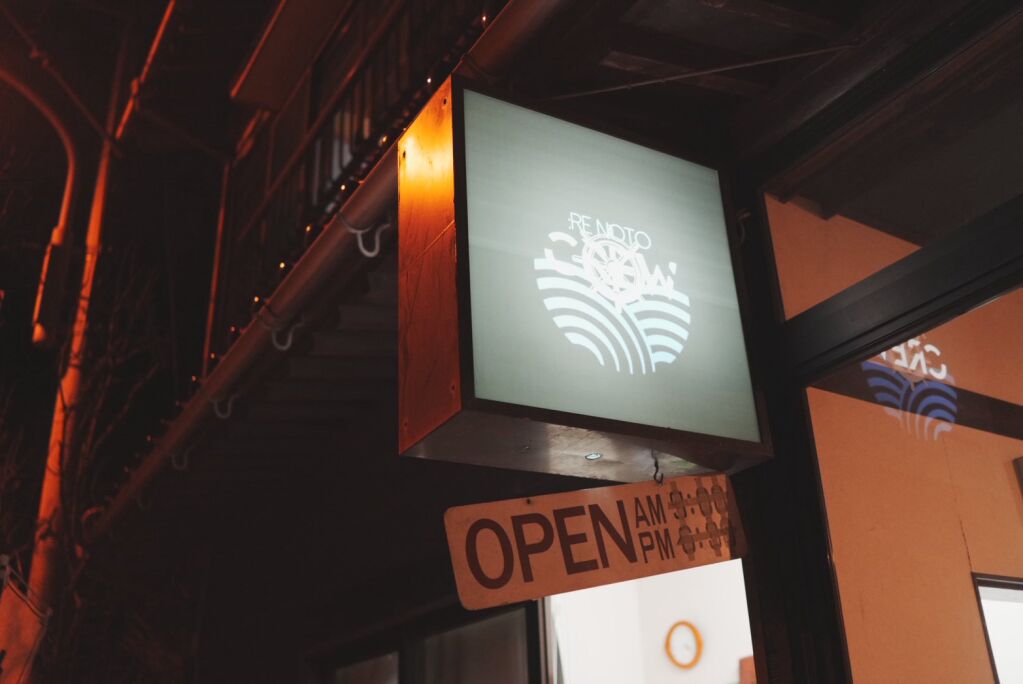
Since the chef was away that day, we had dinner at an Italian restaurant called “Re Noto CREW,” run by the innkeeper’s son. It’s about 2 km from the inn, but thanks to the innkeeper’s kindness, we got a ride there. It’s a great spot where you can enjoy Italian dishes made with local Noto ingredients.
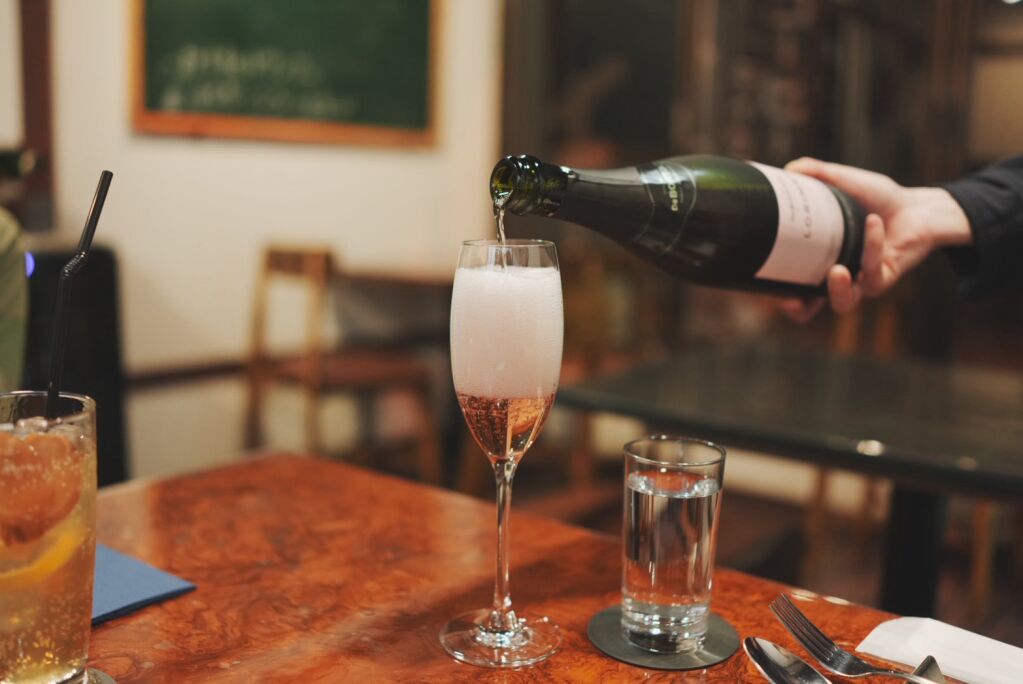
There was no beer on the menu, so we toasted with sparkling wine instead. A fancy cheers like this is pretty rare on a Discover Ride.
The menu had an appetizer, pasta, and a café set. I went with the creamy chicken pasta. The tasty chicken combined with a subtle touch of seaweed made for a rich and delicious dish. I was pretty hungry that day, so I upgraded to a large portion for a little extra.
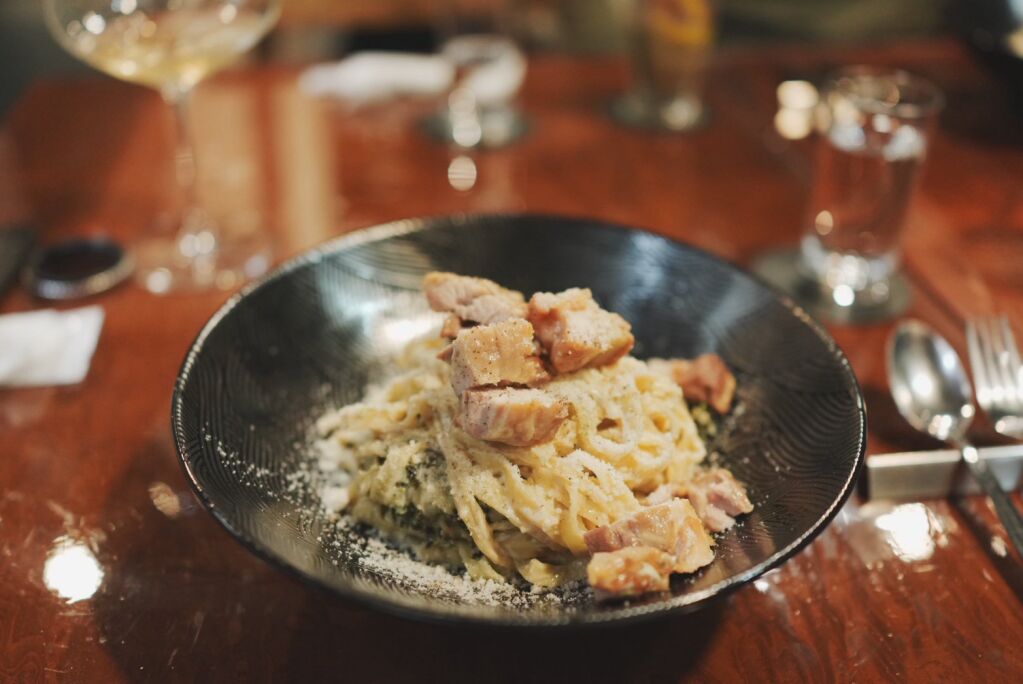
Tsumuri was totally on board with the rich, flavorful pasta. As we looked back on the second day’s ride, we took our time enjoying the meal in a calm, relaxed atmosphere.
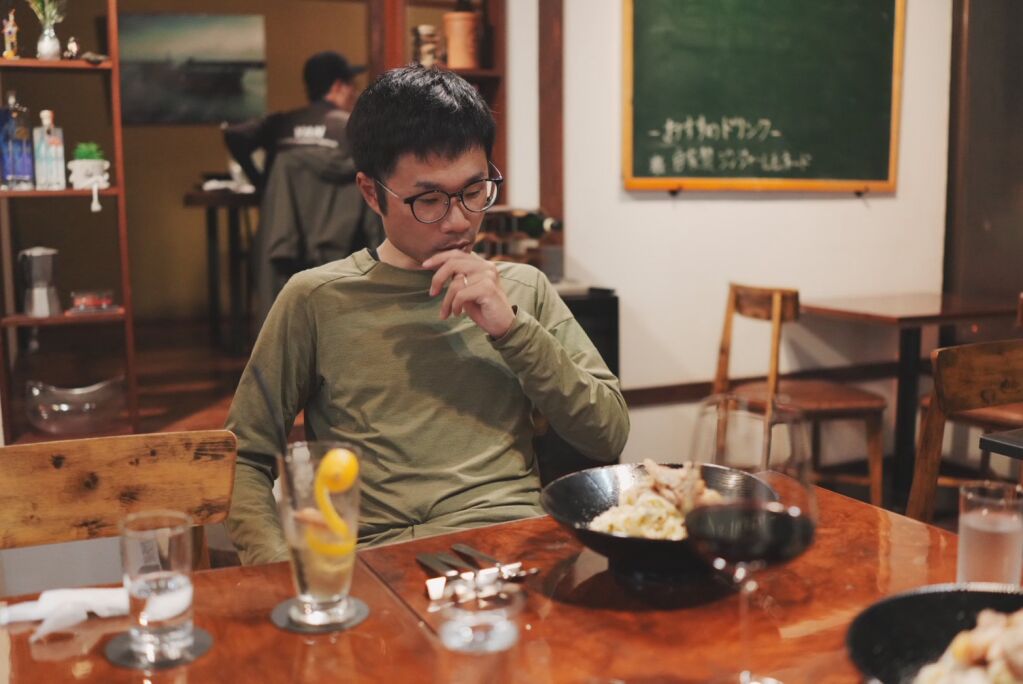
On the other hand, since it was our last night in Noto, Kenta and I enjoyed some wine paired with our meal. We let ourselves be spoiled when the inn’s landlady came to pick us up, and our pace naturally picked up a bit—but we made sure to fully savor every moment of that time.
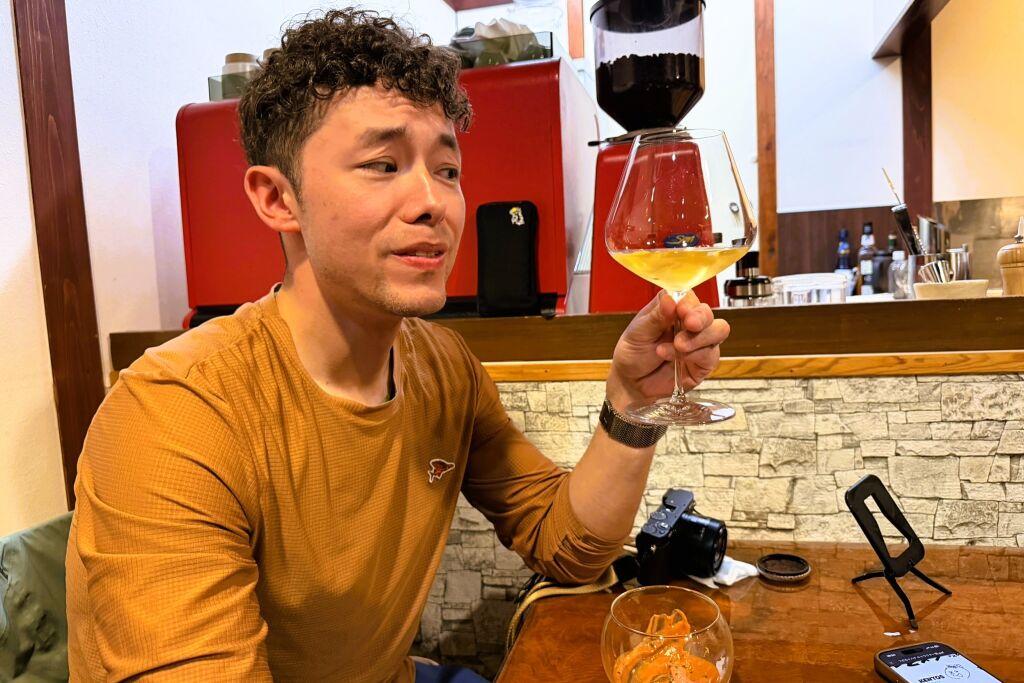
Final Day: Heading to Anamizu Station
After relaxing with a warm bath and cozy futon at the inn “Flat,” I got ready for the final day of the ride. The sky was clear and sunny from the morning again. Heading toward the finish line at Anamizu Station, I set off at a steady, easy pace.
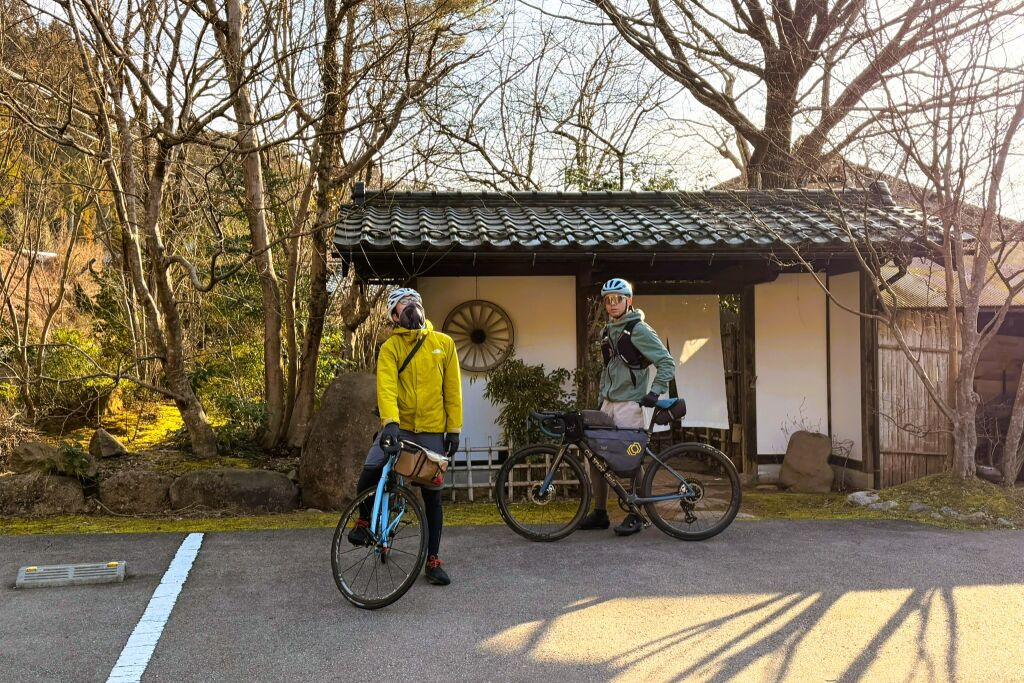
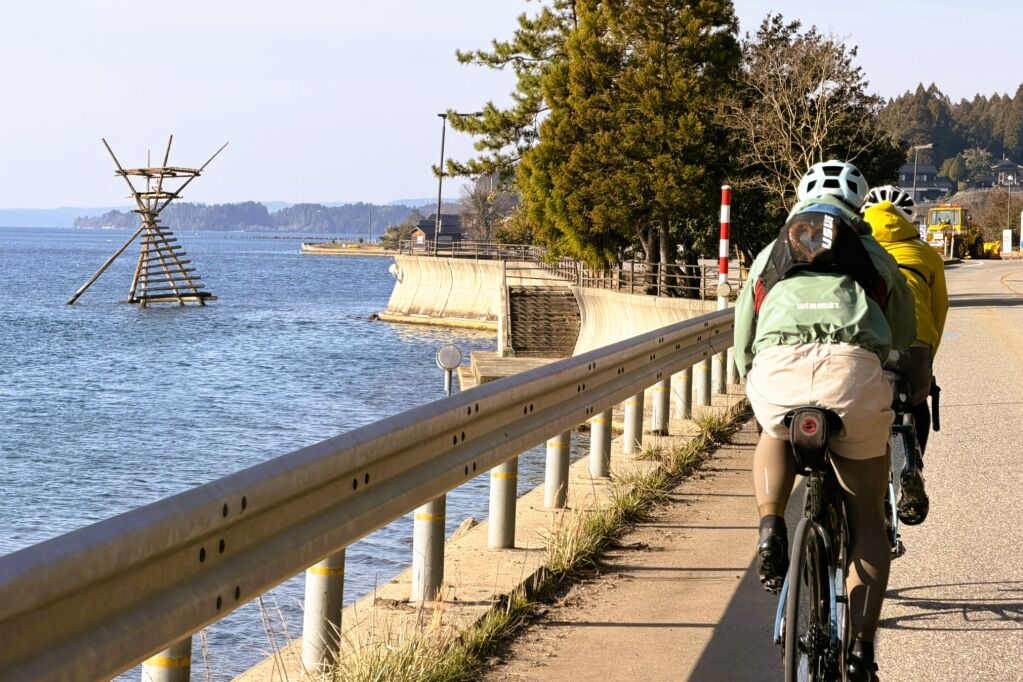
It’s about 20 kilometers from the inn to Anamizu Station. While riding, I caught sight of the “Bora Machi Yagura” watchtowers rising above the sea in Anamizu Town. These towers were built over the water to watch for and haul in mullet caught in nets—a traditional fishing method believed to be the oldest in Japan.
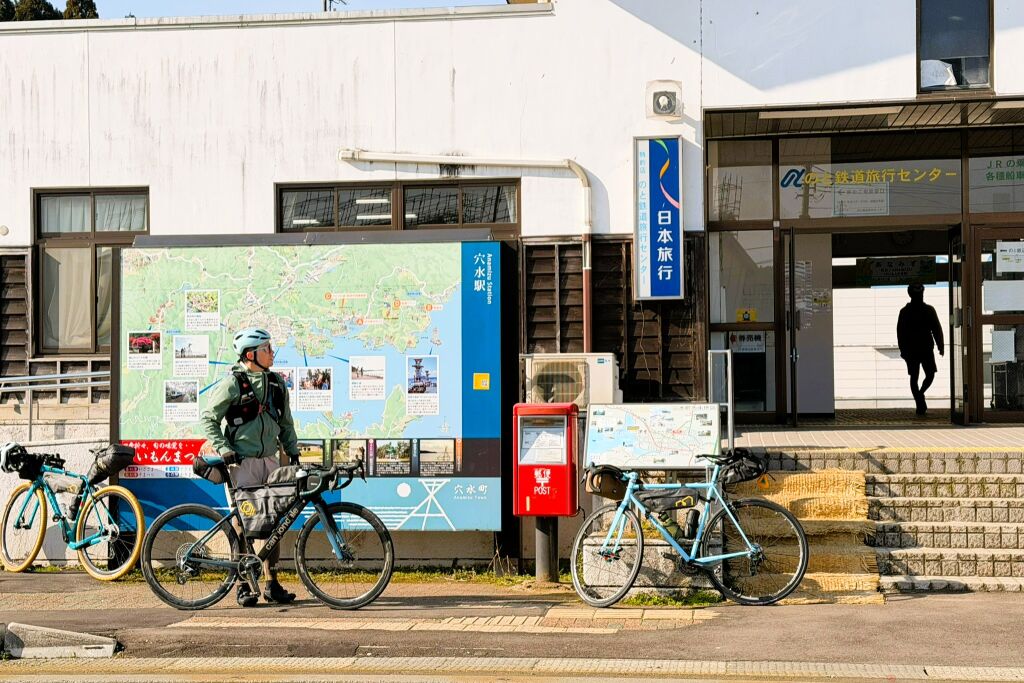
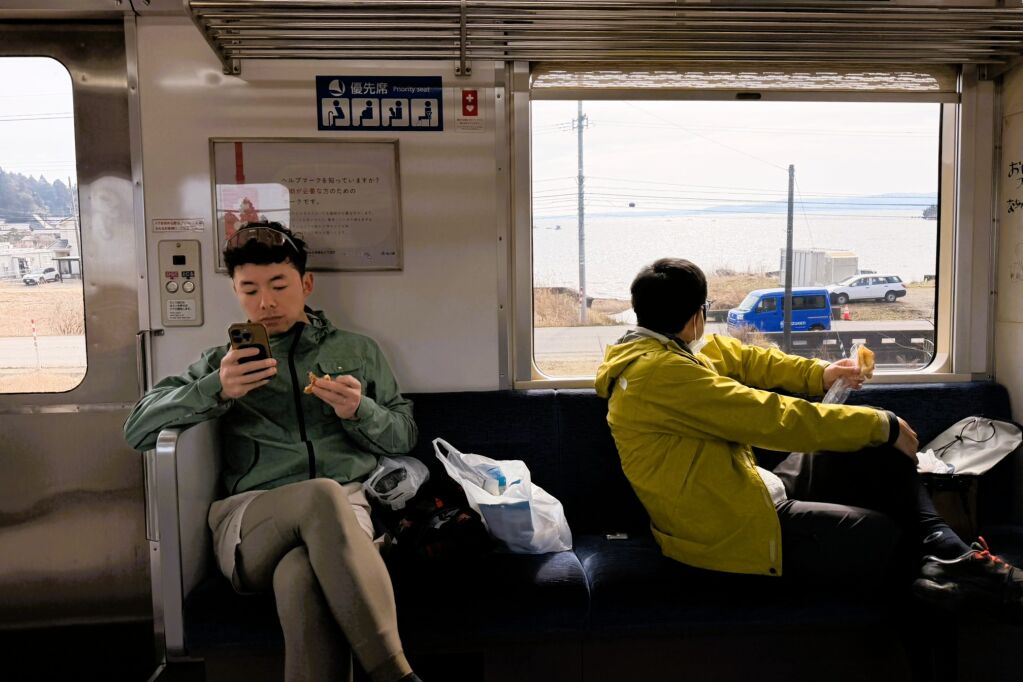
About an hour later, we arrived at our final stop, Anamizu Station. With practiced ease, we packed up our bikes into their travel bags and spent the waiting time browsing souvenirs. It would take about five hours to get back to Omiya with two transfers, so to avoid the evening rush, we headed home early. After three days of riding, the trip wrapped up safely and smoothly.
Riding Through Noto Peninsula: My Journey and Impressions
The 3-day, 2-night ride around the Noto Peninsula was packed with discoveries you can only get by actually cycling through the area. Even though I’d read news and online updates about the ongoing recovery efforts, the impact felt especially real in certain spots. The contrast between the lively energy around Kanazawa Station and the quieter scenes in places like Wakura Onsen, Wajima, and Suzu really stayed with me.
Cycling let me experience the earthquake’s impact up close—like collapsed roads, sinkholes, and detours from ongoing recovery efforts. And the dramatic uplift spanning about 100 kilometers is something you really have to see in person to understand just how massive it is.
At the same time, the towns and people are steadily moving forward. Noto’s perfect mix of mountains and sea makes it an amazing place to ride. I hope this trip sparks more interest in Noto and brings more visitors to support the ongoing recovery efforts.
旅のしおり
| 8:30 | Roll Out |
|---|---|
| 9:00 | Wajima Morning Market |
| 9:45 | Bakery Stop: Rapport du Pain |
| 1100 | Pit Stop: Senmaida Pocket Park |
| 12:30 | Break at Suzu Enden-mura |
| 14:15 | Rokkosaki Lighthouse |
| 15:30 | Late Lunch at Cafe ANARCHY |
| 16:45 | Mitsukejima Island |
| 18:00 | Finish: Guesthouse Flatt |