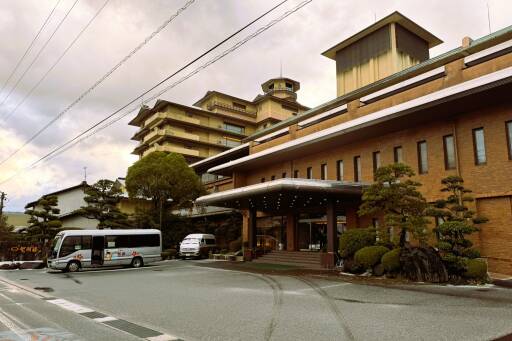
Sanin Region 2-Day, 1-Night Trip DAY1

For my first Discover Ride, I headed to the San’in region. With awesome cycling routes scattered across both Tottori and Shimane prefectures, I had to plan a route that would let me explore both within a limited time. In the end, I chose Yonago Kitaro Airport in Tottori as the starting point for my trip.
Including the night before, it’s a 3-day, 2-night trip, but the real riding happens over just 2 days. So, in my mind, it’s more like a “1-night, 2-day bike trip.” Starting from Yonago Kitaro Airport, I’ll be cruising through Tottori and Shimane on this San’in ride. I’m super excited to share all the fun and adventures from this trip with you!
*This article is brought to you by the Chugoku Region Governors’ Association Cycling Tourism Promotion Committee.*
Starting the San’in ride right from the airport!
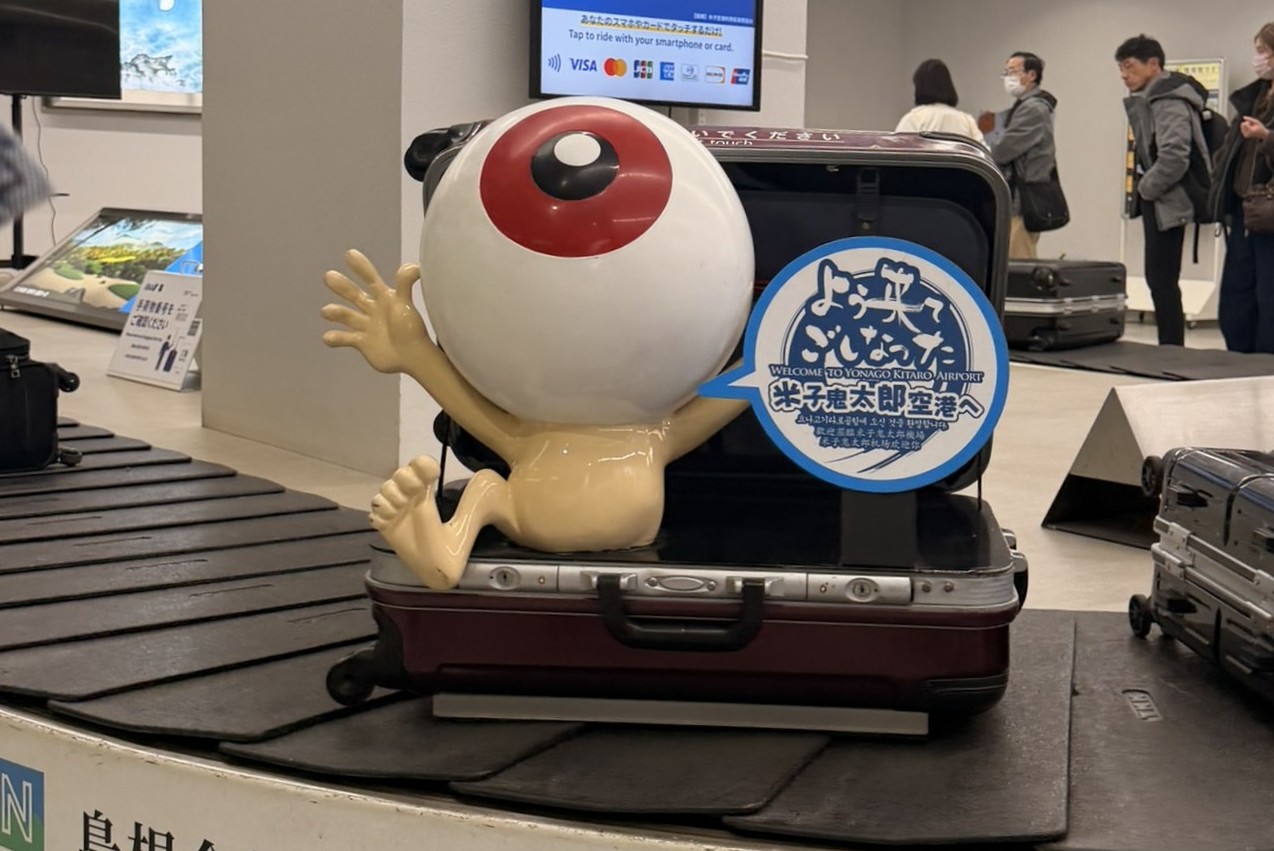
To get ready for the ride the next morning, I headed from Tokyo to Tottori the day before. After about an hour and a half flight from Haneda Airport, I landed and was greeted by Medama Oyaji right at the baggage claim carousel. That perfect little welcome made me think, “Ah, I’m really here,” and instantly put me in full travel mode.
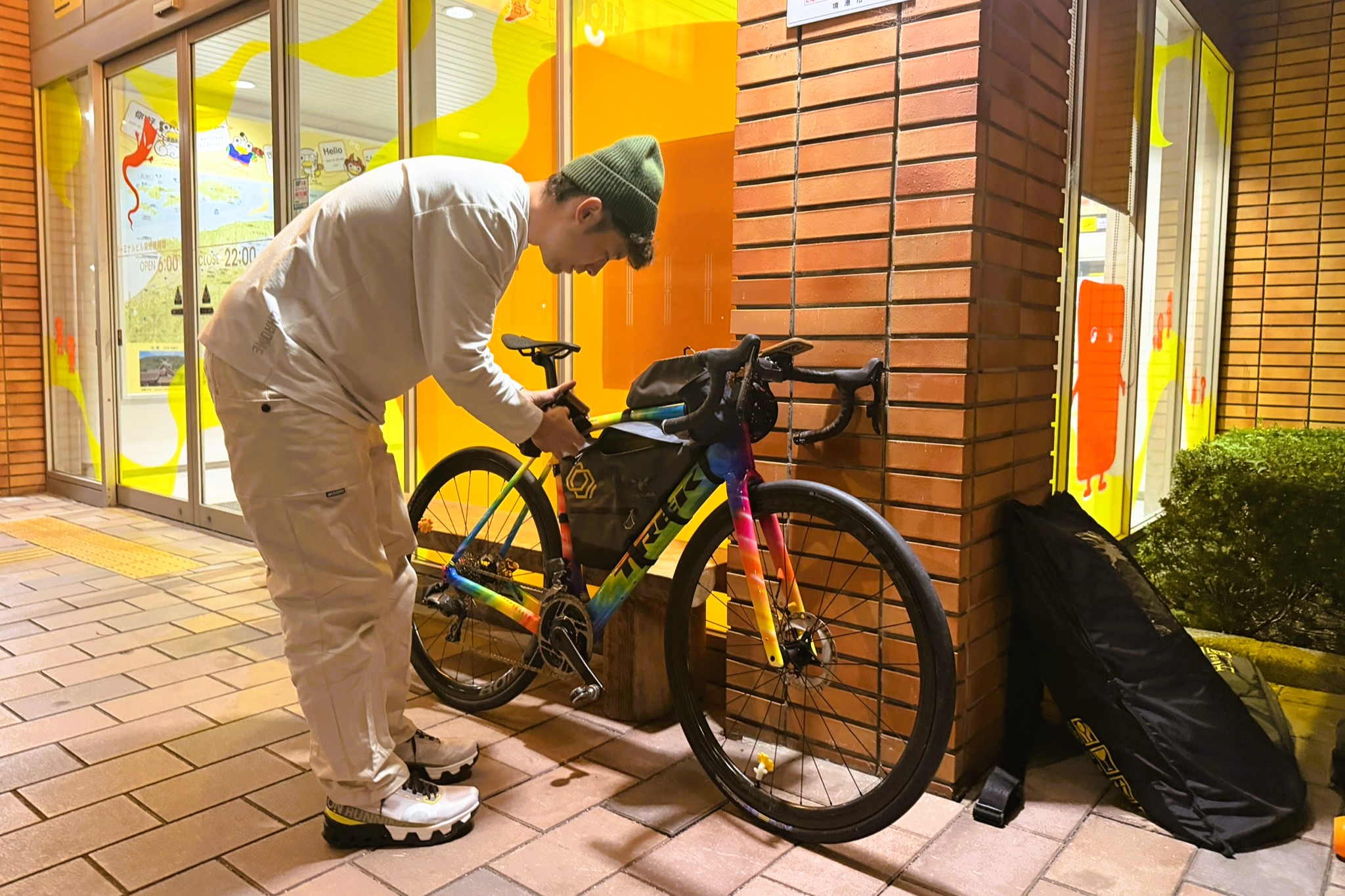
After arriving at the airport, I put my bike together and got ready to ride. I stashed my used bike bag in a coin locker at the airport, so I could start riding light and free.
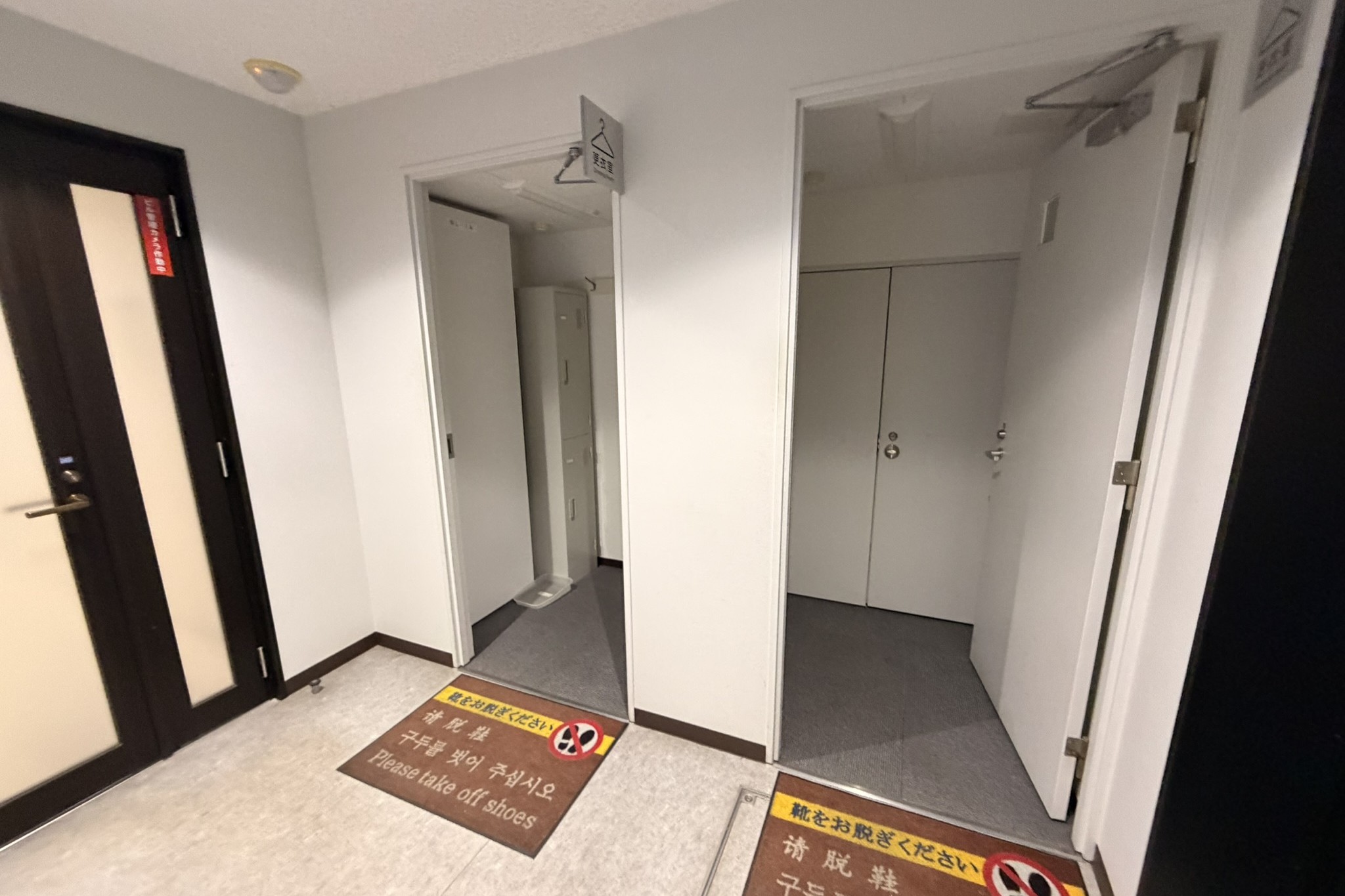
There’s a free changing room inside the airport, so you can easily switch into your cycling gear. Pretty convenient!
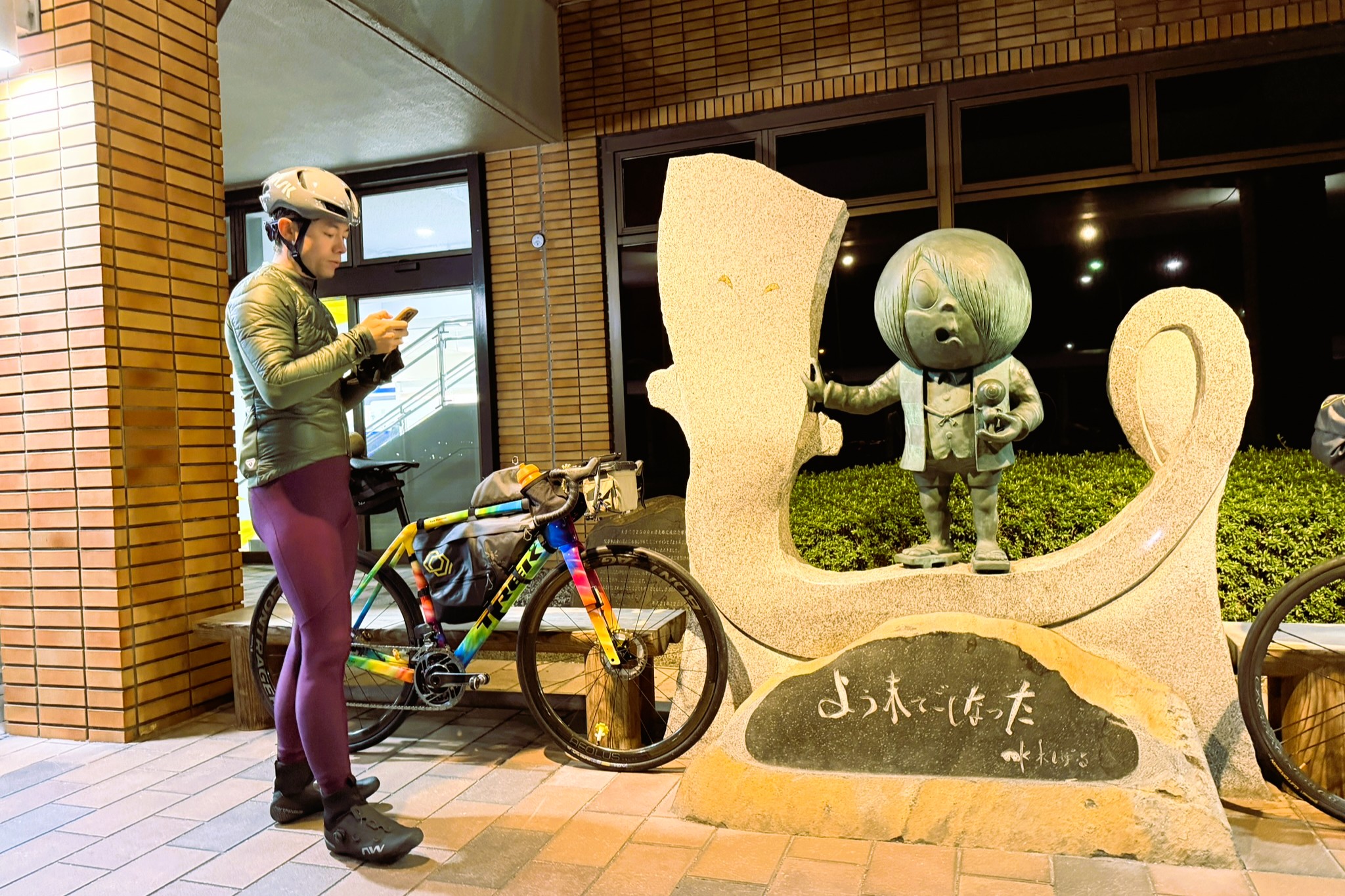
I packed a change of clothes and other stuff for one night on my bike, all set and ready to go. It’s about 6 km to Sakai Minato, where I’m staying the night before. To get ready for the ride the next day, I rode through the night, checking how the bike was doing along the way.
The perfect place to stay the night before—welcoming cyclists with open arms!
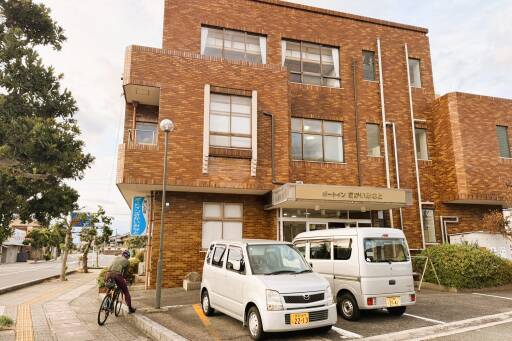
This time, I stayed the night before at “Port Inn Sakai Minato,” which is close to Sakai Minato Station.
Tottori Prefecture’s “A cyclist-friendly place to stayIt’s officially recognized and you can store your bike inside the building. It’s a place where you can relax and rest both your body and your bike, ready for the ride the next day.
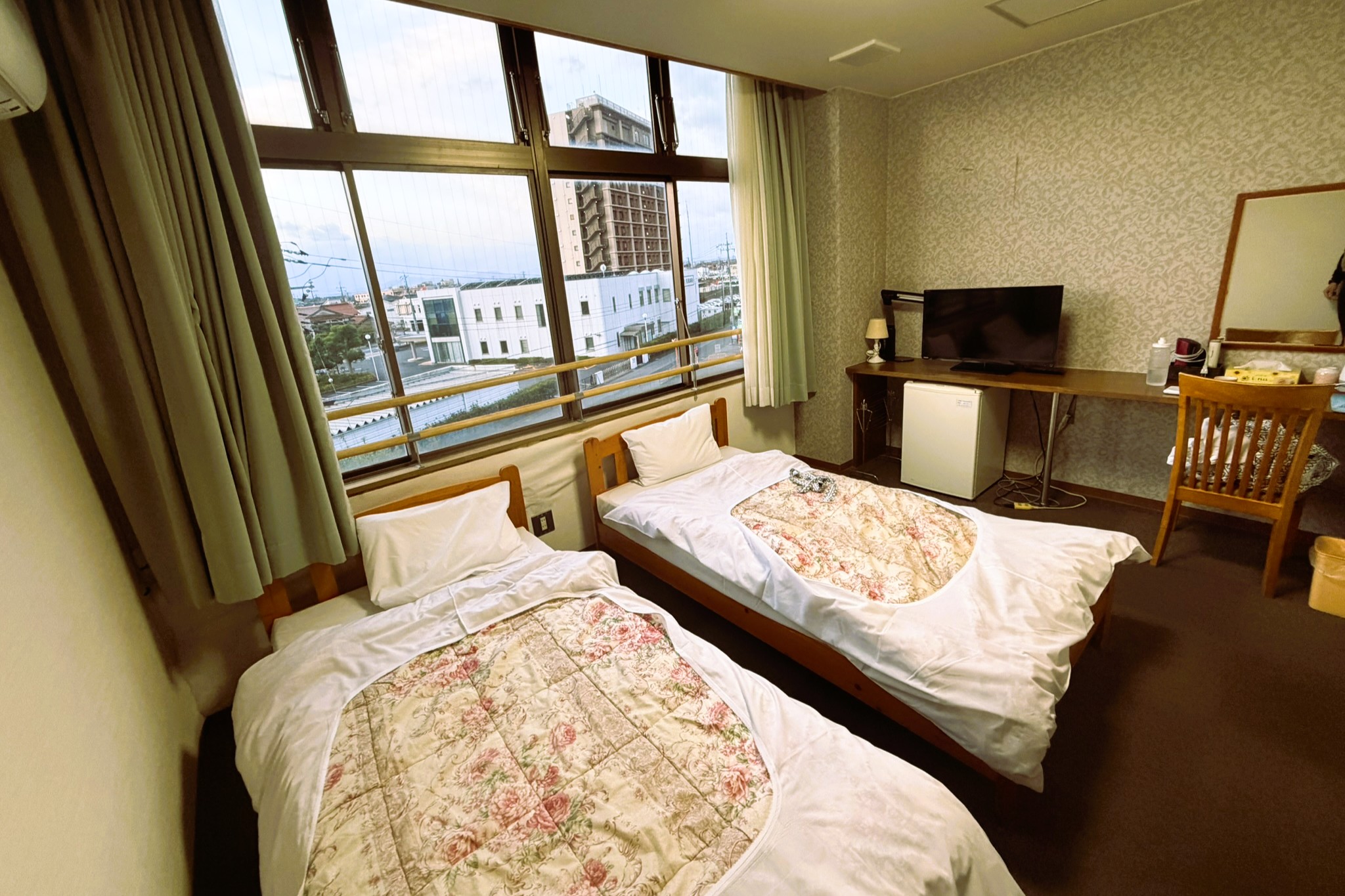
The Western-style rooms come with a unit bath, and prices start at a super affordable 5,600 yen for just the room. It’s a great spot to stay if you’re arriving the night before or using it as a base for a cycling trip—really easy and convenient to use.
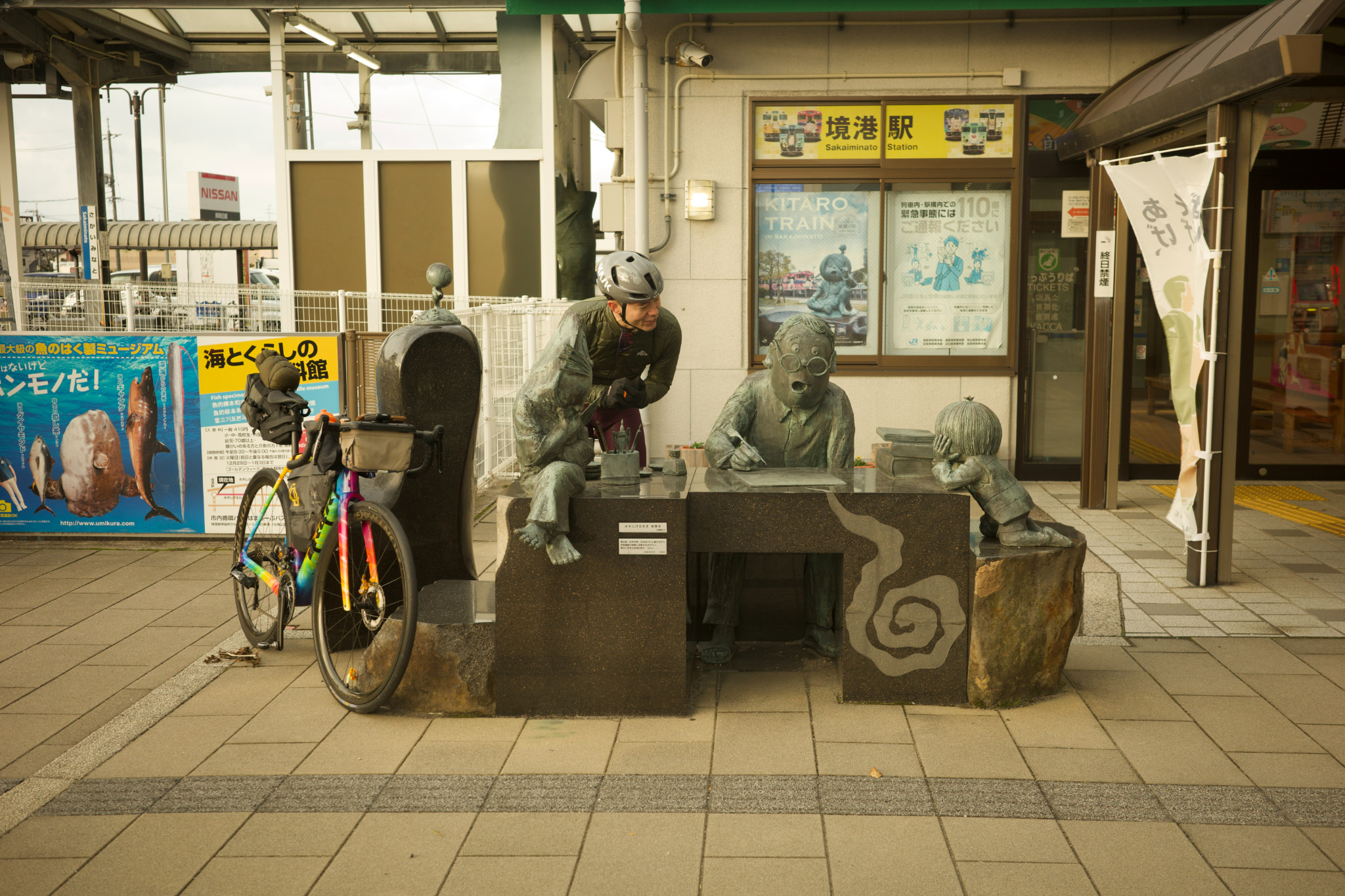
Starting off at Sakai Minato Station, the hometown of Kitaro!
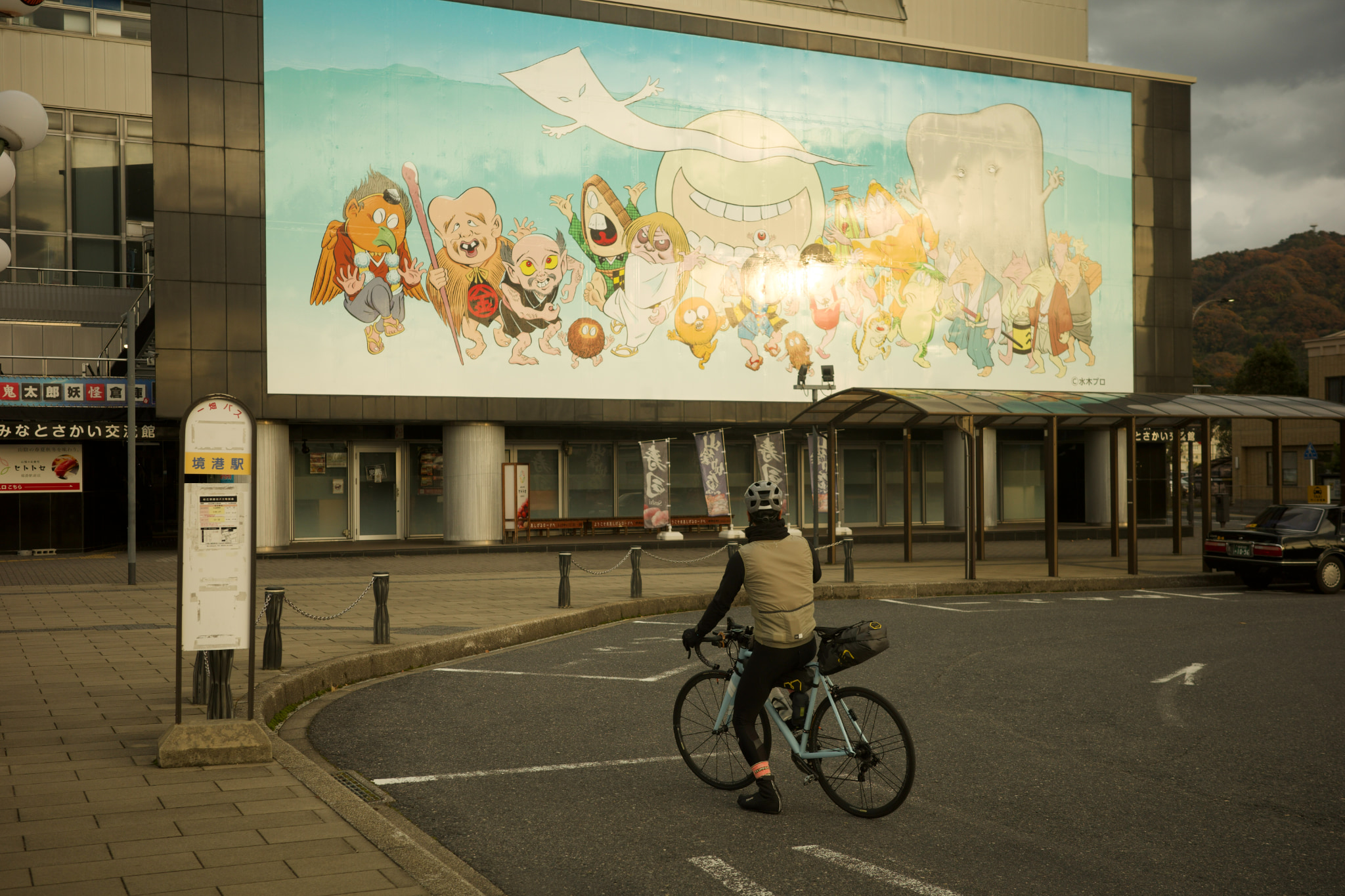
The next morning, after checking out, I headed to Sakai Minato Station, the starting point. Since it’s the hometown of Mizuki Shigeru, the creator of GeGeGe no Kitaro, the area right in front of the station is totally decked out in a yokai theme. There were illustrations and statues of Kitaro and other characters lined up everywhere, so even before I started running, I was already feeling like I’d stepped right into the story.
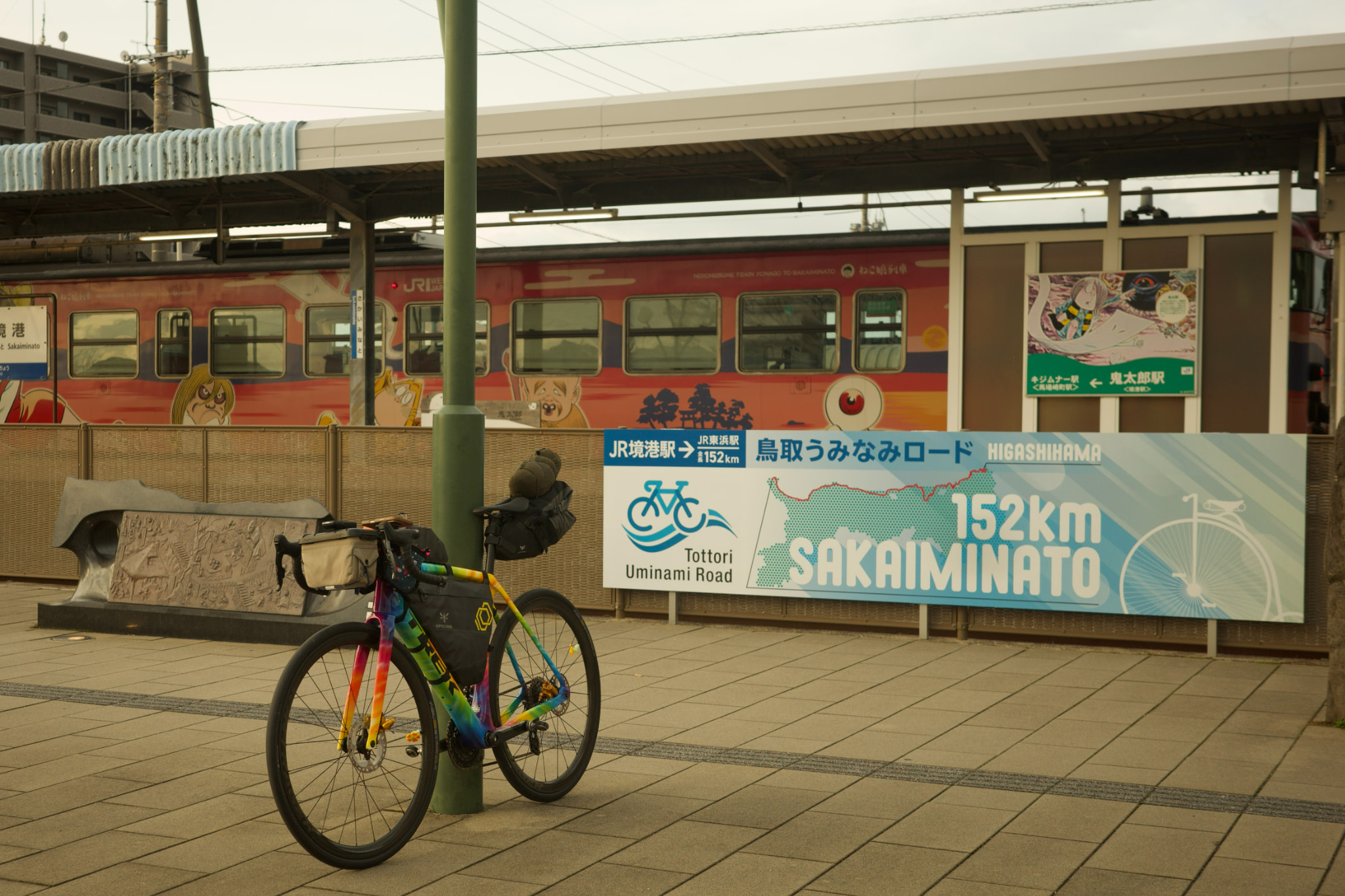
Just in time, the Kitaro train arrived. Not only the train cars but even the benches on the platform are decked out with Kitaro characters—the attention to detail really brings the whole world to life. There’s so much to see right in front of the station that it’s hard to get going.
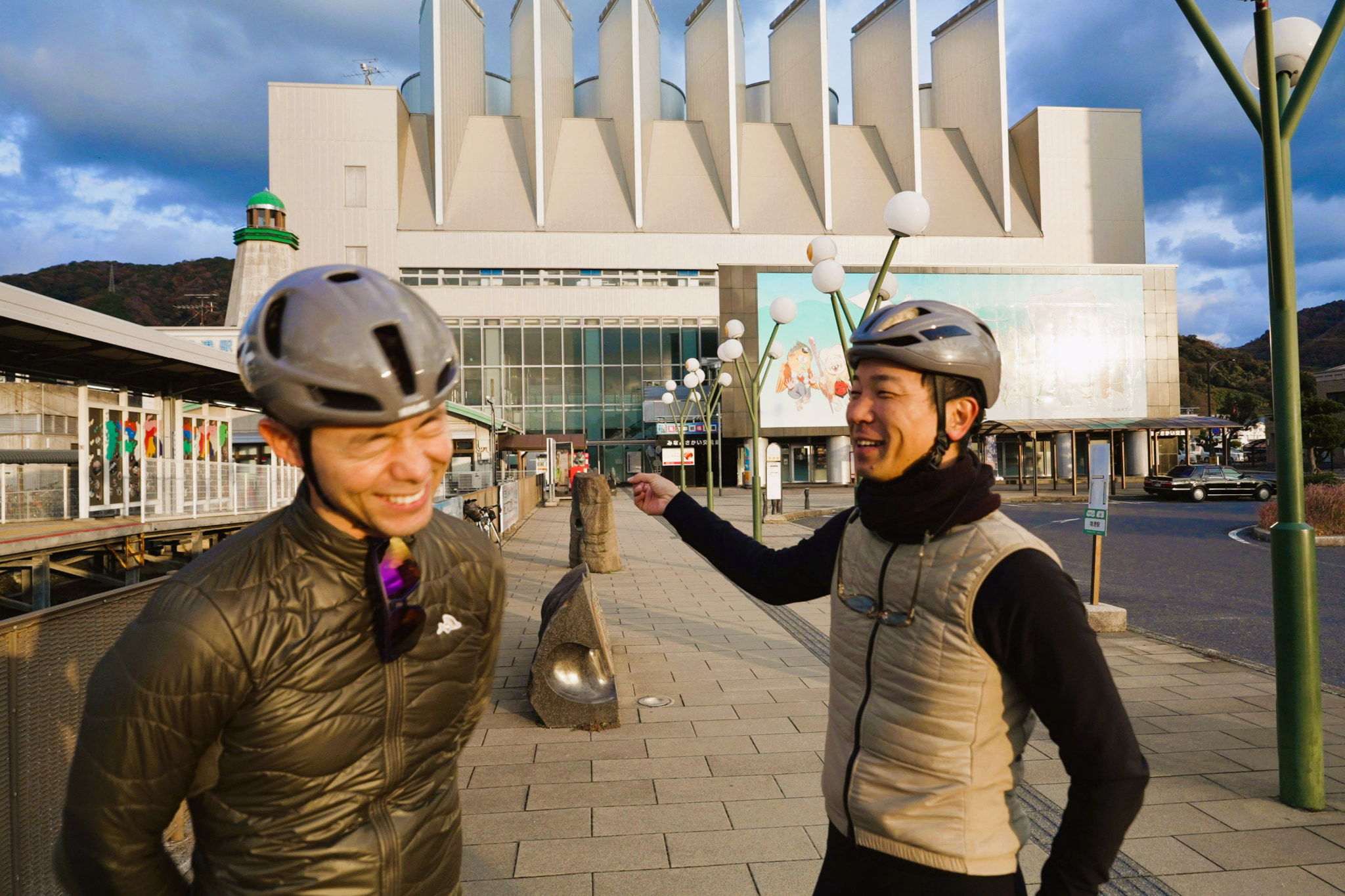
The forecast said rain, but when we got started, it was surprisingly sunny. It was chilly, like December should be, but with a clear blue sky, there was nothing to complain about. Since it was our first Discover Ride in a while, both of us were already pumped before even hitting the road. “I feel like today’s gonna be great,” we said, hyped up on pure, unfounded confidence.
Praying for safety at the Yokai Shrine
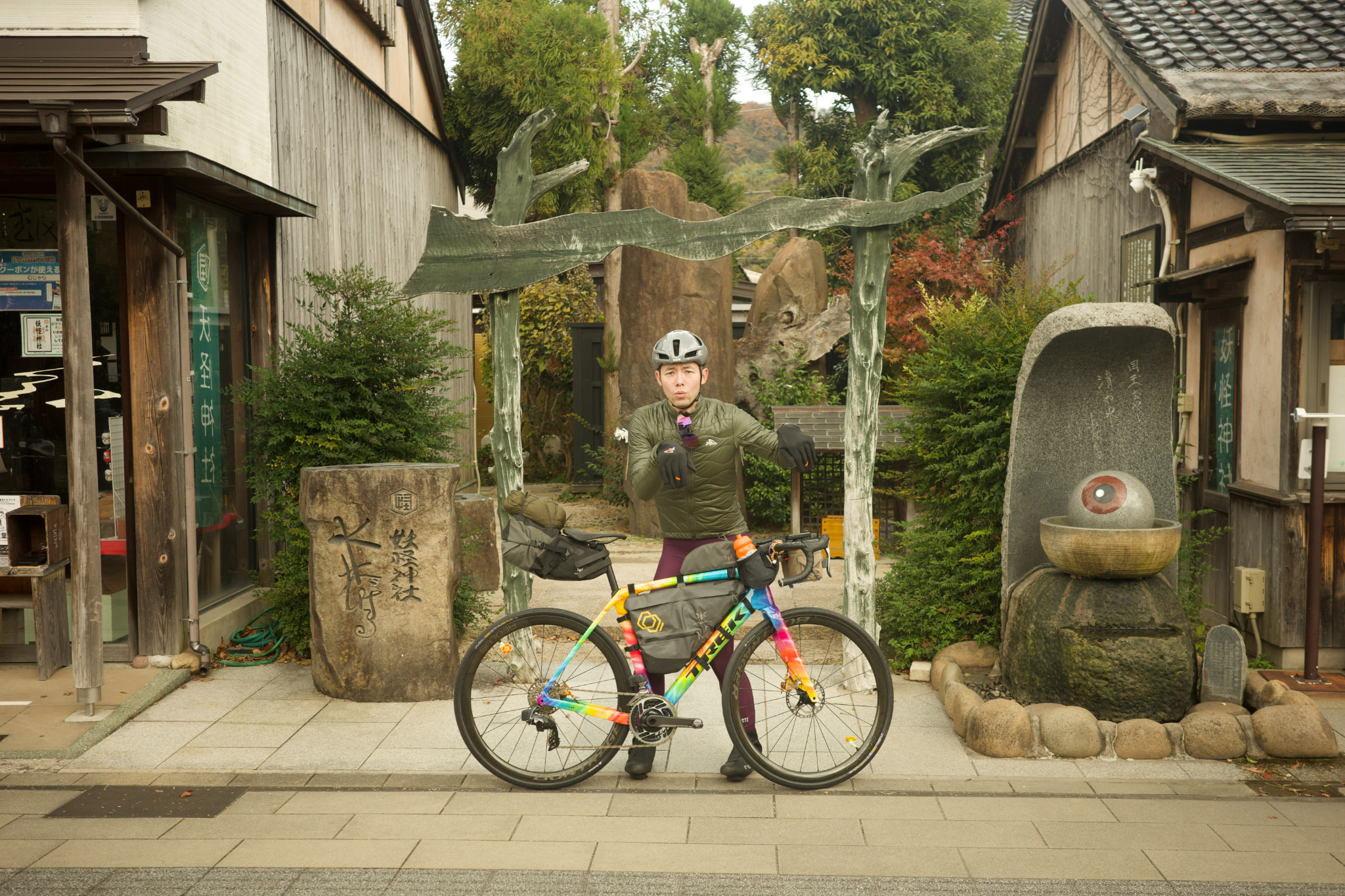
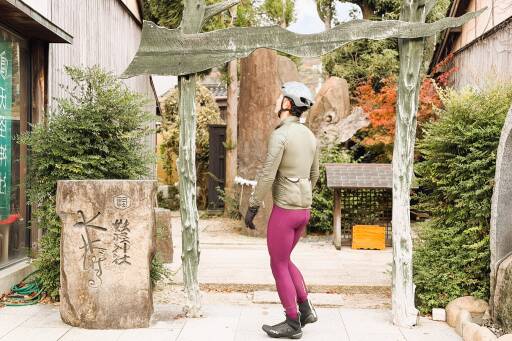
I started off by leisurely biking along Mizuki Shigeru Road. As I slowly made my way down the street lined with all the yokai statues, I really enjoyed the feeling of the trip just beginning. I also stopped by the “Yokai Shrine” to pray for a safe two-day journey ahead.
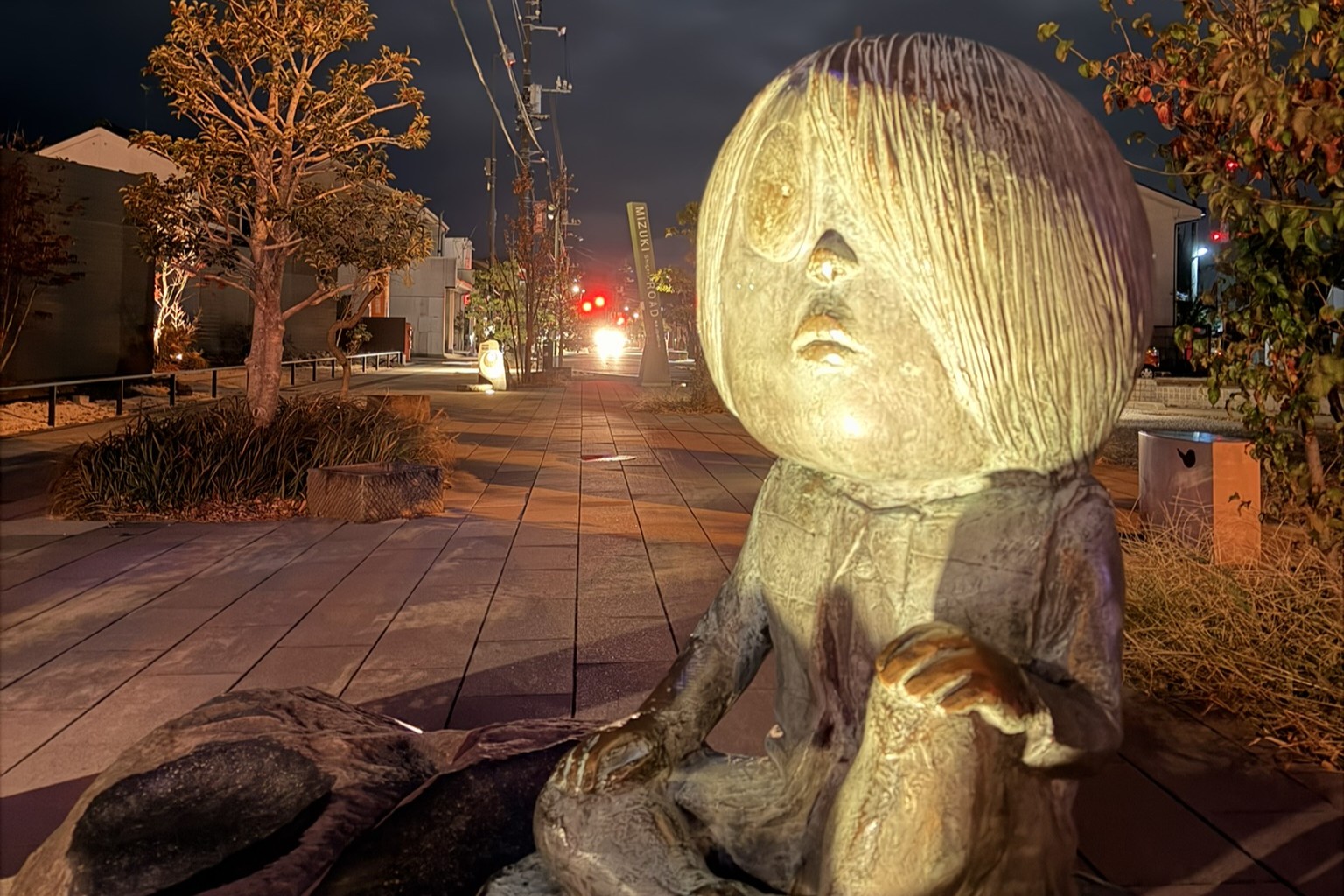
By the way, Mizuki Shigeru Road at night has all these cool lighting effects and little details that give it a totally different, spooky vibe compared to daytime. If you have some extra time, I definitely recommend checking it out after dark.
Breakfast at HATONOVA Sankogaru in Sakai Minato
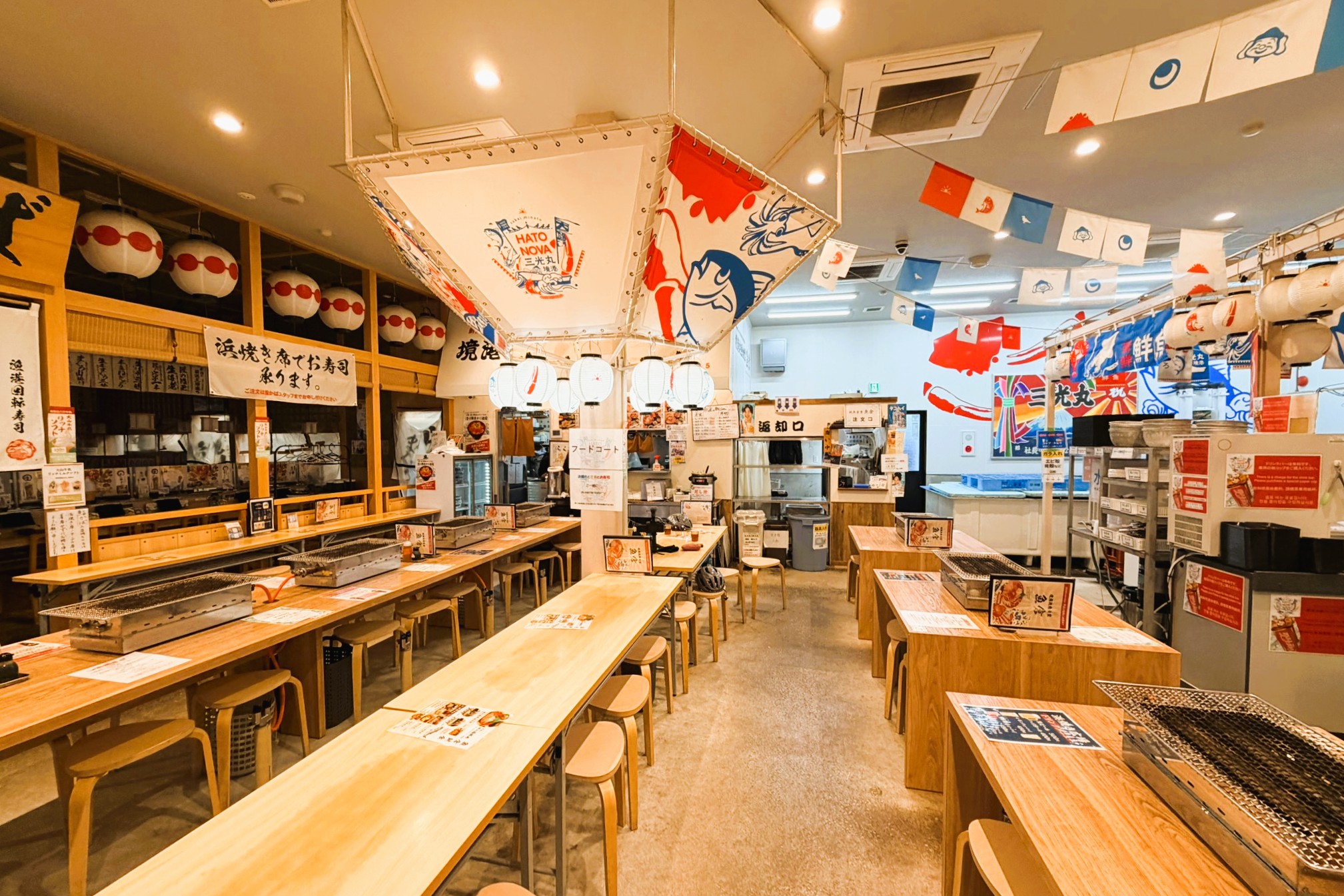
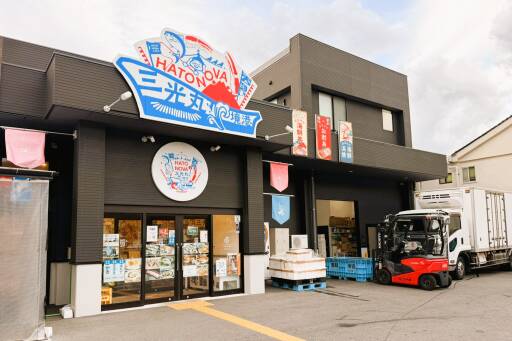
After finishing up with the safety prayers, I stopped by “HATONOVA 三光丸 境港,” which opens at 7 a.m. in Sakai Minato, for some breakfast. Inside, there were seafood robatayaki grills and sushi spots lined up, giving the place a lively, port-town vibe. It’s so popular that on weekends it’s packed with tourists.
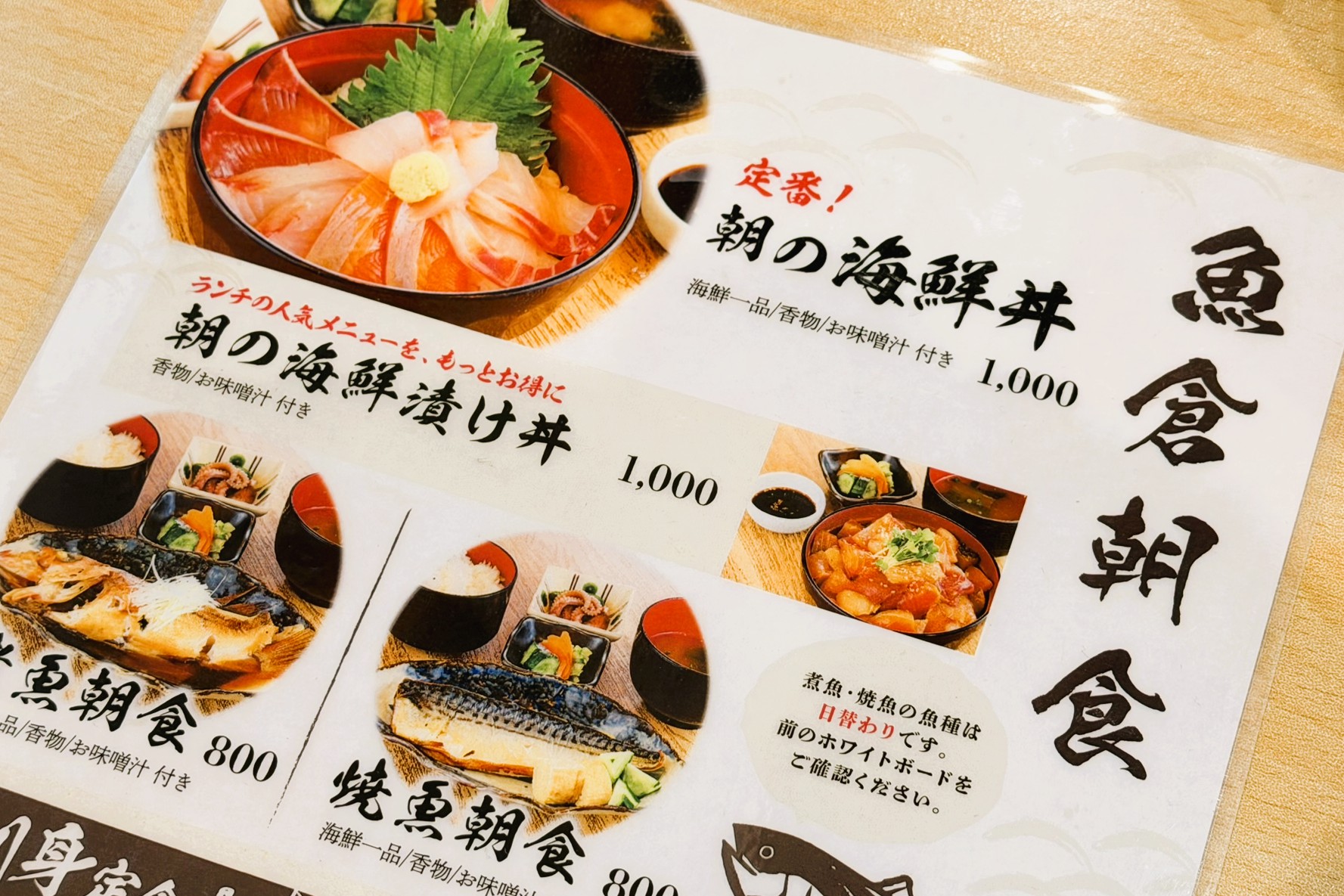
Every breakfast option looked so good, it was hard to choose. Kenta went with the “Morning Seafood Marinated Bowl.” It comes with rice and miso soup, and you can get free refills on both. It’s the perfect, budget-friendly meal to fuel up before a run.
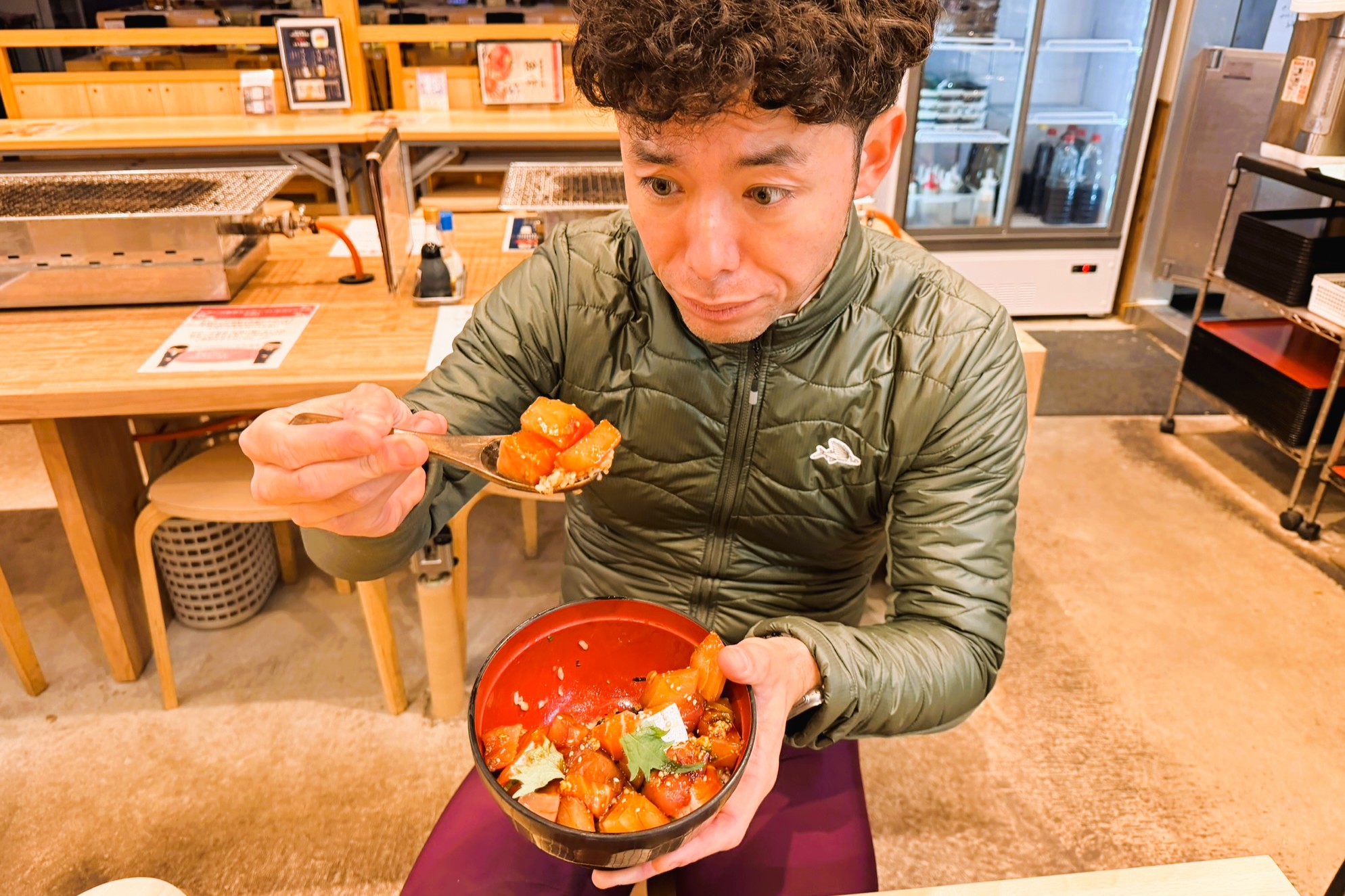
This bowl is loaded with chunky pieces of fish on top of rice. Since the fish is caught right in Sakai Minato, the freshness is unbeatable. Plus, you can finish it off as ochazuke for a tasty twist. Honestly, it might be a bit much for breakfast, but it’s seriously satisfying.
The start of Tottori Uminami Road
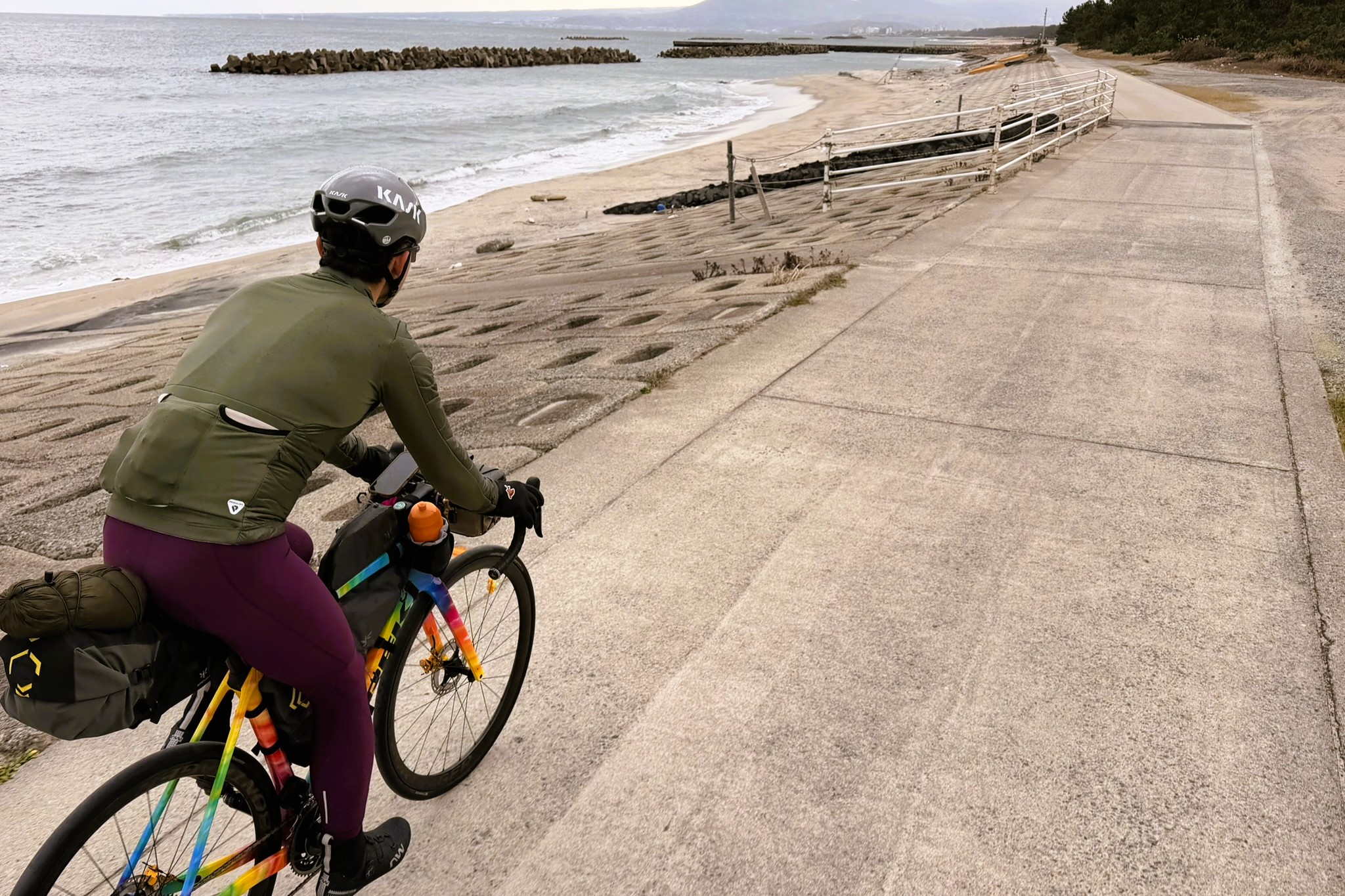
After enjoying an amazing breakfast, it was finally time to start the ride for real. The road along Yumigahama Beach is wide and super easy to ride on. In some spots, you’re riding right along the shoreline, so you can feel the sea breeze and enjoy a refreshing, exhilarating ride.
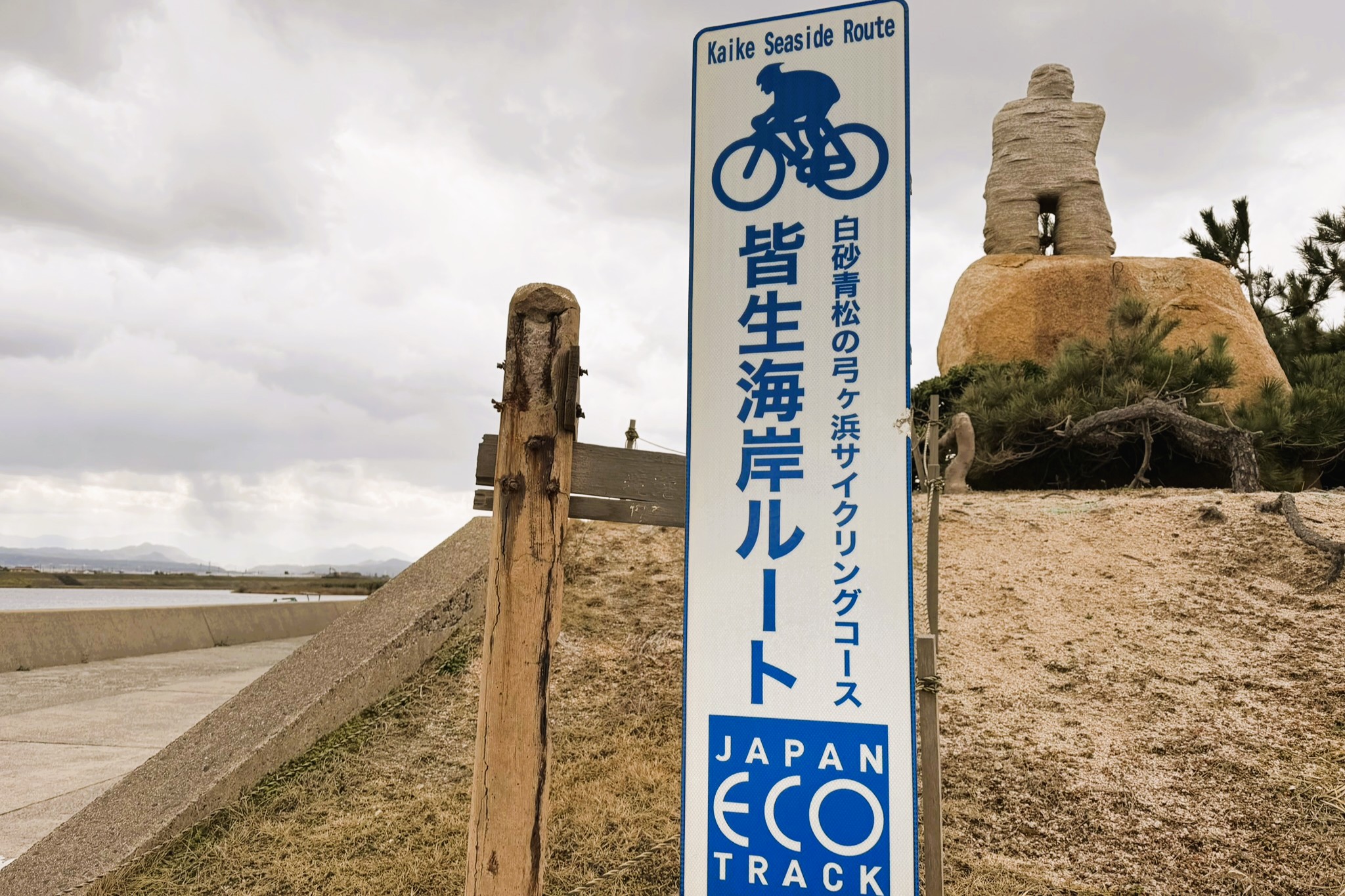
The Tottori Uminami Road is a 152km cycling route that connects several tourist spots and local roads. Along the way, there are plenty of arrow signs and markers, so even if it’s your first time, you won’t get lost and can ride with confidence. Today, I’m tackling about half of it—80km—heading toward the finish line in Yurihama Town.
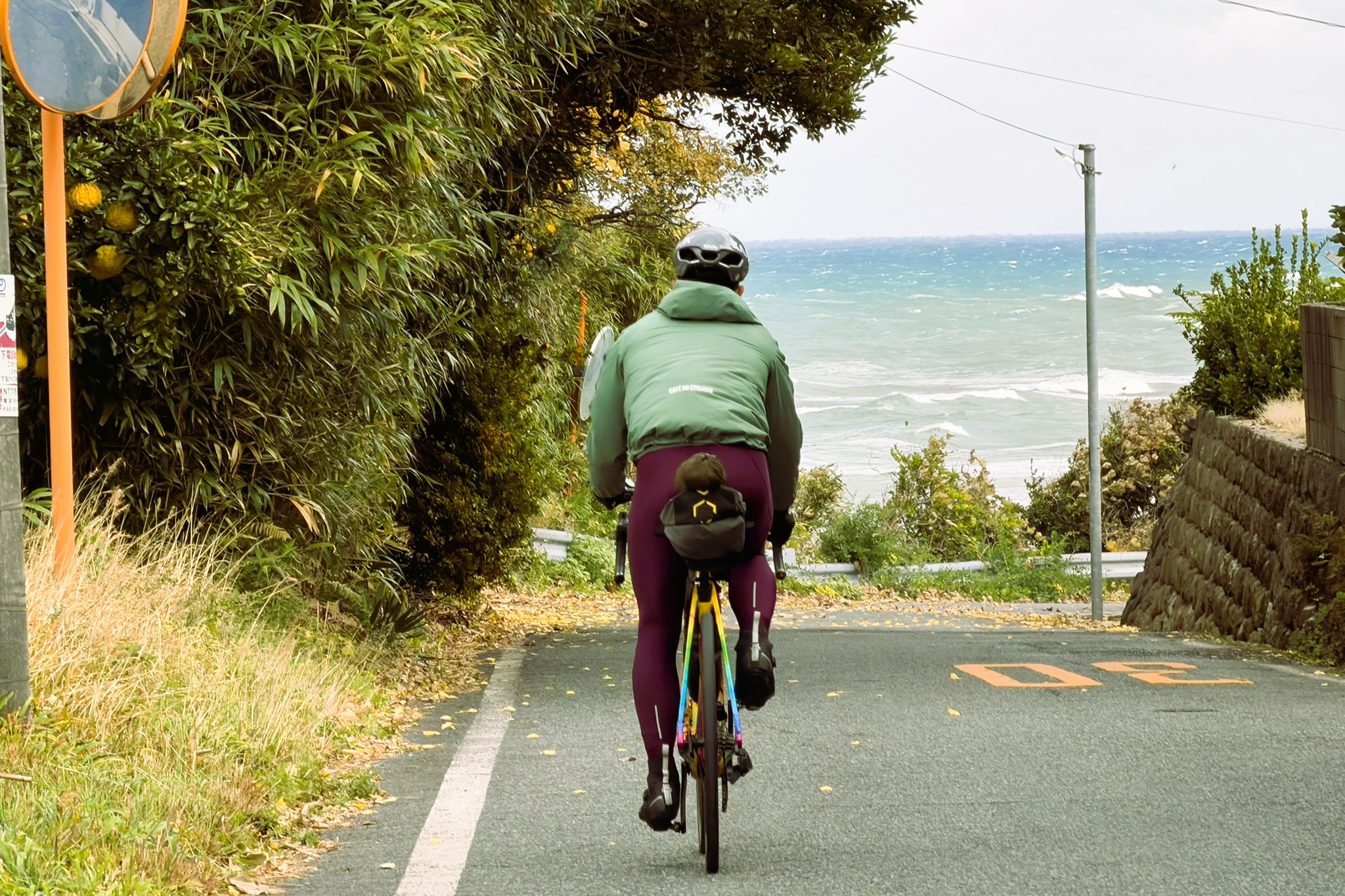
As I rode along the old road, the Sea of Japan peeked out here and there. The waves were pretty high, just like the winter Sea of Japan, but with a strong tailwind at my back, I was able to keep up a fast pace.
Lunch at Mikuri
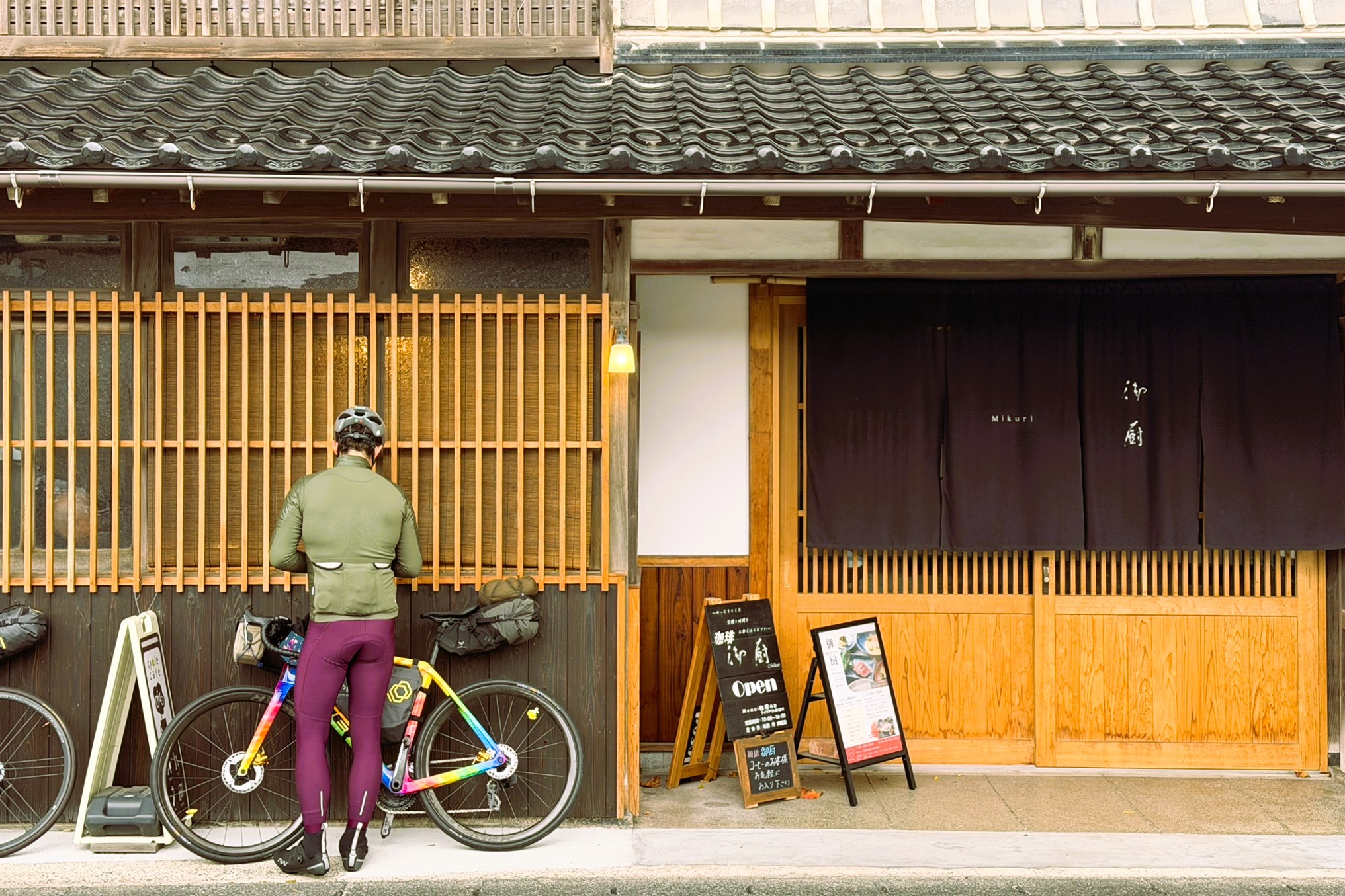
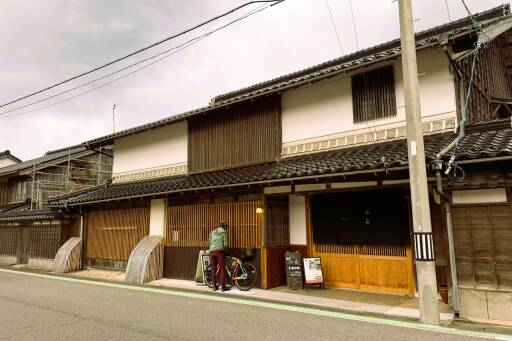
About 40 km in, we finally arrived at “御厨 Mikuri,” which Kenta had been looking forward to for ages. The charming old-style house really set the mood, and it naturally got us even more excited for the meal ahead.
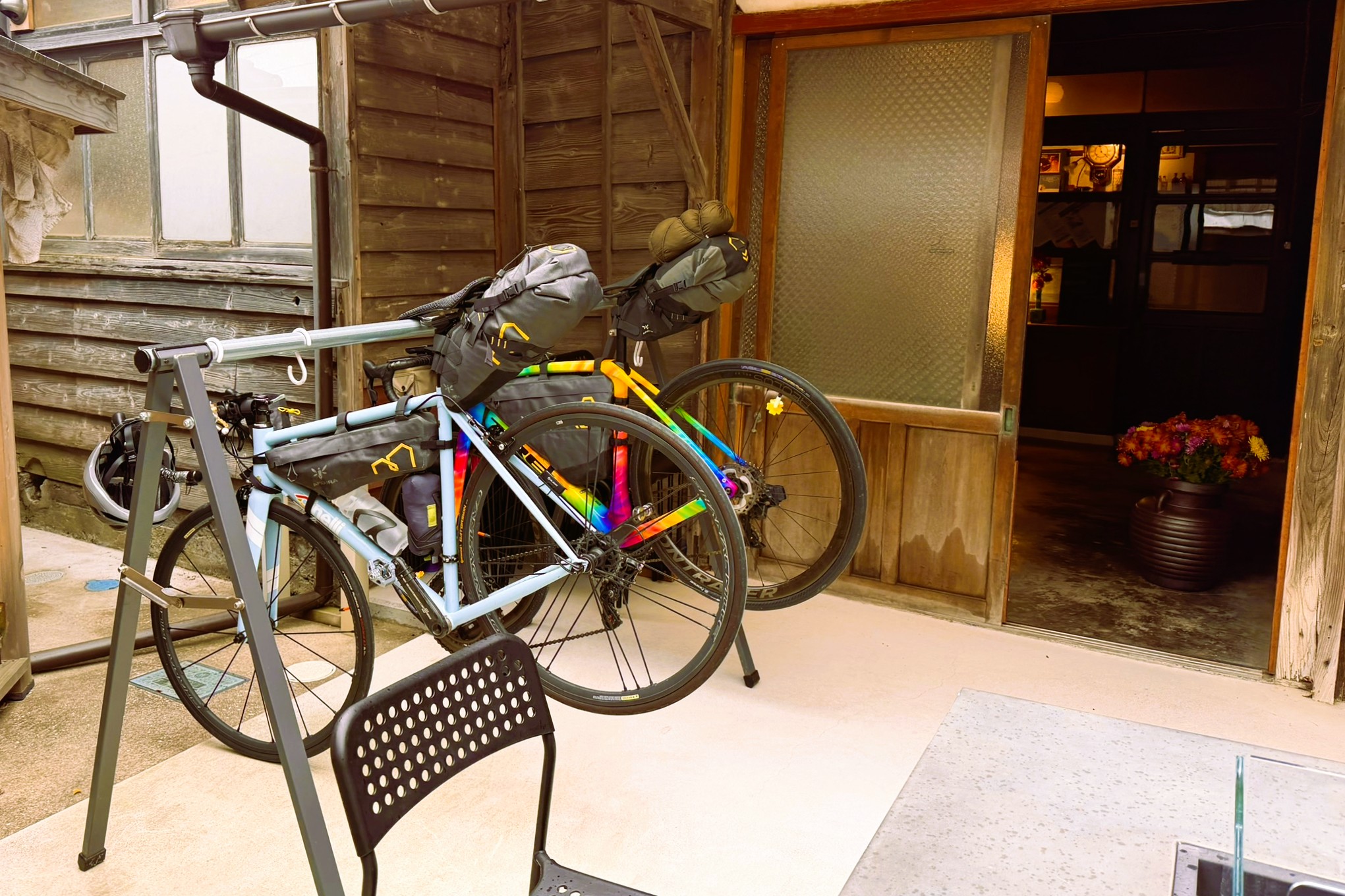
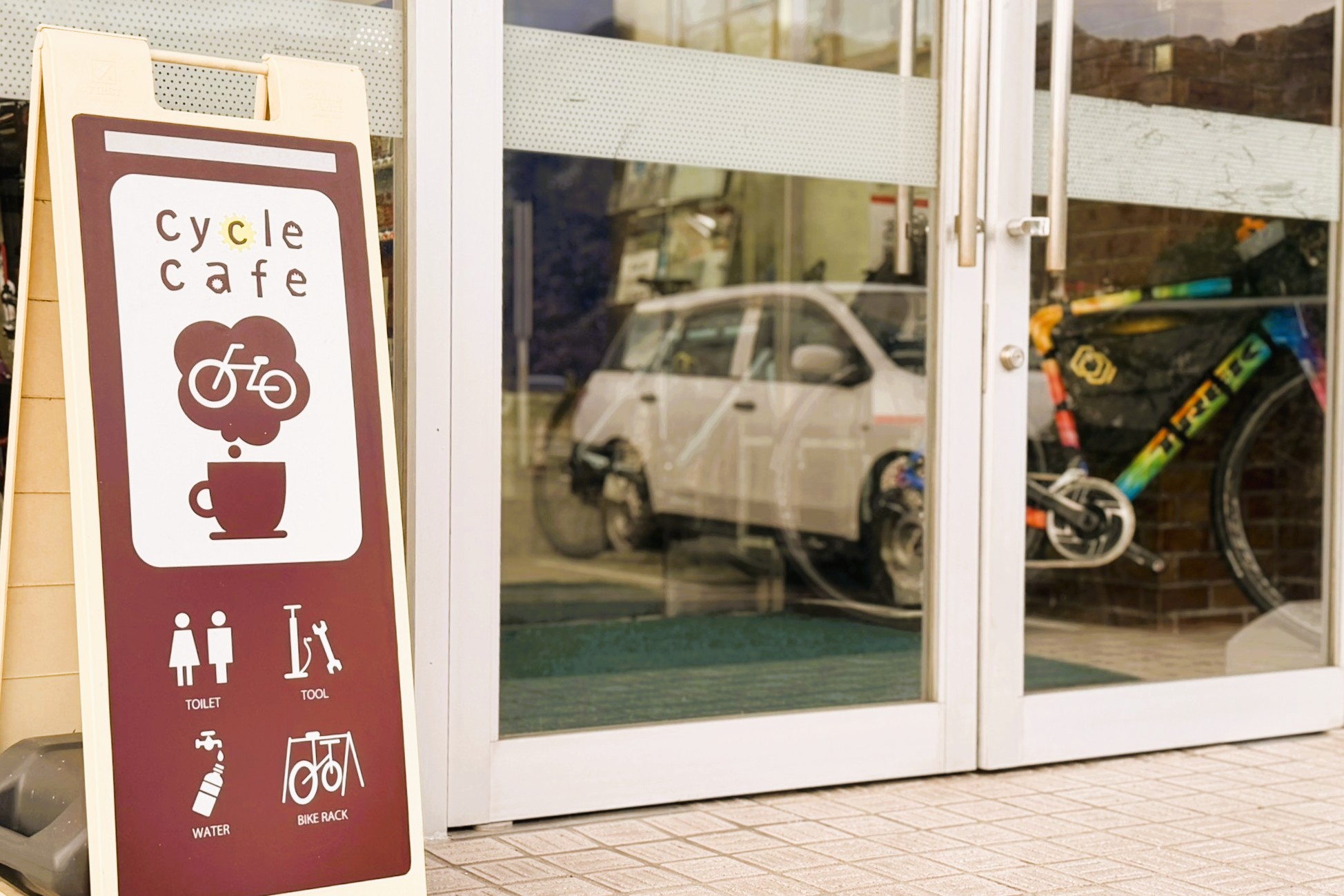
This shop is in Tottori Prefecture’s…Cycle cafeIt’s registered there and has bike racks on the premises. Besides the racks, you can also borrow air pumps and bike tools. At first glance, the place might seem a bit intimidating, but the moment cyclists spot the racks, they instantly feel more at ease—definitely a common feeling among cyclists.
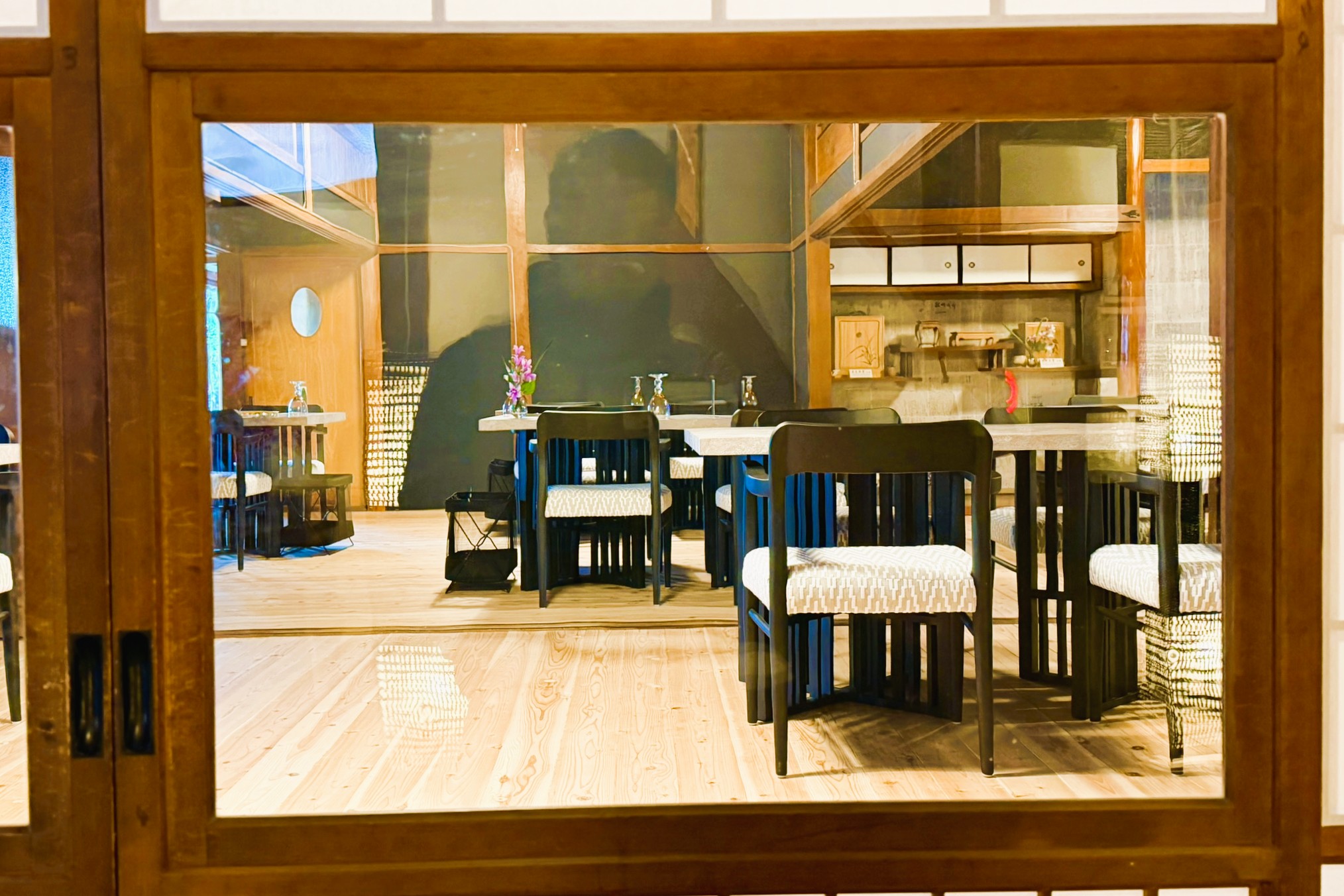
This sake shop, built over 100 years ago, has been renovated. The building still carries the charm of the Meiji era, but inside, modern tables and chairs create a stylish vibe that’s so polished, it’s even used for weddings.
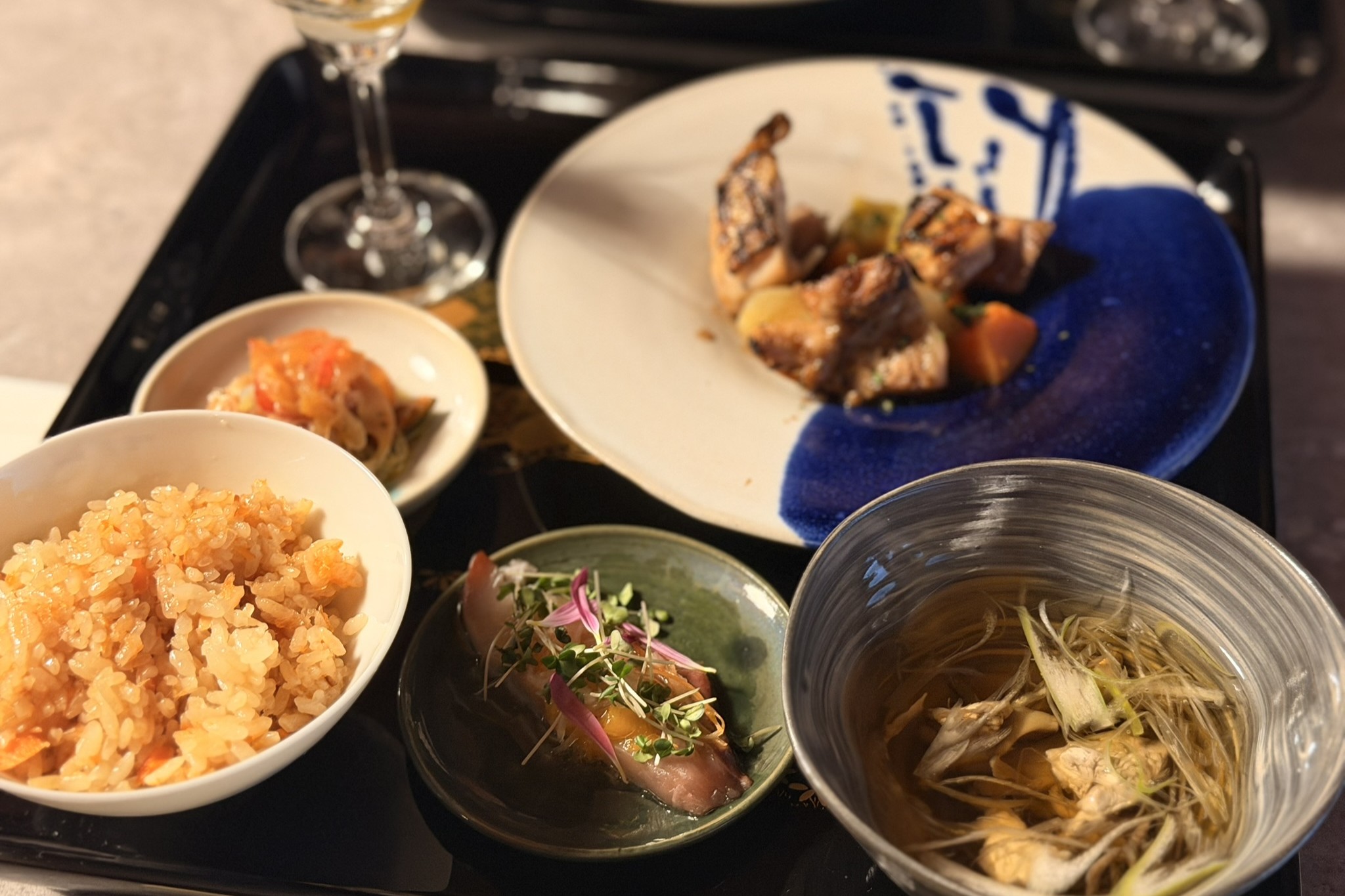
Lunch is limited to just 30 servings a day. The chef, who’s a certified “Dashi Meister,” creates a unique fusion of French and Japanese cuisine with a real focus on dashi. The place fills up right at opening time, 11:30, it’s super popular!
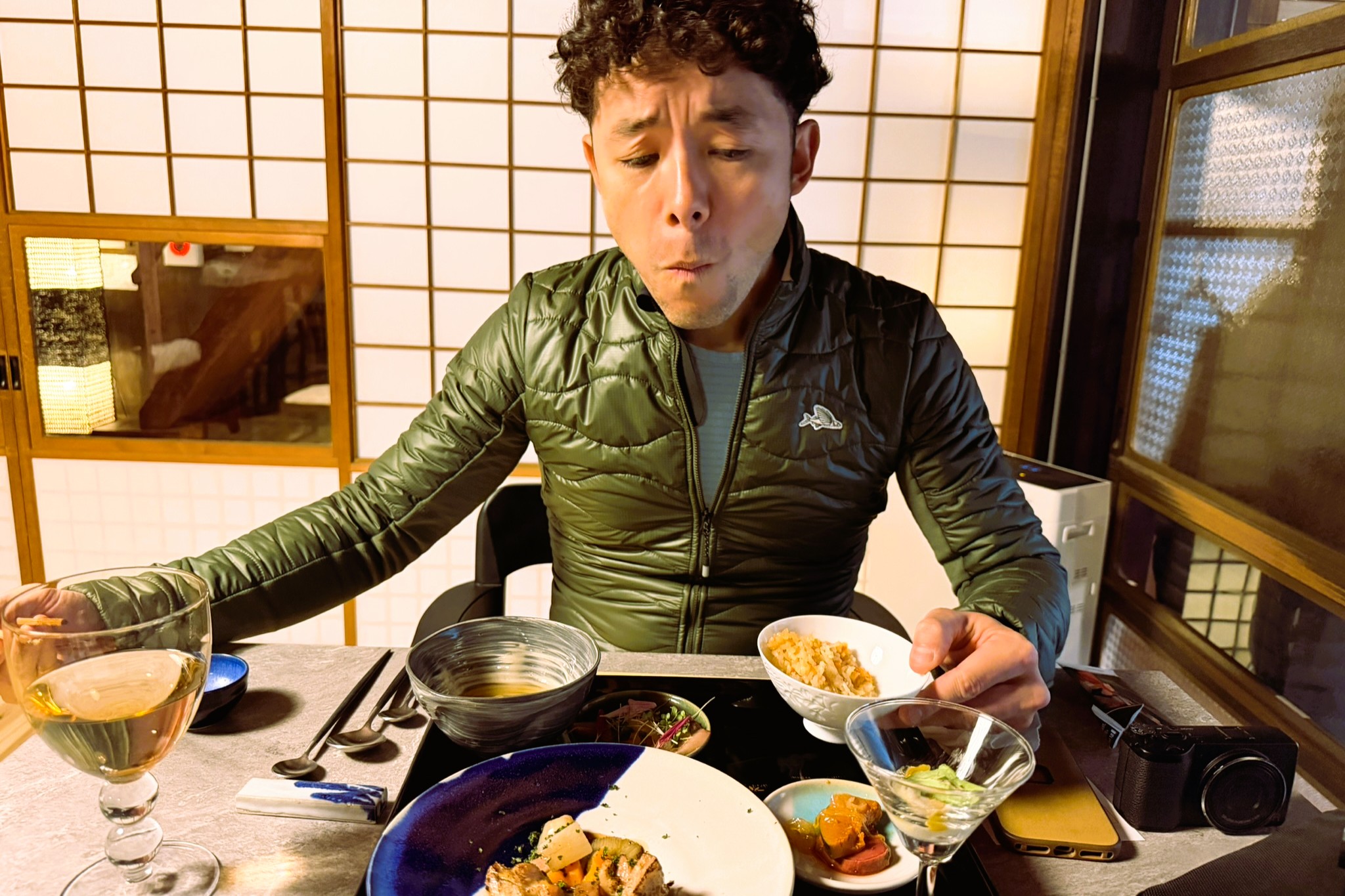
Kenta quietly focused on his food, eating steadily. The flavors were subtle, but the rich umami from the broth really came through, making every bite feel satisfying.
Under the sky turning snowy, the ride starts up again.
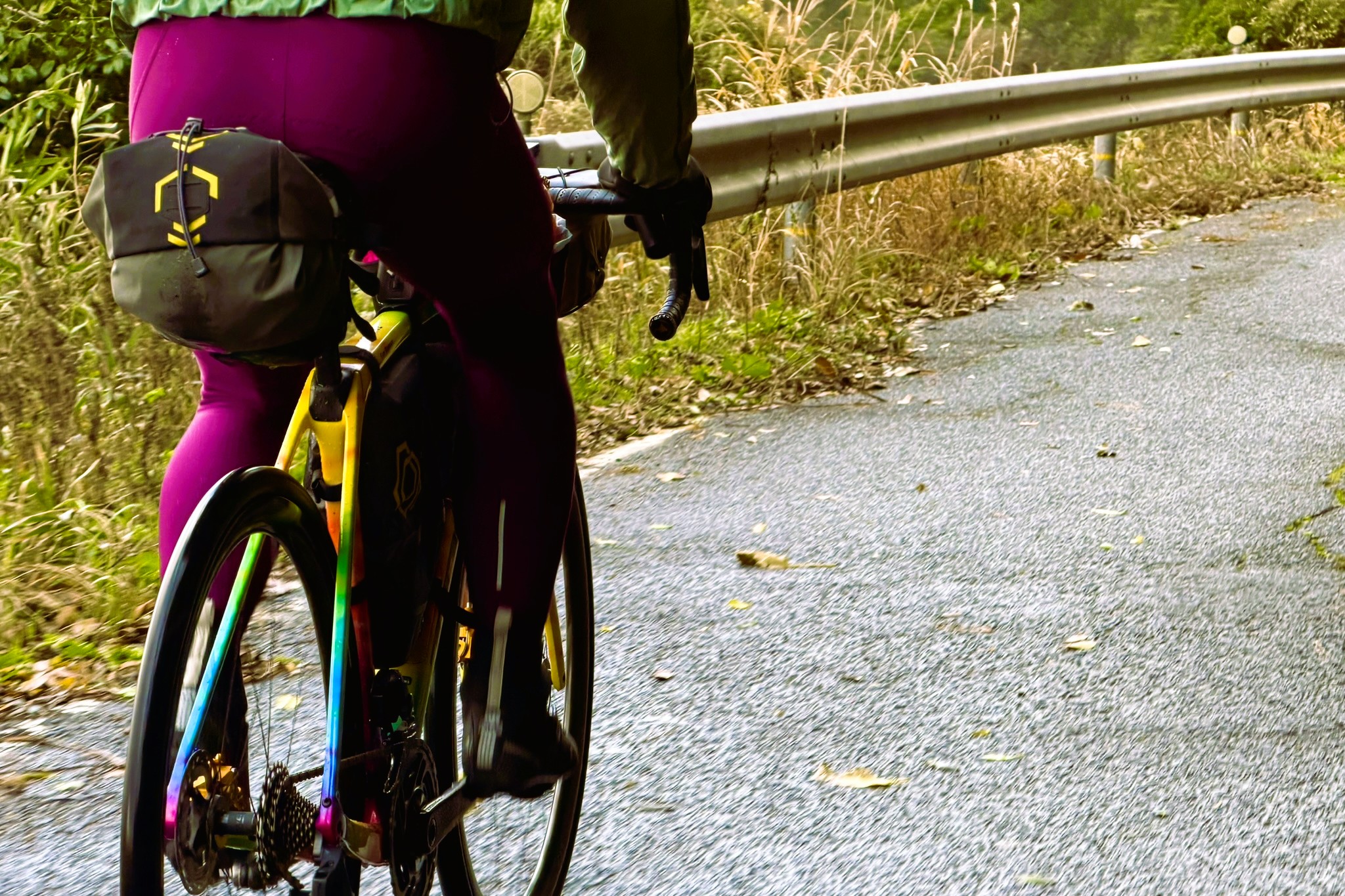
Riding east along the Tottori Uminami Road with a strong west wind at my back. That day, a cold snap hit, and the temperature dropped quickly in the afternoon. My bike computer showed just 3 degrees.
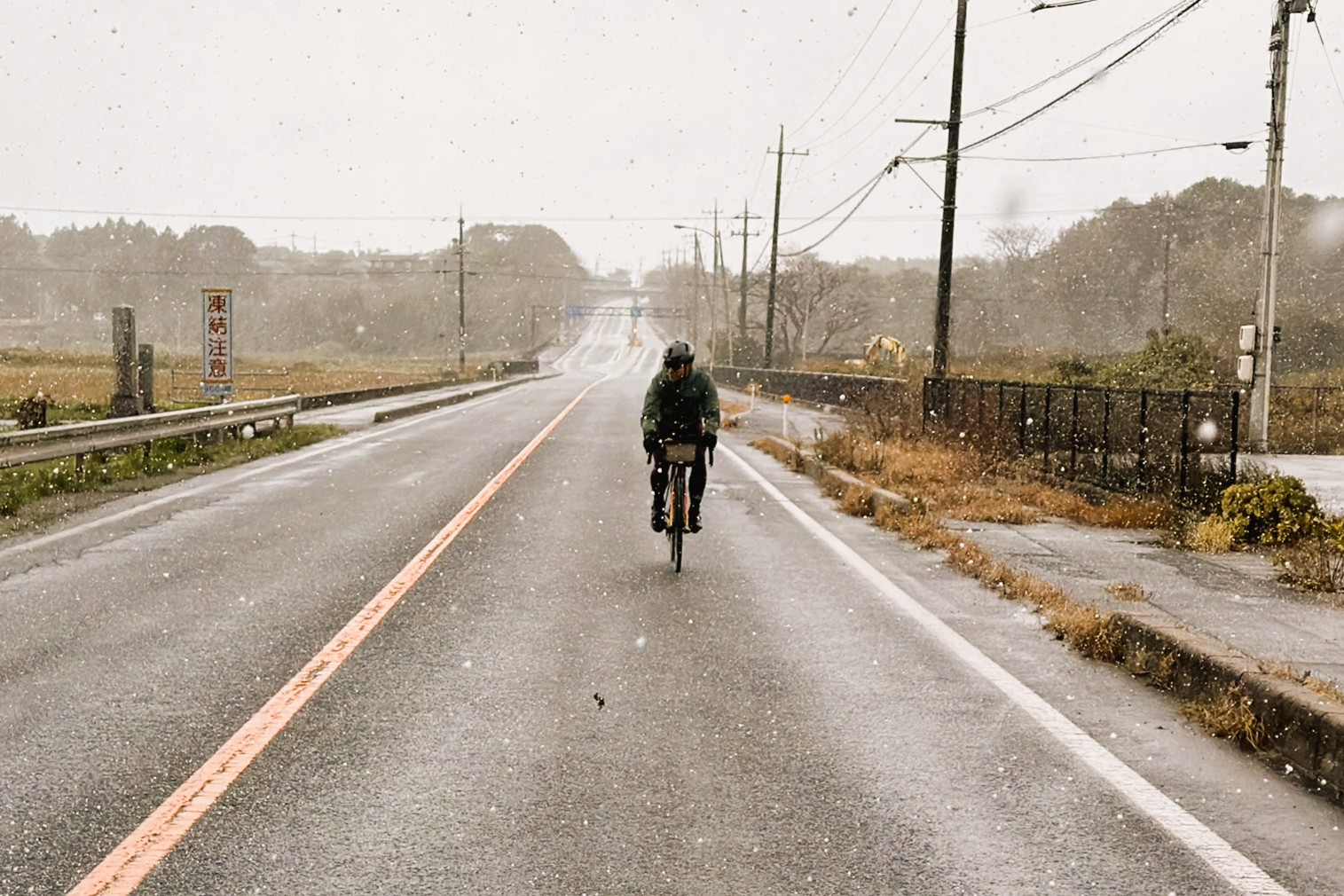
Finally, the rain turned into snow, and I found myself riding right into a blizzard. The conditions were pretty rough, but for some reason, snow actually pumped me up more than rain did. Before I knew it, I was in this weirdly high-energy mood thinking, “Hey, this is kinda fun in its own way!”
The beach where the stones make that cool “karakoro” sound when you walk on them.
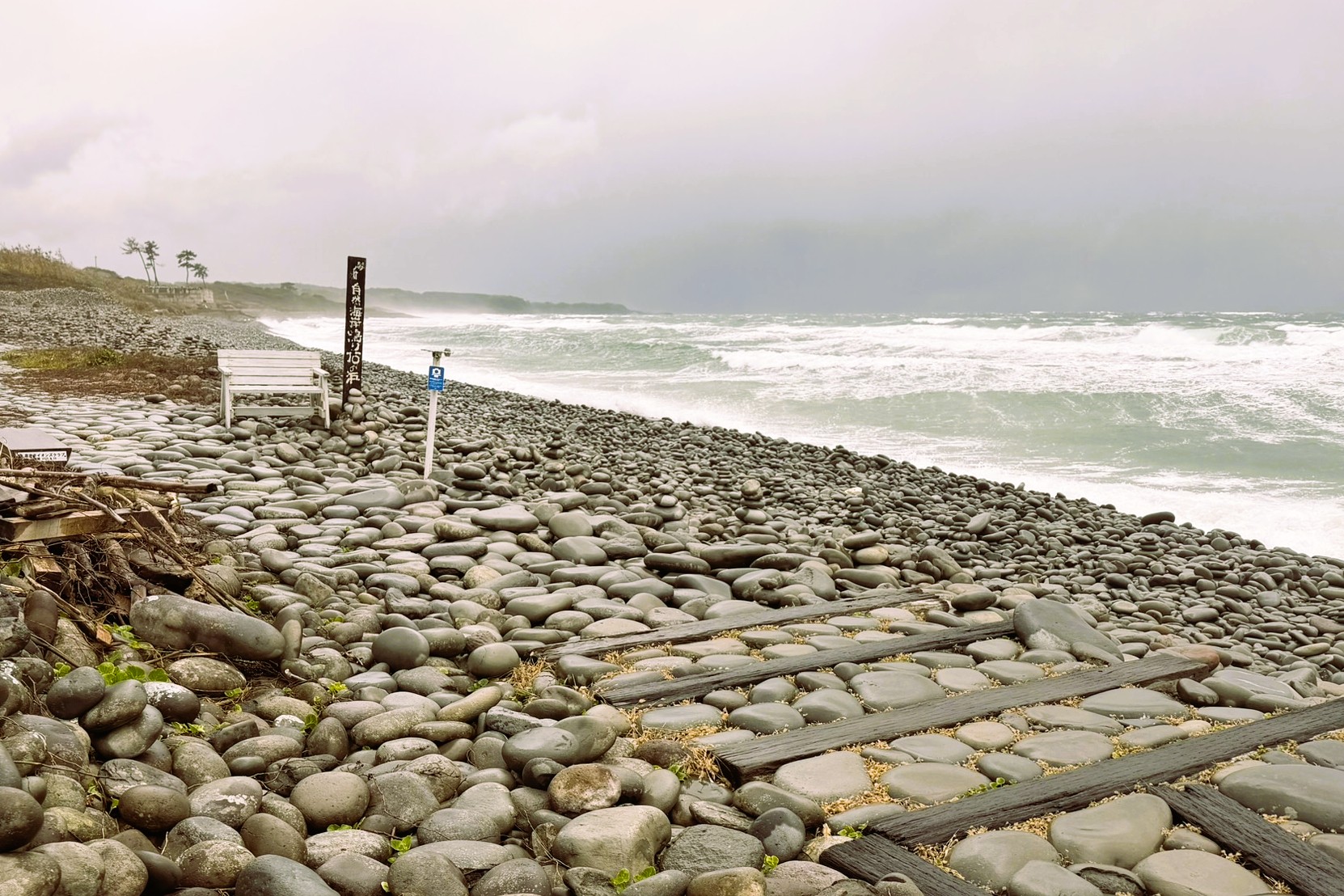
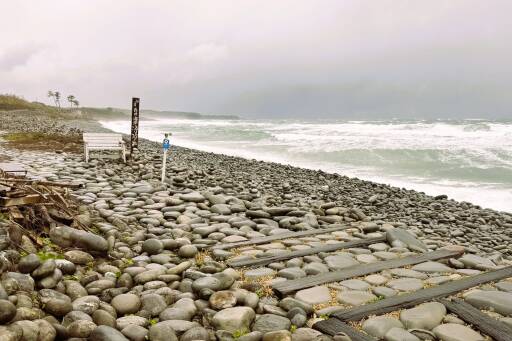
We stopped by the sightseeing spot “Nariishi no Hama.” This beach is famous for the stones that knock against each other with the waves, creating sounds like a koto. As they keep bumping into each other, the stones gradually become more rounded.
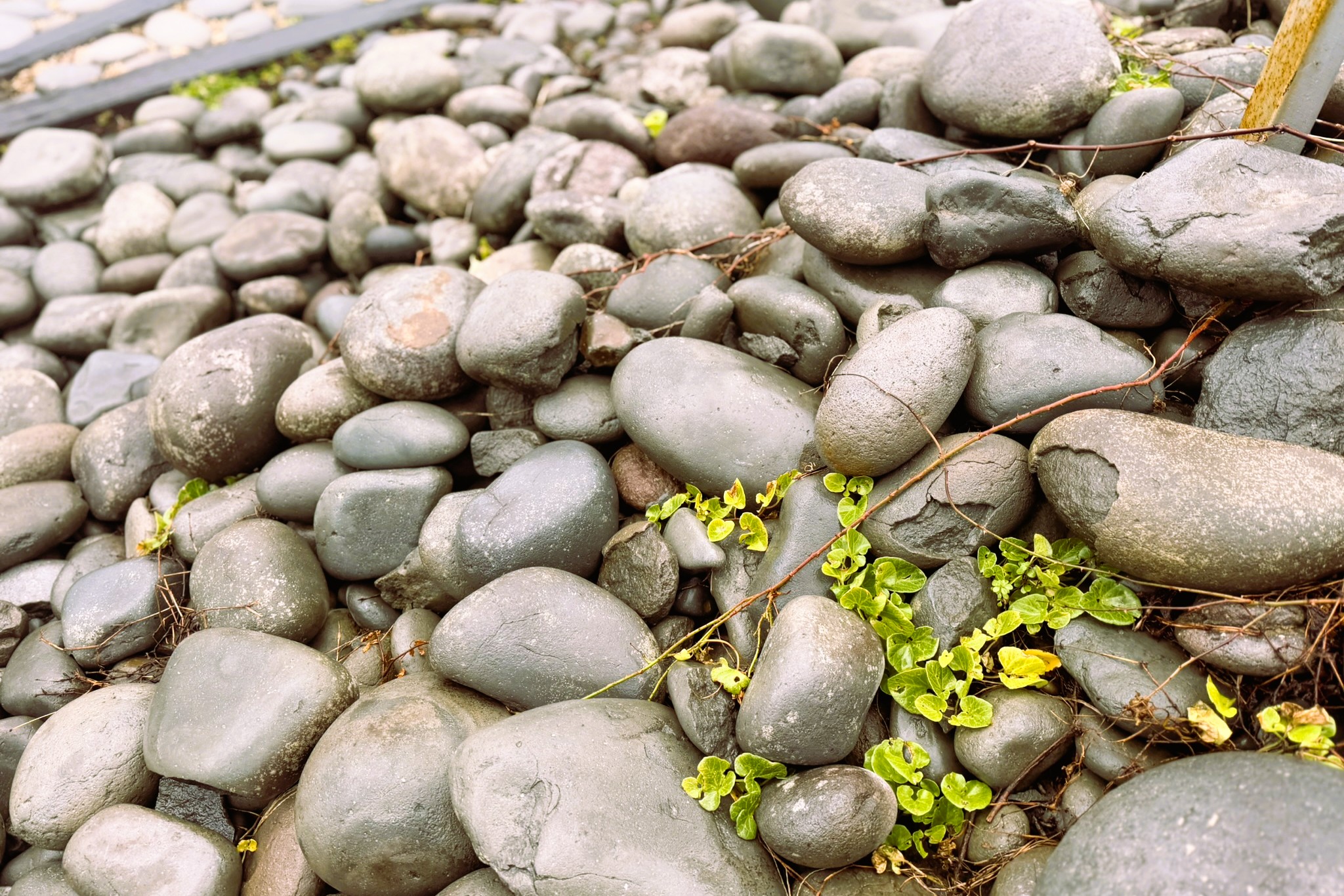
That day, the wind was really strong and the sound of the waves was loud, so I couldn’t hear the stones clinking. But what really stood out was how every stone on the beach was smooth and rounded, with no sharp edges at all.
Stopped by Waku Coffee to warm up.
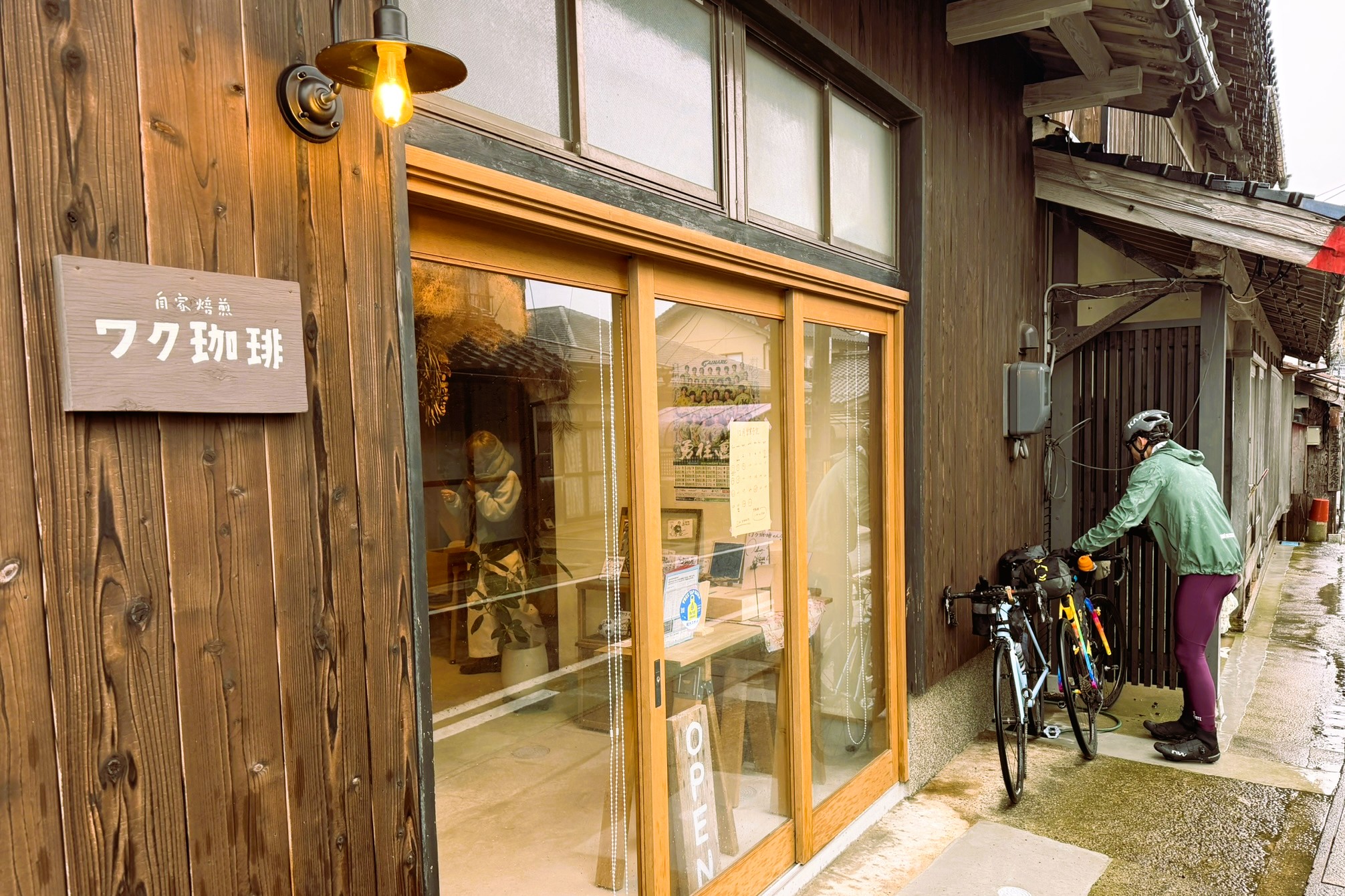
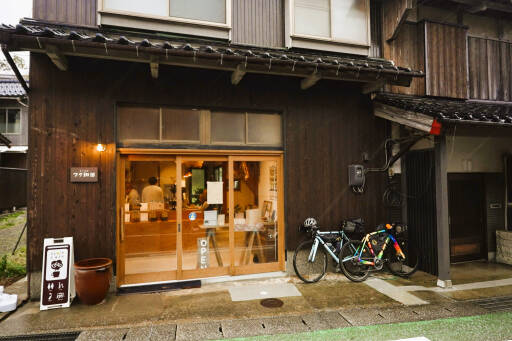
As I was riding through Kotoura, the halfway point of the route, the snow started coming down harder and harder. Then, out of nowhere, I spotted a cozy little coffee shop glowing warmly. There was no way I could pass it up, so I was drawn right in to “Waku Coffee.” Turns out, this place is also registered as a cycle cafe, so I decided to take a break here and warm up, resetting my cold body and mood.
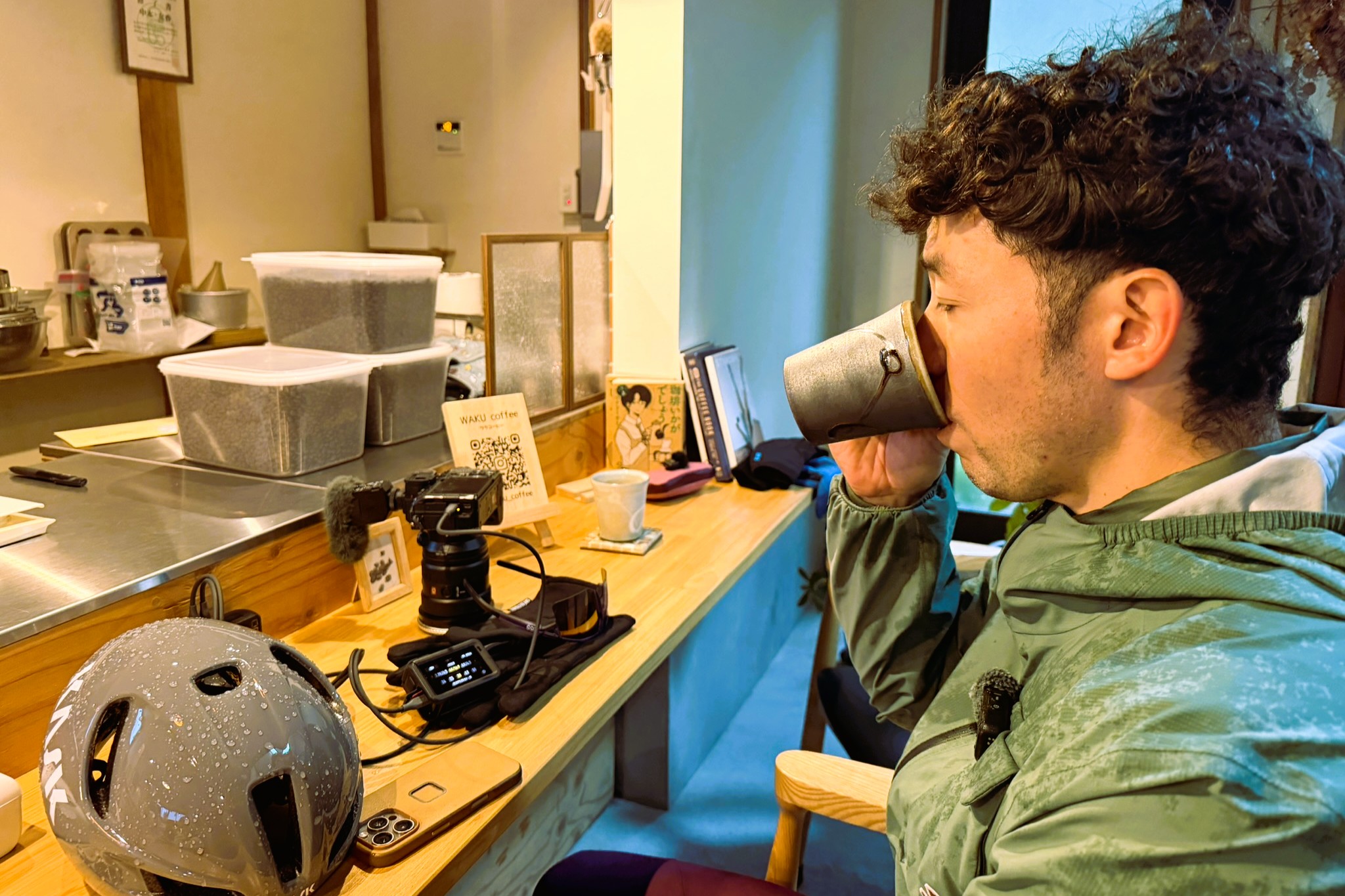
This cozy coffee shop is run by a husband and wife. The gentle aroma of coffee fills the air, creating a calm and relaxing vibe. I warmed up with a hot coffee while waiting for the snow to let up, taking a little break here.
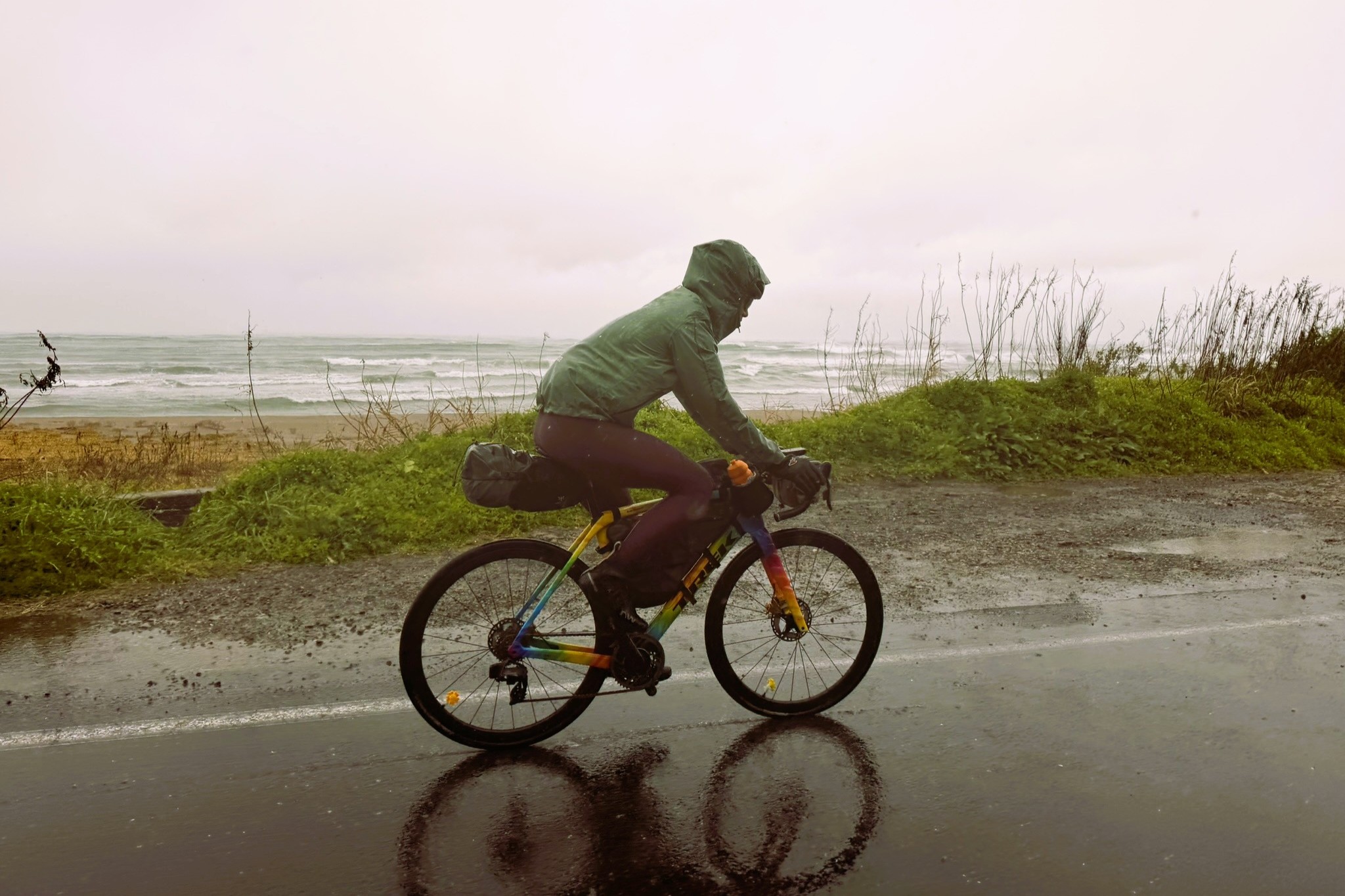
With a mix of snow, sleet, and rain, I kept heading east. Even in tough conditions, the strong west wind pushed me from behind, so I kept pedaling. Honestly, it was rough, but maybe that’s part of the charm of a bike trip?
Taking a break with a classic sweet treat: “Furoshiki Manju”
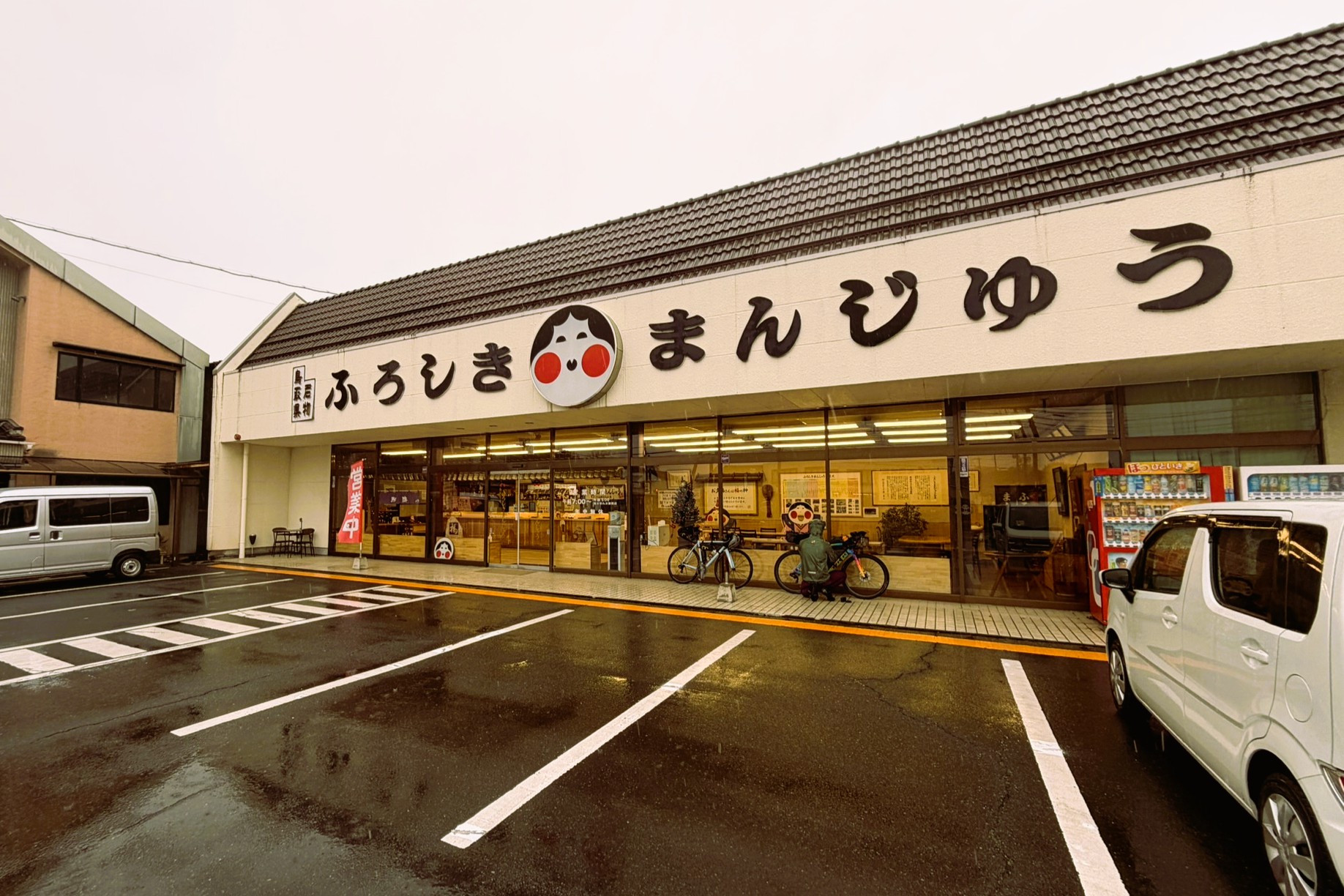
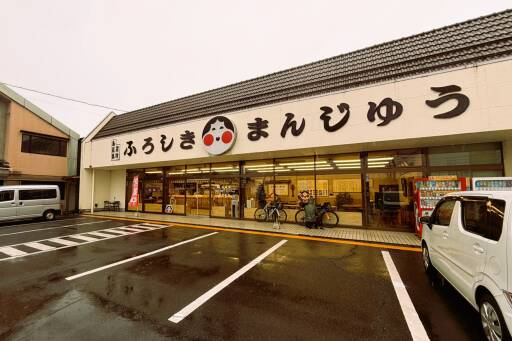
We stopped by the manju shop “Furoshiki Manju,” which Kenta had checked out beforehand and was curious about. It’s a long-established wagashi shop with over 100 years of history, famous for its handmade manju with a simple, sweet flavor that’s been loved for generations.
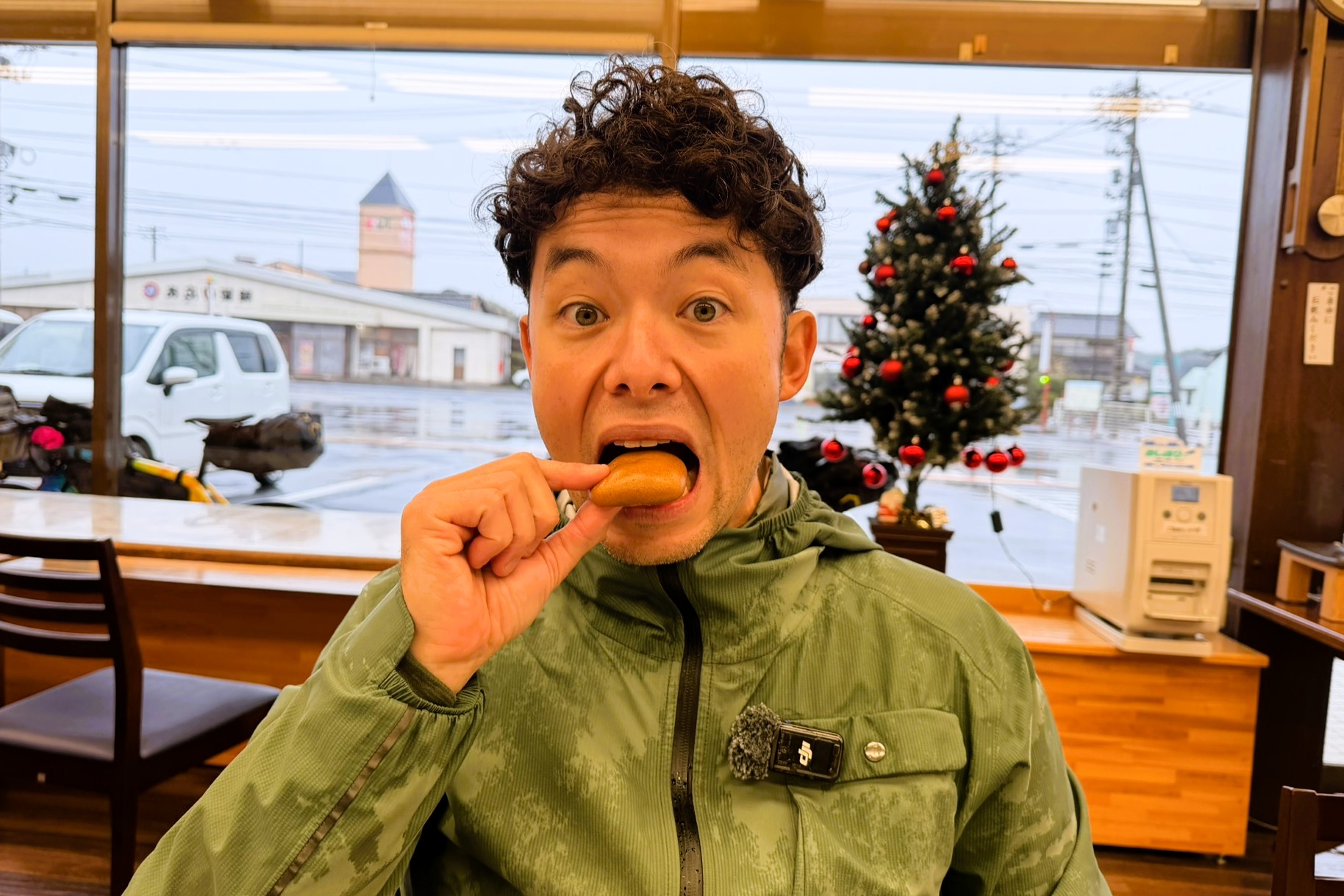
These traditional sweets are made the old-fashioned way and have a gentle sweetness. They’re not flashy in flavor, but you just can’t stop yourself from grabbing one after another. The simple, comforting sweetness spreads in your mouth, and they go perfectly with green tea. They’re a soothing treat to take a break with during a busy day.
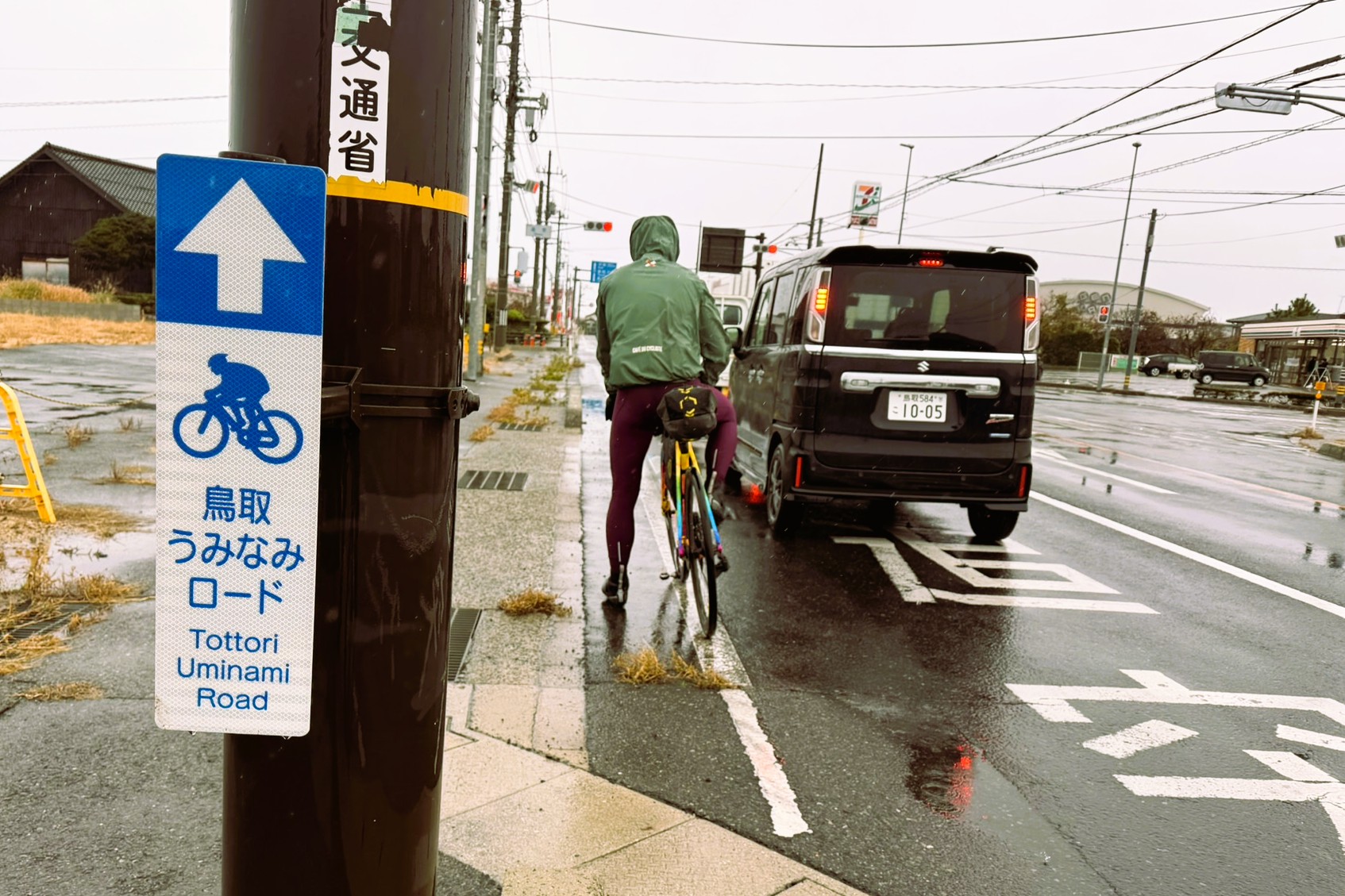
After warming up with some manju and green tea, we headed over to Kitaeicho, known as the holy land of Detective Conan.
The “Conan Bridge,” a symbol of the city of the great detective.
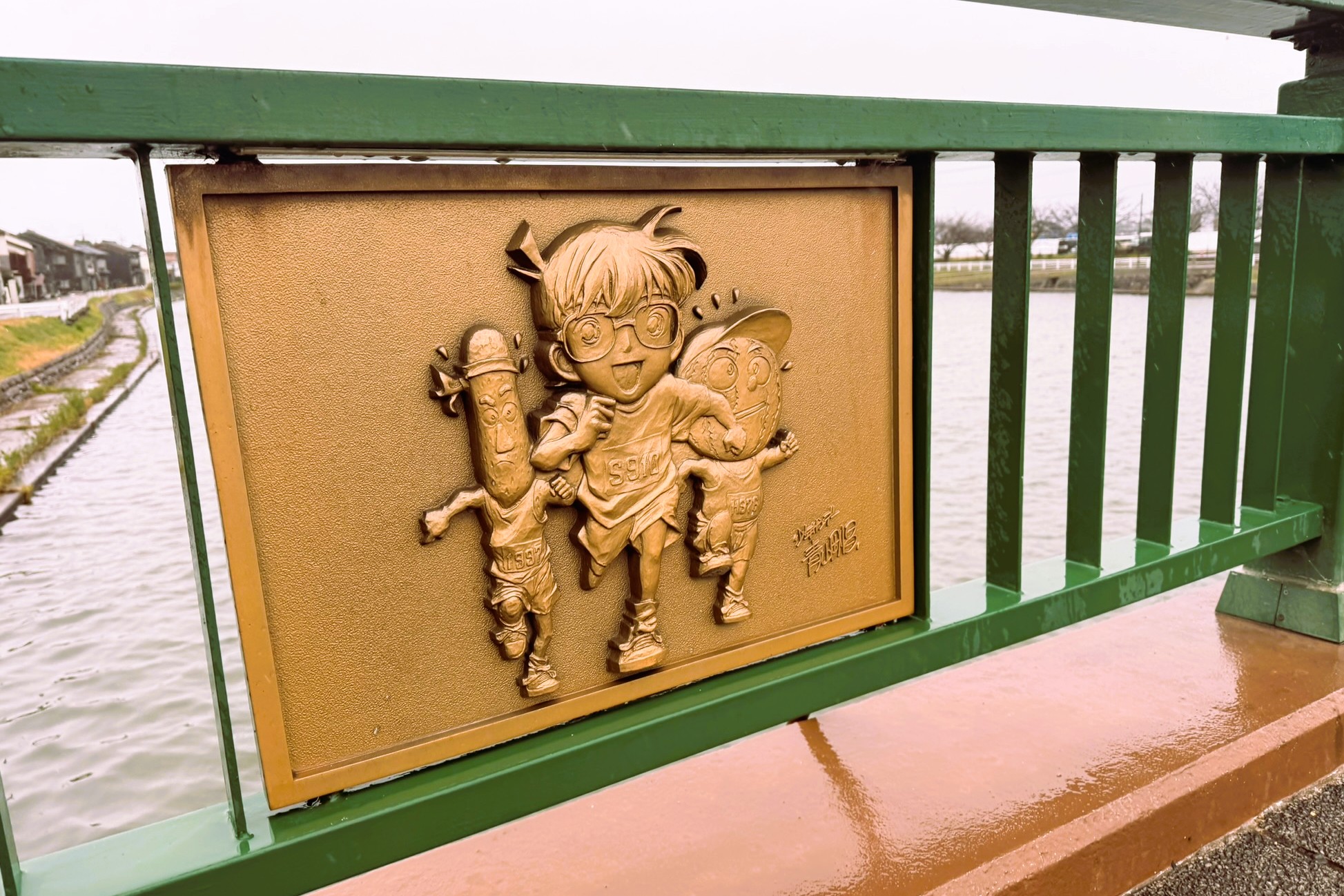
We arrived at the “Conan Ohashi” bridge, right in the heart of Hokuei Town. The bridge’s railings are lined with plates inspired by the works of Gosho Aoyama, the creator of Detective Conan—it’s a must-see spot for any fan!
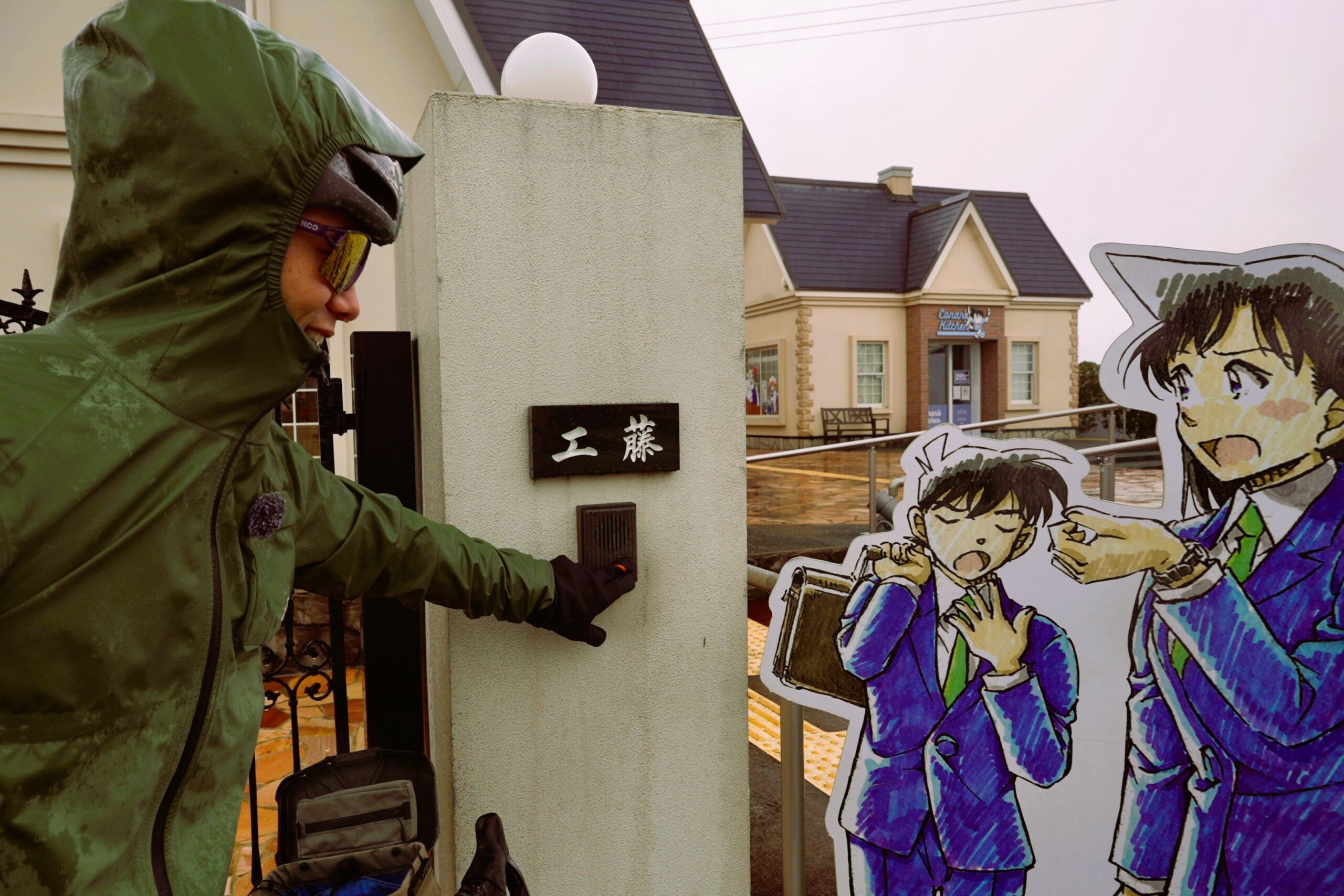
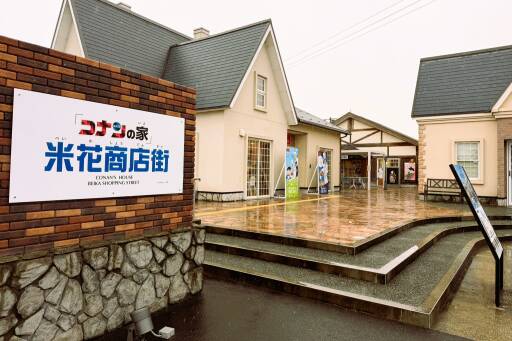
Crossing the bridge, you’ll arrive at “Conan’s House Beika Shopping Street.” It’s a spot that really brings the world of Detective Conan to life, with lots of exhibits and exclusive merch. You can even press the doorbell at the main character Shinichi Kudo’s house and have some fun with it!
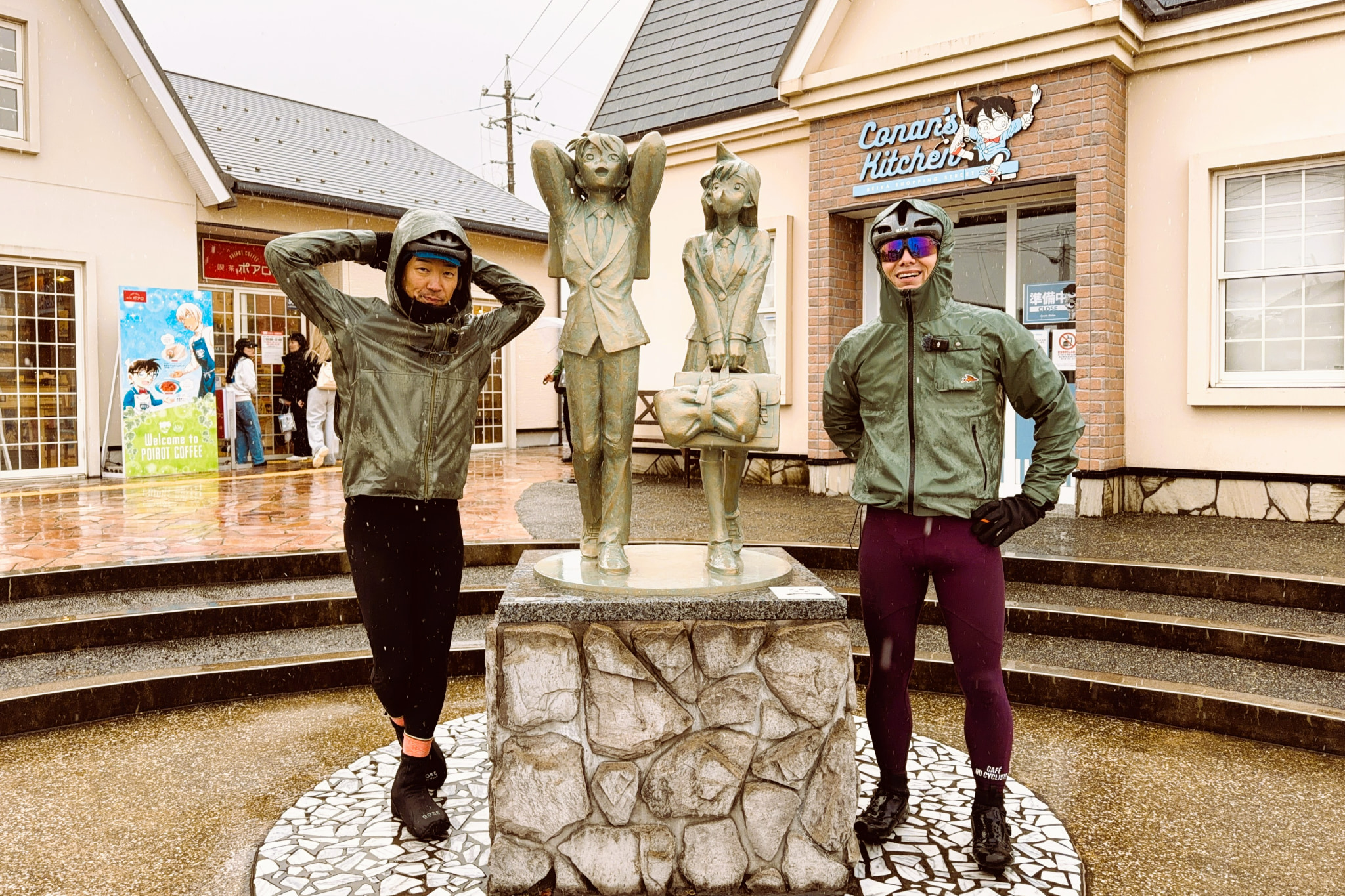
I really wanted to explore the whole town and take pictures of the statues and stuff, but the weather wasn’t on my side. So this time, I just snapped a quick photo with the sculptures, switched gears, and hit the road toward my final stop, Yurihama Town.
After running 80 km, I finally made it to Yurihama Town.
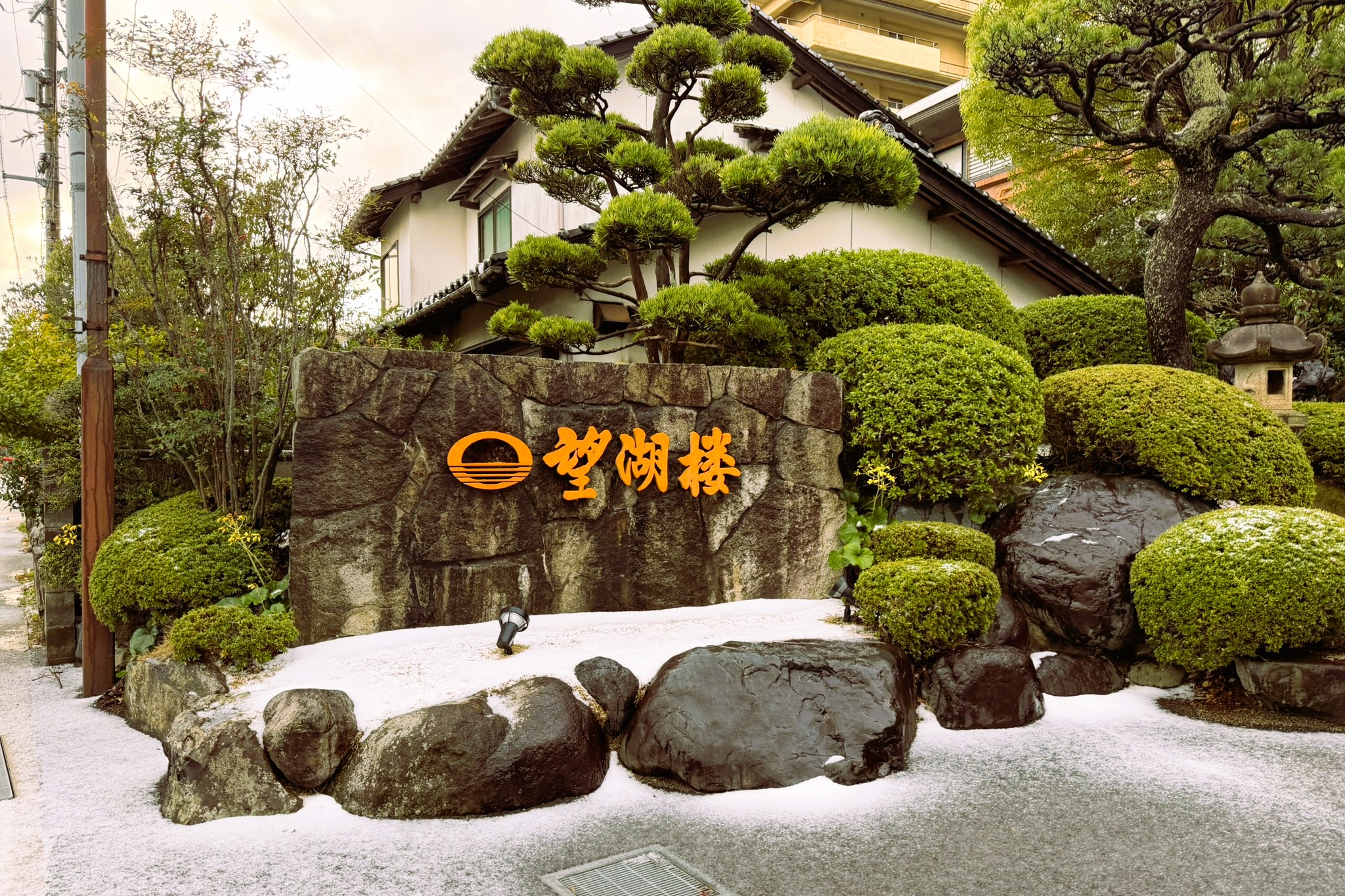
We’ve reached today’s goal, the hot spring inn “Boukoro” in Yurihama Town. It’s also registered as a “cyclist-friendly inn.” The “Hawai Onsen” in Yurihama Town got its name because it sits by Togo Lake, with Tomari to the west and Hawai to the east. Despite the tropical-sounding name, it’s actually a peaceful hot spring spot right by the lake.
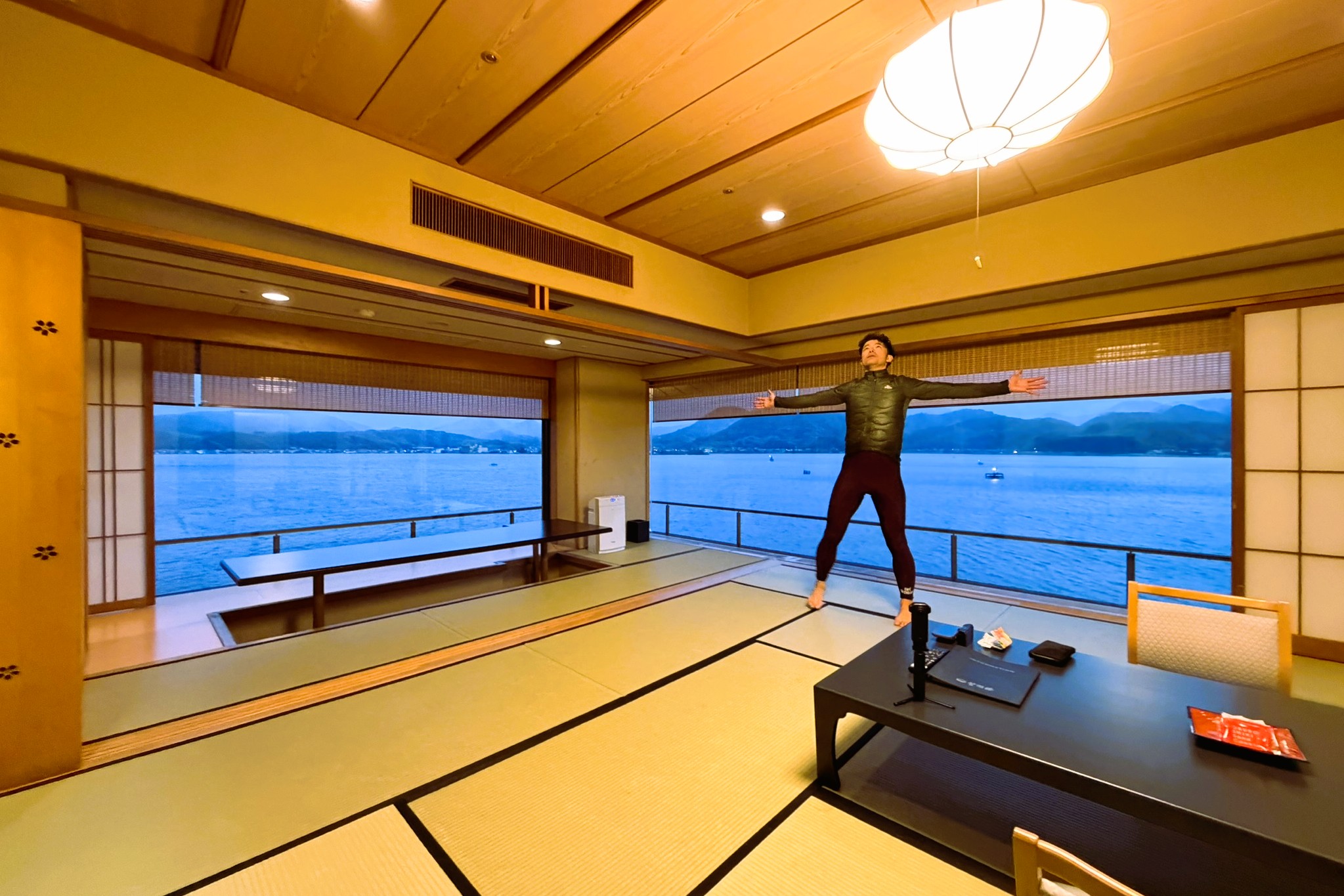
This time, I booked a corner room. It’s such a luxurious space where I get to have the whole view of Togo Lake spread out across the windows all to myself. The ride was tough and challenging, but this view and the cozy vibe totally blew away all the built-up fatigue.
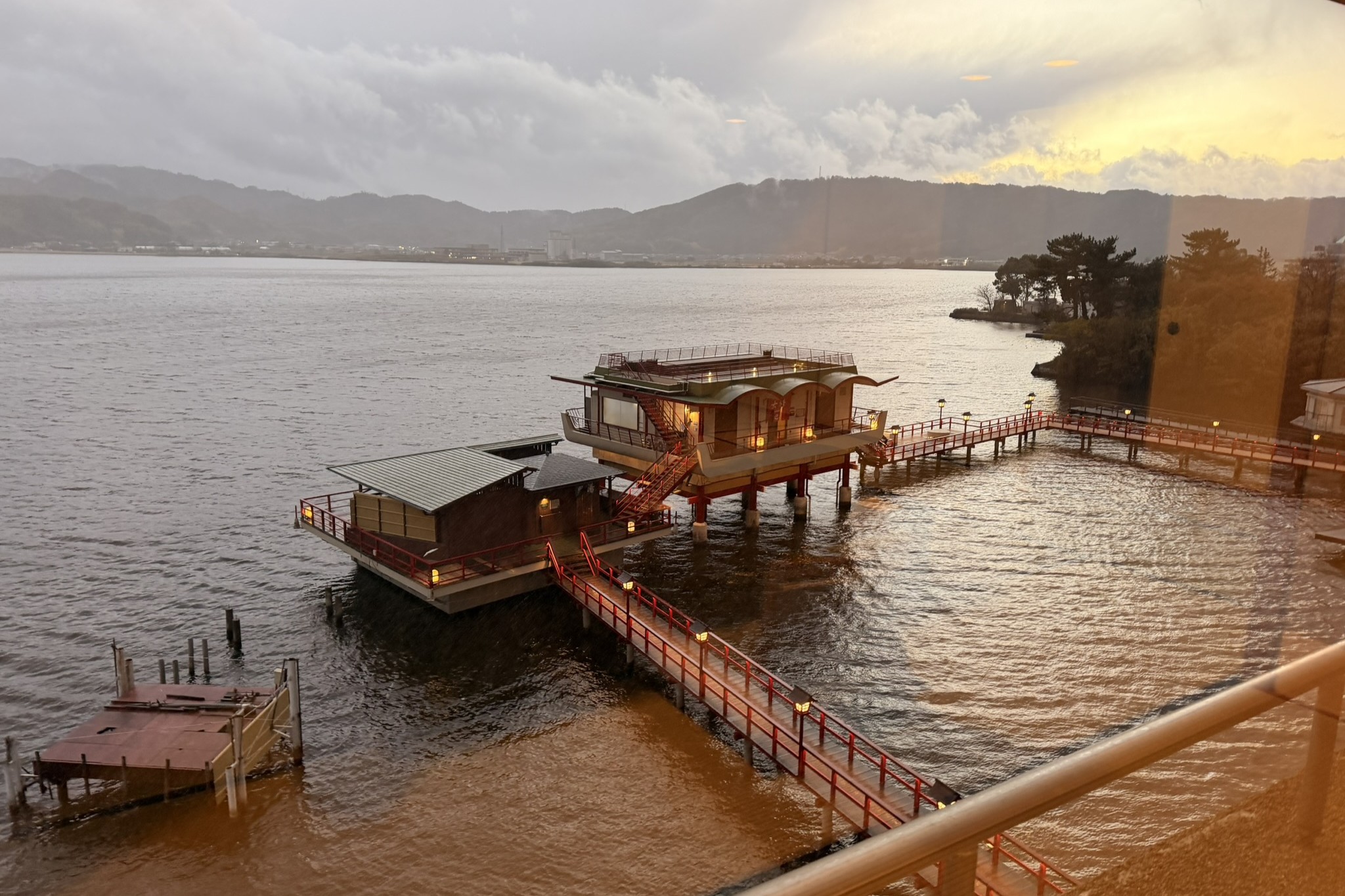
From the room’s window, you can look down at the famous open-air bath at Boro, which is actually built right over the lake. It feels like the water in the tub blends seamlessly with the lake’s surface, creating a truly unique view. It was even featured in volume 69 of Detective Conan, making it a must-visit spot for fans.
Crossing the snowy Sea of Japan and wrapping up the first day with hot springs and crab.
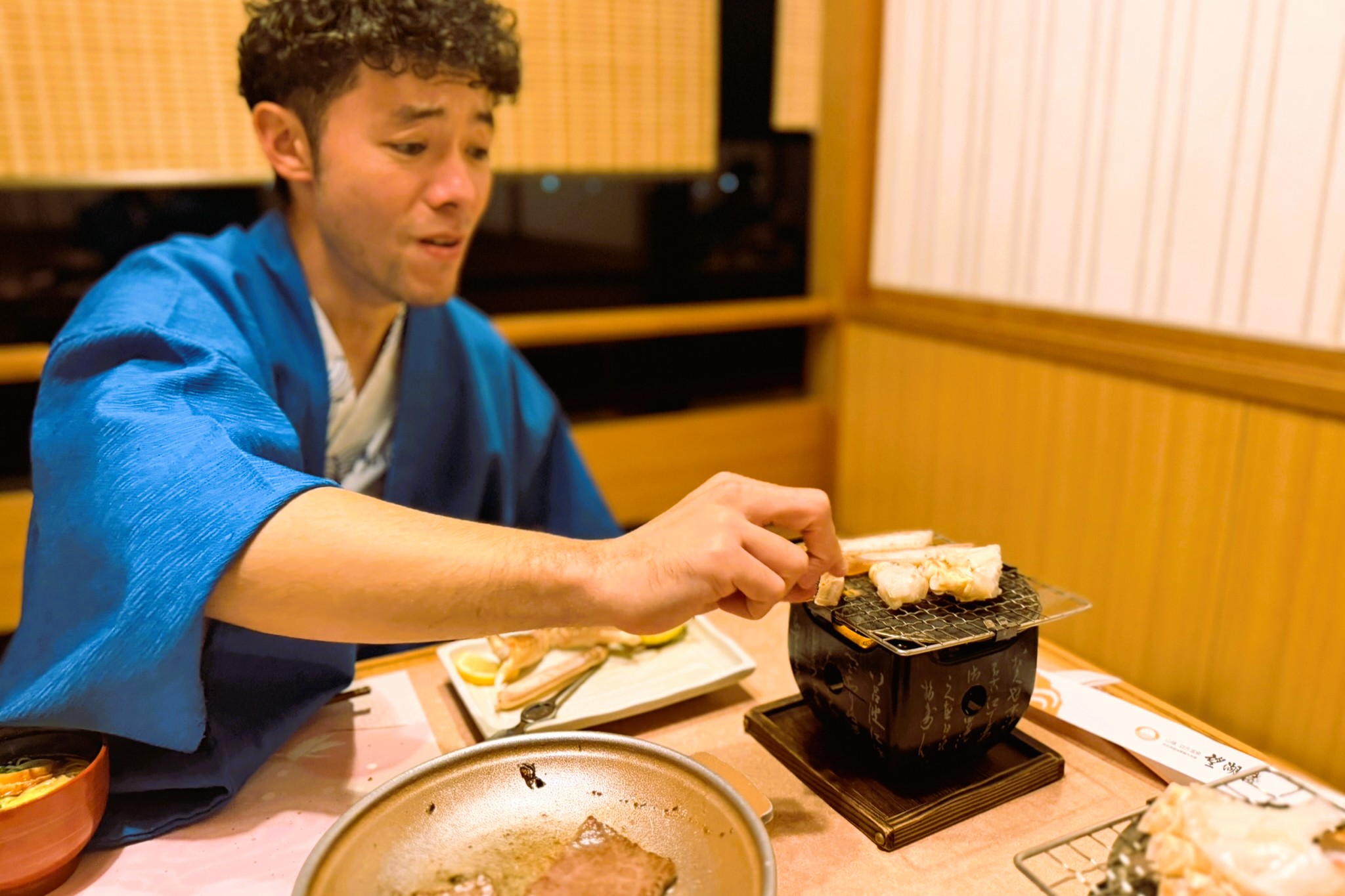
That day, I covered about half of the Tottori Uminami Road—around 70 km. The weather was pretty tough, with a mix of snow and sleet, but that just meant I got to experience the Sea of Japan in all its moody glory. It’s funny how even the rough parts turn into great memories on a bike trip. After finishing the ride, I warmed up my freezing body in an open-air hot spring and enjoyed some grilled crab caught from the winter Sea of Japan. The next day, I took the train from Kurayoshi Station—the closest express stop to my hotel—to Yonago Station, resetting both my mind and body before starting the journey on the Shimane side.
©Mizuki Production
© Gosho Aoyama / Shogakukan
Travel Itinerary
| 15:30 | Haneda Airport *Moved the day before |
|---|---|
| 17:00 | Just landed at Yonago Kitaro Airport! |
| 18:00 | Driving myself from the airport to Sakai Minato. |
| 18:30 | Stayed the night before at “Port Inn Sakai Minato” in Sakaiminato. |
| 07:30 | Starting from Sakaiminato Station — Day 1 of the ride |
| 08:15 | Breakfast at Sankomaru |
| 11:30 | Lunch at Mikuri |
| 13:30 | Checked out Nariishi no Hama Beach. |
| 14:00 | Taking a break at Waku Coffee. |
| 14:30 | Stopped by to grab some furoshiki manju. |
| 15:30 | Checking out Conan Street |
| 17:00 | Just arrived at Bokoro in Yurihama Town! |