2 Days in Ube, Yamaguchi

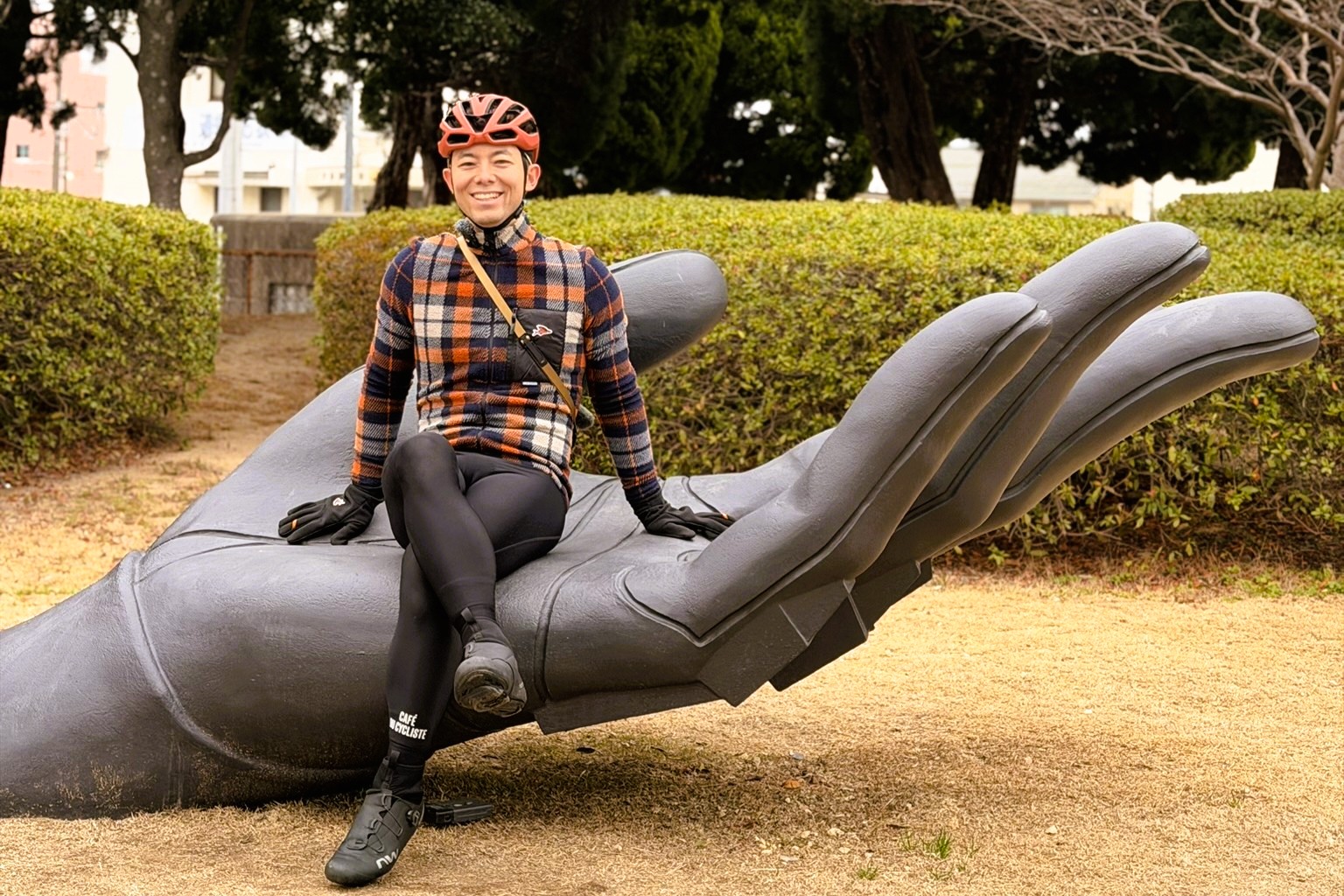
I’d heard that Yamaguchi is really into cycling sports, and it’s been on my radar for a while. Honestly, I don’t know the area well—Shimonoseki is about the only place that comes to mind. But just thinking about all the unknown roads and scenery waiting to be discovered gets me excited. It’s that sense of the unknown that makes me want to explore it on my own two wheels. This time, I’m starting from Shin-Yamaguchi Station and heading out on the Setouchi Adventure Rindo.
A journey connecting the town of Ube, where the world of Evangelion all over town comes alive, with peaceful roads overlooking the Seto Inland Sea. Here’s a report on that day’s adventure.
This article is brought to you by the Chugoku Region Governors’ Association Cycling Tourism Promotion Committee.
Get ready the night before and kick off your Yamaguchi ride!
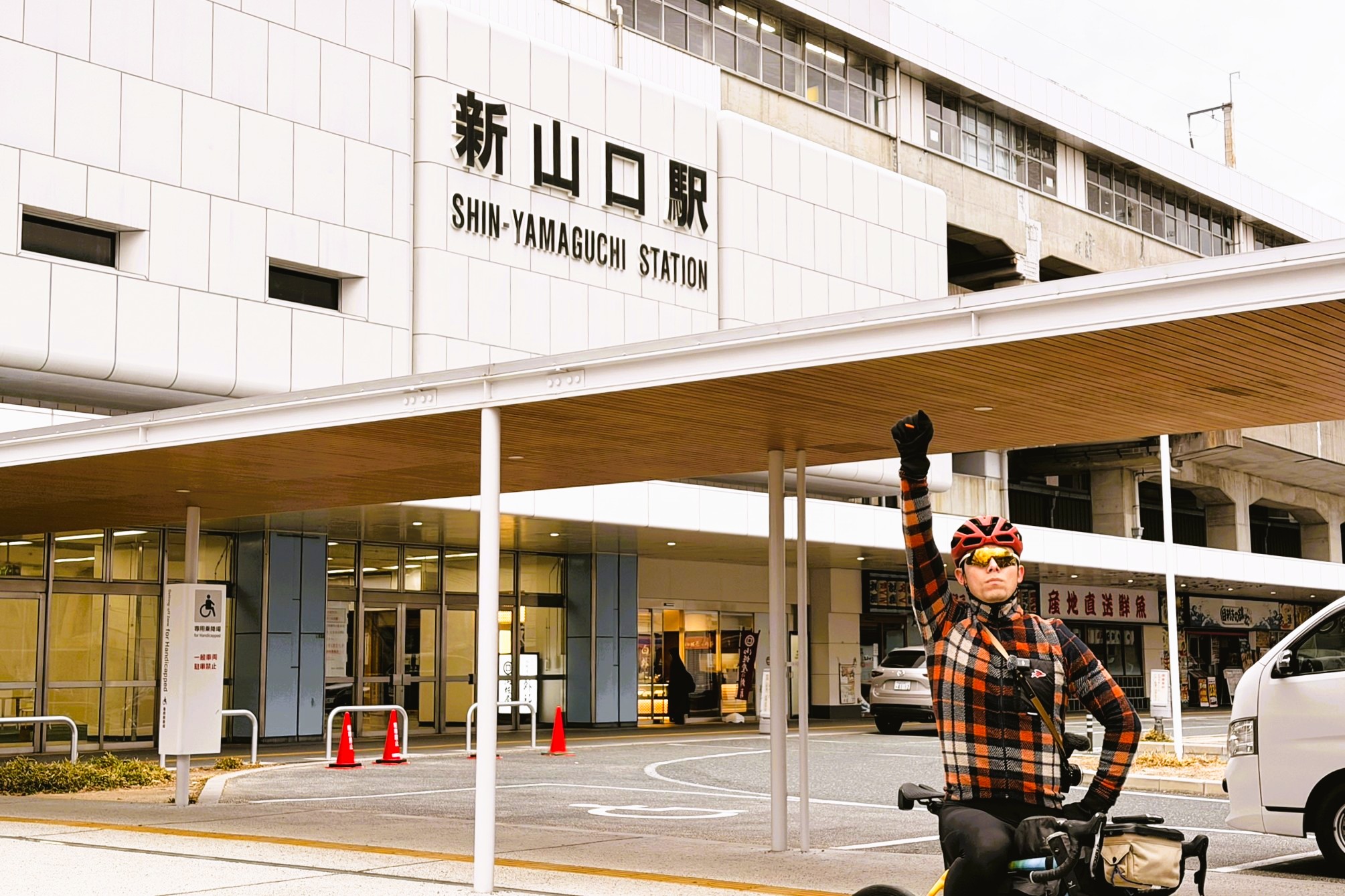
The day before, I took the Shinkansen from Tokyo to Shin-Yamaguchi Station. The ride was a bit long—about 4 and a half hours—but considering the hassle of getting to and through the airport, the Shinkansen was way more laid-back. In the end, it turned out to be a chill choice that gave me plenty of time, including travel.
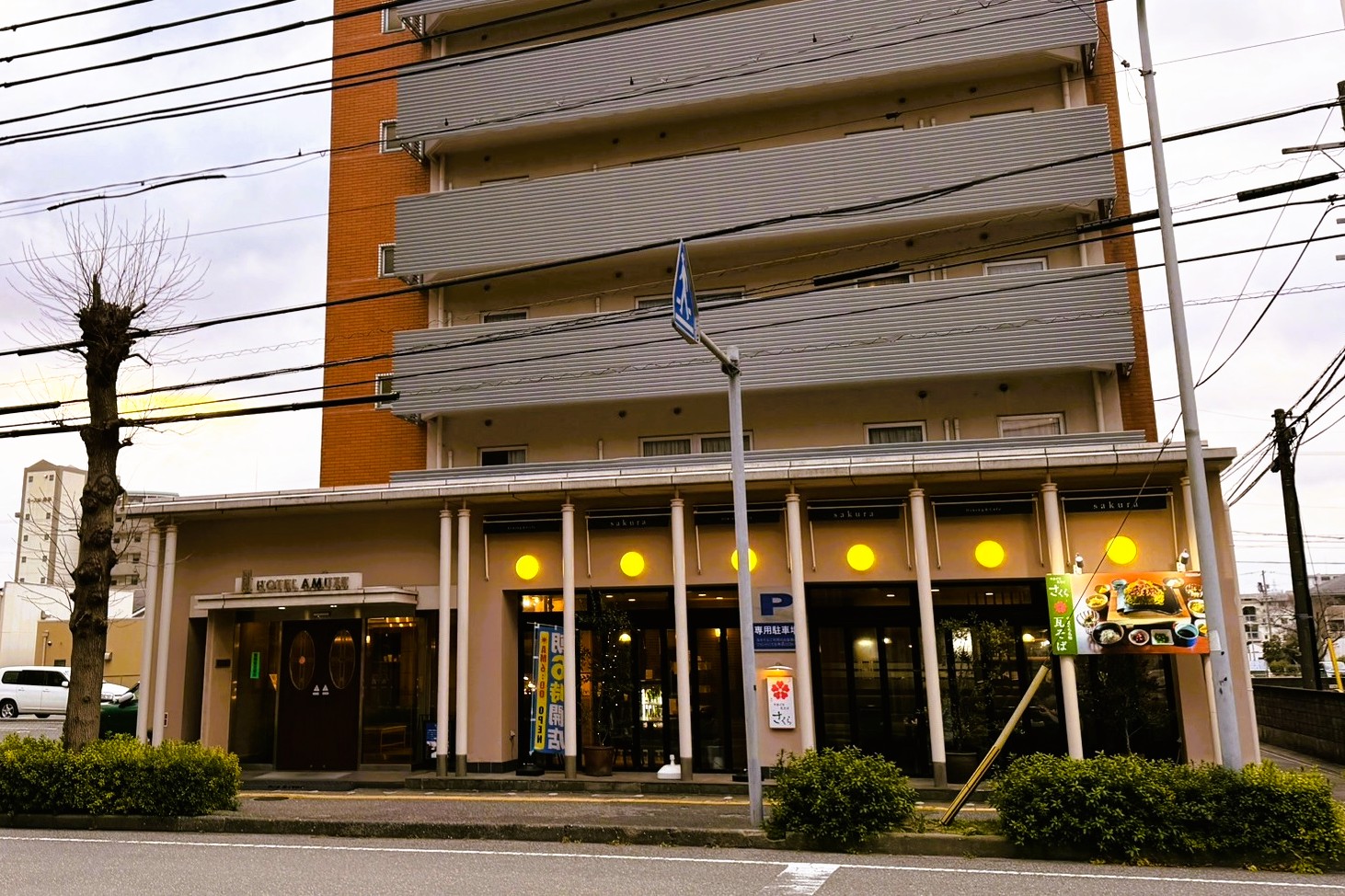
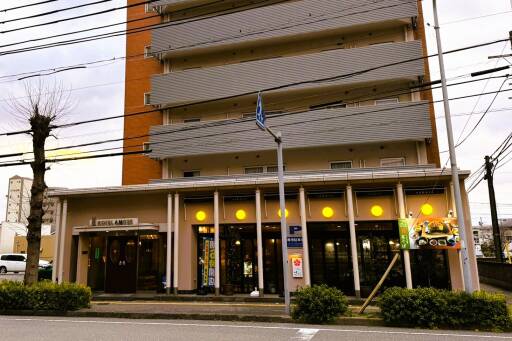
Since I stayed the night before at Hotel Amse Shin-Yamaguchi right by Shin-Yamaguchi Station, they let me store my extra stuff even after checkout. That way, I could hit the ride feeling totally light and free. Having or not having extra gear makes a huge difference in comfort, so these little prep steps really matter more than you’d think.
Tweaking the Setouchi Adventure Rindo route
This time, we’re riding a route based on the “Setouchi Adventure Rindo,” with a few tweaks—about 75 km in total.
Starting from Shin-Yamaguchi Station, head south toward Ube City, stopping by a tea garden along the way, riding counterclockwise. Then, follow the Seto Inland Sea northward, avoiding main roads as much as possible, and loop back to Shin-Yamaguchi Station.
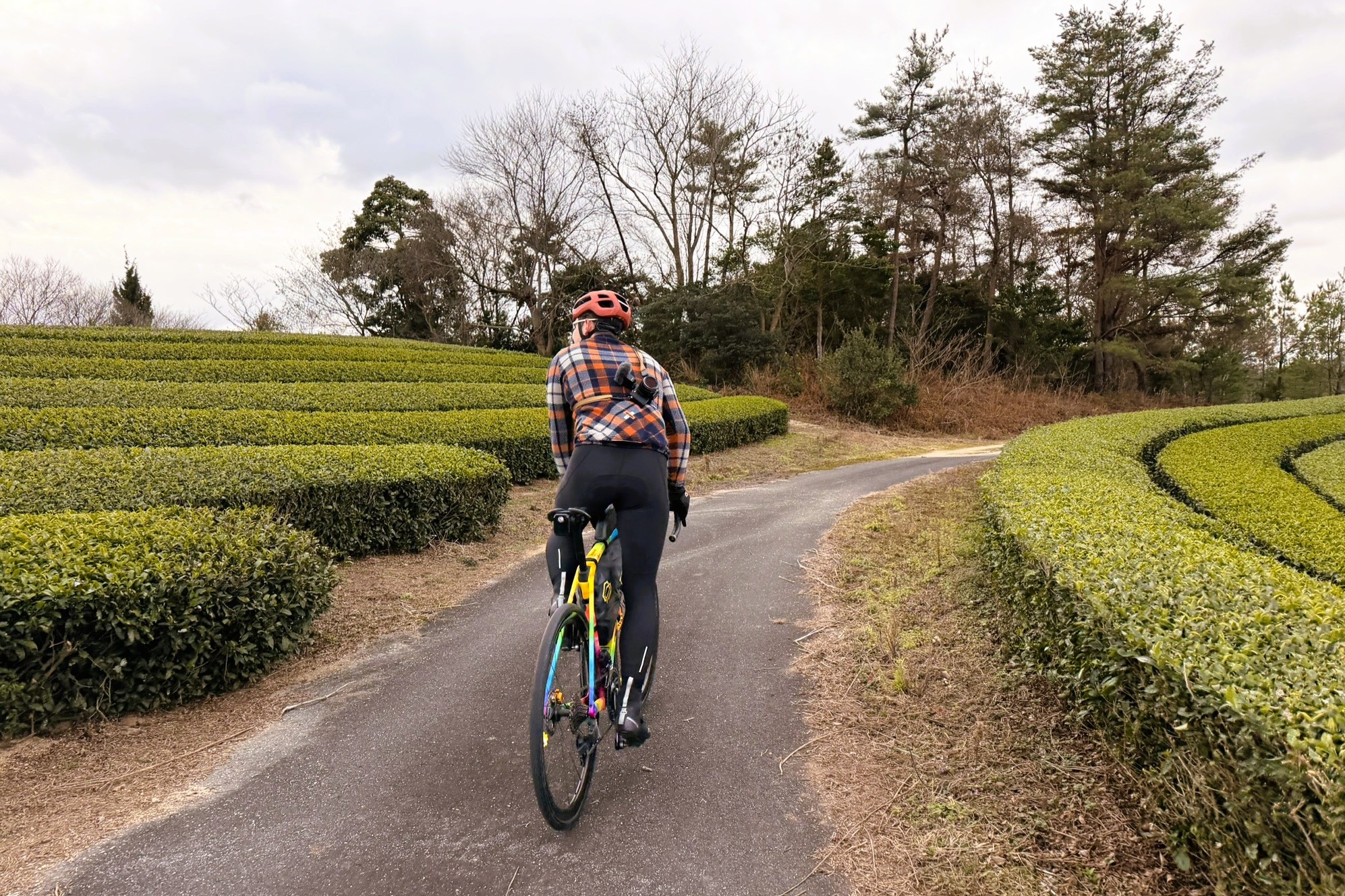
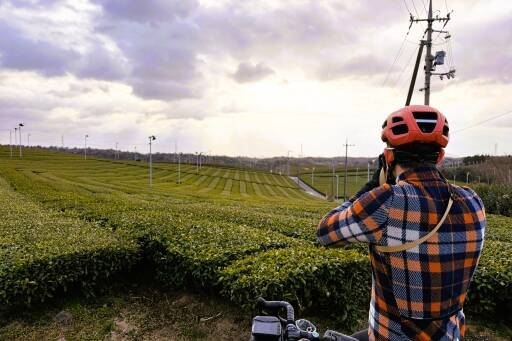
After riding about 10 kilometers, the first stop was Fujigouchi Tea Garden, where you can experience Yamaguchi’s nature and tea culture. The entrance was a bit tricky to find, and while we were wandering around, suddenly the view opened up. Right in front of us stretched a vast tea plantation as far as the eye could see.
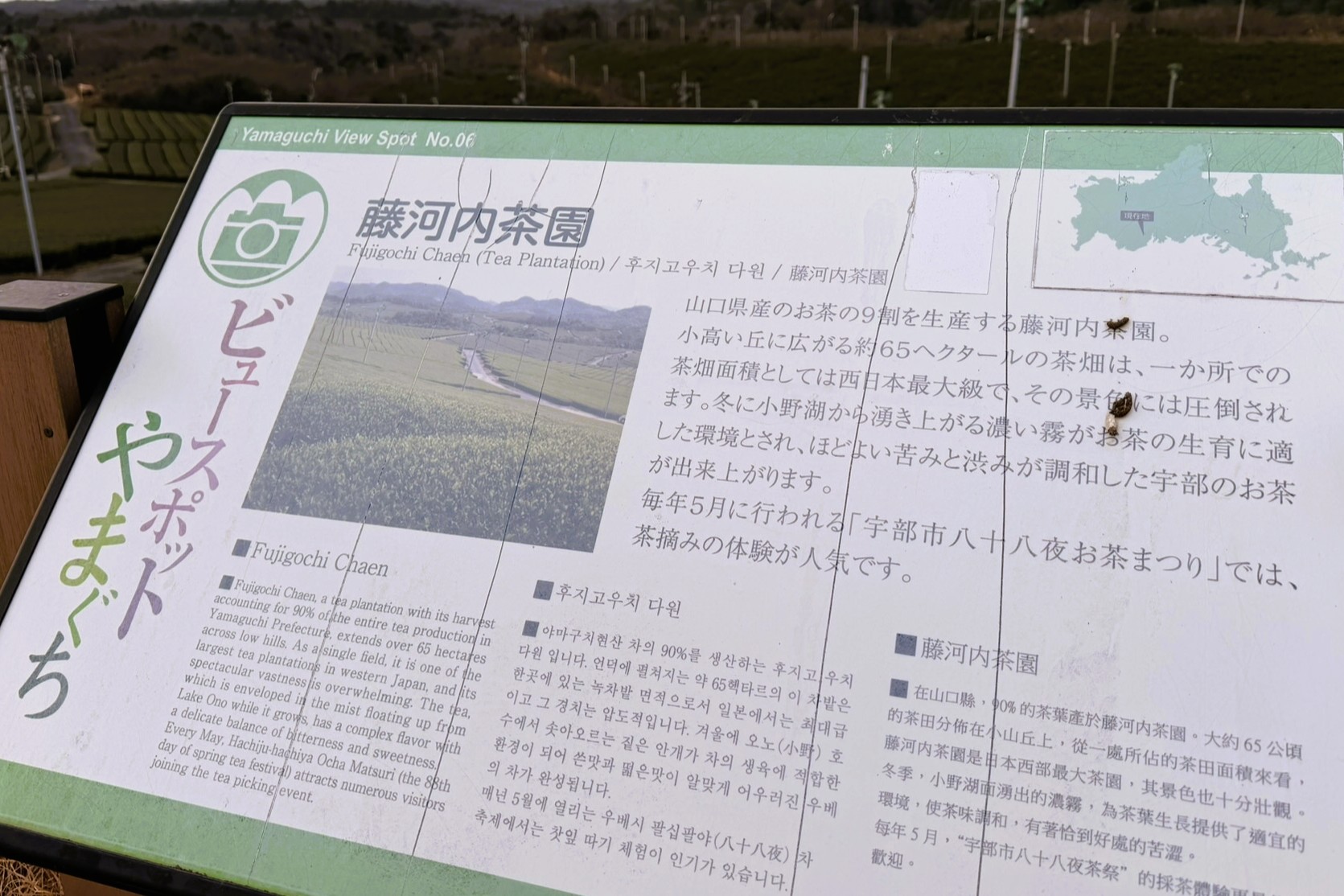
Fujigouchi Tea Garden boasts one of the largest tea plantation areas in western Japan—about the size of eight Tokyo Domes! Nestled in the mountains, it benefits from temperature swings, mist, and pure water, creating the perfect environment to grow tender, flavorful tea leaves.
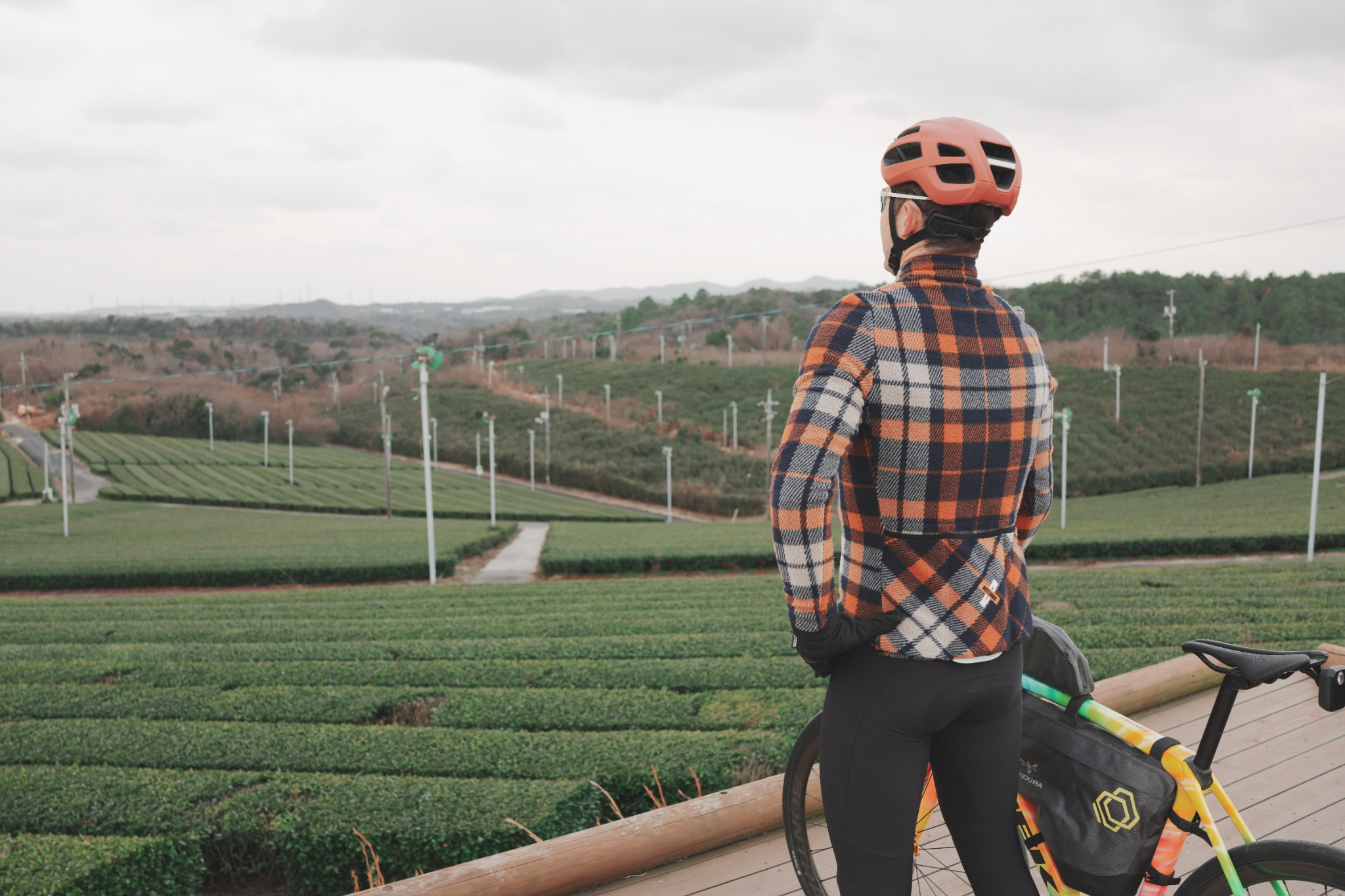
From the lookout deck up on the hill, you get a full 360-degree view of the tea fields stretching out all around. There’s even a smartphone stand for snapping pics with the tea fields as your backdrop—a nice little bonus. Just a heads-up, there aren’t any vending machines nearby, so if you’re visiting during the hot summer months, be sure to bring some drinks with you.
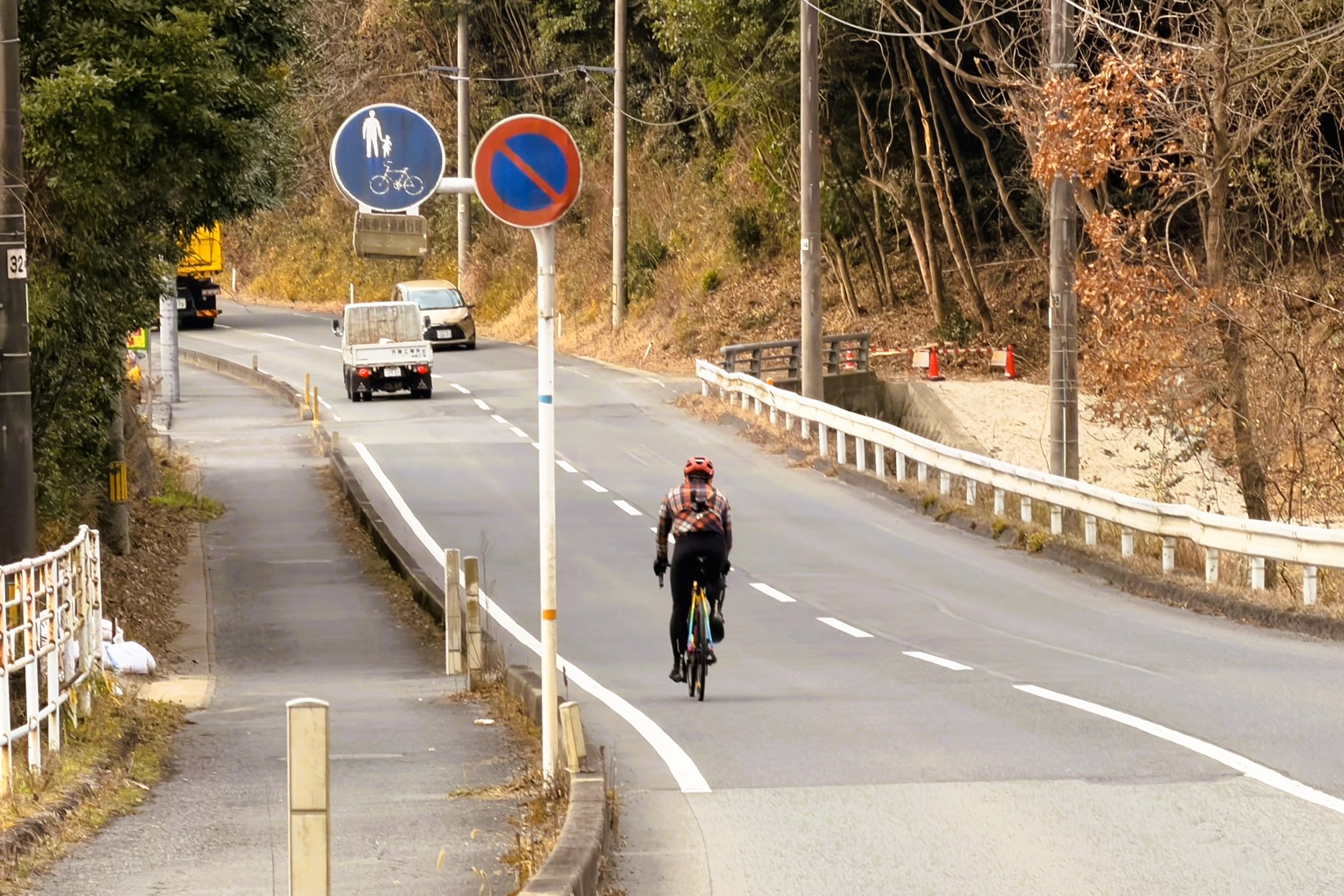
Taking in the fresh morning air among the tea fields, we headed to our next cafe—フタマタセコーヒーWe were supposed to head there… but surprise, it was unexpectedly closed. So we quickly changed plans and decided to power through all at once, riding 20 kilometers straight into Ube city.
Ube Shinkawa Station and the “Evangelion all over town”
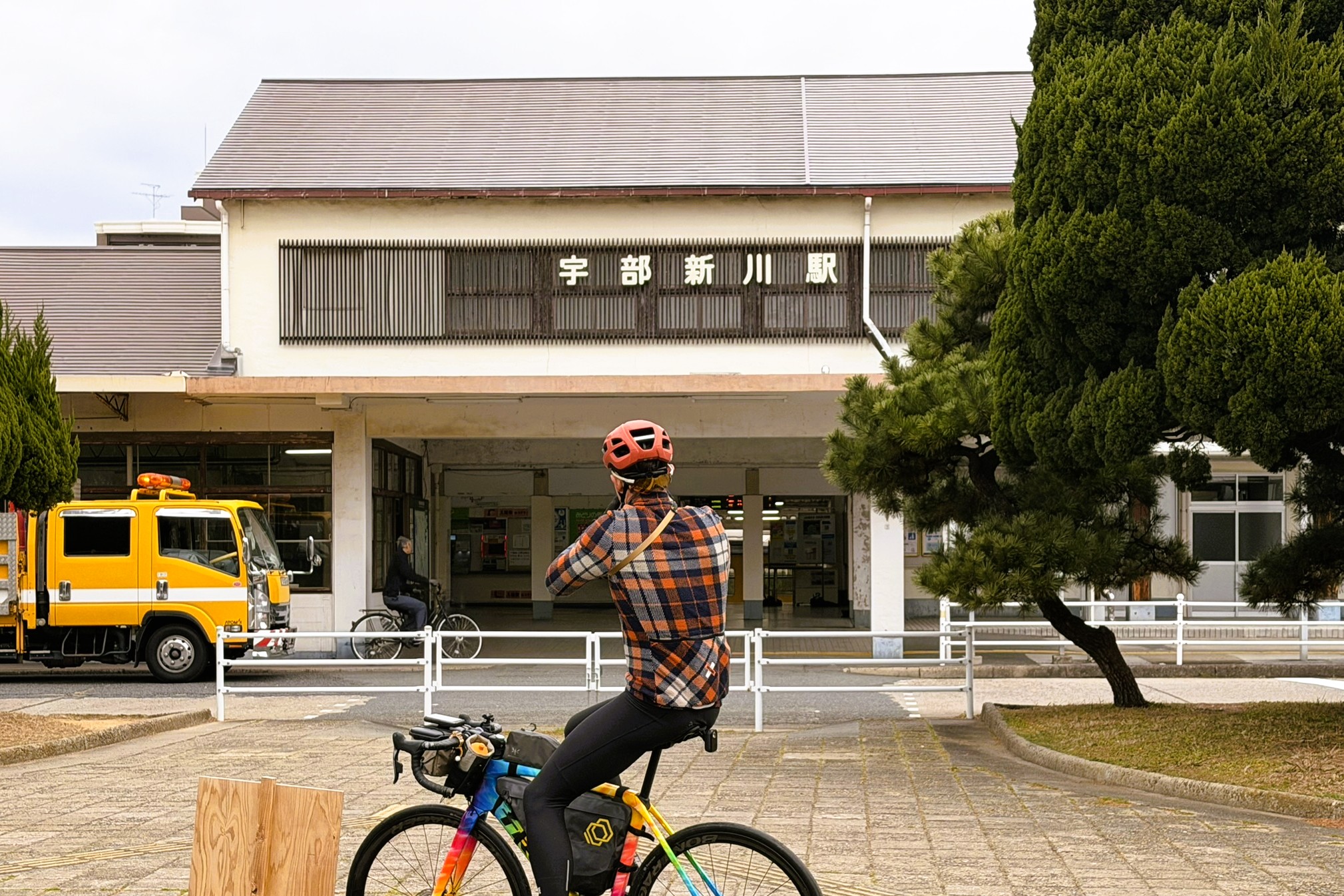
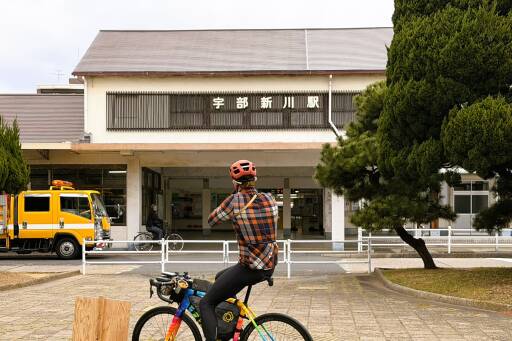
We’ve just arrived at Ube Shinkawa Station, the heart of Ube City. Fun fact: Ube is known as the hometown of Hideaki Anno, the director of the anime “Evangelion.”
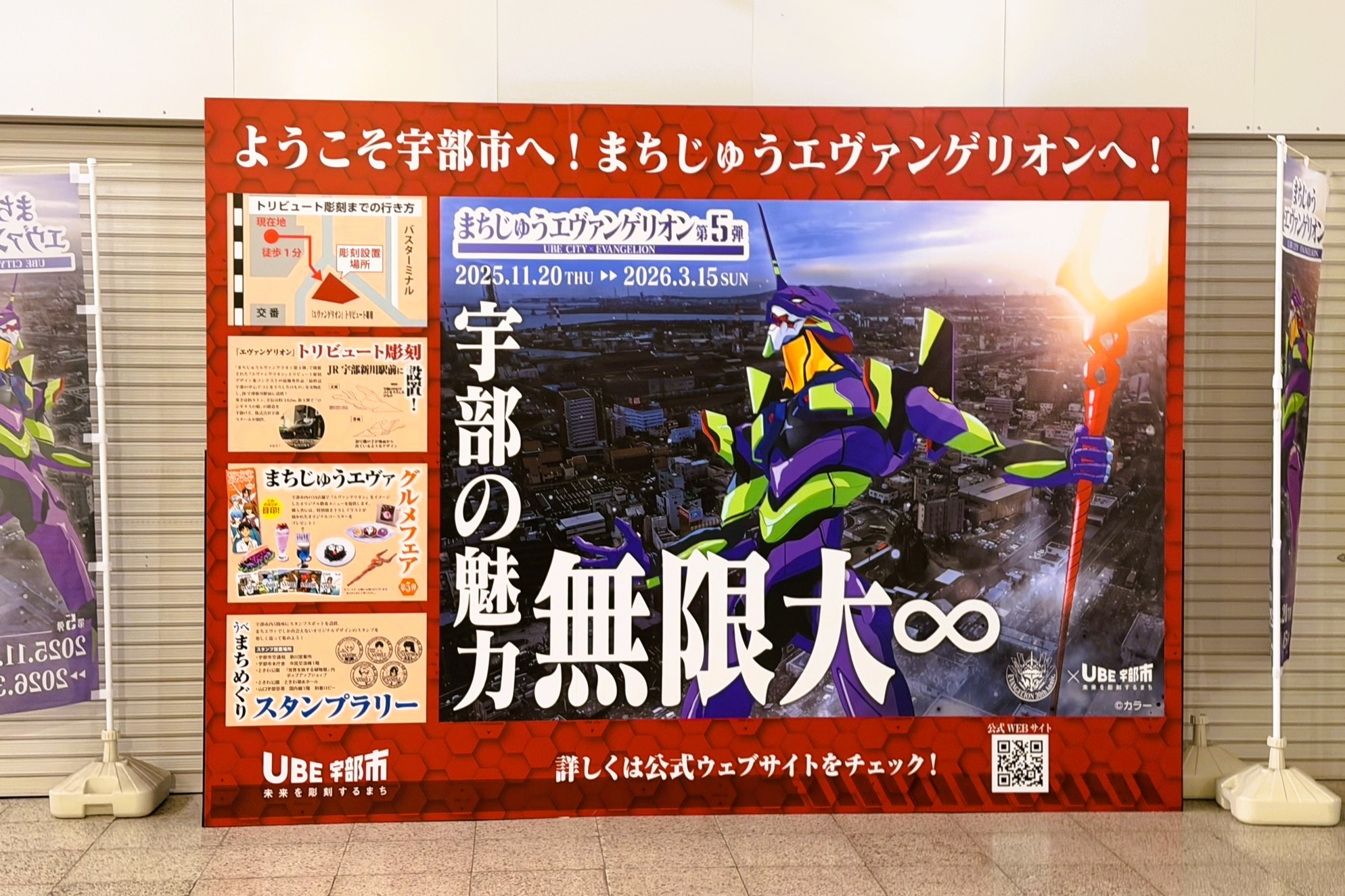

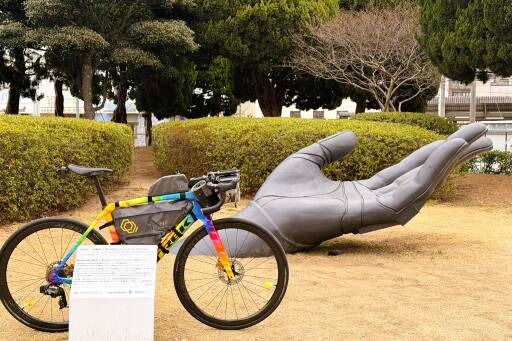
Right in front of Ube Shinkawa Station, there’s a sculpture called “The Beast Sitting Down at the Center of the Universe,” inspired by the left hand of Evangelion Unit-01. It was created by Ube Steel, a local ironworks company in Ube. The design makes it look like Unit-01’s left hand is emerging straight out of the ground, and it’s got such a presence that you can’t help but stop and stare.
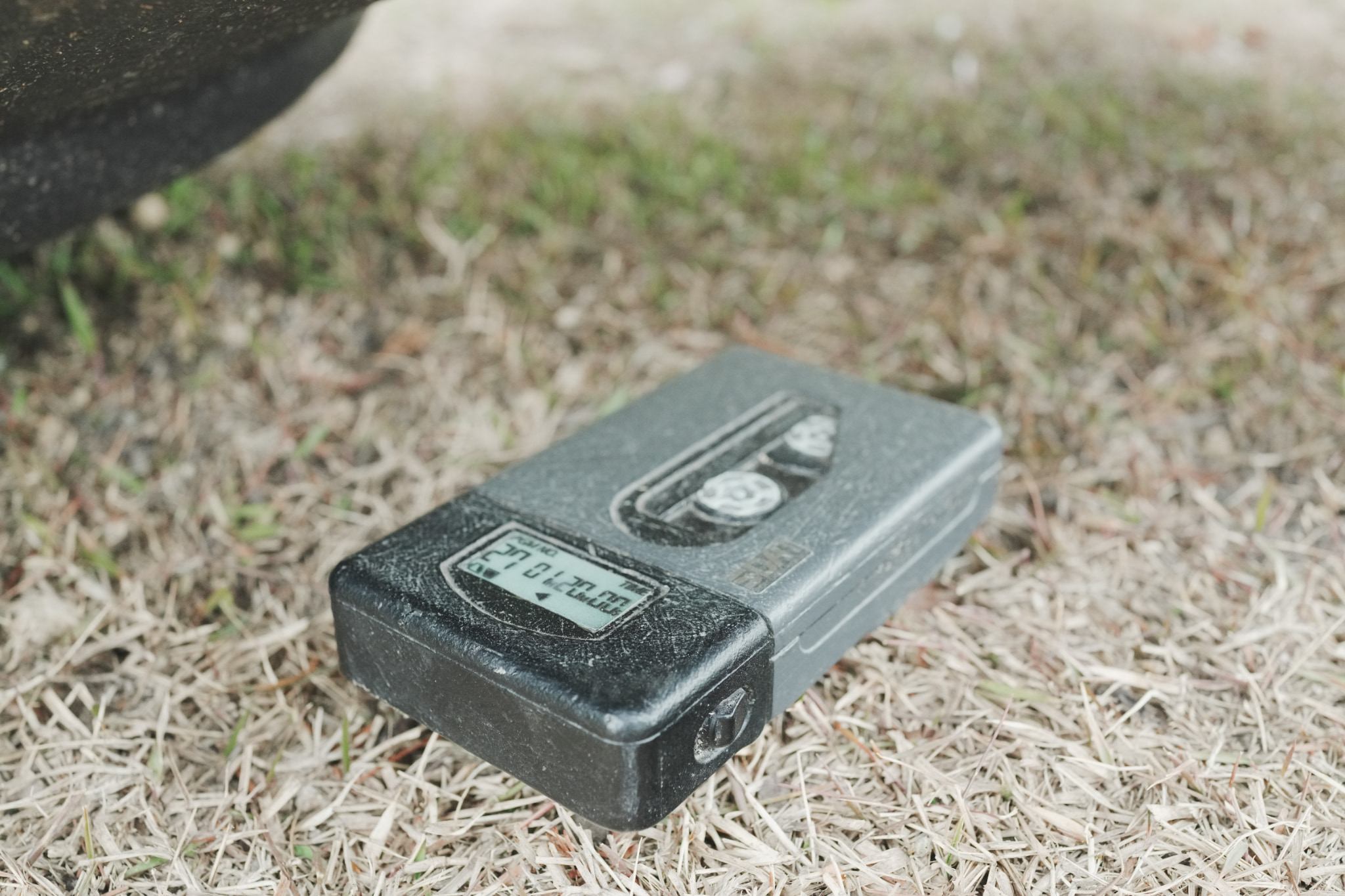
Right under that hand, there’s casually a square object placed. If you look closely, it’s the cassette tape player that the main character, Ikari Shinji, loved to use. The attention to detail shows so much love for the series, and fans can’t help but stop and notice it.
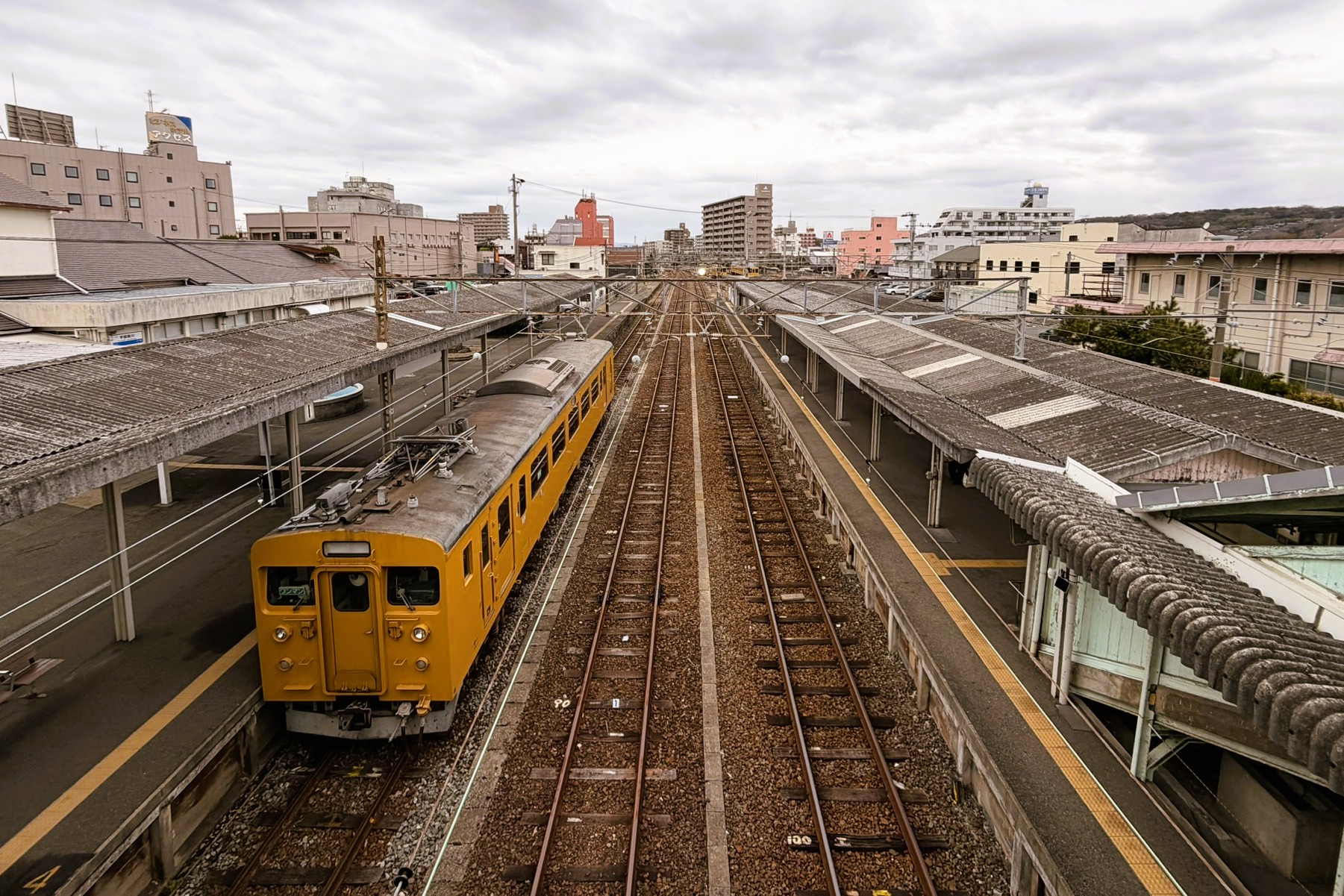
Since we were at it, we decided to check out the platform inside Ube Shinkawa Station. This station is famous for appearing in the final scene of the movie “Shin Evangelion Theatrical Edition.”
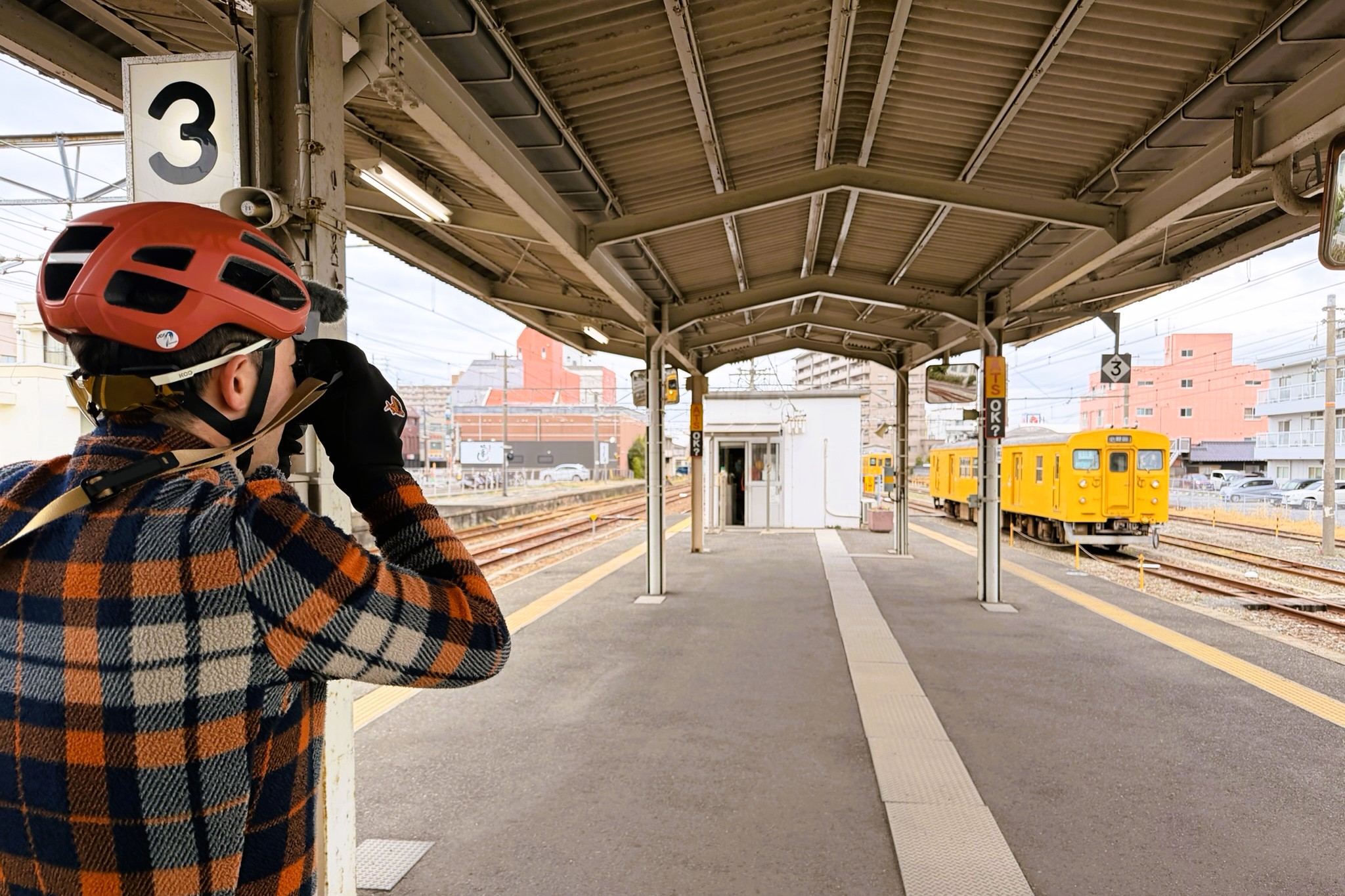
Platform 3 at Ube Shinkawa Station is famous for that iconic final scene. You’d think we’d be all like, “Whoa, that’s awesome!” But honestly, neither Kenta nor I (Tsucchi) had seen the movie yet, so we couldn’t really feel the hype right then and there. We just said, “Guess we gotta watch it when we get back,” and left the station.
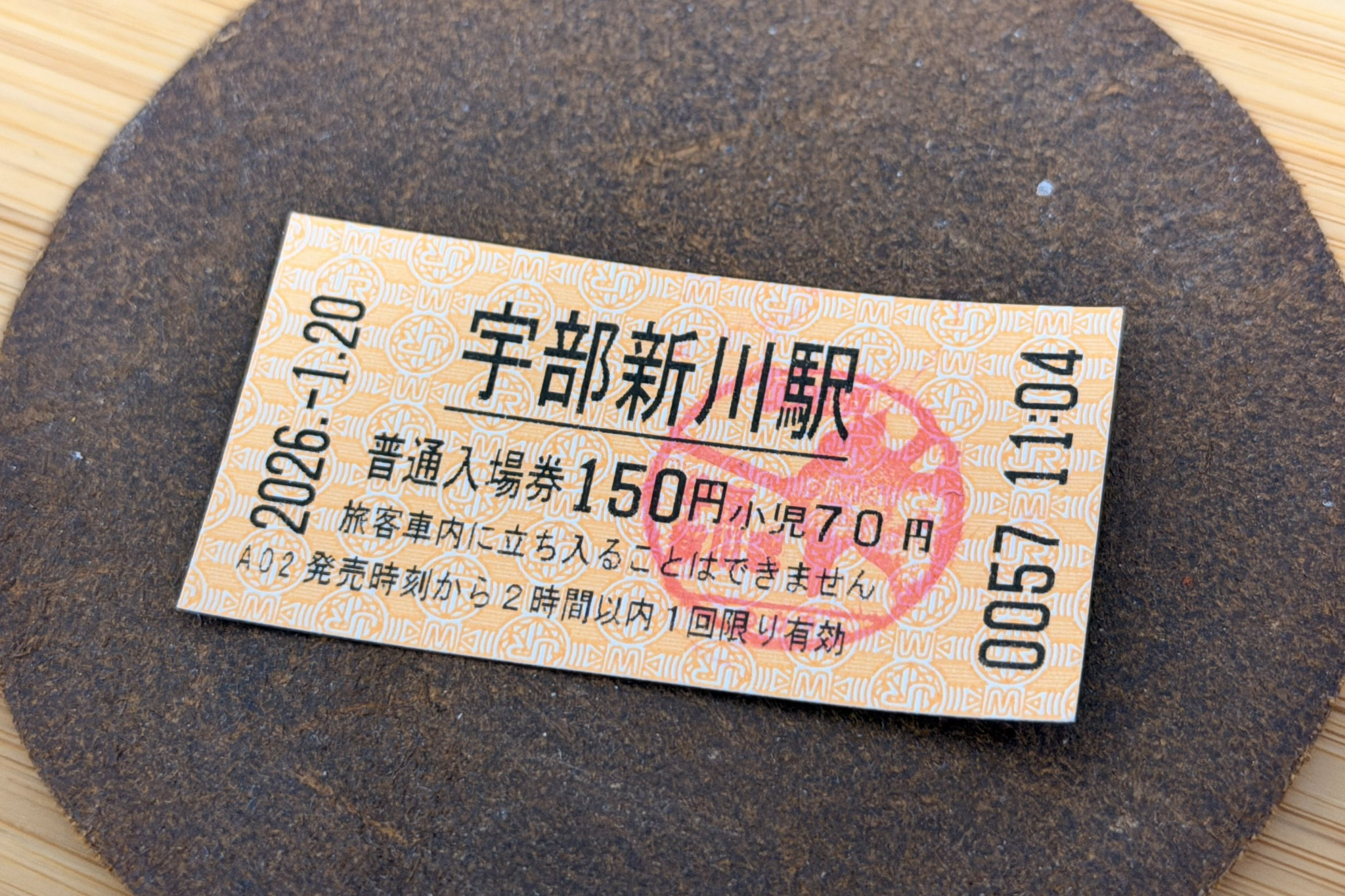
By the way, at Ube Shinkawa Station, if you buy a ticket just to enter, the station staff will stamp it for you—and get this—the stamp is a special design of Evangelion Unit-01’s profile. They’ve sneakily worked in some Evangelion love in unexpected places!
Heading to that mysterious railroad crossing
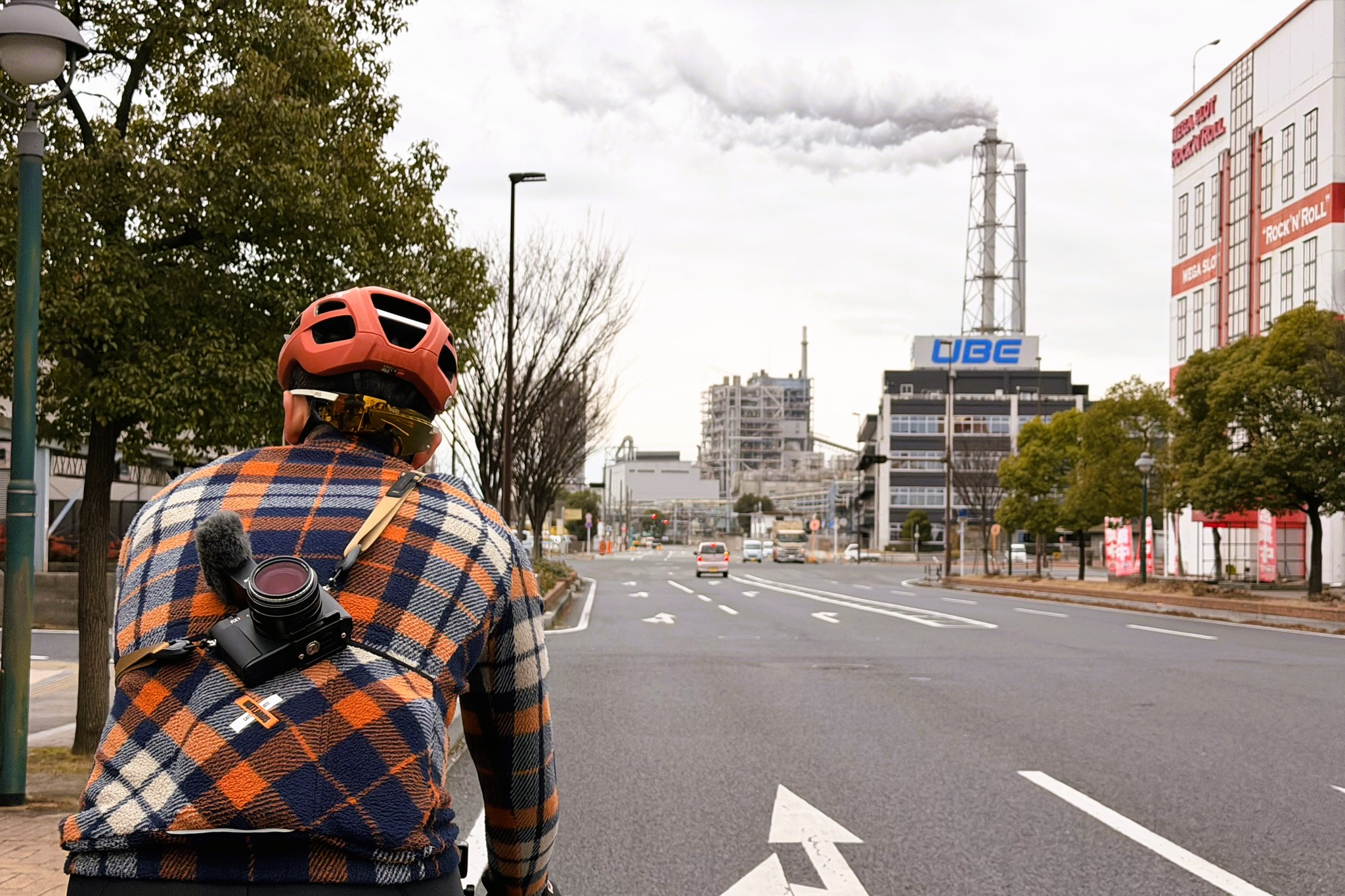
I had heard there was a cool railroad crossing somewhere in Ube city, so I decided to check it out since I was nearby. It’s about 3 km from the station, right in the middle of Ube’s industrial area, so I hopped on my bike and headed straight there.

The Ube industrial zone is a heavy chemical industry area packed with chemical, cement, and steel plants. Factories and plants stretch out over a huge area, giving off a unique sense of scale. It’s a totally different vibe from the city streets, and just riding through leaves a lasting impression.
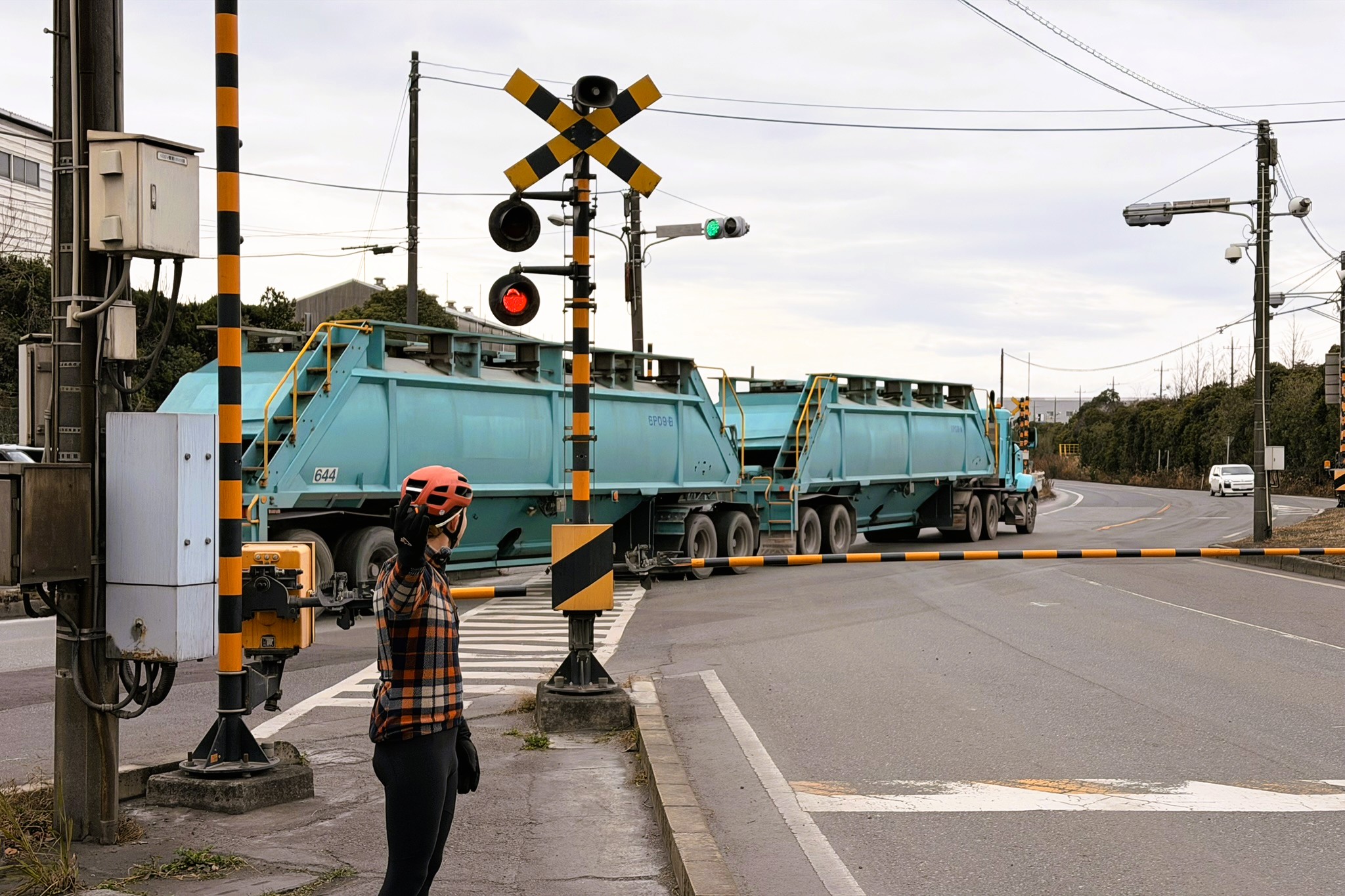
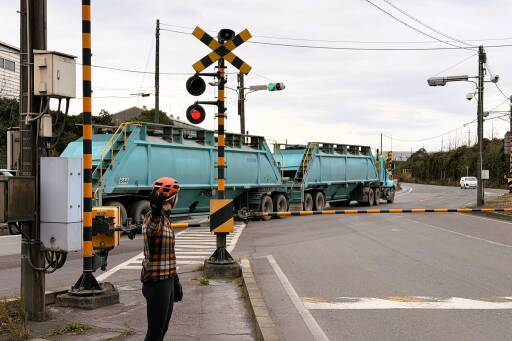
After riding for a while, I came across a familiar railroad crossing. But there were no tracks to be seen—just a road. After the barriers went down, what passed through wasn’t a train… but a massive, oversized truck.
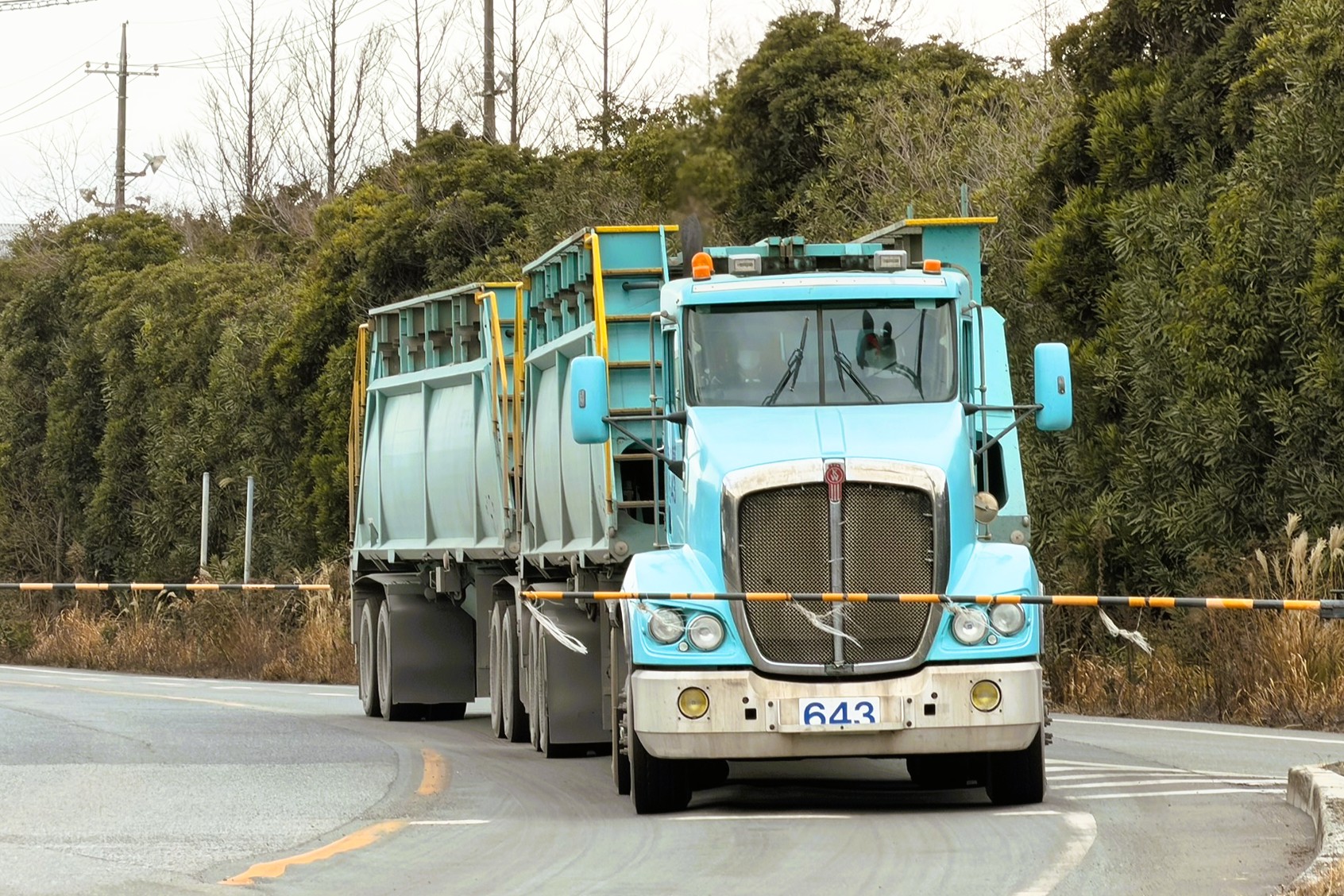
Actually, this railroad crossing is on a private road called the “Ube Isa Exclusive Road,” stretching about 32 km from Ube City to Mine City. Owned by UBE Mitsubishi Cement, it’s known as Japan’s longest private road. It’s used to transport limestone mined from the Isa Mine and semi-finished cement products called clinker via special trailers.
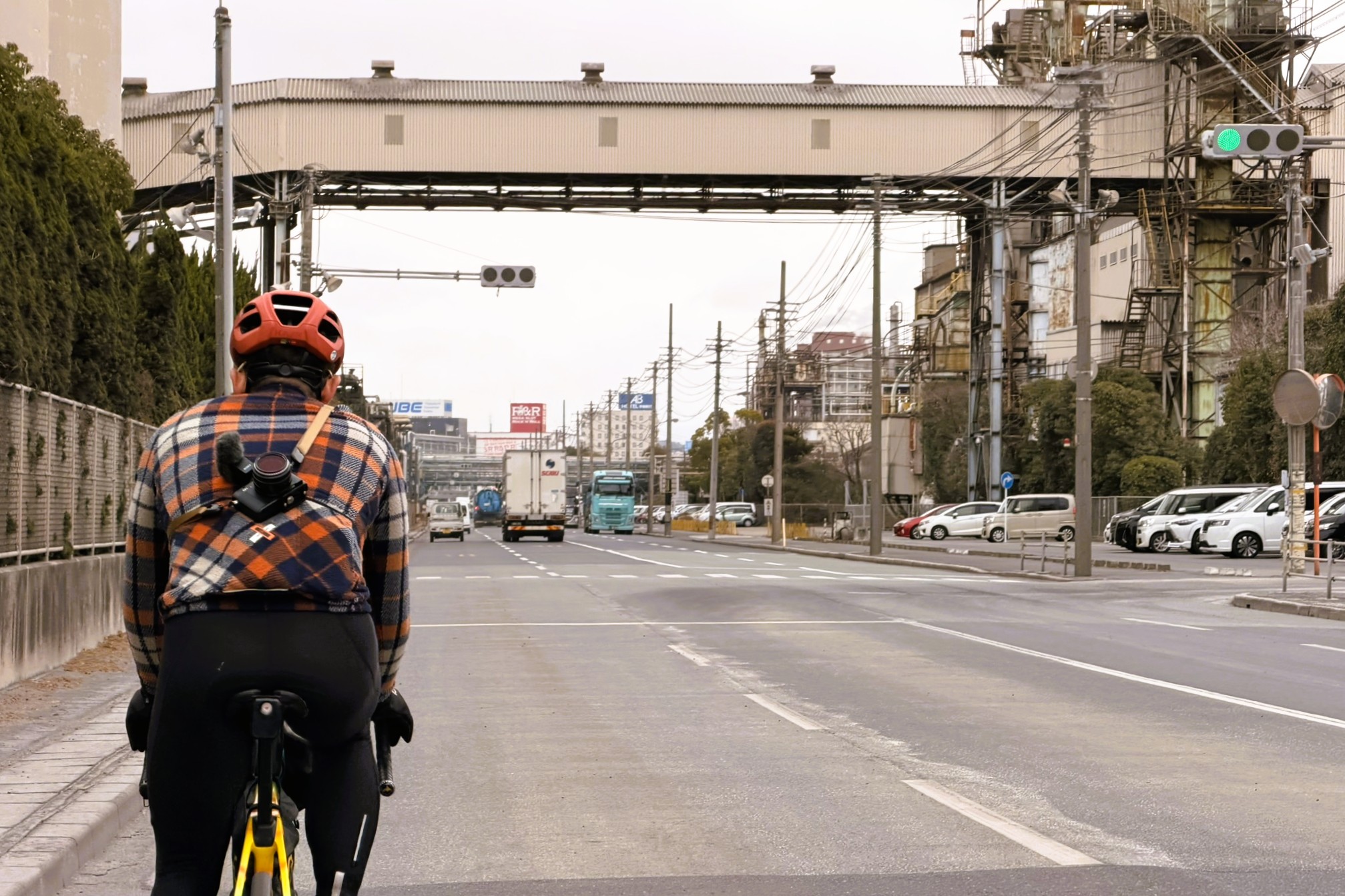
Getting excited by a rare railroad crossing, we turned back the way we came and headed to our lunch spot. Riding through the industrial area again, I couldn’t help but think that Director Anno might have drawn inspiration for the world of Evangelion from the rugged industrial buildings he saw as a kid.
Lunch at the famous market eatery
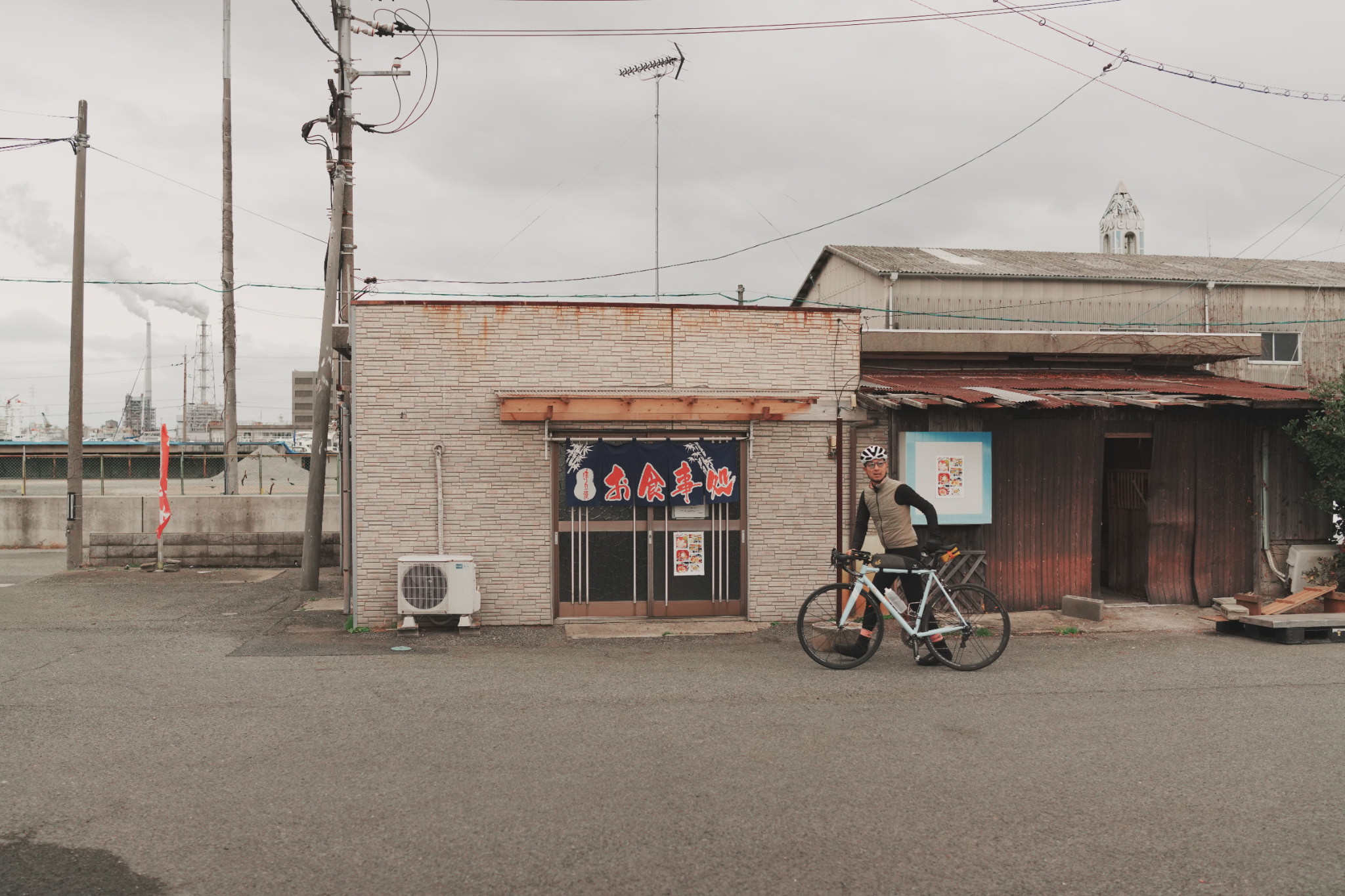
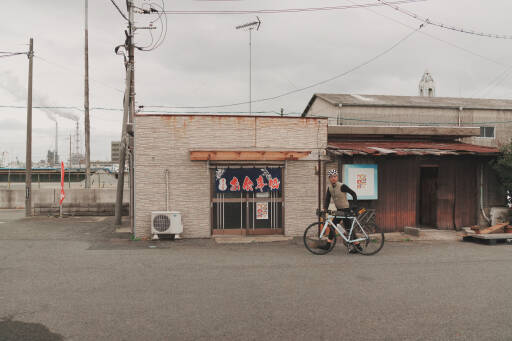
For lunch, we stopped by “Uoichiba Shokudo” at the Ube Fish Market. True to its name, this diner is right inside the market grounds and is a favorite spot among locals and market workers alike.
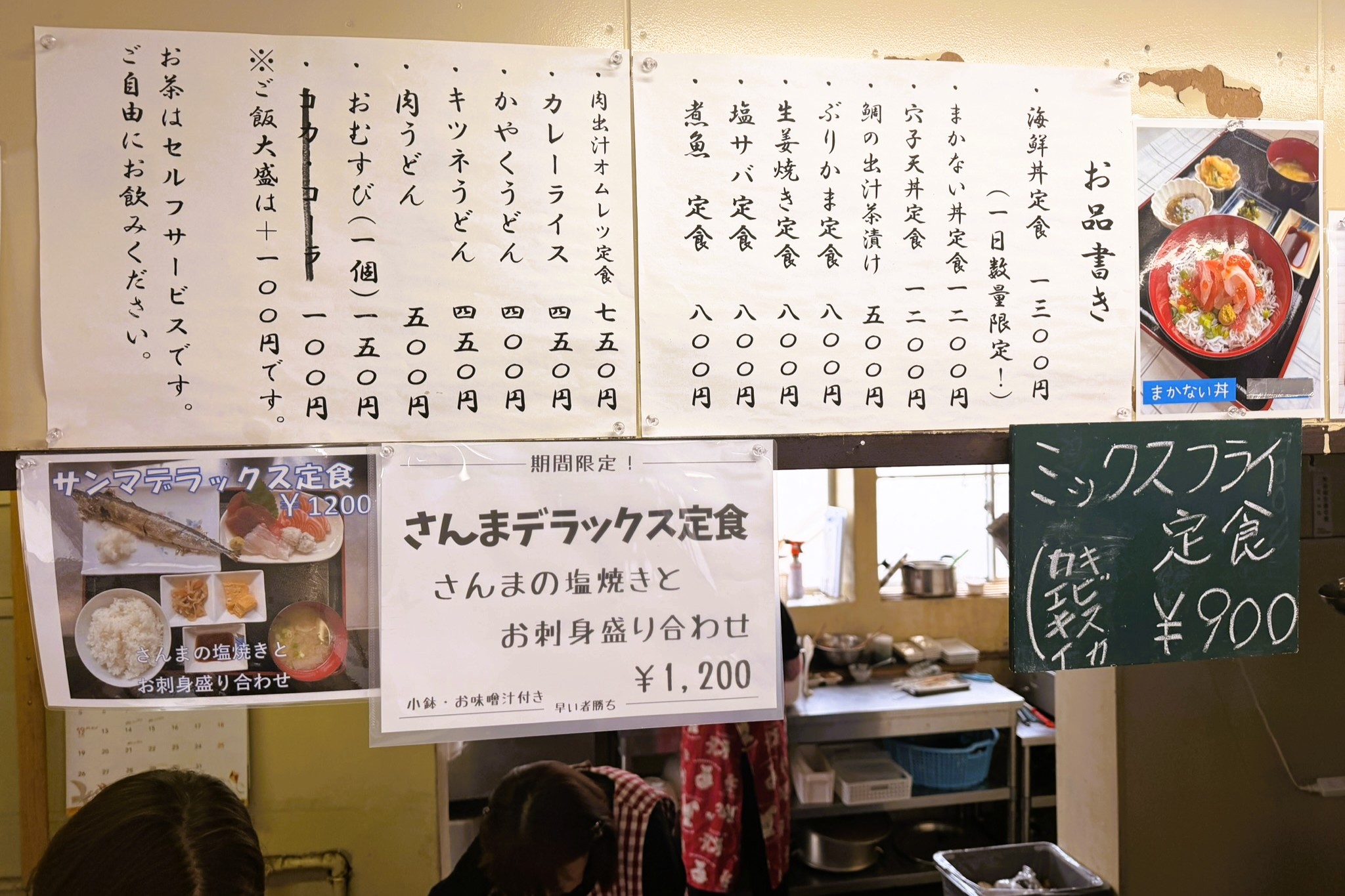
The menu stuck to the kitchen counter looked so delicious that it was hard to choose. Plus, the prices were super reasonable. We seriously debated for a while, both of us trying to decide.
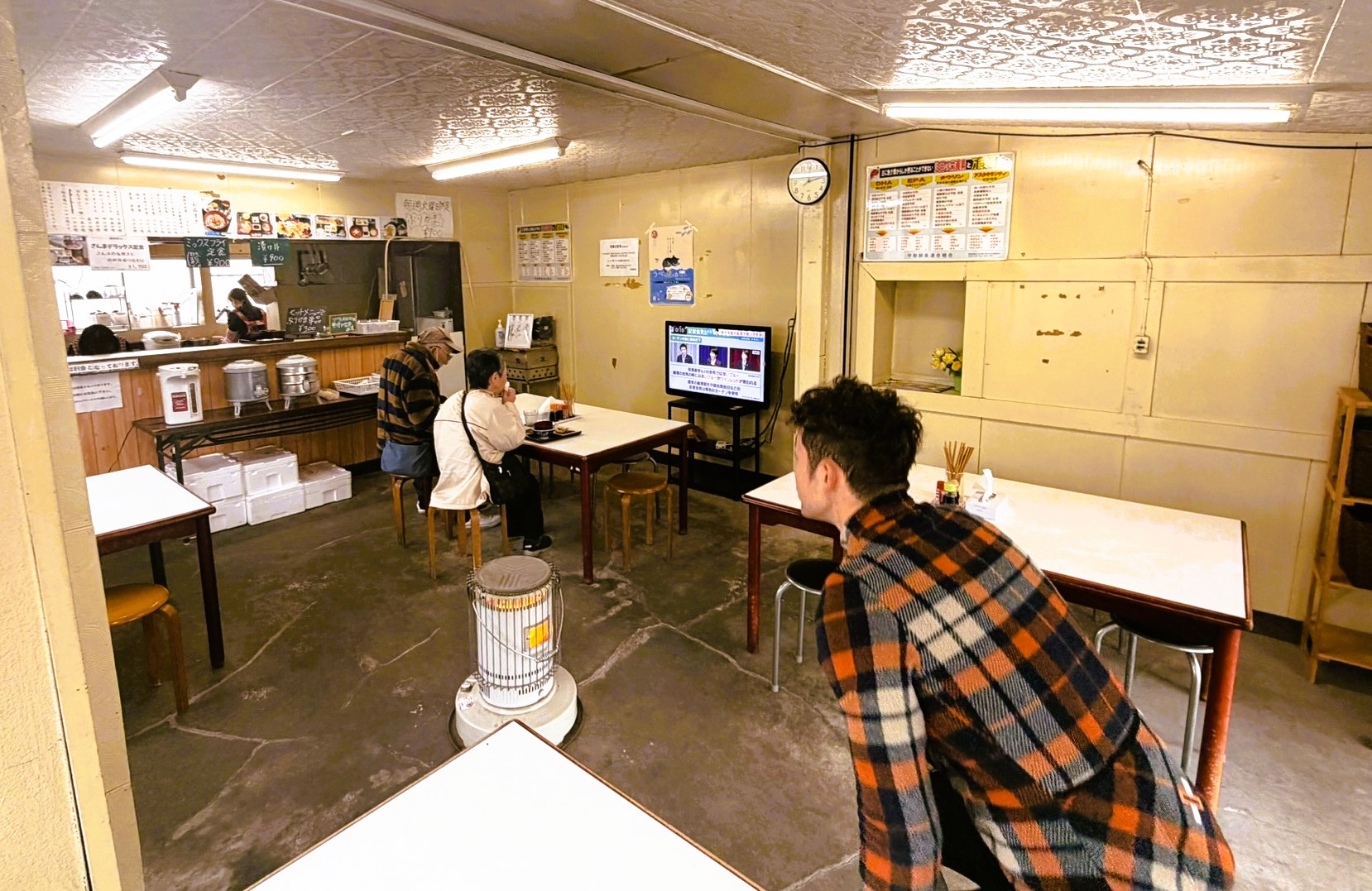
While waiting for our food, the kerosene stove in the center of the shop gently warmed up our chilled bodies. The place was buzzing with market folks and locals, and you could spot a few tourists here and there. Honestly, it just felt like we were in for something great.
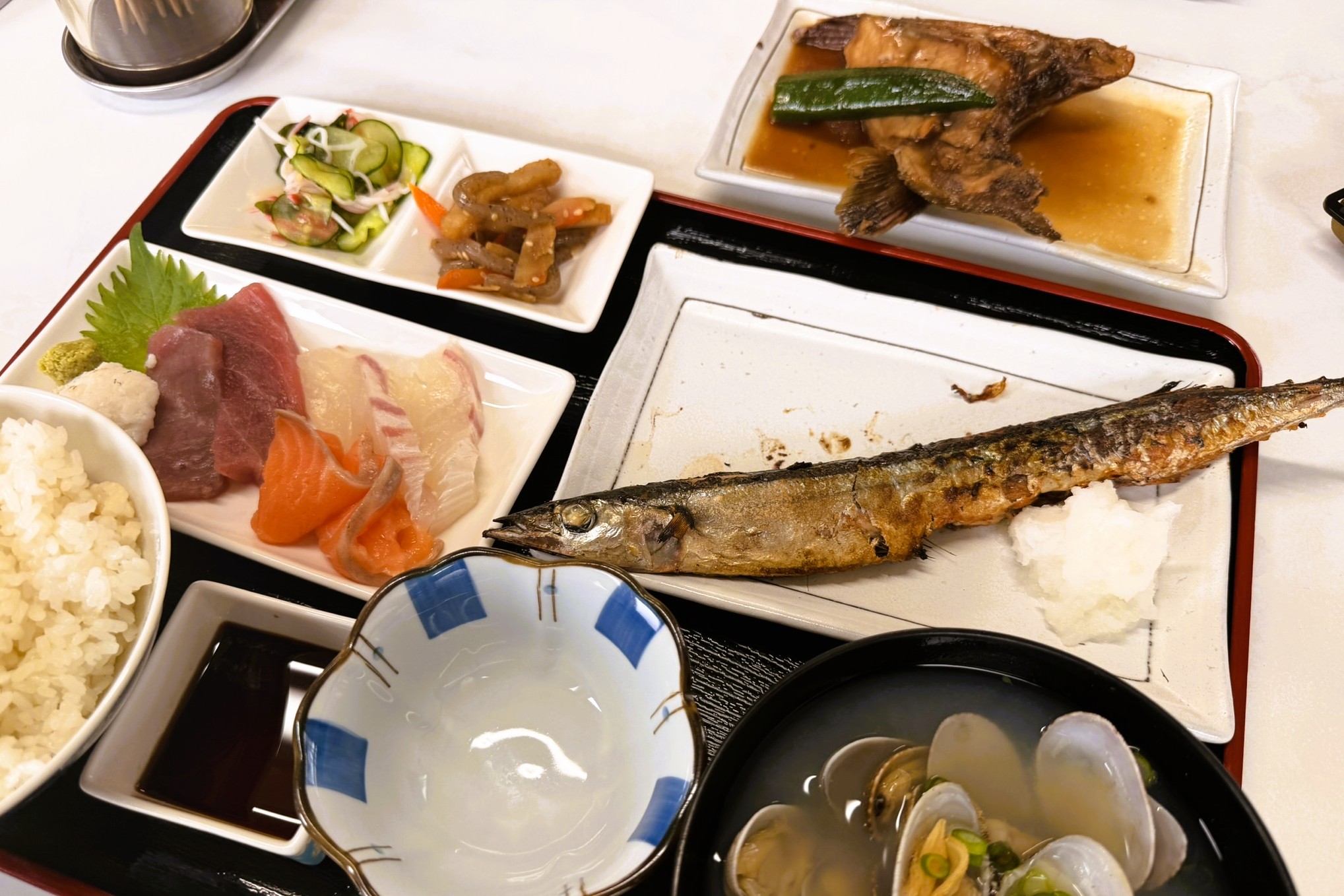
After some serious deliberation, I went with the Sanma Deluxe Set Meal. Sanma has now joined the ranks of luxury fish, but the perfect combo of its mild bitterness and grated daikon was unbeatable—I couldn’t stop eating the rice. The sashimi was shockingly fresh too—definitely a jackpot. I even added buri kama for just 300 yen more, and before I knew it, I was enjoying a pretty fancy lunch.
Tokiwa Park and the Spear of Longinus
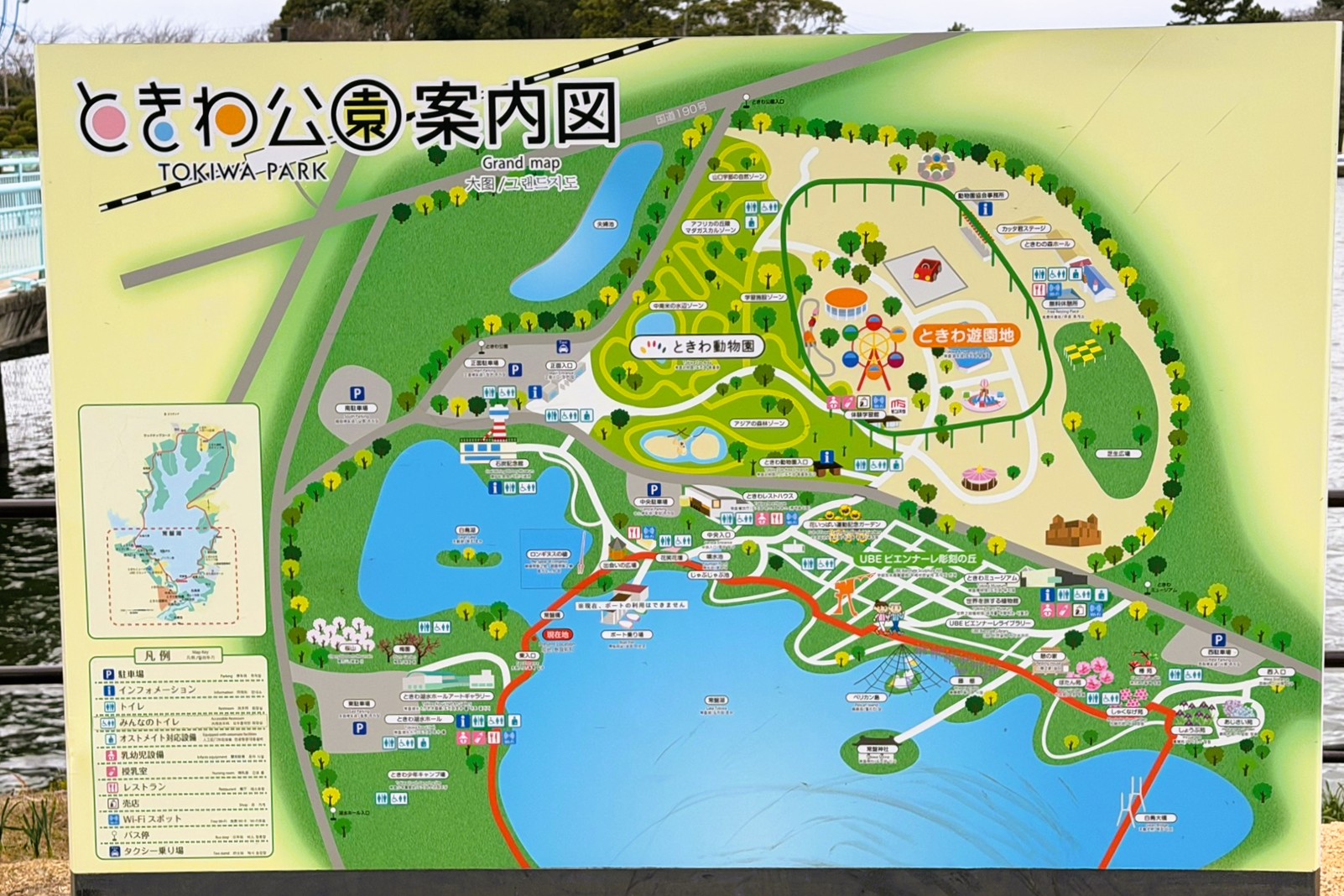
After lunch, we headed to Tokiwa Park. It’s a huge park that really represents Ube City, with a lake, walking trails, a zoo, and scattered sculptures throughout. It’s a chill spot where nature and art blend together perfectly.
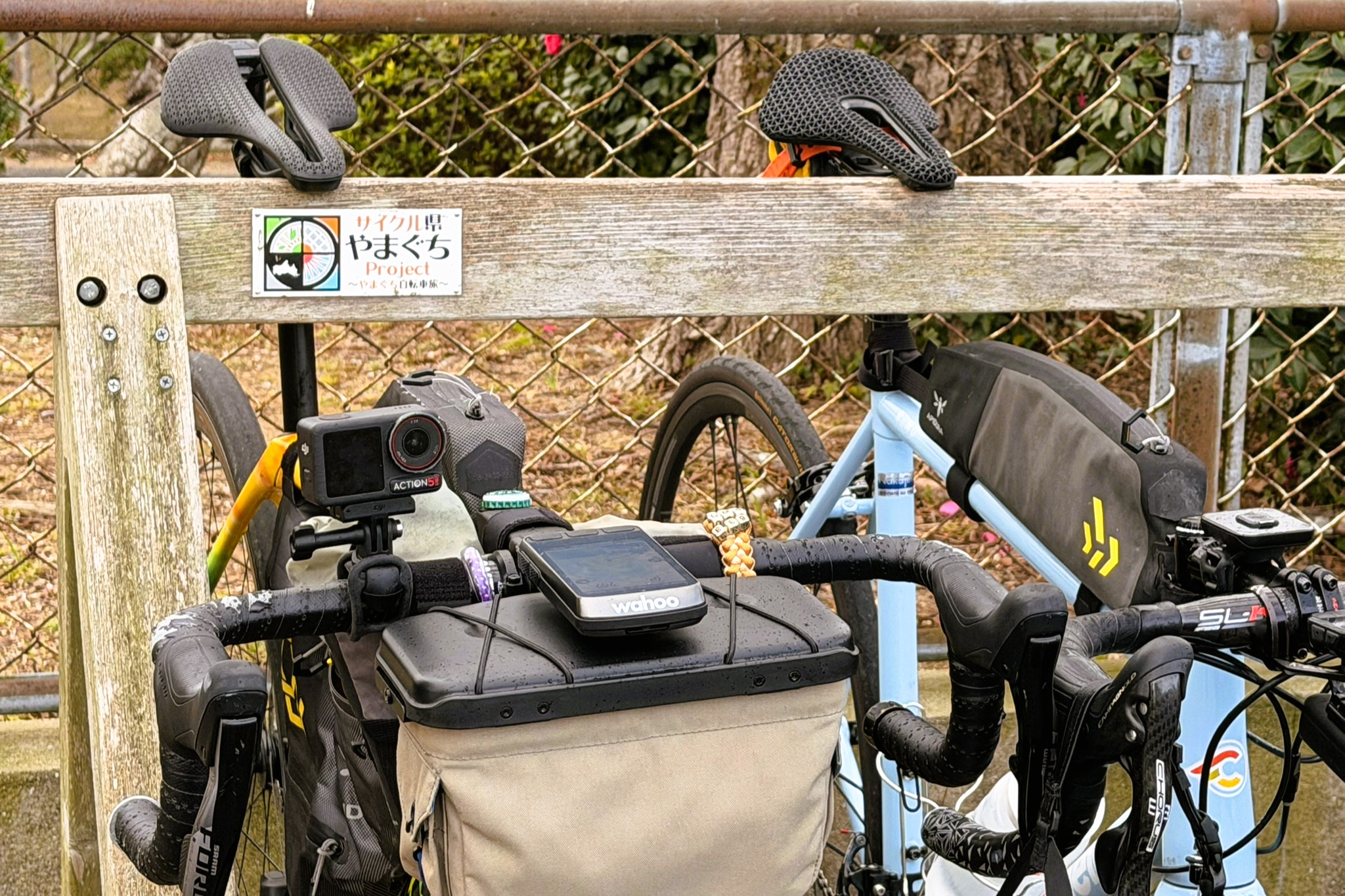
By the way, the park’s bike parking area is fully equipped with bike stands, which is a big plus for cyclists. Being able to park your bike securely makes it a highly recommended spot to stop by.
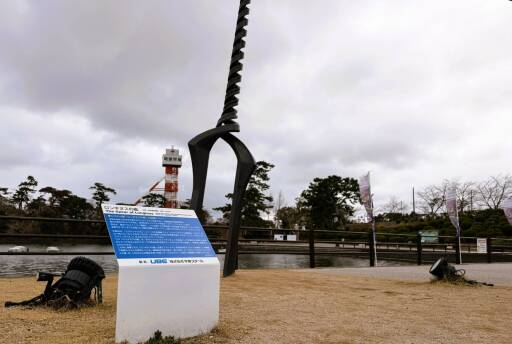
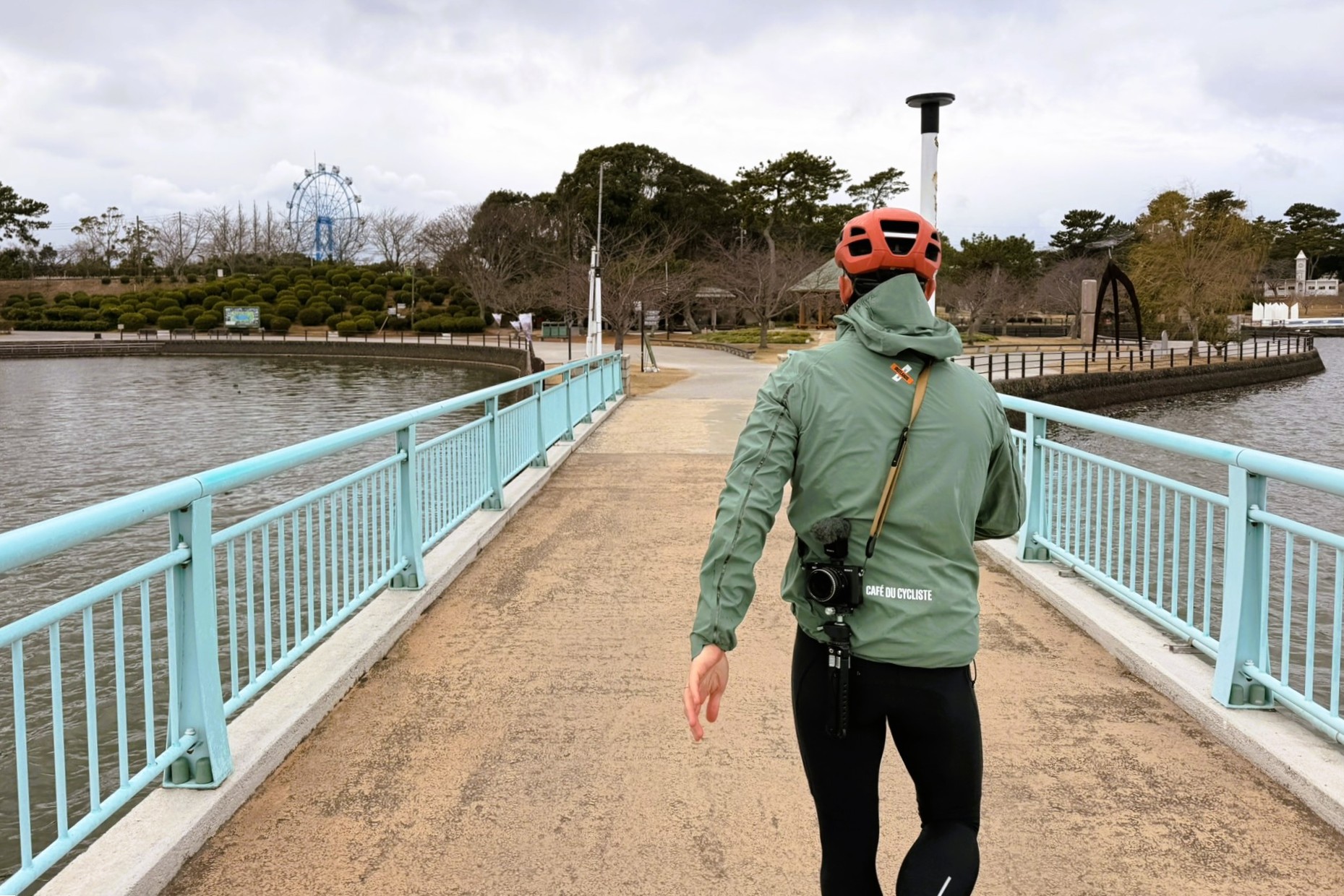 The reason we came to this park? Yep, you guessed it—Evangelion again. Crossing the pond inside the park, up ahead we spotted that iconic weapon you just can’t miss from the series.
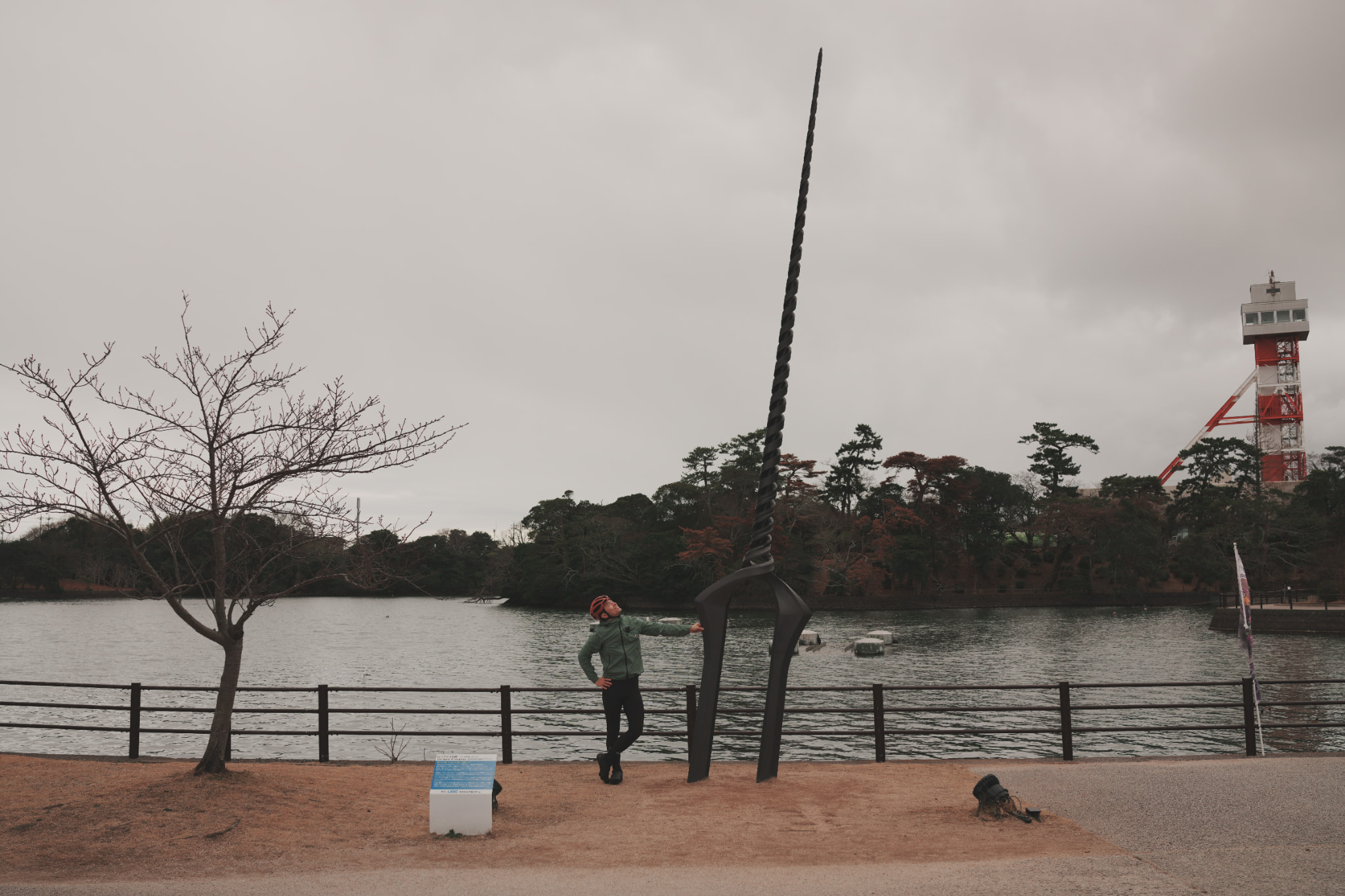
Yeah, the Spear of Longinus.
Standing about 7 meters tall right next to the pond, it really commands attention. The Spear of Longinus is a key item and special weapon from the anime Neon Genesis Evangelion. This cast iron spear was made by a local company, Ube Steel. After watching footage of how it was made, seeing the real thing in person makes its power and weight feel even more real.宇部スチールのYouTube動画)
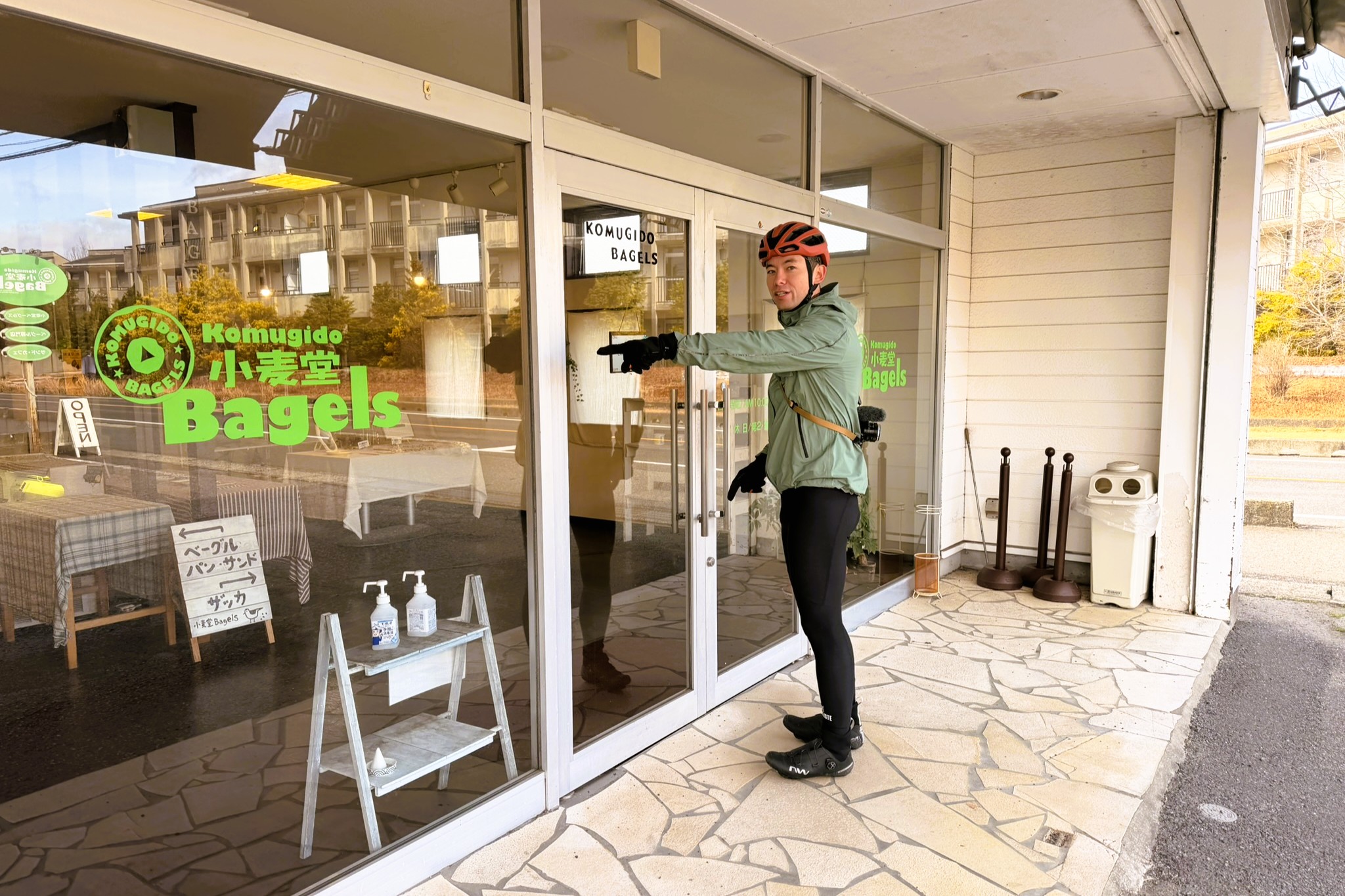
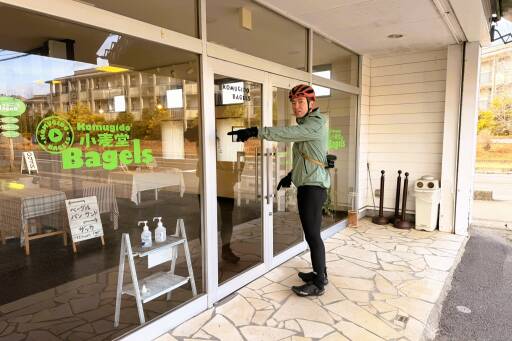
While checking out the Spear of Longinus at the park, I suddenly got this weird craving like, “I wanna eat the Spear of Longinus…” So, we decided to head over to Komugido Bagels, a bakery nearby.
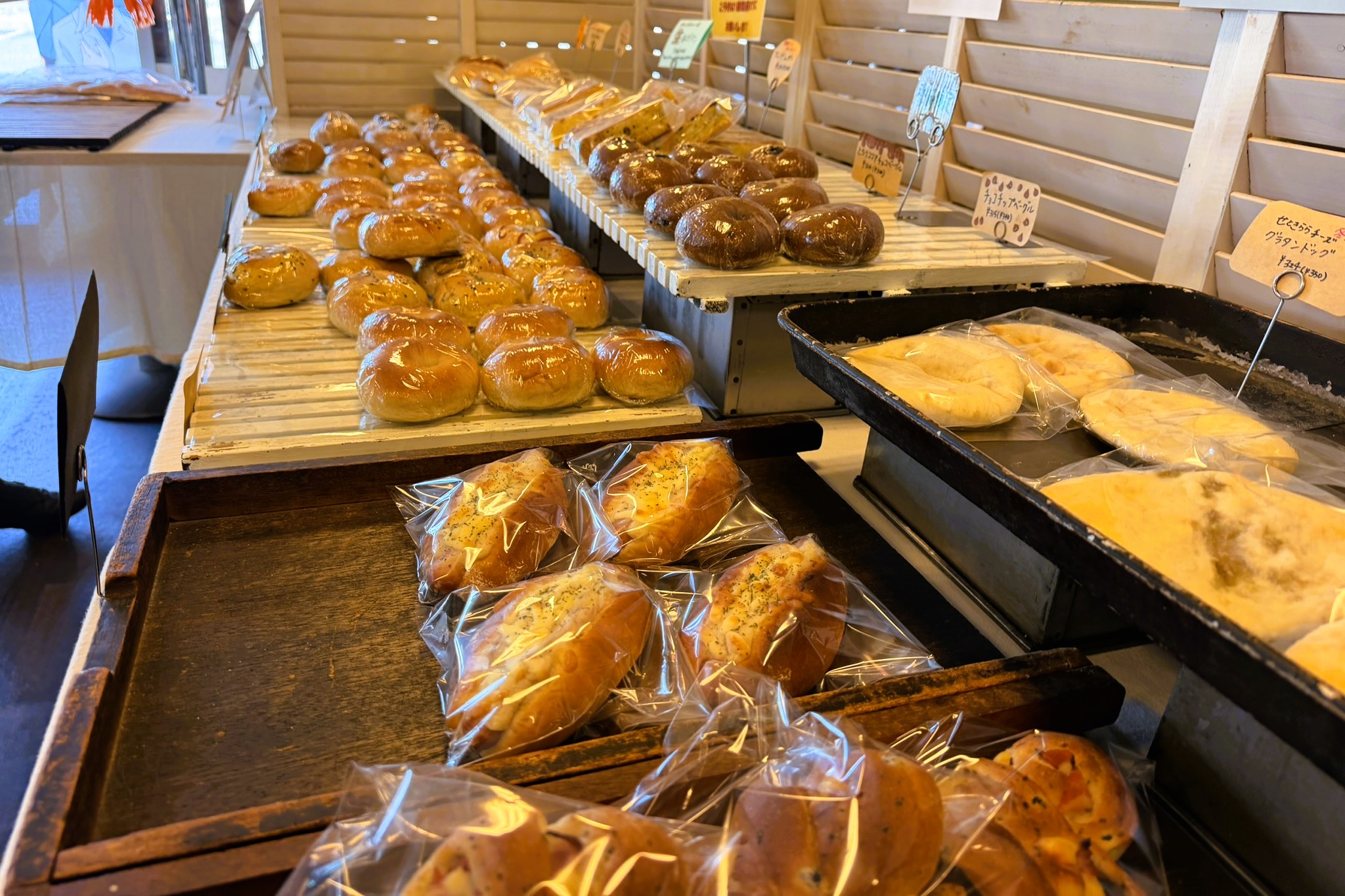
I stopped by this bagel shop because I heard that Ube City’s “Evangelion all over town” project was selling some cool Eva-themed goodies here. As soon as I stepped inside, the smell of freshly baked bagels filled the air, instantly putting me in a relaxed and happy mood.
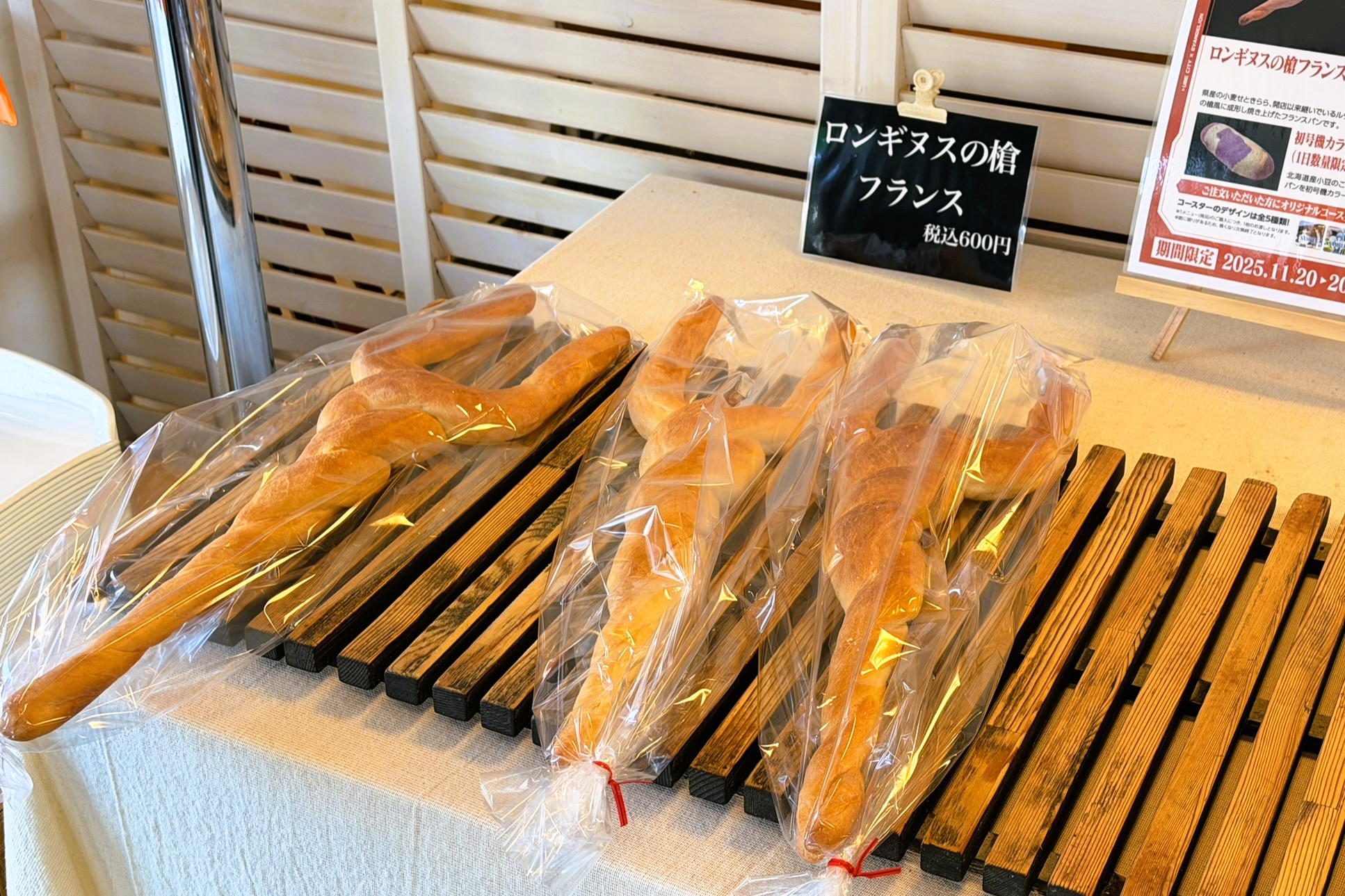
I finally found the “Spear of Longinus” bread I was looking for! It was even bigger than I imagined, and since it’s a French baguette, it’s pretty firm. Looks like it won’t break easily. I tucked it into my saddlebag, grabbed a coffee from a nearby convenience store, and decided to enjoy them together.
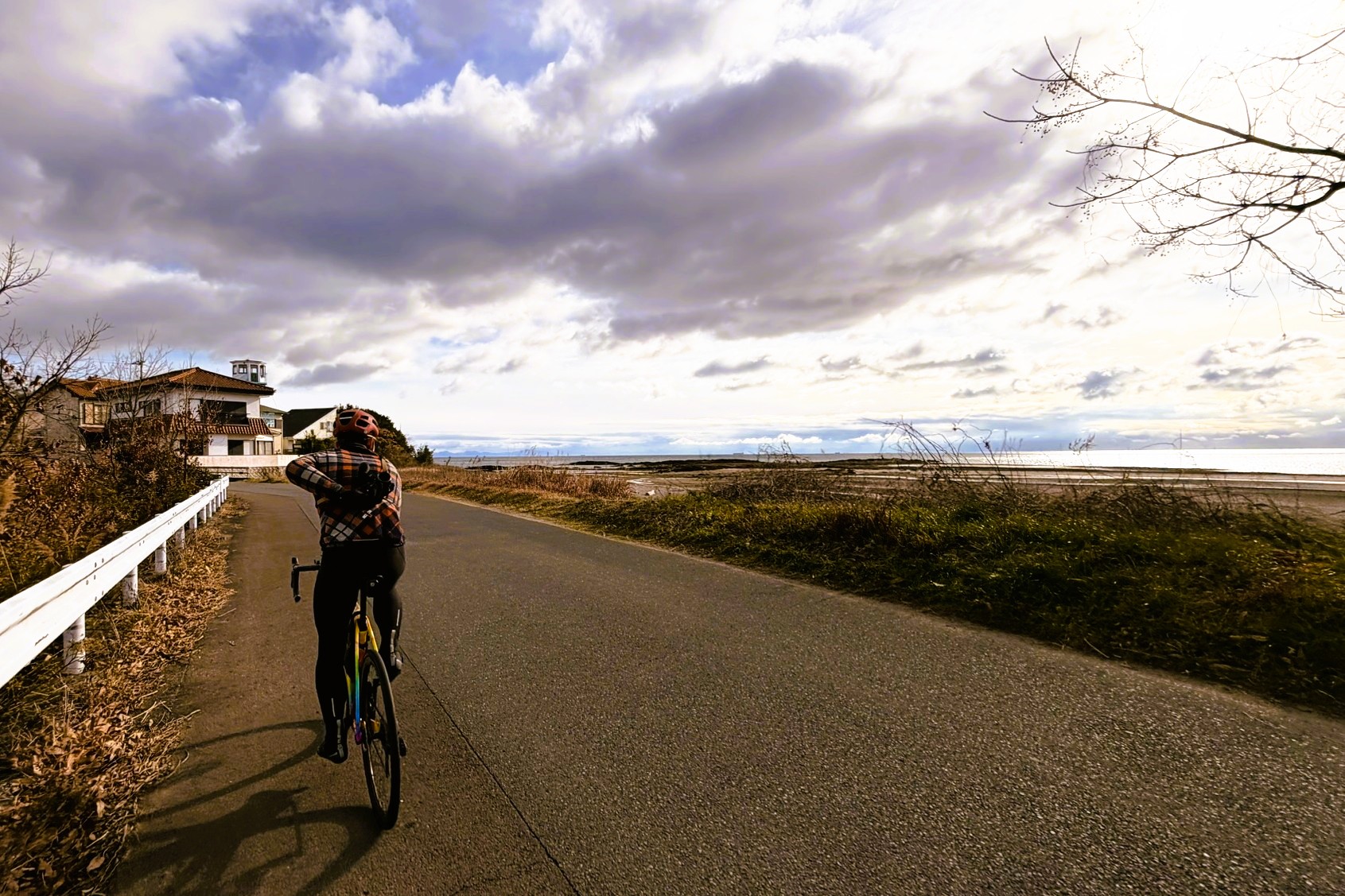
After wrapping up our coffee break, we headed to the next spot. Skipping the main road, we took it easy cruising along the seaside path. Through a gap in the seawall, the calm Seto Inland Sea suddenly came into view.
Japan’s own Uyuni Salt Flats, Kiwa La Beach
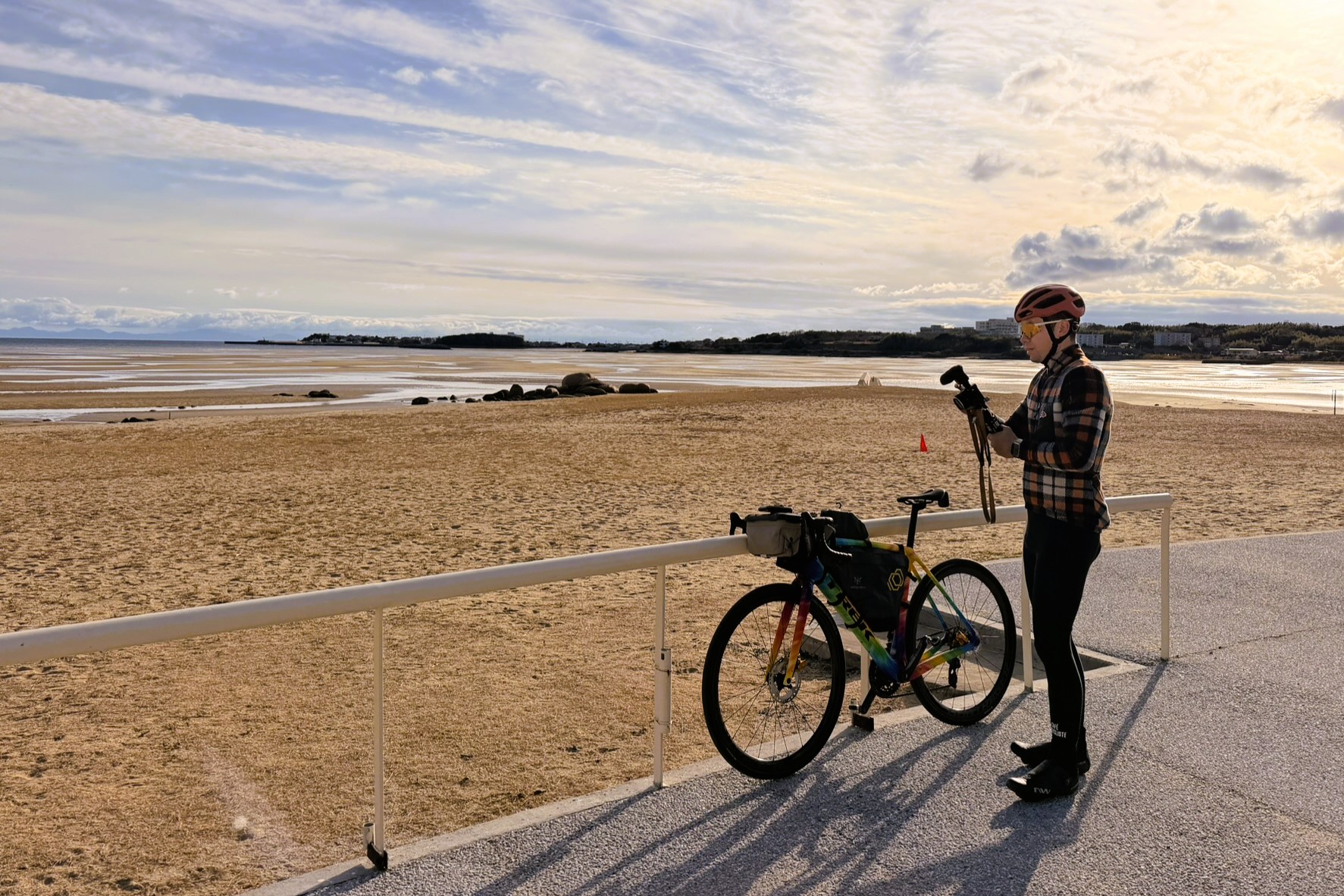
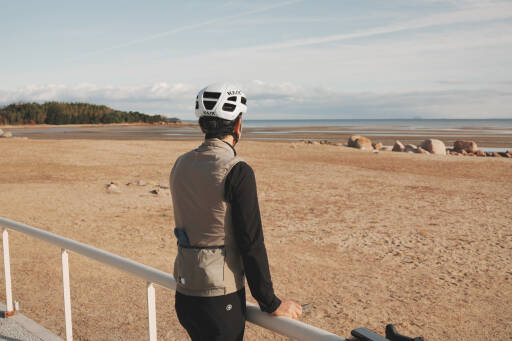
Kiwa La Beach reveals a sandbar about 2.0 km wide and 700 m deep during low tide. On windless days, the tidal pools become like mirrors, earning it the nickname “Japan’s Uyuni Salt Flats” among photography enthusiasts.
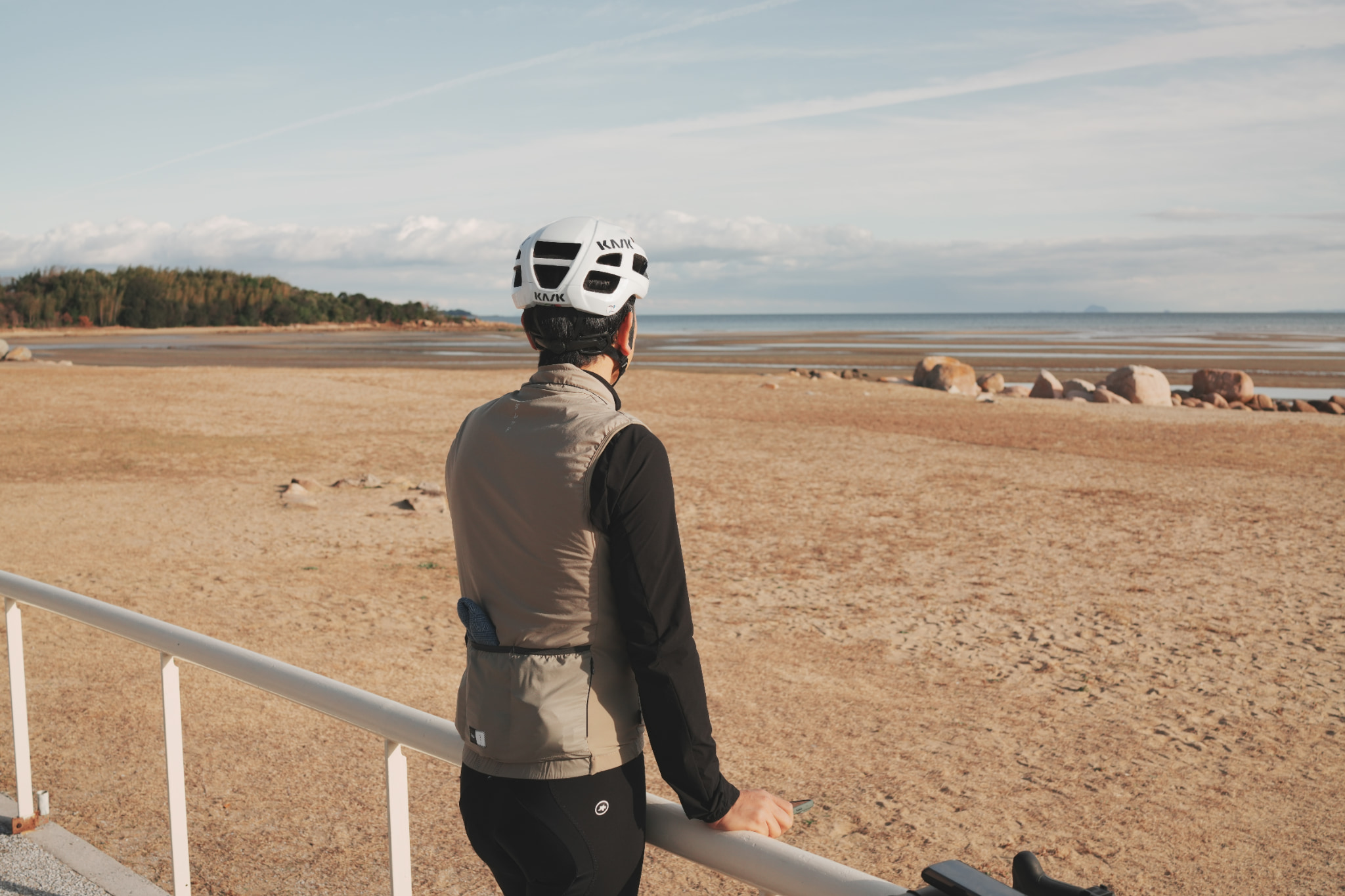
We happened to stop by right at low tide. The shallow sea stretched out with a beautiful sandy beach reaching far into the distance. One of the coolest things about this spot is that during low tide, you can actually walk out surprisingly far into the ocean. This time, though, since we were wearing cleats, we had to skip walking on the sand.
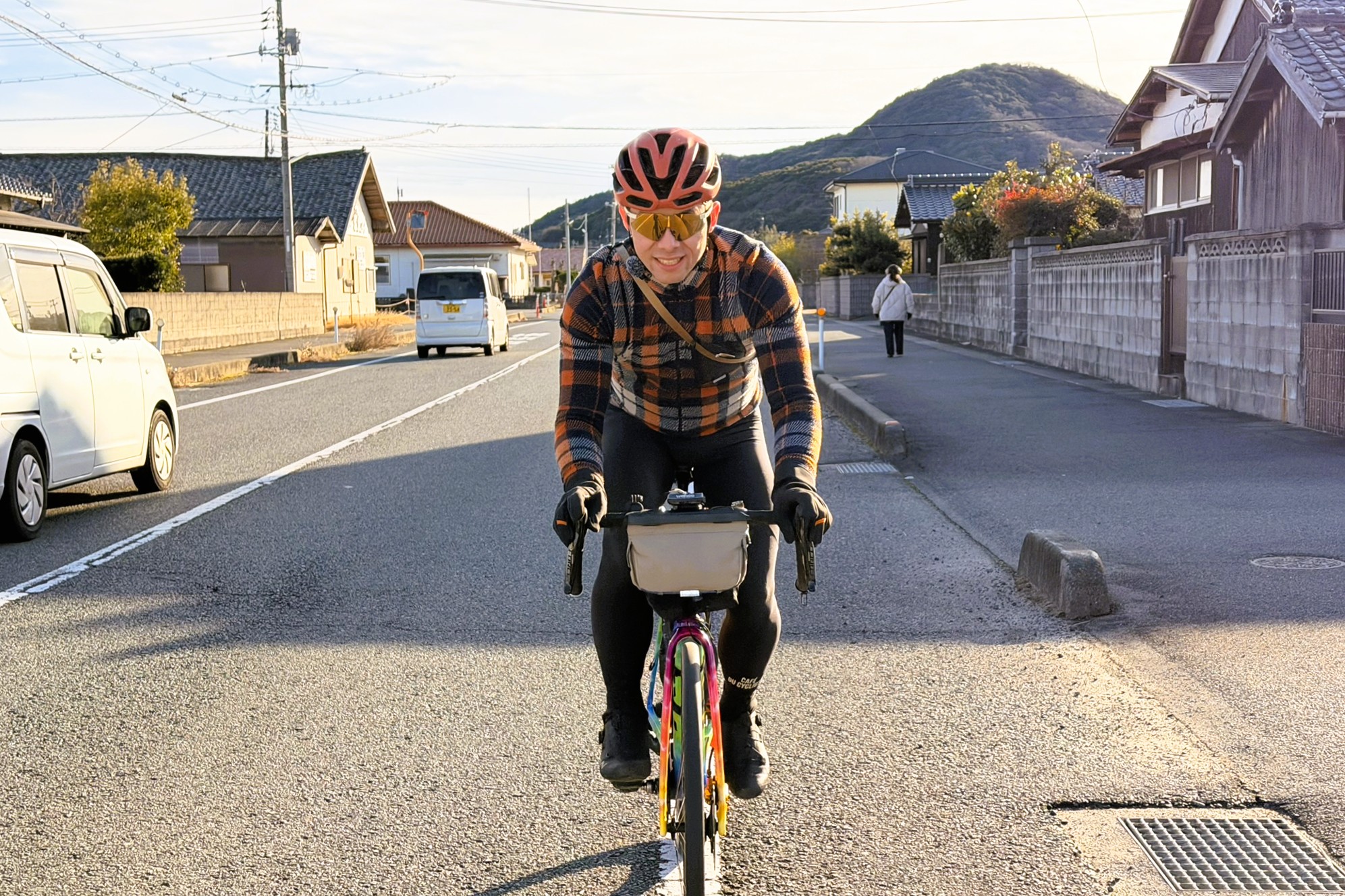
After soaking in the views of what’s called Japan’s “Uyuni Salt Flats,” it’s time to head to the final stop, Shin-Yamaguchi Station. With about 15 km left, I rode the last stretch, savoring the lingering vibes of the journey.
Taking a breather at the Kirara Ajisu roadside station.
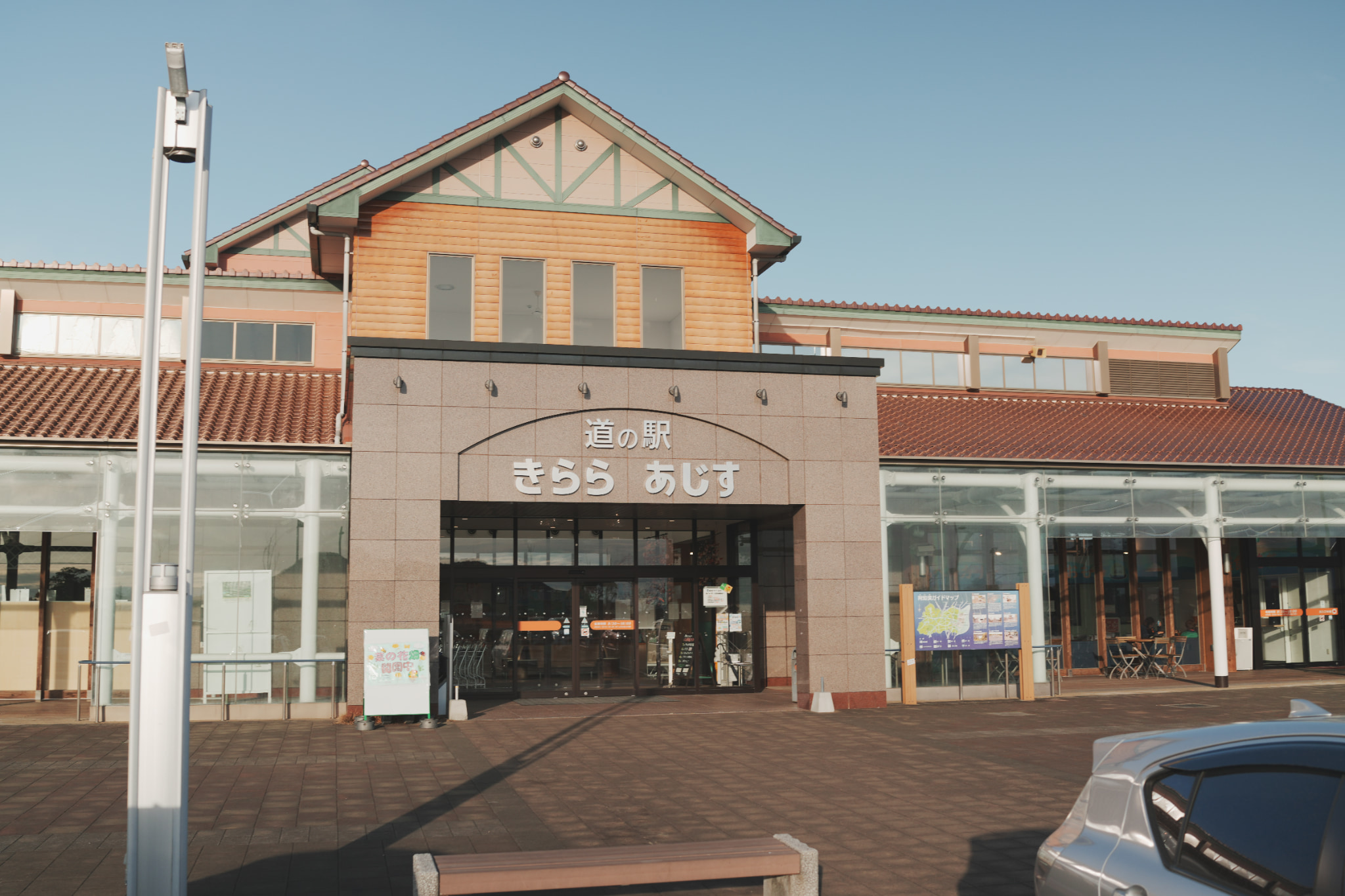
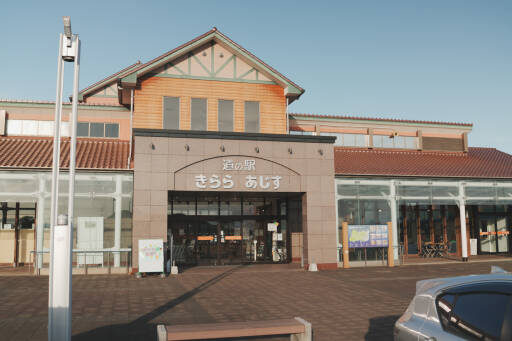
On the way, we stopped at the roadside station “Kirara Ajisu” for our last break. “Ajisu” comes from the name of the area, Ajisu, where this spot is located. Inside, there’s a souvenir shop and some places to grab a bite, making it the perfect pit stop for a cycling break.
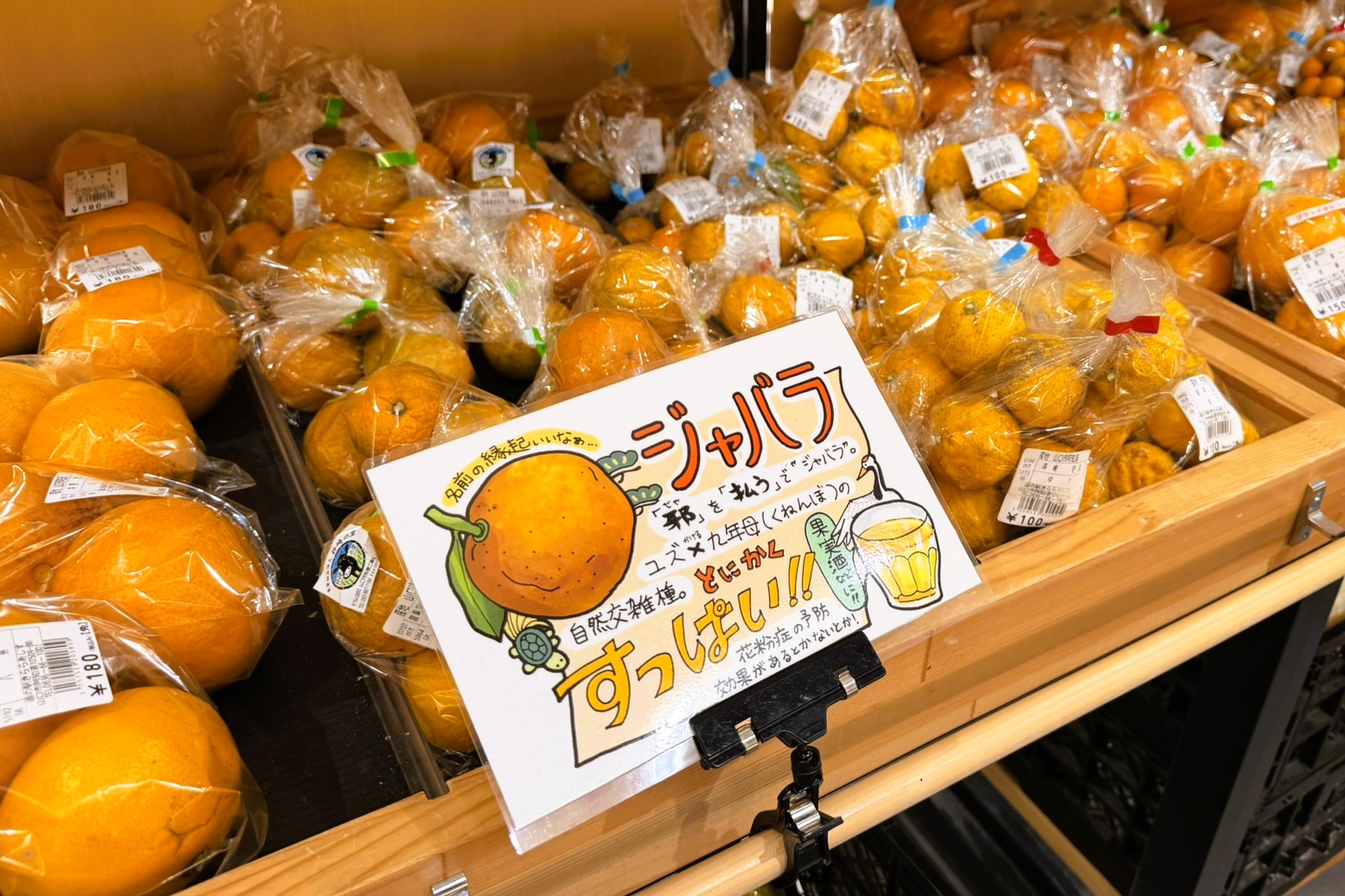
Inside the shop, they had a rare citrus fruit called “Jabara” on display. It’s known for its strong tartness and a subtle bitterness, and the juice and peel contain compounds that are getting a lot of attention. It’s pretty sour, but honestly, the fact that it’s said to help with hay fever makes it super appealing.
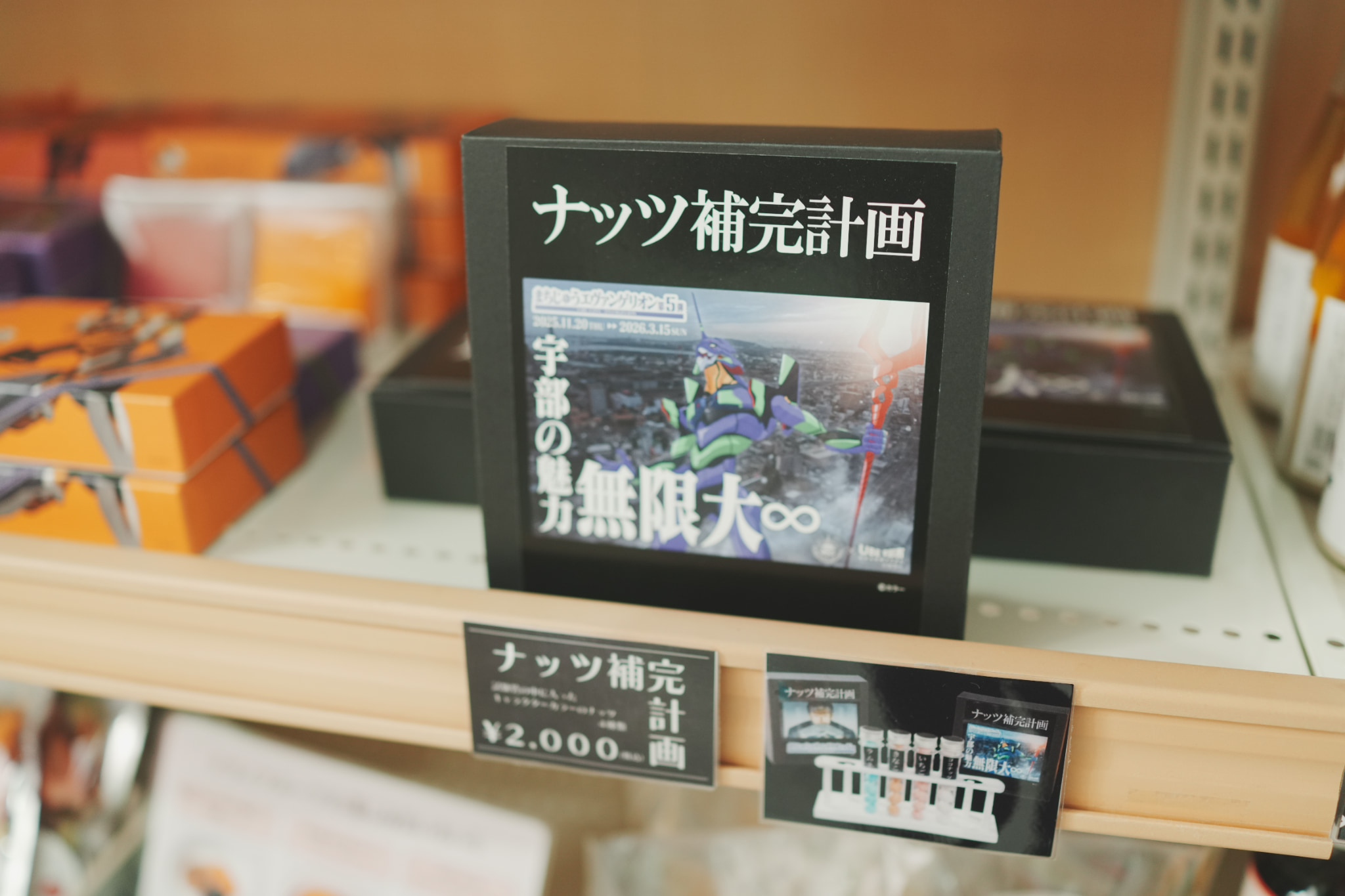
They had Evangelion all over town collaboration products lined up here too.
It’s called the “Nuts Completion Plan.” The name is so catchy, you’ll probably do a double take—it’s packed with that playful Evangelion vibe. If you’re not familiar with Evangelion, check this out. (External site:animate Times)
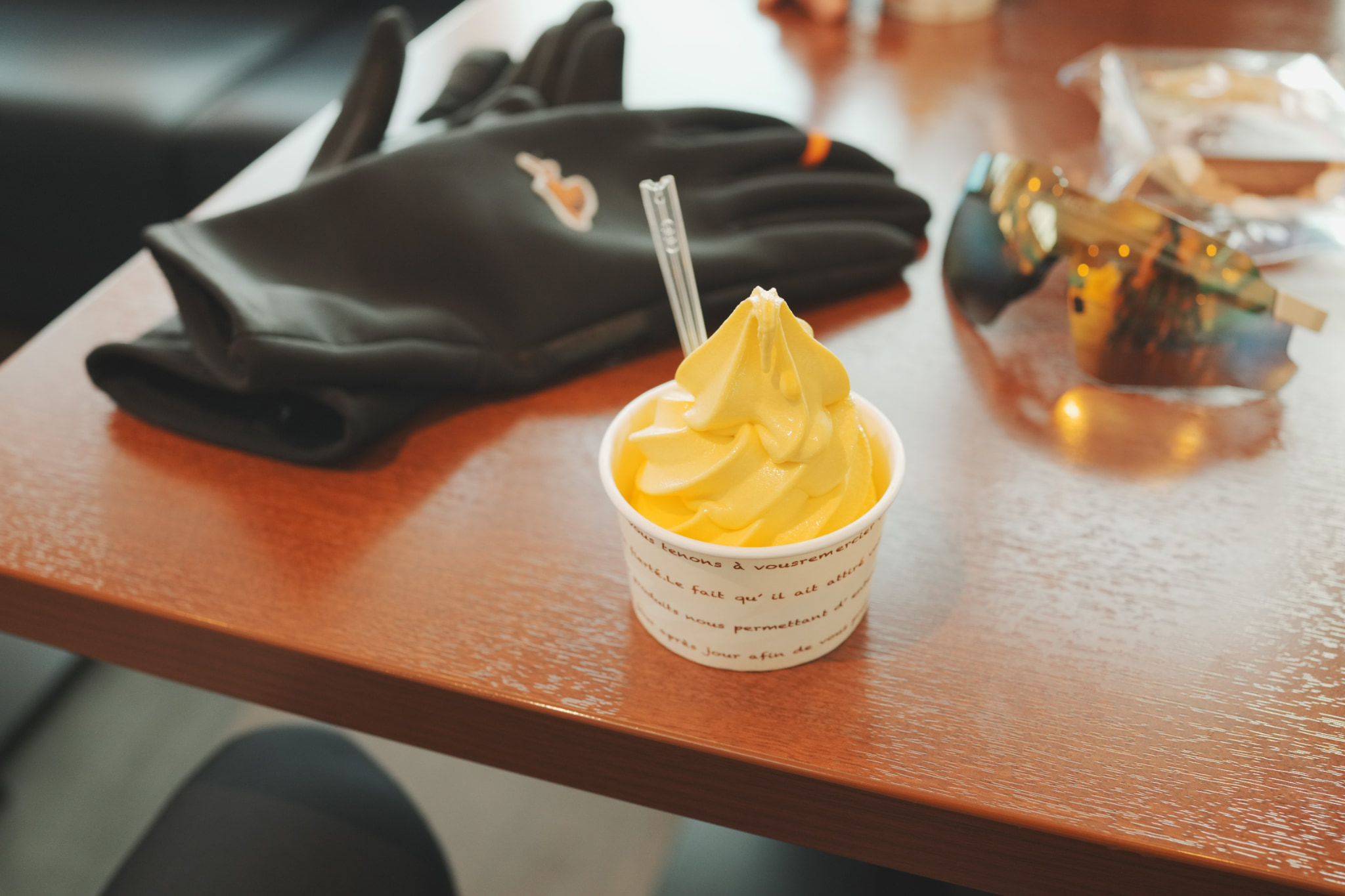
At the snack corner inside the shop, I enjoyed a soft serve made with Achisu’s special pumpkin, “Kurimasaru.”
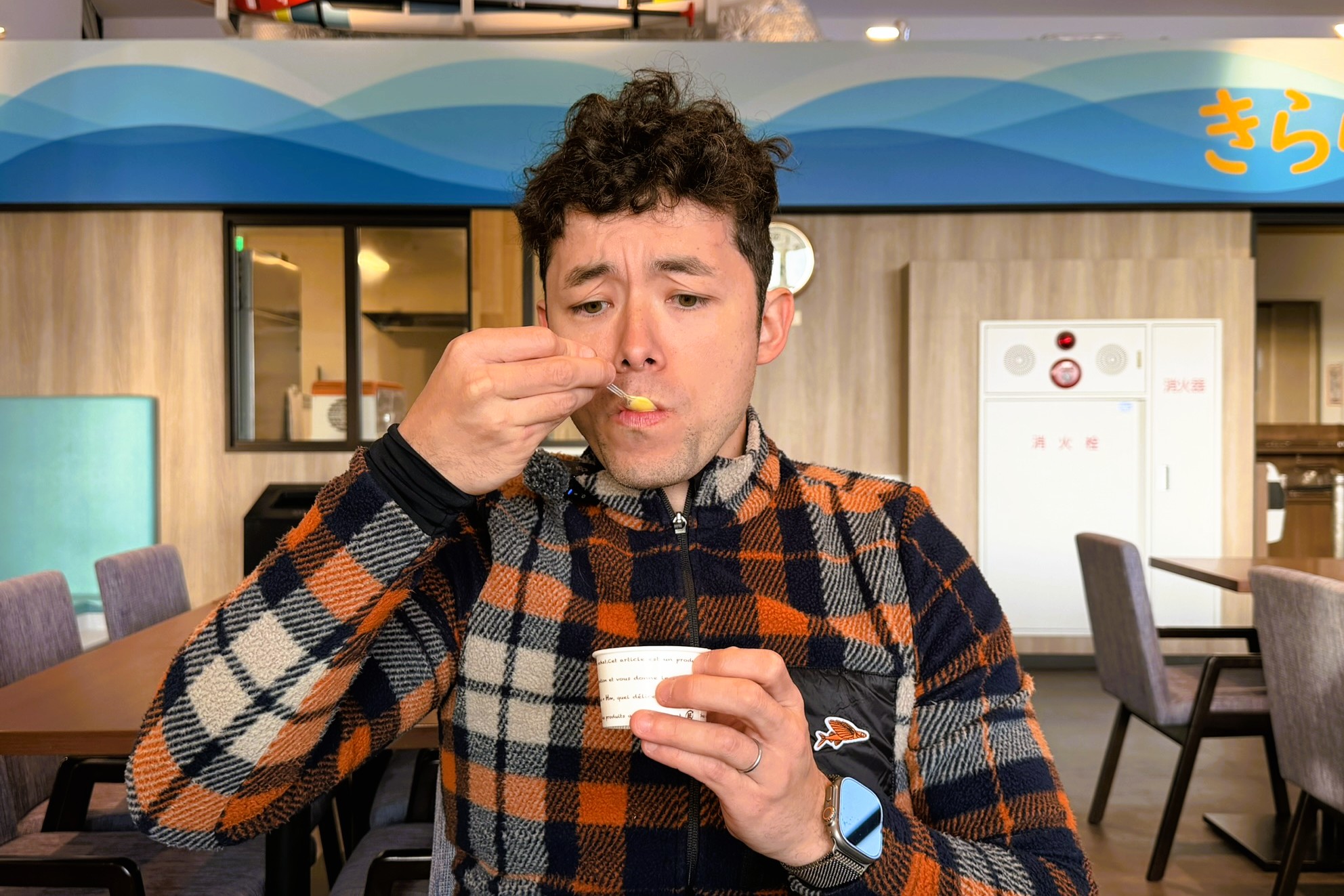
Rich and smooth with a subtle hint of pumpkin aroma. Just the perfect snack for that final boost.
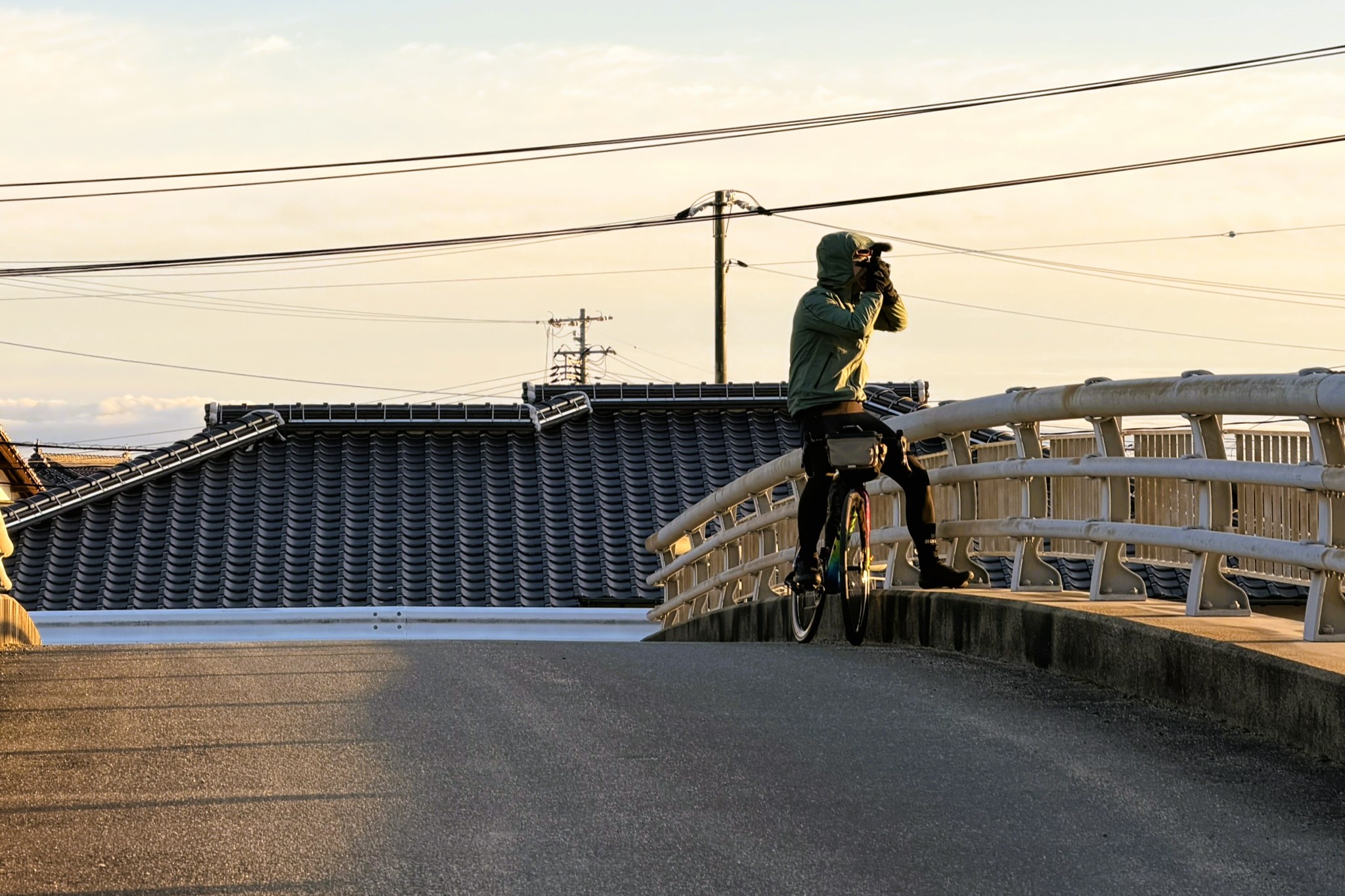
After leaving the roadside station and hitting the road, the sunset was so stunning that I couldn’t help but stop on a bridge. At first glance, the route might seem like it’s all about Evangelion, but once you actually ride it, you realize it’s a perfectly balanced course where you can really soak in the sea, sky, and the vibe of the town. Moments like these, where you can just pause and take it all in, are one of the best things about traveling by bike.
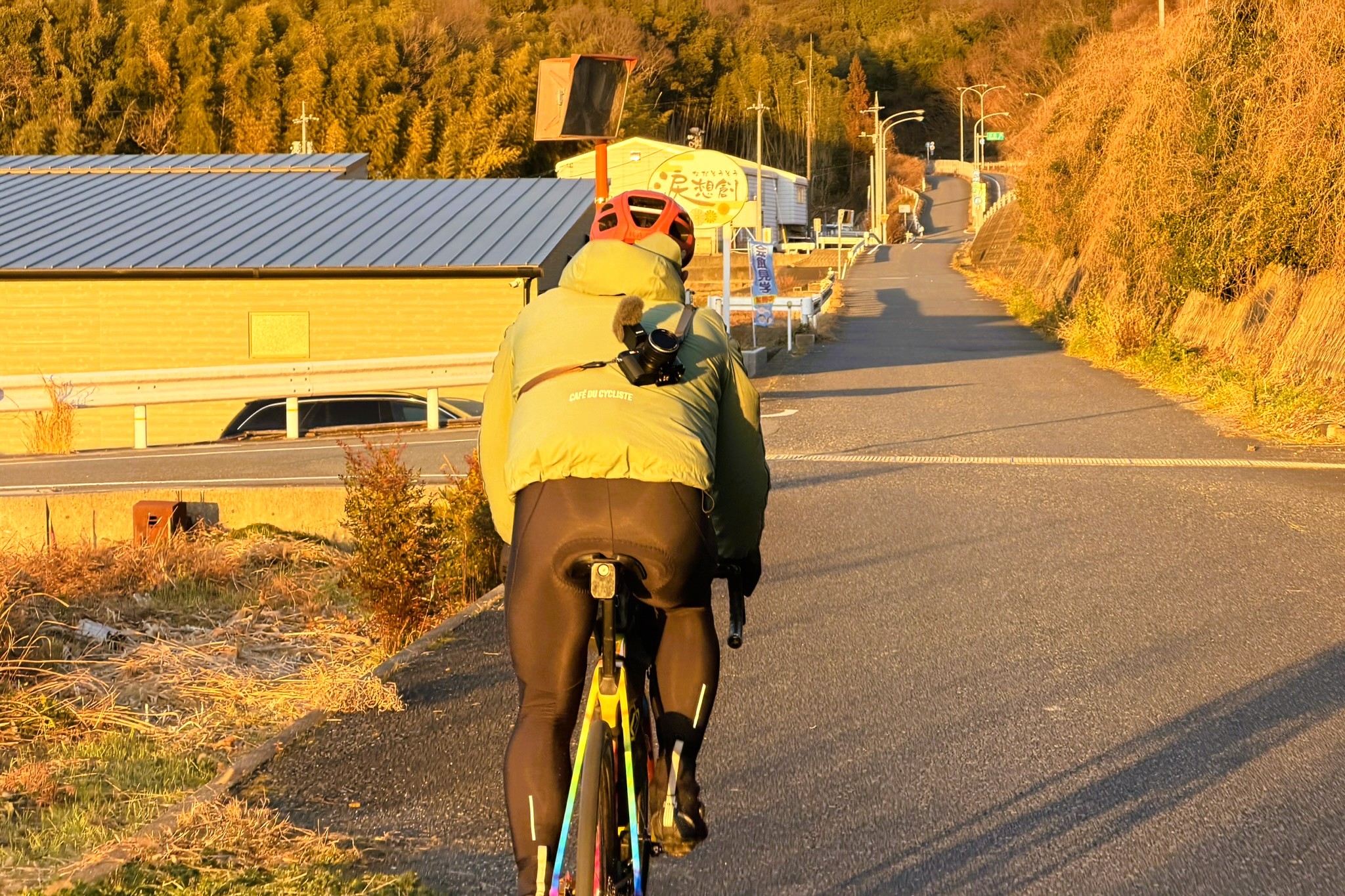
Basking in the glow of the sunset, I rolled into the finish line at Shin-Yamaguchi Station. Knowing the Yamaguchi trip was about to wrap up, I felt a little bittersweet.
Finished at Shin-Yamaguchi Station!
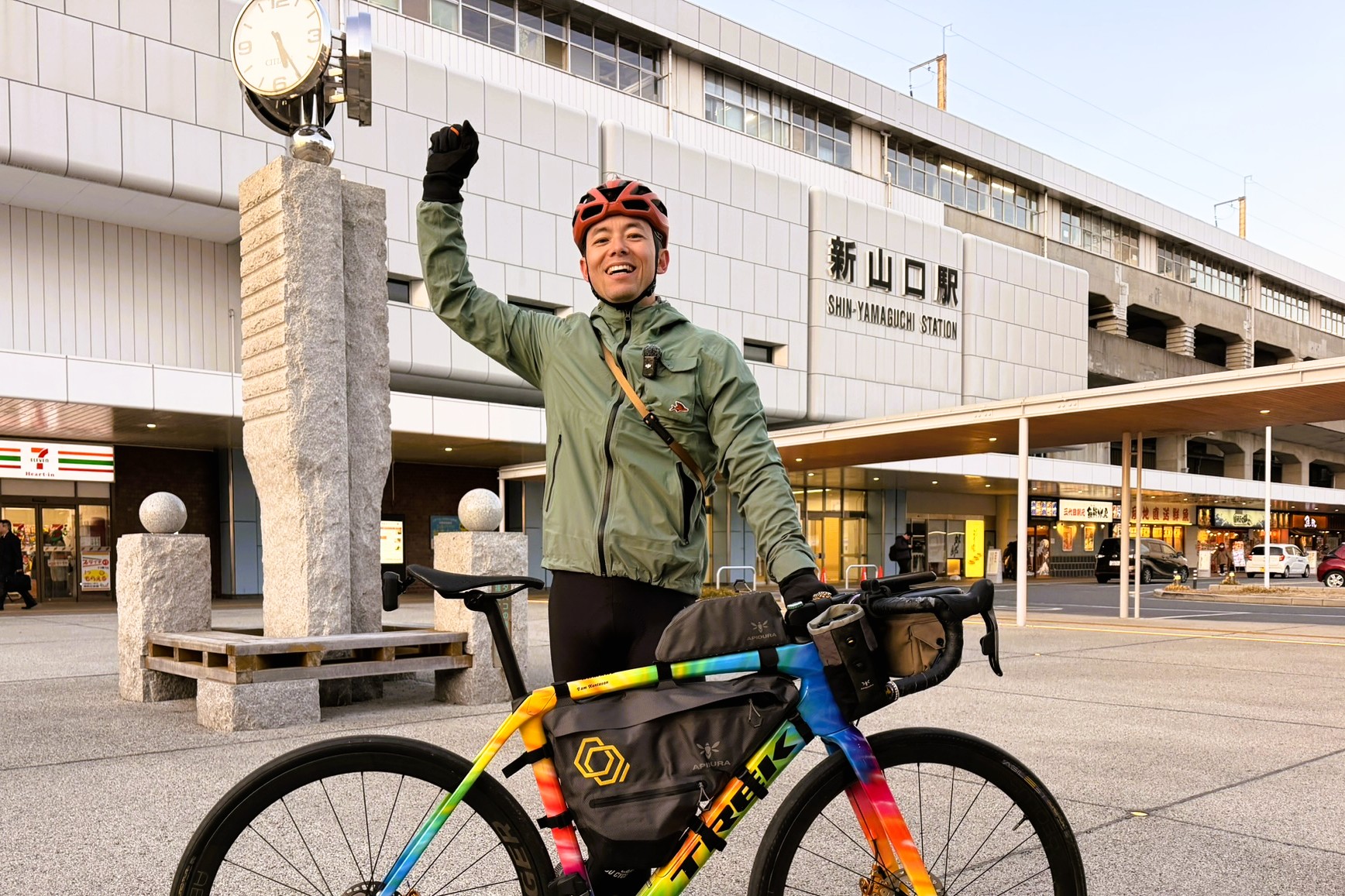
We arrived at Shin-Yamaguchi Station, which was both the starting point and the finish line. The route had relatively few hills, so the overall average speed was pretty quick. It was just right for focusing on key spots with a road bike, covering a solid distance and enjoying a fast-paced ride.
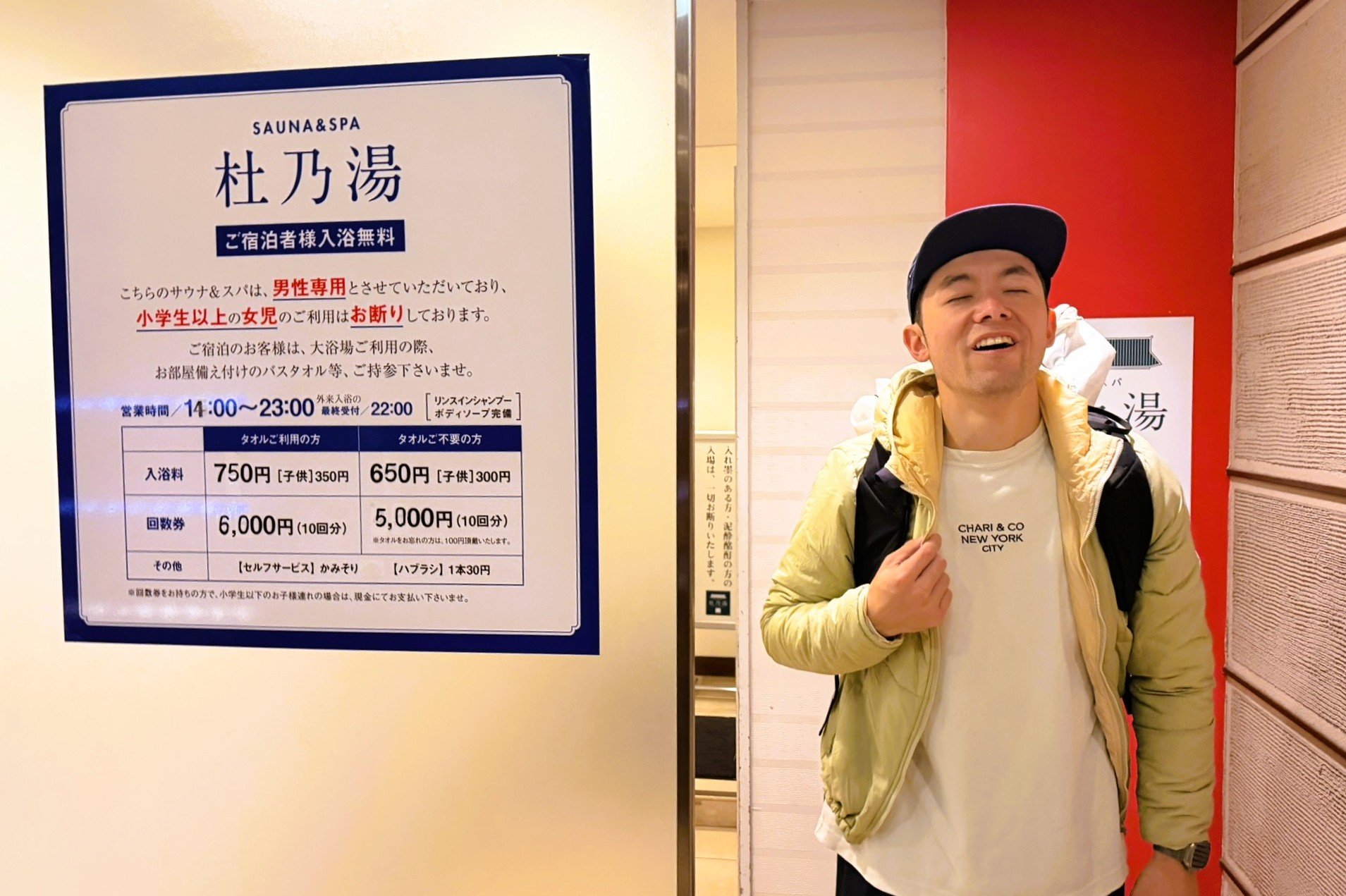
For this trip, after finishing the ride, I picked up my luggage at Hotel Amse Shin-Yamaguchi. Then, I stopped by a day-use hot spring to wash off the sweat and really warm up my body.
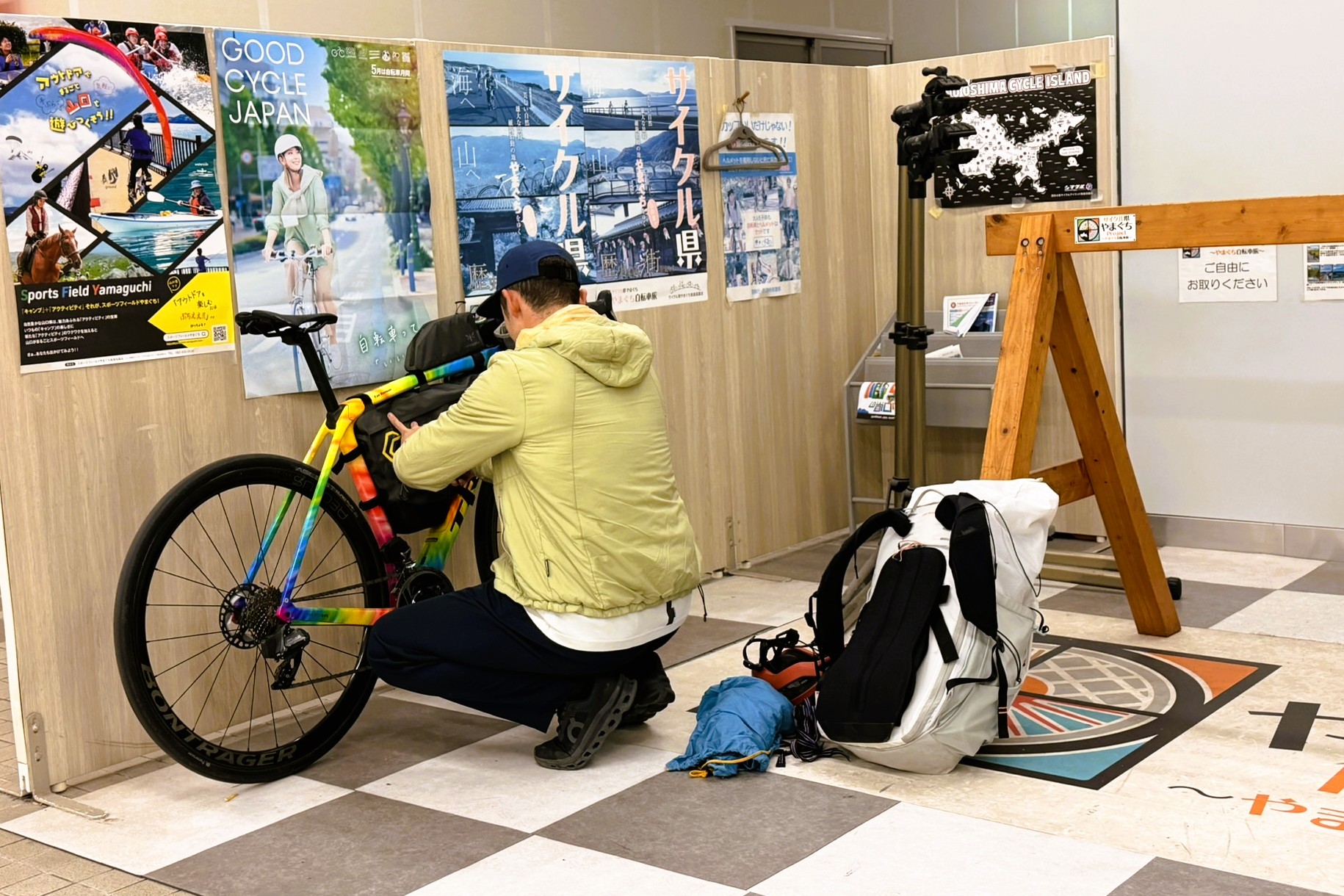
At the cycle station in Shin-Yamaguchi Station, we started getting our bikes ready for the train ride. There’s an elevator right next door, making it super easy to get to the ticket gates. For anyone traveling with bikes, this setup is absolutely perfect.
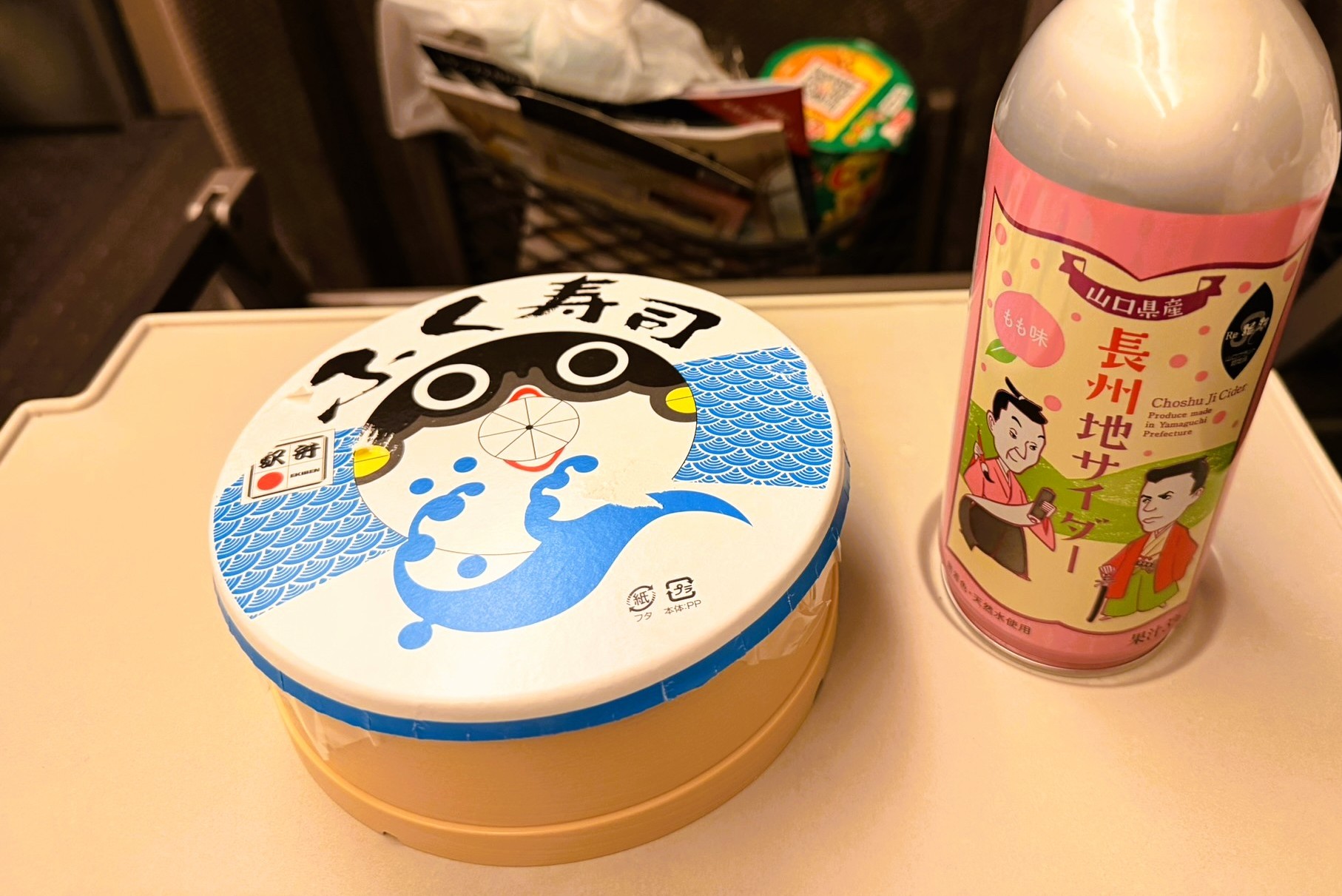
On the Shinkansen back to Tokyo, I had a light dinner with Yamaguchi’s famous station bento featuring blowfish sushi and some Choshu cider. After warming up thoroughly in the bath post-ride, the four-hour trip flew by, and before I knew it, I was sound asleep all the way to Tokyo Station.
After finishing the ride
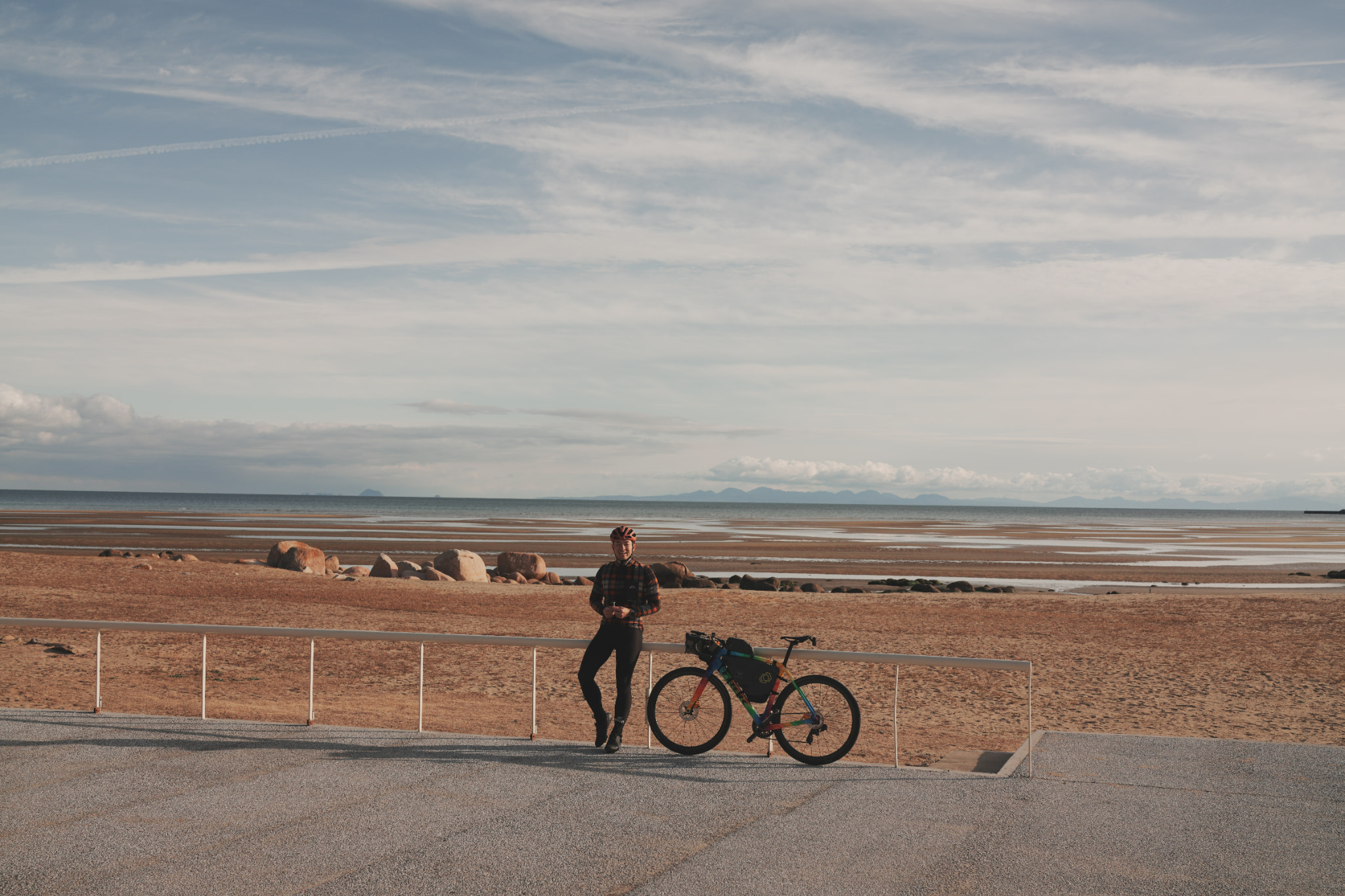
This Yamaguchi ride struck the perfect balance between cycling and sightseeing, making for a way more fulfilling day than I expected. From the unique vibes of the industrial zones to the calm waters of the Seto Inland Sea, and even the Evangelion all over town blending right into the cityscape, the scenery kept changing in the coolest ways. The route had relatively few hills, so you can keep a good pace without too much strain, which is a big plus. It feels like there are still tons of unknown views and routes to explore, so I’m definitely looking forward to riding in other areas next time. This trip left me with such a positive, adventurous vibe.
旅のしおり
| 13:10 | Depart Tokyo Station by Shinkansen |
|---|---|
| 17:30 | Arrive Shin-Yamaguchi Station (Overnight stay) |
| 8:00 | Start from Shin-Yamaguchi Station |
| 9:00 | Stop by Fujigouchi Tea Garden |
| 11:00 | Arrive at Ube Shinkawa Station |
| 11:30 | Ube-Isa Private Road Crossing |
| 12:00 | Lunch at Fish Market Diner |
| 13:30 | Stop at Tokiwa Park |
| 13:45 | Shop at Komugido Bagels |
| 15:30 | Chill at Kiwa-la Beach |
| 16:00 | Rest at Kirara Ajisu Roadside Station |
| 17:30 | Finish at Shin-Yamaguchi Station |
| 18:20 | Depart Hiroshima by Shinkansen |
| 22:15 | Arrive Tokyo Station |